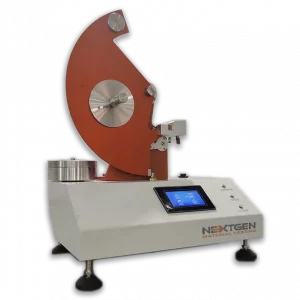
ASTM D1922 is a standard test method for measuring the force required to propagate an existing tear in plastic film and nonrigid thin sheeting using an Elmendorf-type pendulum tearing tester.
Because film structure and orientation can strongly affect results, many teams use this method for material comparison, specification acceptance, and packaging film screening rather than as a universal production-control tool. If you need help matching specimen type, capacity range, or reporting expectations to your product, talk with our team.
ASTM D1922 — Standard Test Method for Propagation Tear Resistance of Plastic Film and Thin Sheeting by Pendulum Method
ASTM D1922 describes an Elmendorf (pendulum) tear procedure used to determine the average force needed to continue tearing a plastic film or nonrigid thin sheet after a tear is initiated.
The standard is commonly referenced for packaging and flexible products where tear propagation performance is a practical durability indicator, especially when comparing films of similar thickness.
Quick Definition
In one line: A pendulum-tear (Elmendorf) method that reports the average force required to propagate a tear through a specified tear length in plastic film or nonrigid thin sheeting.
| Item | What ASTM D1922 focuses on |
|---|---|
| Document type | Test method |
| Primary specimens | Rectangular and constant-radius; constant-radius is the preferred/referee specimen |
| Primary result | Average tear propagation force (with thickness also reported) |
| ISO equivalence | Listed as equivalent to ISO 6383-2 |
What This Standard Covers
ASTM D1922 covers the determination of the average force required to propagate tearing through a specified length of plastic film or nonrigid thin sheeting using an Elmendorf-type tearing tester.
It is intended for tear propagation (continuing an initiated tear), not puncture resistance or tensile strength. The standard also recognizes that orientation and extensibility can lead to oblique tearing and variable reproducibility for some materials.
Why This Standard Matters in Testing
Propagation tear is a practical performance index for many flexible products. It is often used to rank relative tear resistance among films of comparable thickness and to support acceptance testing when reproducibility for the specific material has been demonstrated.
This method can be especially useful when film tearing behavior in service is driven by rapid, dynamic tear events (for example, handling and opening), where a controlled pendulum tear provides a consistent way to compare candidates.
Common Materials, Product Types, or Applications Covered
ASTM D1922 is commonly applied to plastic films and nonrigid thin sheeting used in flexible applications.
Common examples: Packaging films, barrier films, flexible liners, bags and pouches, overwraps, and other thin polymer sheet products where tear propagation resistance is part of performance or QC requirements.
Common Test or Verification Workflow
Most labs implement ASTM D1922 as a comparative tear-propagation test with controlled specimen geometry and consistent conditioning.
Typical workflow: (1) define film direction(s) to be tested (machine direction vs transverse direction where applicable), (2) cut specimens using the specified geometry (often the constant-radius referee specimen), (3) measure and record specimen thickness, (4) run pendulum-tear trials with an Elmendorf-type tester at an appropriate capacity range, and (5) report average tear force alongside thickness and any notable tearing behavior (such as oblique tearing).
Practical note: Results are generally compared at the same thickness, and film anisotropy can be significant—so directionality and specimen selection matter for meaningful comparisons.
Equipment Commonly Used for This Standard
ASTM D1922 is typically performed on a dedicated Elmendorf (pendulum) tearing tester configured for plastic film and thin sheeting.
Common equipment: Elmendorf-type pendulum tear tester (with suitable capacity range and calibration approach), specimen cutting die(s) for the specified geometries (including constant-radius where used), thickness gauge/micrometer for film thickness reporting, conditioning space (when required by the test plan), and basic handling tools to avoid nicking or pre-damaging specimens.
Selection caution: Highly extensible or highly oriented films can show greater variability and directional effects; matching pendulum capacity and using consistent specimen preparation are key to avoiding misleading rankings.
How to Read This Designation or Revision
Designation: “D1922” is the base ASTM identifier for this specific tear propagation test method.
Year suffix: Versions are commonly cited with a year suffix such as ASTM D1922-23, indicating the edition year associated with that version.
Reapproval notation: Some citations may include a reapproval year (for example, a 2015 edition later reapproved in 2020). When purchasing equipment or comparing data, it is good practice to align on the exact cited edition because updates can affect specimen details, reporting expectations, or acceptance criteria referenced by a customer specification.
Related Standards, Methods, or Frameworks when useful
ASTM D1922 results are sometimes used alongside other film tear or toughness indicators when a broader mechanical performance picture is needed.
Commonly paired references: ASTM D1004 is frequently mentioned as a supplementary tear-related method (with different specimen geometry and test speed), and ISO 6383-2 is commonly used in parallel when an ISO designation is required for customer alignment.
Get help selecting an Elmendorf tear setup for ASTM D1922
If you are standardizing ASTM D1922 across multiple film types or need to match a customer’s cited edition and specimen geometry, you can request a detailed quote for an Elmendorf tear tester package (capacity, cutters, and accessories) aligned to your lab workflow.