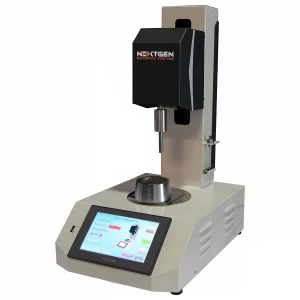
ASTM C187 covers the amount of water required to produce a hydraulic cement paste at normal consistency. It is a cement-lab test method used to establish a repeatable paste condition for standards work that depends on controlled consistency.
This standard is most relevant to cement producers, construction materials laboratories, QA teams, and R&D groups working with hydraulic cement characterization. If you need help matching a Vicat-based setup or deciding whether ASTM C187 fits your workflow, Contact Us.
ASTM C187 Standard Test Method for Amount of Water Required for Normal Consistency of Hydraulic Cement Paste
ASTM C187 is a test method, not a material specification. Its purpose is narrow and practical: determine how much water is needed to prepare a hydraulic cement paste at normal consistency.
Because this result is commonly used as an input to other cement test work, ASTM C187 often sits early in a laboratory workflow rather than serving as the final acceptance test by itself.
Quick Definition
What it measures: The water content needed to bring hydraulic cement paste to standard normal consistency.
Primary material area: Hydraulic cement and cement paste.
Typical lab context: Cement characterization, standards-based paste preparation, and Vicat-based bench testing.
Equipment direction: Vicat apparatus, paste mixing equipment, mass and volume measurement devices, and basic cement-lab accessories.
What This Standard Covers
ASTM C187 addresses the normal consistency of hydraulic cement. In practical terms, it defines the water requirement for a cement paste so the paste condition is controlled before related testing is performed.
The method is focused on fresh cement paste rather than hardened concrete, mortar strength, or structural performance. It is also expressed in SI units.
Why This Standard Matters in Testing
Normal consistency matters because many cement tests become difficult to compare if paste preparation varies from one lab or batch to the next. ASTM C187 provides a consistent starting point for paste-based work.
For buyers and lab managers, that means this standard usually affects the front end of the workflow: sample preparation, Vicat setup, operator technique, and repeatable measurement. It is less about high-force loading equipment and more about controlled bench-scale cement testing.
Common Materials, Product Types, or Applications Covered
ASTM C187 applies to hydraulic cement. It is commonly encountered in portland cement and other hydraulic cement evaluation programs, especially where paste properties or setting-related methods are part of the test plan.
Common users: Cement manufacturers, independent construction materials laboratories, DOT and transportation materials labs, academic materials labs, and R&D teams developing or comparing cement formulations.
Common Test or Verification Workflow
A typical ASTM C187 workflow starts with prepared cement paste, controlled water addition, and a Vicat consistency determination. The result is reported as the amount of water required to reach normal consistency.
In many laboratories, that value is then used to support other standards-based cement tests, especially other Vicat or paste-based methods. When a specification or customer test plan cites multiple cement standards together, edition matching across the workflow matters.
Equipment Commonly Used for This Standard
ASTM C187 most commonly points to a manually operated Vicat apparatus with the specified plunger and ring assembly, along with accurate weighing and water-measurement tools. A mechanical mixer may also be part of the lab setup when the workflow follows ASTM cement mixing practices.
Common equipment families: Vicat apparatus, Vicat molds or rings and base plates, cement mixers, balances and reference masses, glass graduates, timers, and general cement paste preparation accessories.
This is not a universal testing machine standard. If you are building or updating a cement lab for ASTM C187 and related Vicat work, Request a Quote.
How to Read This Designation or Revision
In a citation such as ASTM C187-25, the C187 portion identifies the standard and the -25 suffix identifies the edition year. ASTM standards may also appear with a parenthetical reapproval year or an epsilon mark when editorial changes have been issued.
Revision sensitivity: Even when the method remains familiar, labs should match the cited edition in the purchase specification, quality manual, or customer requirement.
Related Standards, Methods, or Frameworks
ASTM C187 is commonly used alongside other hydraulic cement standards rather than alone.
- ASTM C305: Mechanical mixing of hydraulic cement pastes and mortars of plastic consistency.
- ASTM C191: Vicat needle setting-time test methods that use paste prepared at normal consistency.
- ASTM C219: Terminology for hydraulic and other inorganic cements.
- AASHTO T 129: Transportation-lab designation associated with this normal consistency method.
Where multiple standards are cited together, the practical equipment question is usually whether one Vicat setup, mixer, and supporting accessories can cover the full required workflow.
Get Help with ASTM C187 Equipment Selection
If you are quoting a cement laboratory, replacing Vicat equipment, or checking coverage for ASTM C187 alongside related cement methods, we can help match the application to the right configuration.
Request a Quote for ASTM C187-related cement testing equipment and lab setup guidance.