GenCut GL110XYZ / GL130XYZ – Large-Capacity Abrasive Cut-Off Saw

Metal Testing Equipment
Standards
Description
The GenCut GL110XYZ and GL130XYZ are large-capacity metallographic cutting machines for cylindrical, polygonal and irregularly shaped workpieces, including large ones. The two models share one machine and differ only in the cutting wheel and the maximum section: Φ4.33″ (110 mm) for the GL110XYZ and Φ5.12″ (130 mm) for the GL130XYZ. A fully enclosed double housing and a quick clamping mechanism keep every cut safe.
A strong, independent cooling system with two channels keeps the specimen cool during the cut. It prevents overheating and burning of the structure, avoids micro-burns on the cut surface, allows larger cross-sections and makes better use of the cutting wheel. Read more in our MEGA BLOG.
The machine is vertical. A sliding door at the front and a hinged door on the left open the cutting chamber, so large workpieces go in from the top, the front and the left.
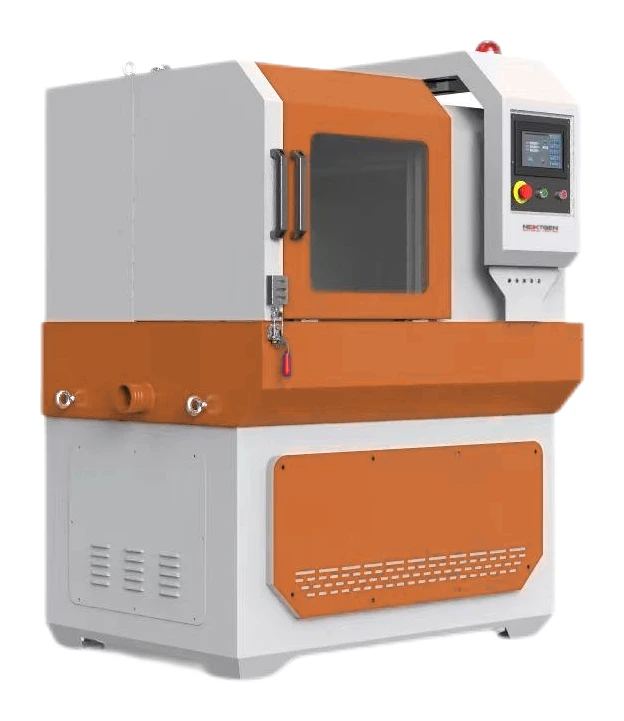
GenCut GL110XYZ / GL130XYZ with the sliding door and the hinged door closed.
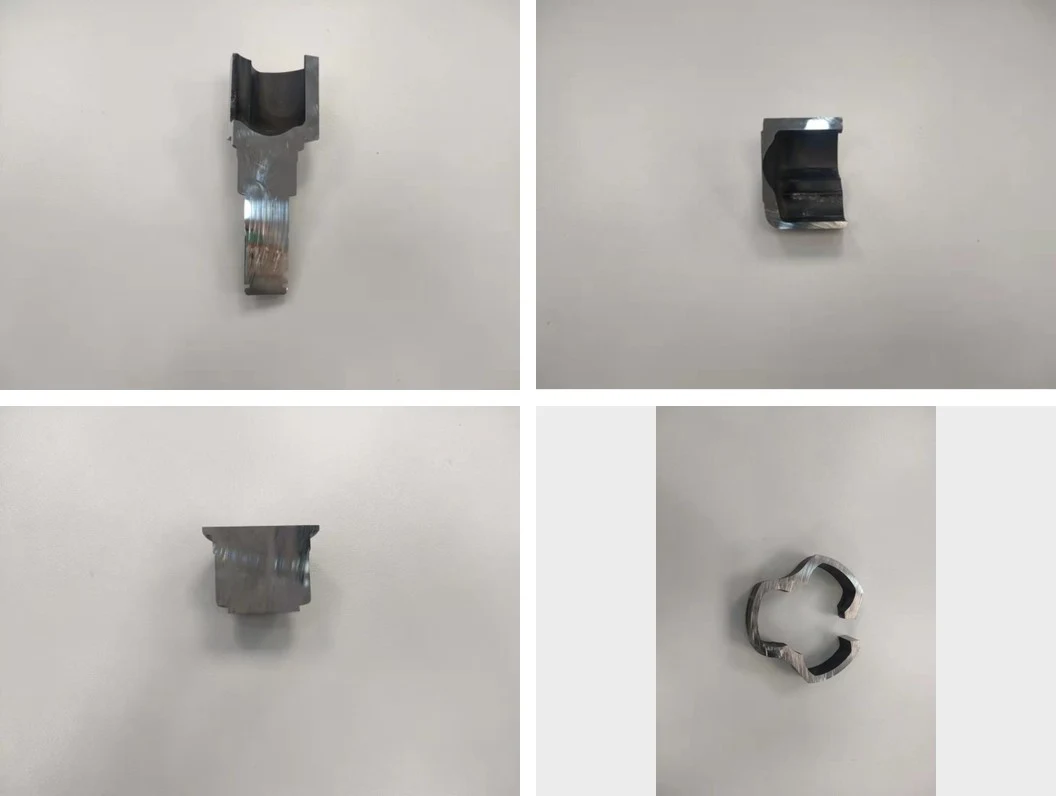
Specimens sectioned on the machine.
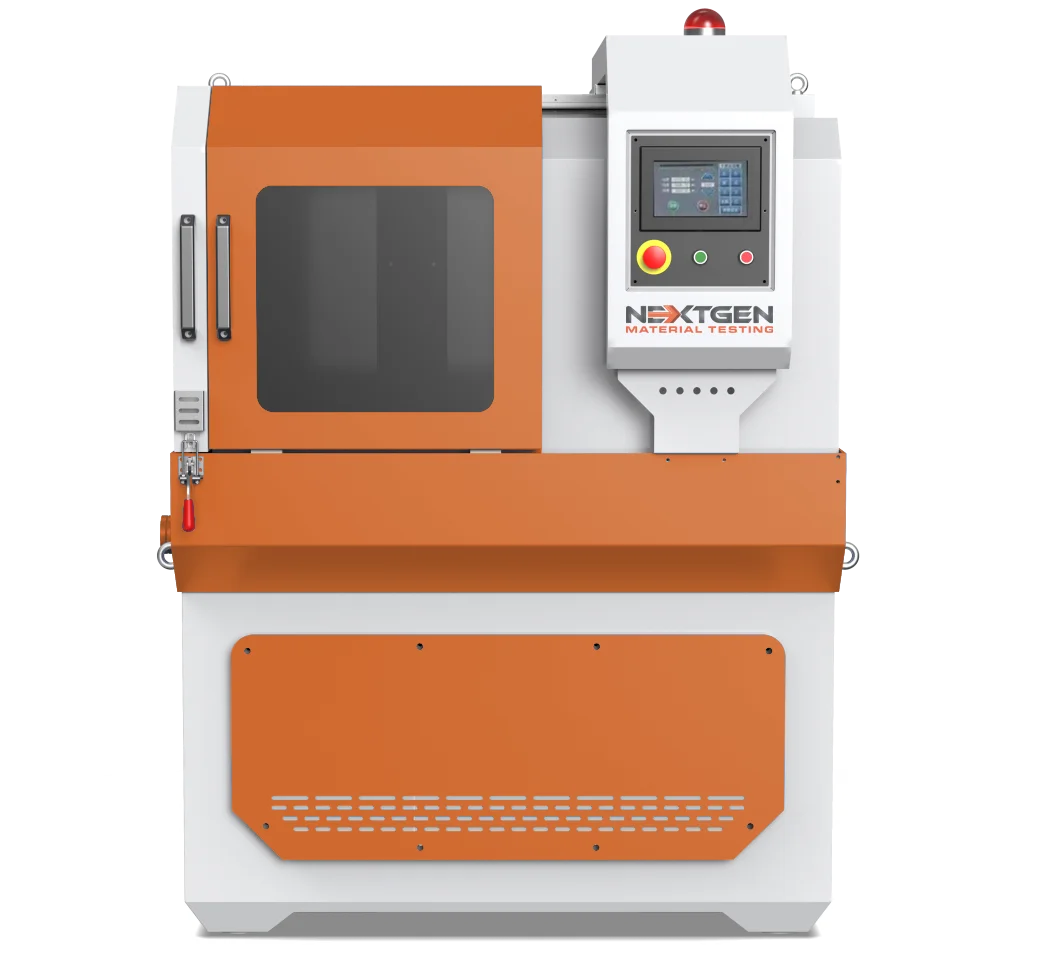
GenCut automated metallographic abrasive cutter: system overview.
GenCut GL110XYZ / GL130XYZ Features
All three axes are driven by stepper motors and run from the touch screen, so the operator sets the cut once and the machine makes it.
Cutting capacity
Maximum section Φ4.33″ (110 mm) on the GL110XYZ and Φ5.12″ (130 mm) on the GL130XYZ.
Automatic X, Y and Z axes
Three-axis linkage with stepper motors: 5.12″ (130 mm) of Z travel, 7.87″ (200 mm) of Y travel and 3.94″ (100 mm) of X travel, with automatic reset.
Three cutting modes
Chop cutting, flat push cutting along the Y axis and sweep cutting along the Z axis, each with direct, intermittent or in-and-out feed.
Touch screen control
A 7″ colour industrial touch screen with a PLC control system: every cutting parameter is set on the screen.
Stepless wheel speed
500 to 3,000 rpm, adjustable to the hardness of the material for the fastest clean cut.
Two-channel cooling
Automatic water cooling from an independent 21.1 gal (80 L) tank with its own pump.
Safe enclosed chamber
An explosion-proof observation window, a safety lock that keeps the doors closed while cutting and an alarm if the motor is overloaded or a door is not closed.
Easy loading
A sliding door and a hinged door give free access to the chamber for large workpieces.
Exhaust, light and rinsing
An exhaust system carries the fumes out of the chamber, LED lights the cutting area and a cleaning water gun rinses the table.
Cursor positioning
Optional cursor positioning marks the cutting location more accurately.
The main screen shows the position and speed of every axis and the selected cutting mode.
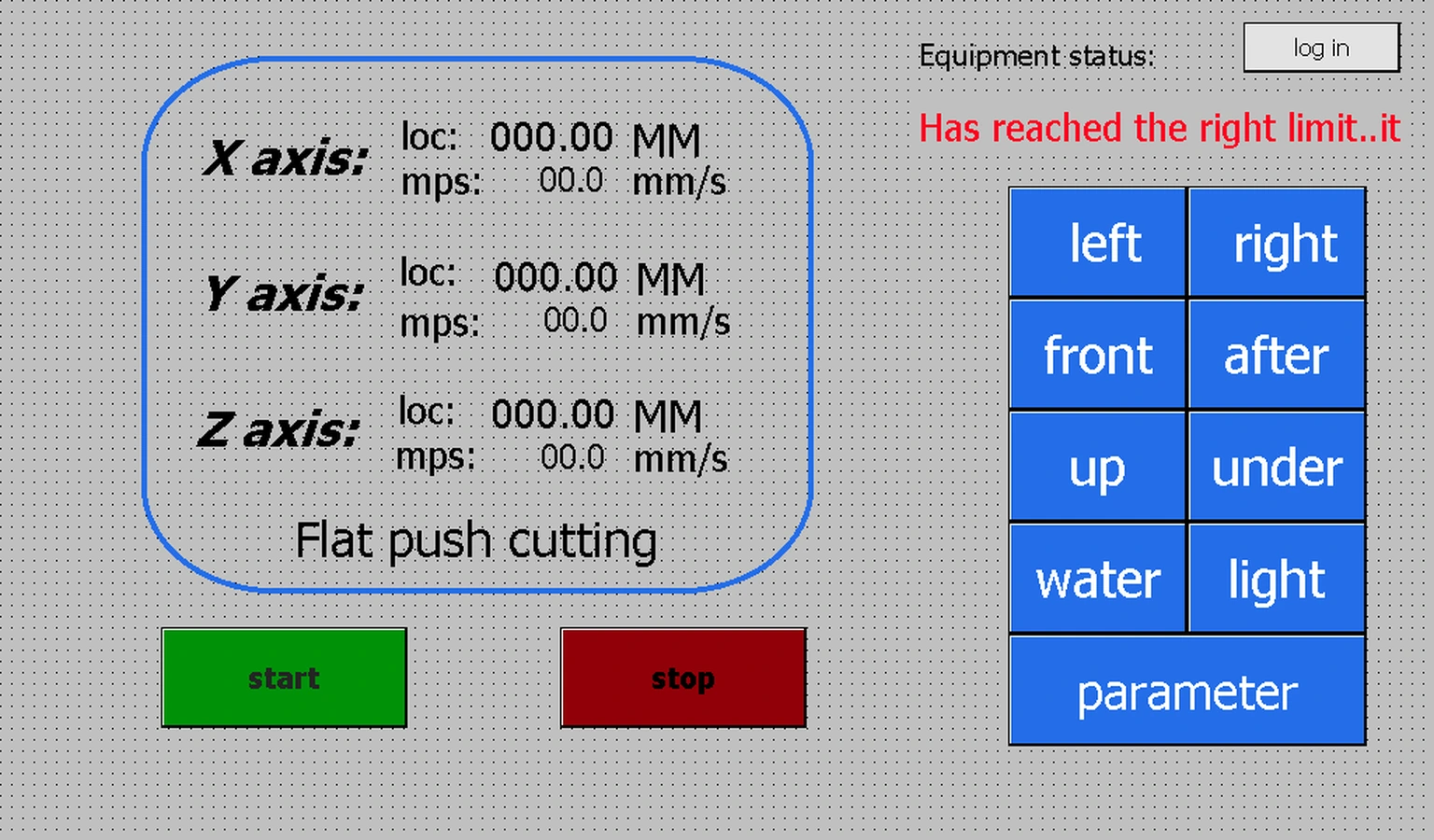
X, Y and Z positions and speeds, the cutting mode and the direction buttons on the main screen.
GenCut GL110XYZ / GL130XYZ Technical Specifications
Sectioning is the first step of metallographic preparation under ASTM E3, and the cut itself decides how much of the structure survives to the microscope: a wheel that runs hot leaves a deformed or burnt layer that later grinding has to remove. Check the maximum section of each model against your largest samples before ordering. Imperial values come first, with the metric equivalent in brackets.
| Specification | GenCut GL110XYZ | GenCut GL130XYZ |
|---|---|---|
| Cutting Wheel | Φ13.8″ × 0.098″ × Φ1.26″ (Φ350 × 2.5 × Φ32 mm) | Φ15.7″ × 0.138″ × Φ1.26″ (Φ400 × 3.5 × Φ32 mm) |
| Maximum Cutting Section | Φ4.33″ (110 mm) | Φ5.12″ (130 mm) |
| Control Method | Automatic, three-axis linkage, 7″ industrial touch screen | |
| Control System | 7″ colour touch screen, PLC control system | |
| Cutting Table | Right side 5.04″ × 12.6″ (128 × 320 mm), left side 7.09″ × 12.6″ (180 × 320 mm) | |
| Maximum Travel | Z axis 5.12″ (130 mm), Y axis 7.87″ (200 mm), X axis 3.94″ (100 mm) | |
| Wheel Speed | 500-3,000 rpm, stepless | |
| Cutting Speed | 0.0004-0.039″/s (0.01-1 mm/s), adjustable in steps of 0.01 mm/s | |
| Cutting Modes | Chop cutting, flat push cutting, sweep cutting | |
| Resetting Mode | Automatic | |
| Feed Drives | Stepper motors | |
| Cooling System | Automatic water cooling, 2 channels | |
| Machine Type | Vertical | |
| Input Power | 4 kW | |
| Input Voltage | 220 V 50 Hz, three-phase, four-wire | |
| Dimensions (W × D × H) | 53.1″ × 43.3″ × 68.9″ (1,350 × 1,100 × 1,750 mm) | |
GenCut GL110XYZ / GL130XYZ Standard Configuration
Every machine is delivered with the following. The cut-off wheel and the cutting fluid are consumables: they are chosen for the material and replaced as they wear.
The full delivery scope:
- GenCut GL110XYZ or GL130XYZ cutting machine
- Water tank 21.1 gal (80 L) with pump
- Cutting wheels Φ350 × 2.5 × Φ32 mm, 2 pcs
- Cutting fluid, 1.06 qt (1 L)
- Quick clamp
- Water inlet pipe and water outlet pipe
- Exhaust pipe
- Cleaning water gun
- Wrench set
- Operation manual
Important Note: Check out our consumables catalogue starting on Page 1 for saw consumables. Or speak with your NextGen representative for our best recommendation on consumables to include for your cutting applications.
Send us the largest section you need to cut and the material, and we will confirm whether the GL110XYZ, the GL130XYZ or the larger GL 170XY is the better fit.
For Laboratories
Need Additional Quality Control Equipment to Build Your Laboratory?
Abrasive sectioning is only one part of a complete quality control laboratory. NextGen can help you equip your entire lab with impact testers, notching and broaching systems, cooling chambers, tensile testers, hardness testers, specimen preparation equipment, and other supporting solutions, all coordinated as one complete project.
- One partner to equip your complete laboratory
- Installation, training, calibration
- Support for the life of the equipment
FAQs
The machine comes with a 21.1 gal (80 L) water tank with pump, two Φ350 × 2.5 × Φ32 mm cutting wheels, 1.06 qt (1 L) of cutting fluid, a quick clamp, water inlet and outlet pipes, an exhaust pipe, a cleaning water gun, a wrench set and the operation manual.
Wheels and cutting fluid are consumables and are replaced as they wear; the consumables catalogue lists the replacements.
It is a vertical machine. The upper section is the safety cover, the middle section is the frame with the cutting chamber, and the lower frame holds the electrical box. The cooling water tank stands separately.
The overall size is 53.1″ × 43.3″ × 68.9″ (1,350 × 1,100 × 1,750 mm), so plan floor space for the machine and its tank. If you are setting up a new laboratory, we can plan the whole equipment set with you.
The GL110XYZ cuts sections up to Φ4.33″ (110 mm), and the GL130XYZ cuts sections up to Φ5.12″ (130 mm).
This is the only performance difference between the two models, and it comes from the size of the cutting wheel. If your largest workpiece is close to either limit, send us its size and material through a quote request and we will recommend the model with enough margin.
Three: chop cutting, flat push cutting and sweep cutting. Flat push cutting is made by Y axis movement, and sweep cutting by Z axis movement.
In flat push and sweep cutting the wheel can feed continuously, intermittently or in and out, so the cut can be matched to the hardness and size of the workpiece. The mode is selected with one button on the parameter screen. Our overview of the GenCut GL series compares it with the other cutters in the range.
The Z axis travels 5.12″ (130 mm), the Y axis 7.87″ (200 mm) and the X axis 3.94″ (100 mm).
Each axis is driven by a stepper motor and can also be moved by hand from the direction buttons on the main screen, at a manual speed the operator sets. The current position of every axis is shown on the screen and can be set to zero before a cut.
The automatic cutting speed is adjustable from 0.0004 to 0.039″ per second (0.01 to 1 mm/s), in steps of 0.01 mm/s.
A slower feed suits hard materials and thick sections, where heat builds up quickly. A faster feed shortens the cut on softer materials. The speed is set for each workpiece according to its material, hardness and cutting thickness.
From a 7″ colour industrial touch screen with a PLC control system. The main screen shows the position and speed of each axis and the cutting mode, and it holds the start and stop icons and the direction buttons.
Separate screens set the parameters of each axis and of sweep cutting, and an I/O screen shows every limit, door and motor signal when a fault needs to be traced.
The wheel speed is stepless from 500 to 3,000 rpm.
Being able to choose any speed in that range lets the operator adapt the cut to the material, which is why the machine suits precision cutting of a wide range of metals. Together with the adjustable feed, it helps reach the fastest cut that still leaves a clean surface.
The machine resets automatically, so the axes return without the operator stepping in and the next workpiece can be loaded straight away.
When the cut is complete and the wheel has stopped, the operator opens the doors, removes the specimen and rinses the table with the cleaning water gun that comes with the machine.
A three-phase, four-wire, 220 V, 50 Hz supply. The input power is 4 kW.
The machine should be connected by a qualified electrician. If your laboratory has a different supply, tell us when you request a quote so we can confirm the configuration before delivery.
Both use the cutting distance set on the axis parameter screen. In intermittent cutting the wheel cuts that distance, pauses for the set time and cuts again. In in-and-out cutting it cuts the distance and then backs off by the set back distance.
The cutting distance must always be greater than the back distance. The total cutting stroke is set to the length of the workpiece.
The cutting chamber is fully enclosed by a double housing, and a safety lock keeps the doors closed while the machine is cutting. An explosion-proof transparent window lets the operator watch the cut.
The system raises an alarm if the motor is overloaded or a door is not closed properly. The electrical box is separated from the cutting chamber, which protects electrical safety and keeps maintenance simple.
The table has two working areas: 5.04″ × 12.6″ (128 × 320 mm) on the right side and 7.09″ × 12.6″ (180 × 320 mm) on the left side.
Workpieces are held on the table with the quick clamp supplied with the machine. The clamp is designed for fast changes, which keeps the time between cuts short.
An independent cooling system with two channels cools the specimen during the cut. It is fed from a 21.1 gal (80 L) water tank with its own pump.
Strong cooling prevents overheating and burning of the specimen structure and avoids micro-burns on the cut surface, one of the common preparation artifacts that later grinding would have to remove. It also allows larger cross-sections and makes better use of the cutting wheel.
The cutting chamber has a sliding door at the front and a hinged door on the left. With both open, large workpieces can be placed in position from the top, from the front and from the left.
LED lighting in the chamber and the optional cursor positioning help to set the workpiece exactly where the cut has to be.
The GL110XYZ runs a Φ13.8″ × 0.098″ (Φ350 × 2.5 mm) wheel, and the GL130XYZ a Φ15.7″ × 0.138″ (Φ400 × 3.5 mm) wheel. Both wheels have a Φ1.26″ (32 mm) bore.
The wheel is a consumable, chosen for the material being cut. Our consumables catalogue lists the wheels we supply for this machine.
The exhaust system carries the fumes generated during cutting out of the cutting chamber through the exhaust pipe supplied with the machine.
The cleaning water gun rinses the cutting table and the chamber after each cut, so debris does not build up between workpieces.
The GenCut GL110XYZ and GL130XYZ cut metallographic specimens from cylindrical, polygonal and irregularly shaped workpieces, including large parts that do not fit a benchtop cutter.
The machine is built for laboratories that section a lot of material: the cut runs automatically on three axes, inside a fully enclosed chamber, with cooling that protects the structure of the specimen. Both models are part of our range of abrasive metallographic cutting equipment.
Related Products
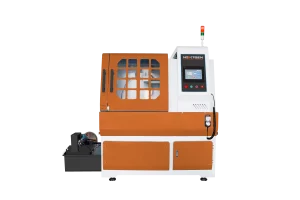
GenCut GL170XY – Multi-Function Abrasive Cut-Off Saw
GenCut GL 170XY is a large-capacity abrasive cut-off saw for automated metallographic sample cutting up to Φ170 mm. Its XY-axis movement, variable feed speed, large coolant system, 150 L water tank, illuminated cutting chamber, ventilation fan, and touchscreen control help operators cut demanding metal specimens safely, accurately, and consistently while preserving sample integrity for later analysis.
Read more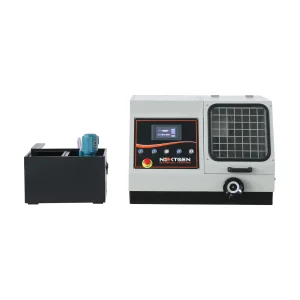
GenCut GL350 – Metallographic Cutting Machine
GenCut GL350 is a precision metallographic sample cutting machine for larger laboratory and industrial specimens. With automatic and manual work modes, a maximum circular cutting section of Φ100 mm, adjustable feed speed, robust cooling, and a closed structure with a large observation window, it helps produce clean, accurate cuts while reducing overheating, improving operator safety, and supporting efficient metallographic preparation workflows.
Read more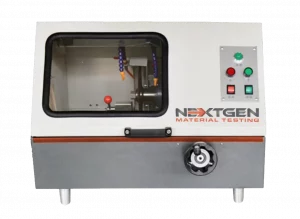
GenCut GL100M – Manual Metallographic Cutting Machine
GenCut GL100M is a precision manual metallographic sample cutting machine for clean, controlled preparation of metal specimens. It supports cutting sections up to Φ100 mm with a 350 mm wheel, 2800 rpm speed, and 3.0 kW motor. A closed safety structure, wide observation window, fast clamping system, cooling water tank, and stainless work surfaces help protect sample integrity and operator safety.
Read more
GenCut GL80A – Precision Metallographic Cutting Machine
GenCut GL80A is a precision metallographic sample cutting machine for preparing metal specimens with a cutting capacity up to Φ80 mm. Designed for simple, user-friendly operation, it supports clean sectioning before grinding, polishing, and microscopic inspection. Its enclosed cutting area, cooling support, observation access, and secure clamping approach help laboratories maintain sample integrity, operator safety, and consistent preparation results.
Read more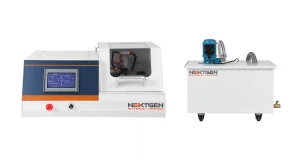
GenCut GL200E – High-Speed Precision Metallographic Cutter
GenCut GL200E is a high-speed automatic precision metallographic cutter for accurate sectioning of metals, ceramics, biological specimens, and other materials up to Φ60 mm. It offers automatic Y-axis feed, manual and pulse feed modes, 500–5000 rpm spindle speed, 0–600 mm/min feed control, micrometer adjustment, a 200 mm cutting wheel, protective cover, safety switch, and closed-loop overload protection.
Read more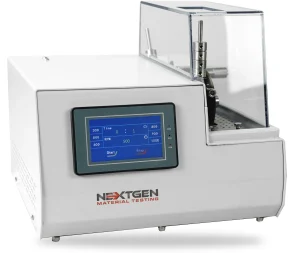
GenCut GL100E – Low-Speed Precision Metallographic Cutter
GenCut GL100E is a low-speed automatic precision cutter for metallographic preparation of small and delicate specimens. Designed for metals, composites, ceramics, plastics, electronics, rocks, and thin-film samples, it uses a 100 mm diamond cutting wheel at 100-1000 rpm, gravity feed with loading weights, micrometer control, a touchscreen with speed presets, coolant circulation and automatic stop at the end of the cut.
Read more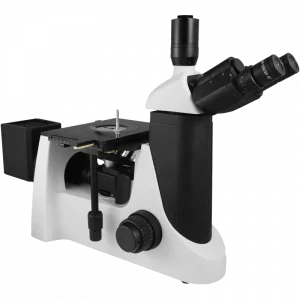
G-800E – Trinocular Metallurgical Microscope
G-800E is an inverted trinocular metallurgical microscope for industrial, research, and educational metallurgy applications. It supports reflected-light observation of polished metals, alloys, coatings, and mounted specimens, with a trinocular head ready for C-mount camera integration. Standard 10x, 20x, 50x, and 80x long-working-distance objectives, 10x eyepieces, and polarization capability make it useful for grain structure, inclusions, phases, and documentation.
Read more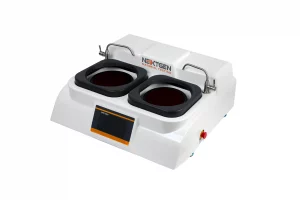
GenGrind N Series 200S / 250S / 300S – Grinder and Polisher
GenGrind N Series is a manual metallographic grinder and polisher available in 8-inch, 10-inch, and 12-inch formats, with single- or dual-wheel options. A 7-inch touchscreen, 50–1000 rpm stepless speed range, reversible rotation, constant-speed presets, and optional magnetic disc changes make it suitable for coarse grinding, fine grinding, and polishing while keeping sample preparation stable, quiet, and efficient.
Read more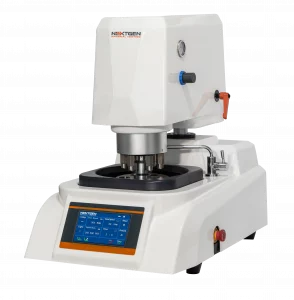
GenGrind SA-I 250S – Semi-Automatic Grinder and Polisher (Individual Force)
GenGrind SA-I 250S is a semi-automatic single-wheel grinder and polisher for metallographic sample preparation with individual pneumatic force control. It features a 10-inch magnetic disc, 100–1000 rpm stepless speed, automatic specimen mover power head, programmable time and rotation settings, and capacity for up to six 30 mm samples, helping laboratories achieve consistent grinding and polishing results with flexible operator control.
Read more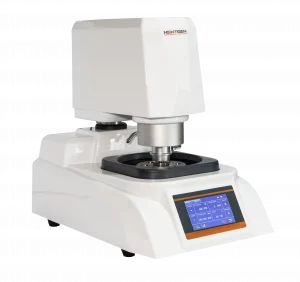
GenGrind SA-C 250S – Semi-Automatic Grinder and Polisher (Central Force)
GenGrind SA-C 250S is a semi-automatic metallographic grinder and polisher for repeatable sample preparation with central pneumatic force control. Its 250 mm magnetic working disc, 100–1000 rpm stepless speed range, bidirectional rotation, touchscreen controls, and automatic power head help laboratories process up to six 30 mm specimens per cycle while maintaining consistent grinding and polishing results across different materials.
Read more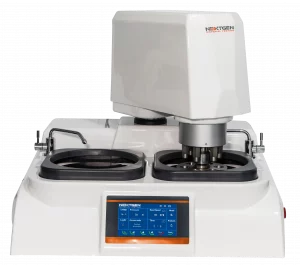
GenGrind FA-IC 250D – Fully Automatic Dual-Wheel Grinder and Polisher
GenGrind FA-IC 250D is a fully automatic dual-wheel metallographic grinder and polisher designed for higher-throughput sample preparation. With two 10-inch working plates, 100–1400 rpm stepless speed, programmable cycles, magnetic disc changes, automatic cleaning, and both individual and central pneumatic pressure modes, it helps laboratories standardize pre-grinding, grinding, and polishing while reducing manual handling and improving repeatability.
Read more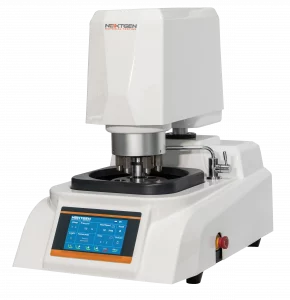
GenGrind FA-IC 250S – Fully Automatic Single-Wheel Grinder and Polisher
GenGrind FA-IC 250S is a fully automatic single-wheel grinder and polisher for repeatable metallographic sample preparation. Its 10-inch working plate, 100–1400 rpm stepless speed, programmable time and rotation settings, automatic specimen mover head, and individual or central pneumatic force control help laboratories process multiple samples efficiently while maintaining consistent grinding, polishing, and surface finish quality.
Read more