NG-AutoPol – Automatic Longitudinal Polisher for Tensile Specimens

Metal Testing Equipment
Standards
Description
The NG-AutoPol Automatic Longitudinal Polisher from NextGen Material Testing removes the grinding stress and the residual surface stress that turning or milling leaves behind on a test specimen. It polishes both cylindrical and flat tensile specimens along their length, which is the direction that matters: circumferential scratches left across a gauge section act as crack starters and shorten fatigue life.
The machine is fully automated and compact. Motion, pressure and contact are all controlled, so the surface damage from machining comes off evenly and the specimen goes into a tensile or fatigue test without a preparation artefact in the result. Polishing parameters are set on the touchscreen, and no CNC experience is needed to set them.
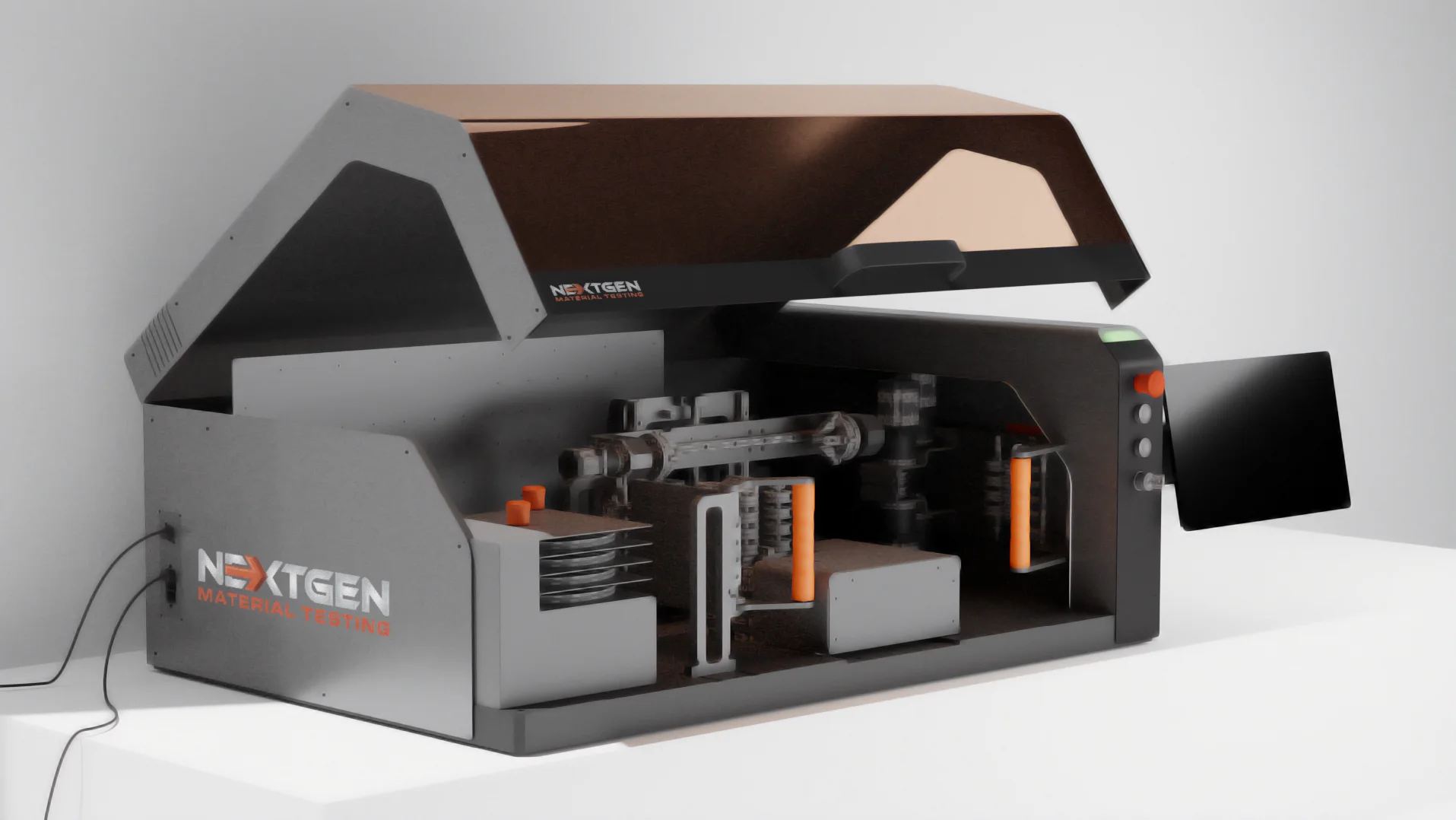
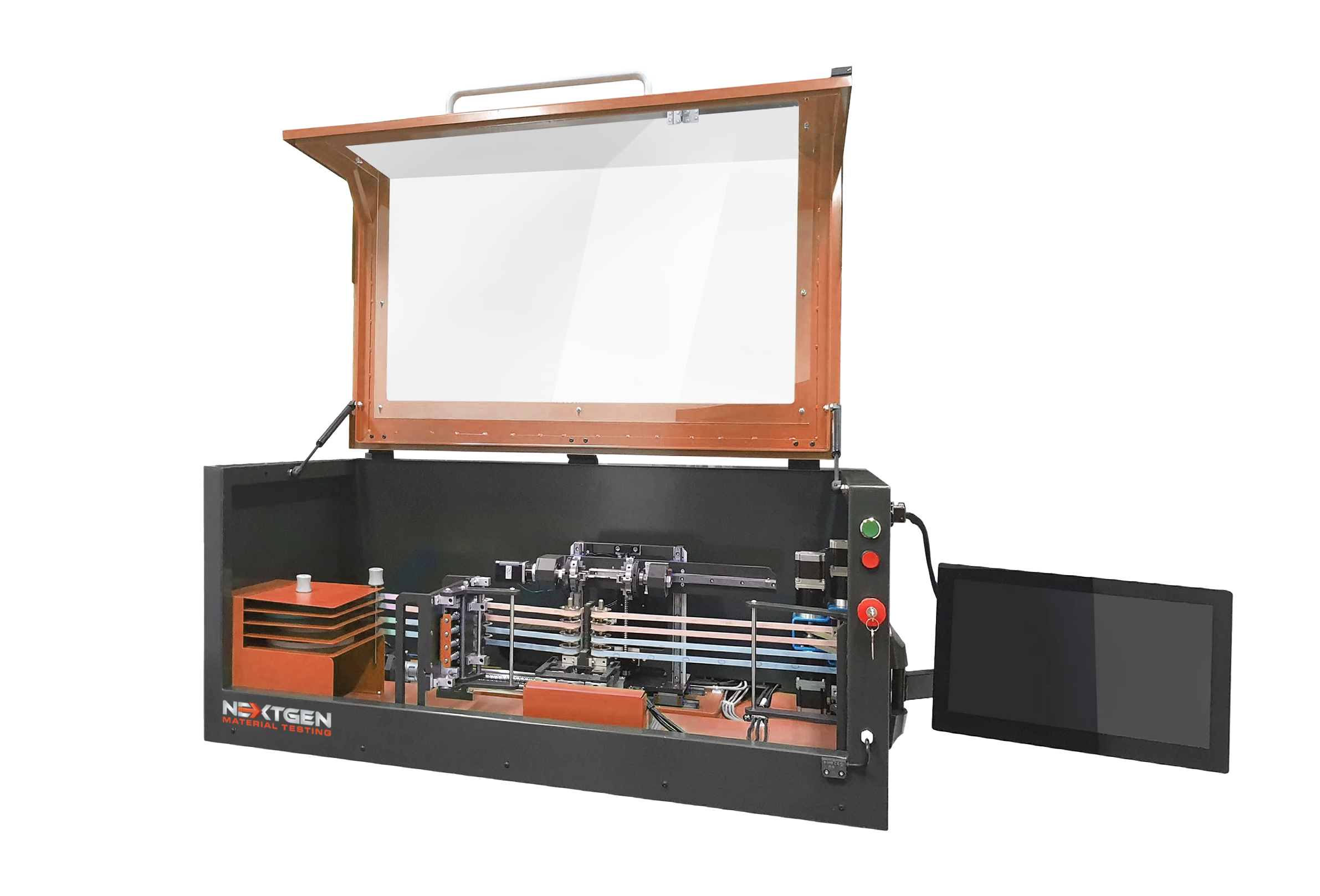
NG-AutoPol with the chamber open.
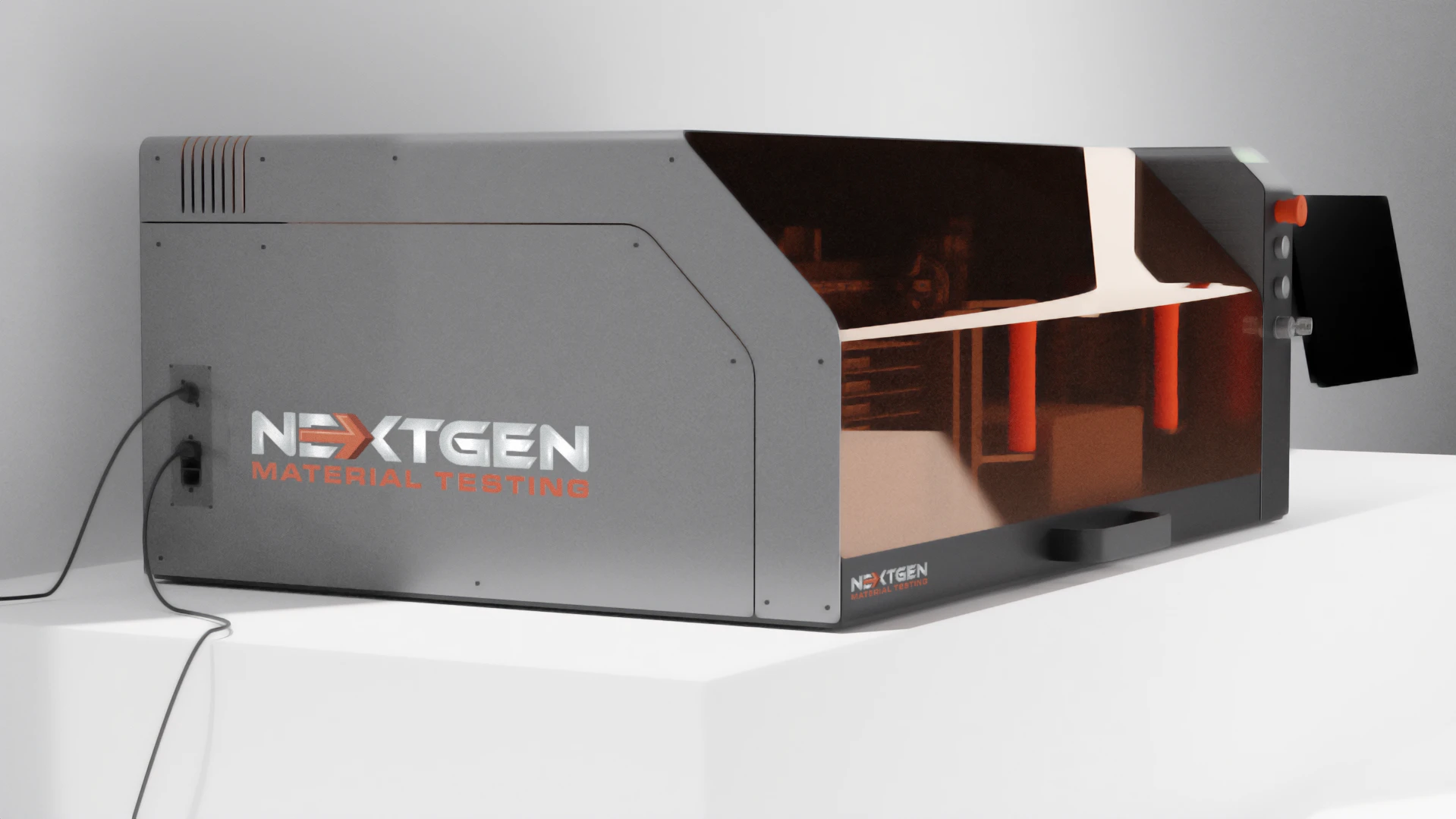
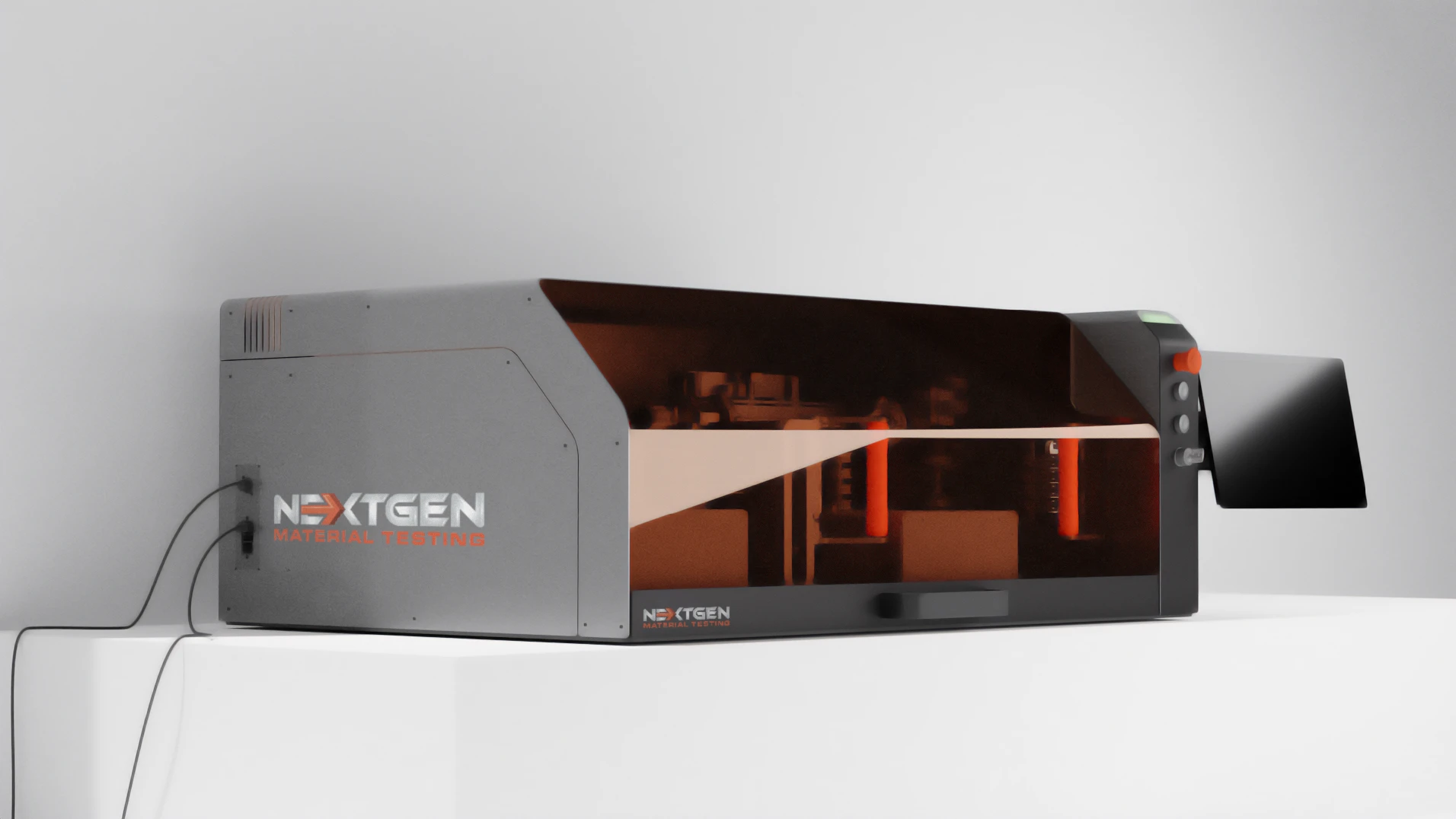
The chamber closed for a cycle.
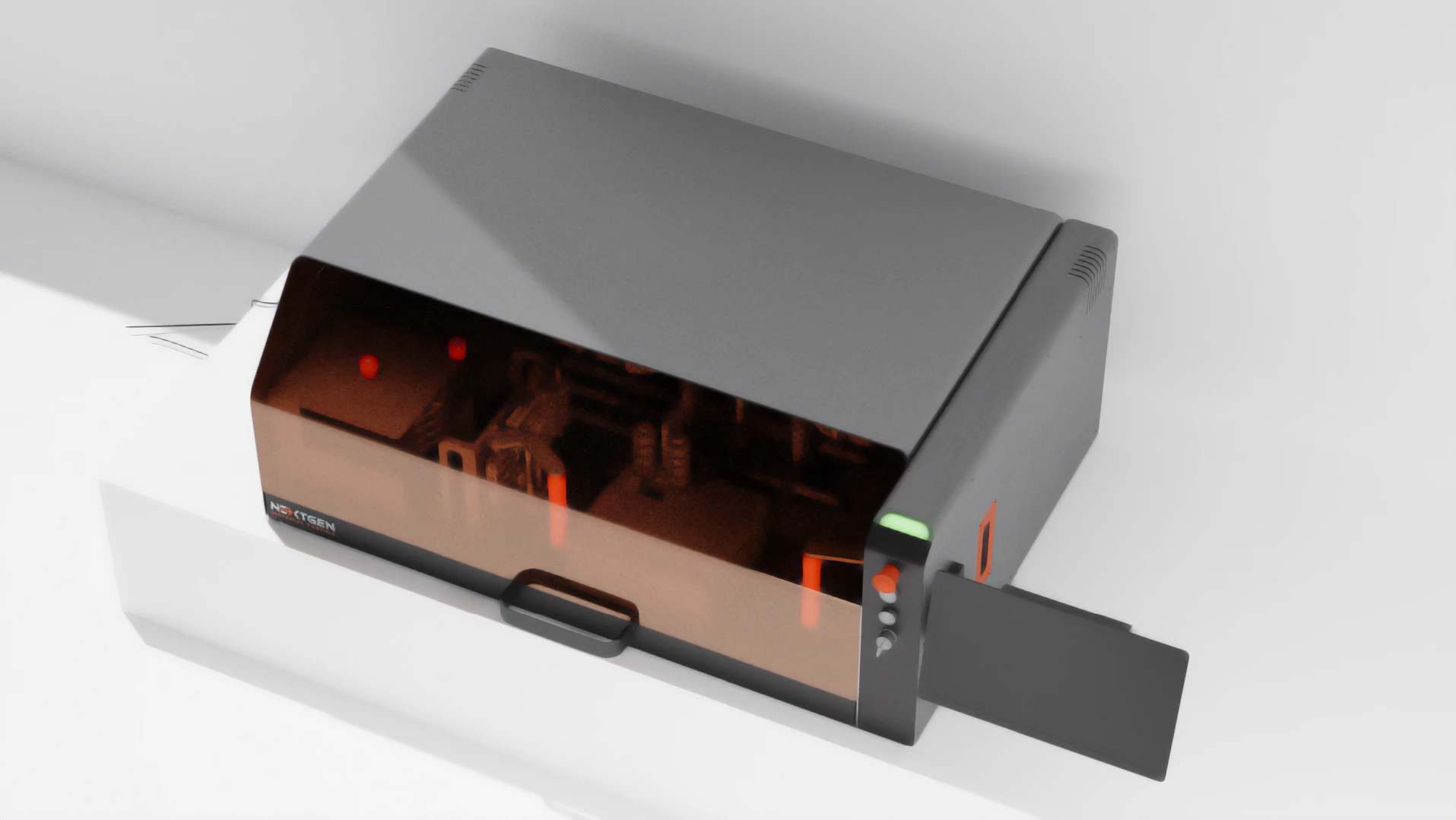
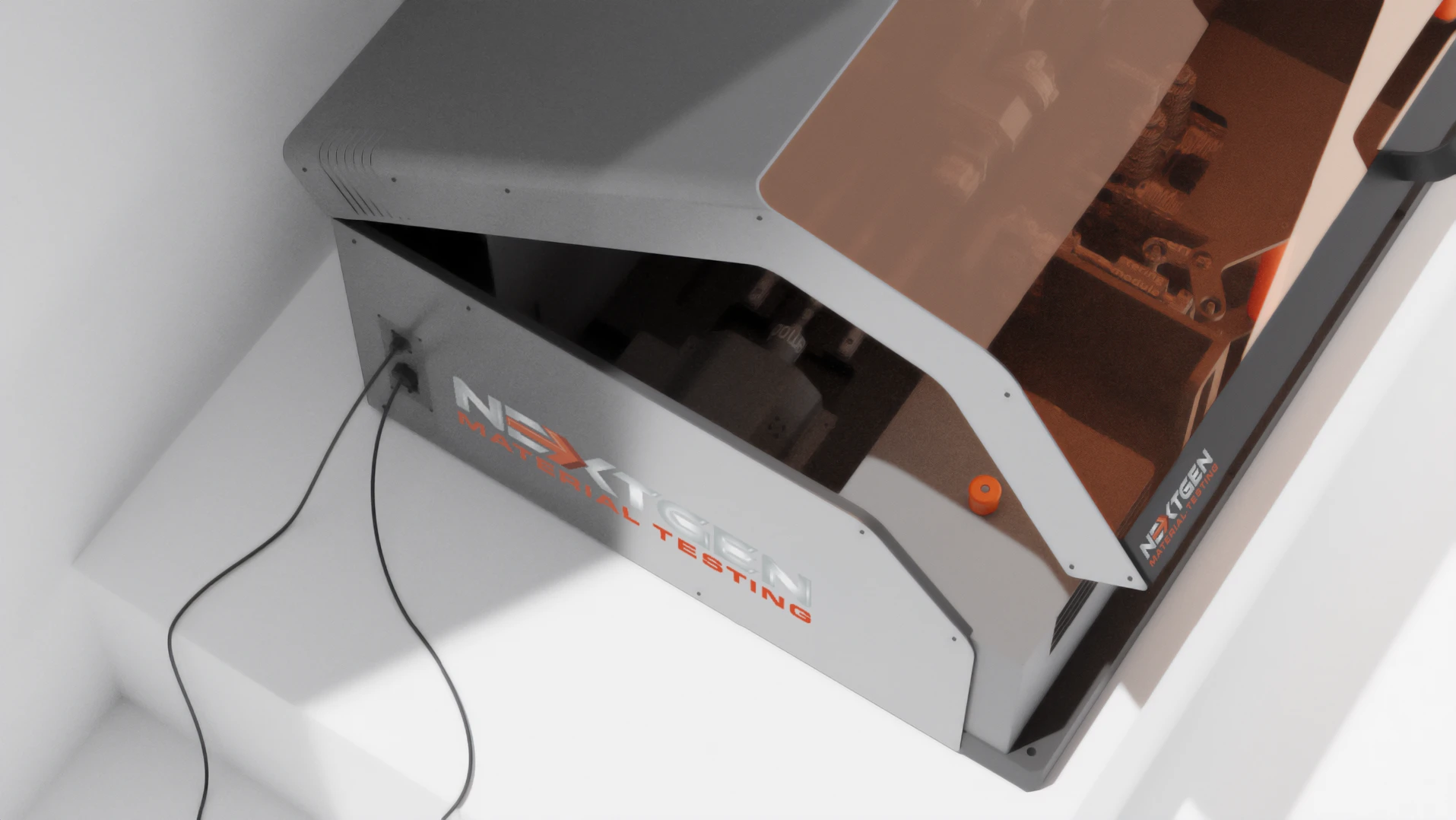
NG-AutoPol in operation.
NG-AutoPol Features
Everything on this list exists to keep one variable out of the fatigue result: the surface the specimen was tested with.
Automatic longitudinal polishing
Controlled single-contact polishing, which is what makes the finish repeatable rather than operator-dependent.
Adjustable parameters
Rotation, force, speed and polishing length are all set from the touchscreen.
Multi-grit switching
The machine moves through up to four sandpaper types inside one polishing cycle.
Integrated cleaning
The sandpaper is cleaned during the cycle, which extends its life and keeps the cut uniform.
Stable mechanical design
Polishing accuracy and pressure stay uniform across sample types.
Process memory
Polishing configurations are saved and recalled, so a repeat run is identical to the first.
Compact and low maintenance
A footprint that fits a busy laboratory bench area.
Low-stress finishing
Pressure control and linear motion keep residual stress out of the finished surface.
Multi-geometry fixtures
Interchangeable fixtures cover cylindrical, flat, small and large specimens.
NADCAP-ready option
A NADCAP-ready configuration is available for aerospace and other accredited testing environments.
NG-AutoPol Model Configurations
The machine is built in five configurations. They differ by the specimen the fixture is designed around, and every one of them holds EN 6072 compliance for stress-free surface finishing:
| Model | Description |
|---|---|
| SCS - Standard Cylindrical Specimen | Cylindrical specimens of various diameters and lengths, in full compliance with EN 6072. |
| ESCS - Extremely Small Cylindrical Specimen | Micro-sized cylindrical specimens that need precise control and delicate surface finishing. |
| ELCS - Extremely Large Cylindrical Specimen | Oversized cylindrical samples, with the same polishing quality and stability. |
| FS - Flat Specimen | Flat tensile specimens, with a consistent longitudinal finish across the whole sample area. |
| C - Customized Configuration | A tailor-made build for a specific laboratory or industrial requirement. |
Specimen Compatibility
Round and flat specimens are both covered, in the standard and radiused geometries used by the fatigue methods:

Standard cylindrical specimen.

Continuous radius cylindrical specimen.

Double radius cylindrical specimen.
The same three geometries in the flat family:

Standard flat specimen.

Continuous radius flat specimen.

Double radius flat specimen.
NG-AutoPol Technical Specifications
Check the polishing length and the force range against the specimens you prepare. The single-contact motion and the four-grit sequence are what let one cycle take a machined surface down to a fatigue-ready finish.
| Specification | NG-AutoPol |
|---|---|
| Polishing process | |
| Specimen Types | Cylindrical and flat specimens of various diameters and lengths |
| Process | Fully automatic longitudinal polishing |
| Contact Control | Controlled single contact: each area of the paper meets the specimen only once, which is what prevents over-polishing |
| Sandpaper Force | 5-50 N, adjustable |
| Linear Speed | 10-100 mm/s, in 10 mm/s increments |
| Active Polishing Length | 5-280 mm, adjustable |
| Sandpaper Grits | Multiple grits, for example 200, 400, 600, 800 |
| Grit Switching | Automatic switching between up to four sandpaper grades in one cycle |
| Control | |
| Interface | Touchscreen control of all parameters, with process visualization |
| Optional Modes | Data logging and calibration modes for advanced testing workflows |
| Machine | |
| Overall Dimensions (W × L × H) | 33.07″ × 48.82″ × 19.69″ (840 × 1240 × 500 mm) |
| Weight | 485 lbs (220 kg) |
Global Testing Standards

Standards supported across the NextGen range.
Surface preparation is not a detail the fatigue methods leave to the operator. A fatigue crack starts at the surface, and a machining mark left across the gauge section behaves like a notch: it concentrates stress and shortens the life of the specimen. That is why the standards below prescribe how the specimen is finished, and why the finish has to be traceable rather than visually acceptable.
The same logic runs through the wider NextGen range, which is built to the ISO, ASTM, DIN, GB, BSI and JIS families. On the NG-AutoPol it comes down to four documents: two ASTM fatigue methods, the European S-N standard, and the aerospace accreditation programme that audits how the work is done.
Each of them is summarised below.
ASTM E466
Force-controlled constant amplitude axial fatigue. Defines the procedure for fatigue testing of metallic samples under a constant axial load amplitude, where strains remain mostly elastic, and is used to assess fatigue life under repeat loading.
ASTM E606
Strain-controlled fatigue testing. Covers fatigue tests where the strain rather than the stress is controlled across cycles, and is used to study low-cycle fatigue and the plastic deformation that comes with repeated loading.
EN 6072
Metallic materials, constant amplitude fatigue testing by the S-N method. The European standard for S-N fatigue data under constant amplitude loading, aligning specimen geometry and test method between laboratories.
NADCAP
Materials testing accreditation used in aerospace and related industries to validate that testing, preparation and inspection meet quality and traceability requirements. The NG-AutoPol can be supplied in a NADCAP-ready configuration.
What Ships With the NG-AutoPol
The machine arrives ready to run:
- NG-AutoPol main unit, with the integrated touchscreen control
- Interchangeable specimen fixtures for cylindrical, extremely small or large, and flat specimens
- A sandpaper roll set in multiple grit sizes for progressive finishing
- Operation and training package: user manual and step-by-step instructional videos
Tell us the specimen geometry and the fatigue standard you test to, and we will confirm which NG-AutoPol configuration and which grit sequence suit your work.
For Laboratories
Need Additional Quality Control Equipment to Build Your Laboratory?
Tensile specimen preparation is only one part of a complete quality control laboratory. NextGen can help you equip your entire lab with impact testers, notching and broaching systems, cooling chambers, tensile testers, hardness testers, specimen preparation equipment, and other supporting solutions, all coordinated as one complete project.
- One partner to equip your complete laboratory
- Installation, training, calibration
- Support for the life of the equipment
FAQs
Yes, NextGen provides comprehensive support for laboratories preparing for compliance audits and certification reviews. The company assists clients in generating and maintaining documentation that demonstrates adherence to international standards such as ASTM, EN, ISO, and NADCAP. This includes guidance on process validation, specimen preparation procedures, and calibration traceability required for audit verification.
NextGen’s technical specialists can help structure documentation packages that align with common quality systems, including AS9100, ISO 17025, and NADCAP Materials Testing. The NG-AutoPol system’s built-in features—such as recipe memory, data logging, and process parameter recording—further simplify compliance tracking and audit preparation.
Click here to learn more about the product or here to receive a personalized quote.
The NG-AutoPol system is designed for ease of use and requires only minimal operator training to achieve professional results. Its intuitive touchscreen interface allows users to set polishing parameters, such as force, speed, and polishing length, through a clear, step-by-step menu. This automation eliminates the need for manual adjustments or prior CNC experience, making the system accessible even to new laboratory personnel.
While the interface is user-friendly, a short familiarization session is recommended to help operators understand best practices for specimen placement, fixture selection, and sandpaper maintenance. Experienced technicians can also take advantage of advanced settings, such as data logging and recipe storage, to standardize polishing processes across multiple tests.
Click here to learn more about the product or here to receive a personalized quote.
Yes, the NG-AutoPol system complies with ASTM E8, which defines the methods for tensile testing of metallic materials. The machine’s precise longitudinal polishing process ensures that specimens prepared for tensile testing fully meet the dimensional, surface, and alignment requirements outlined in this standard. By minimizing residual stresses and machining damage, NG-AutoPol helps laboratories produce specimens that deliver accurate and repeatable tensile strength, yield strength, and elongation measurements.
ASTM E8 is one of the most widely recognized standards in materials testing, specifying procedures for determining mechanical properties of metals under uniaxial tension. It includes guidance on specimen geometry, preparation, alignment, and testing rate to ensure uniform results across laboratories. Compliance with ASTM E8 confirms that the NG-AutoPol system supports globally accepted preparation protocols, enabling consistent data for quality control, certification, and research applications.
Click here to learn more about the product or here to receive a personalized quote.
The NG-AutoPol system is available in five distinct model configurations, each optimized for a specific specimen type or laboratory requirement.
The SCS (Standard Cylindrical Specimen) model is designed for routine preparation of standard cylindrical specimens across a wide range of diameters and lengths, fully compliant with EN 6072 and ASTM fatigue testing geometries. The ESCS (Extremely Small Cylindrical Specimen) configuration specializes in micro-sized specimens that require precise pressure control and delicate surface finishing without deformation.
For large-diameter or elongated specimens, the ELCS (Extremely Large Cylindrical Specimen) model provides extended polishing length and reinforced stability to maintain uniform surface quality. The FS (Flat Specimen) configuration is tailored for flat tensile samples, ensuring even polishing pressure across the gauge width.
Finally, the C (Customized Configuration) model offers tailor-made solutions developed for laboratories with unique geometries, alloy types, or specialized testing standards, ensuring complete adaptability within any research or industrial environment.
Click here to learn more about the product or here to receive a personalized quote.
Yes, the NG-AutoPol system can be configured to operate in full compliance with NADCAP (National Aerospace and Defense Contractors Accreditation Program) requirements. Its NADCAP-ready configuration supports the strict process control, documentation, and traceability demanded by accredited aerospace and defense testing laboratories. The system’s automated polishing parameters—such as force, speed, and contact length—are fully programmable and repeatable, allowing consistent preparation of tensile and fatigue specimens that meet certified process validation standards.
NADCAP is an internationally recognized accreditation program managed by the Performance Review Institute (PRI), designed to ensure uniform quality and process reliability in the aerospace supply chain. It covers various testing disciplines, including materials testing, heat treatment, and non-destructive evaluation. NG-AutoPol’s integration of recipe memory, data logging, and repeatable automation directly aligns with NADCAP’s emphasis on process standardization, ensuring compliance and audit readiness for laboratories operating under aerospace quality systems such as AS9100 and ISO 17025.
Click here to learn more about the product or here to receive a personalized quote.
Yes, the NG-AutoPol system complies with ASTM E466, which governs the force-controlled constant amplitude axial fatigue testing of metallic materials. The system’s precise longitudinal polishing process ensures that specimens used in fatigue testing meet the stringent surface quality and geometry requirements outlined in this standard. By eliminating residual machining marks and surface stress, NG-AutoPol enables accurate and repeatable fatigue life evaluations under cyclic loading conditions.
ASTM E466 specifies the procedures for determining the fatigue strength of metals subjected to repeated axial stresses of constant amplitude. It defines the preparation, alignment, and finish requirements of test specimens, as surface integrity plays a crucial role in fatigue performance. Through controlled polishing parameters such as force, speed, and contact length, NG-AutoPol produces specimens with the low-stress surface finishes required for high-quality fatigue data collection and long-term material reliability studies.
Click here to learn more about the product or here to receive a personalized quote.
Yes, the NG-AutoPol system is engineered to polish both cylindrical and flat tensile specimens with equal precision and repeatability. The system includes interchangeable fixtures that allow operators to quickly switch between specimen types without the need for additional tools or extensive recalibration.
For cylindrical specimens, the polishing motion follows the longitudinal axis of the gauge section, ensuring an even surface finish around the entire circumference. The system maintains consistent pressure and linear speed, which helps remove machining marks and residual stress without distorting the geometry.
For flat specimens, NG-AutoPol applies uniform polishing across the width of the gauge section, achieving the same low-stress surface condition required for accurate tensile and fatigue testing. This dual compatibility allows laboratories to use a single system for multiple testing standards and specimen types.
Click here to learn more about the product or here to receive a personalized quote.
The NG-AutoPol system offers several major advantages over traditional manual polishing methods, primarily through automation, precision, and repeatability. Unlike manual processes, which rely heavily on operator skill and can introduce inconsistencies, NG-AutoPol automates all key parameters—pressure, speed, polishing length, and grit transition—ensuring that every specimen receives identical treatment. This eliminates human variability and improves test-to-test reproducibility in tensile and fatigue analyses.
Manual polishing often generates uneven surfaces, localized heating, or micro-scratches that alter material properties and compromise test accuracy. NG-AutoPol’s controlled single-contact polishing motion prevents over-polishing and residual stress formation, producing smooth, low-distortion surfaces ideal for mechanical testing.
Additionally, the automated system significantly reduces operator fatigue and preparation time while maintaining strict compliance with ASTM, EN, and NADCAP standards. The result is a cleaner, faster, and more reliable polishing process that enhances data consistency and laboratory productivity.
Click here to learn more about the product or here to receive a personalized quote.
The NG-AutoPol system is offered in several model configurations tailored to different specimen geometries and laboratory needs.
The SCS (Standard Cylindrical Specimen) model is optimized for typical cylindrical specimens in tensile or fatigue tests.
The ESCS (Extremely Small Cylindrical Specimen) version is designed for small-diameter samples where precision and minimal handling distortion are critical.
For large or elongated cylindrical specimens, the ELCS (Extremely Large Cylindrical Specimen) configuration offers extended polishing length and reinforced stability.
The FS (Flat Specimen) model specializes in flat tensile specimens, applying uniform polishing across the full gauge width.
Lastly, the C (Customized Configuration) model allows bespoke adaptations—such as unusual dimensions, hybrid specimen types, or special material requirements—designed in collaboration with NextGen’s engineering team to match specific laboratory workflows.
Click here to learn more about the product or here to receive a personalized quote.
NextGen provides extensive after-sales and technical support to ensure that every NG-AutoPol system continues to perform at peak precision throughout its service life. Clients receive lifetime access to expert assistance for troubleshooting, parameter optimization, and workflow integration. The technical team can provide remote diagnostics, process verification, and operational guidance to help laboratories maintain consistent specimen quality.
In addition to remote support, on-site visits can be arranged for installation, calibration, and staff training. NextGen also maintains a global inventory of spare parts and consumables to minimize downtime and facilitate quick replacements.
Click here to learn more about the product or here to receive a personalized quote.
The NG-AutoPol system is designed to handle a broad range of metallic materials and specimen geometries used in tensile and fatigue testing. It can polish both cylindrical and flat specimens, including standard, continuous-radius, and double-radius configurations. This versatility allows laboratories to prepare samples that comply with multiple international standards, including ASTM E8, ASTM E466, ASTM E606, and EN 6072.
The system effectively processes materials such as carbon steels, stainless steels, aluminum alloys, titanium, nickel-based superalloys, and other advanced engineering metals. Through adjustable polishing force (5–50 N) and variable speed control (10–100 mm/s), operators can fine-tune the process for materials ranging from soft metals to high-strength alloys without inducing additional surface stress.
Interchangeable fixtures provide stable clamping and alignment for different specimen shapes and sizes, ensuring uniform longitudinal polishing across all surfaces. This adaptability makes NG-AutoPol suitable for both routine quality control and advanced R&D testing environments.
Click here to learn more about the product or here to receive a personalized quote.
The longitudinal polishing process used in the NG-AutoPol system is designed to remove surface irregularities and residual stresses along the specimen’s axis without altering its geometry or introducing new defects. The process operates through controlled linear motion, where the sandpaper moves parallel to the length of the specimen under precisely regulated pressure and speed.
Each section of the abrasive paper makes a single contact with the specimen surface—this single-contact motion prevents overheating, over-polishing, and distortion of the gauge section. The system’s automation maintains a constant polishing force and consistent contact length, ensuring an even surface finish and low residual stress distribution.
Throughout the cycle, the NG-AutoPol can automatically switch between multiple sandpaper grits, progressing from coarse to fine abrasives to achieve the desired smoothness. The result is a uniform, mirror-like finish that meets the requirements of tensile and fatigue testing standards, improving test repeatability and data accuracy.
Click here to learn more about the product or here to receive a personalized quote.
Yes, the NG-AutoPol system allows operators to save and recall complete polishing programs for future use through its integrated process memory function. Each saved program can store all critical parameters, including polishing force, linear speed, contact time, active polishing length, and grit sequence. This enables laboratories to maintain standardized specimen preparation procedures across multiple operators, shifts, or testing campaigns.
By using saved programs, operators can reproduce identical surface finishes and stress conditions on every specimen, ensuring consistent results that meet ASTM, EN, and NADCAP compliance requirements. This feature is particularly valuable for high-volume testing environments and accredited laboratories where traceability and process repeatability are essential.
Click here to learn more about the product or here to receive a personalized quote.
Longitudinal polishing is a critical step in preparing tensile and fatigue specimens because it directly influences the accuracy, repeatability, and reliability of mechanical testing results. During machining operations such as turning or milling, surface irregularities and residual stresses can develop along the specimen’s gauge length. These imperfections often lead to premature crack initiation, localized strain concentration, or inconsistent stress distribution during testing.
By polishing along the longitudinal axis—the same direction as the applied test load—the NG-AutoPol system removes machining marks and surface defects without introducing cross-directional scratches or new stress points. This produces a smooth, low-stress surface that allows the specimen to deform naturally under load, providing true material behavior rather than surface-induced artifacts.
For fatigue testing, longitudinal polishing is especially vital: it prevents early crack initiation at micro-scratches and ensures that fatigue failure occurs due to intrinsic material properties.
Click here to learn more about the product or here to receive a personalized quote.
The NG-AutoPol system is an automatic longitudinal polisher designed to prepare metallic specimens for tensile and fatigue testing. Its purpose is to remove machining marks, grinding stress, and residual surface stress that often remain after turning or milling operations. By polishing along the specimen’s longitudinal axis, the system produces a uniform, low-stress surface that accurately reflects the material’s intrinsic mechanical behavior.
This precise surface preparation is essential for generating reliable tensile and fatigue test results. In tensile testing, it ensures that elongation and yield measurements are not distorted by surface imperfections. In fatigue testing, it minimizes premature crack initiation caused by microscopic scratches or stress concentrations.
Click here to learn more about the product or here to receive a personalized quote.
The NG-AutoPol system is designed to accommodate a wide variety of specimen dimensions and geometries used in tensile and fatigue testing. It supports both cylindrical and flat specimens, including standard, continuous-radius, and double-radius configurations. This flexibility allows laboratories to prepare samples for multiple international testing standards using a single polishing platform.
Standard cylindrical specimens typically range from 0.12 to 1.0 inch (3 to 25 mm) in diameter and up to 11 inches (280 mm) in polishing length. Flat specimens can vary in width and thickness depending on the test method, and the system automatically adjusts pressure and motion to maintain uniform surface quality across the entire gauge section.
Interchangeable fixtures enable quick adaptation between specimen types and sizes, ensuring tight alignment and consistent longitudinal surface finish.
Click here to learn more about the product or here to receive a personalized quote.
The NG-AutoPol system is factory-calibrated before shipment and ready for immediate operation upon installation. Each unit undergoes quality verification to confirm that motion control, polishing force, and speed parameters meet specification. This ensures that laboratories receive a system already compliant with ASTM, EN, and NADCAP process requirements.
While routine recalibration is not required for general use, periodic verification is recommended as part of standard laboratory maintenance or when the system is used in accredited environments. Verification typically involves checking polishing force, linear speed accuracy, and fixture alignment to confirm that all parameters remain within tolerance.
NextGen provides detailed calibration guidelines and, if needed, certified verification services traceable to international standards.
Click here to learn more about the product or here to receive a personalized quote.
The NG-AutoPol system is equipped with a fully automated multi-grit polishing function that allows up to four sandpaper grades to be used sequentially in a single polishing cycle. This feature enables progressive surface refinement without manual intervention, ensuring consistent surface quality and repeatability across all specimens.
During operation, the system automatically transitions from coarse to fine grits based on the programmed sequence and polishing time set by the operator. Each sandpaper section makes controlled, single-contact passes over the specimen, preventing over-polishing and maintaining the correct surface geometry. The polishing force, linear speed, and contact length are precisely regulated for every stage to achieve an even and low-stress finish.
An integrated cleaning mechanism continuously removes debris from the sandpaper surface between grit changes, extending consumable life and maintaining optimal polishing efficiency.
Click here to learn more about the product or here to receive a personalized quote.
The replacement frequency for sandpaper and consumables on the NG-AutoPol system depends on the specimen material, polishing parameters, and production volume. Under normal laboratory conditions, sandpaper rolls typically last for 50–100 specimens per grit, depending on hardness and surface condition of the materials being prepared.
The integrated cleaning system extends sandpaper life by removing debris during each polishing cycle, but replacement is still recommended once surface performance begins to decline or the polishing time increases noticeably. Other consumables, such as cleaning pads and fixture inserts, should be inspected weekly and replaced as needed to maintain uniform pressure and finish quality.
NextGen advises keeping spare sandpaper rolls in multiple grit grades, commonly 200, 400, 600, and 800. Regular monitoring and timely replacement of consumables guarantee consistent surface results, prevent over-polishing, and sustain compliance with tensile and fatigue testing standards.
Click here to learn more about the product or here to receive a personalized quote.
The NG-AutoPol system is equipped with multiple built-in safety mechanisms designed to protect both the operator and the equipment during polishing operations. Its enclosed design isolates the polishing area, preventing accidental contact with moving parts or abrasive surfaces. The transparent guard allows visual monitoring of the process while keeping debris and dust contained within the chamber.
Automatic pressure and speed control help prevent overloading and overheating of specimens, while the software continuously monitors system parameters to maintain safe operating conditions. The emergency stop function immediately halts all motion if an irregularity or unsafe condition occurs.
Click here to learn more about the product or here to receive a personalized quote.
The NG-AutoPol system is supplied with a comprehensive manufacturer’s warranty that covers all mechanical, electrical, and automation components against defects in materials and workmanship. This warranty provides full protection for a standard period, typically one year from the date of installation.
The coverage includes access to replacement parts, technical consultation, and remote troubleshooting support provided directly by NextGen’s engineering team. Extended warranty and maintenance programs are also available for clients requiring longer-term protection and periodic performance verification.
Consumable items such as sandpaper rolls and fixtures are excluded from the warranty, as they are subject to normal wear and replacement. With this warranty structure, NextGen ensures dependable long-term support, rapid response in case of technical issues, and continued system performance consistent with international laboratory standards.
Click here to learn more about the product or here to receive a personalized quote.
Yes, the NG-AutoPol system is specifically designed for the preparation of specimens used in both tensile and fatigue testing. Its automated longitudinal polishing process removes residual machining marks and surface stresses that commonly occur during turning or milling, ensuring that each specimen meets the stringent surface finish and dimensional requirements defined by international standards such as ASTM E8, ASTM E466, ASTM E606, and EN 6072.
For tensile testing, the system produces smooth, low-stress surfaces along the gauge length, allowing accurate measurement of yield strength, elongation, and ultimate tensile strength. For fatigue testing, the precise polishing process eliminates microscopic imperfections that can prematurely initiate cracks, thereby improving test repeatability and fatigue life accuracy.
Click here to learn more about the product or here to receive a personalized quote.
The NG-AutoPol combines intelligent automation with precise mechanical control to deliver uniform, low-stress surface finishes for tensile and fatigue specimens. Designed as a complete, ready-to-operate unit, it integrates a touchscreen interface for parameter setup, interchangeable fixtures for various specimen types, and a progressive multi-grit polishing system for full process automation.
All polishing parameters are adjustable directly from the control panel, allowing operators to fine-tune force, speed, and polishing length to match specific material and geometry requirements. The stable mechanical frame and controlled single-contact motion ensure that each surface is polished evenly, without overheating or overworking the specimen.
The table below summarizes the system’s main specifications:
- Adjustable polishing force: 5–50 N
- Linear speed: 10–100 mm/s, in 10 mm/s increments
- Polishing length: 5–280 mm
- Automatic switching between up to 4 sandpaper grades per cycle
- Fully compatible with cylindrical and flat specimens
- Touchscreen interface with visualization and memory function
- Integrated cleaning system for extended sandpaper life
- Stable design for precise linear polishing and minimal residual stress
Click here to learn more about the product or here to receive a personalized quote.
The NG-AutoPol system controls the entire polishing process automatically through a combination of precise motion control, programmable pressure, and real-time feedback monitoring. Operators set parameters such as polishing force, linear speed, contact time, and active polishing length directly on the touchscreen interface, allowing complete customization for each specimen type.
Once the process starts, the system maintains stable contact between the sandpaper and specimen, meaning that each section of the surface is polished only once, known as single-contact motion. This prevents overheating, distortion, or over-polishing of the gauge section.
Click here to learn more about the product or here to receive a personalized quote.
The NG-AutoPol operates on a standard three-phase power supply rated at AC 220 V ±10%, 50/60 Hz, making it compatible with most laboratory electrical infrastructures worldwide. The system’s power configuration ensures consistent energy delivery for smooth and stable operation during high-precision polishing cycles.
A grounded electrical connection is mandatory to guarantee safe operation and prevent electrical interference with sensitive components. The power line should also be protected by an appropriate circuit breaker to safeguard against voltage spikes or current overloads.
Because the machine uses intelligent load management and energy-efficient motor control, overall power consumption remains low relative to its performance capacity.
Click here to learn more about the product or here to receive a personalized quote.
The NG-AutoPol system is designed for low maintenance, requiring only periodic inspection and routine servicing to maintain peak performance. Operators should regularly check the condition of sandpaper rolls, cleaning elements, and specimen fixtures to ensure smooth and consistent operation. Any worn or clogged consumables should be replaced promptly to preserve polishing quality.
The linear guides, drive mechanisms, and pressure components should be kept free of debris and lightly cleaned after every few cycles, especially when working with materials that produce fine dust or metallic residue. Electrical and pneumatic connections should be inspected periodically to confirm proper contact and stability.
It is also recommended to verify polishing pressure and speed calibration every few months to ensure accurate parameter control.
Click here to learn more about the product or here to receive a personalized quote.
Yes, the NG-AutoPol system complies with EN 6072, which specifies the method for conducting constant amplitude fatigue tests on metallic materials using the S–N approach. The system’s automated longitudinal polishing process provides the uniform surface finish and dimensional consistency required for accurate fatigue strength determination. By maintaining controlled polishing pressure, linear speed, and contact length, NG-AutoPol minimizes residual stresses that could otherwise alter fatigue performance and distort test results.
EN 6072 is the European standard equivalent to ASTM E466, focused on generating S–N curves that describe the relationship between stress amplitude and the number of cycles to failure. The standard defines specimen geometry, preparation methods, and surface finish requirements to ensure reproducibility and comparability of fatigue data among laboratories. Through its precision-controlled automation, NG-AutoPol produces specimens that meet EN 6072 compliance, ensuring reliable fatigue data for both industrial qualification and academic research applications.
Click here to learn more about the product or here to receive a personalized quote.
Yes, the NG-AutoPol system can be customized to meet specific specimen geometries, material properties, and laboratory workflow requirements. NextGen’s engineering team works directly with clients to design tailored configurations that align with non-standard sample dimensions, specialized polishing lengths, or unique surface finish criteria.
Custom solutions may include modified fixtures for irregularly shaped or oversized specimens, extended polishing ranges, or adjusted pressure and speed capabilities for advanced alloys and composite materials. Software customization is also available, allowing laboratories to define unique polishing sequences, add process logging options, or integrate data export for digital quality systems.
These flexible customization options make NG-AutoPol suitable for research institutes, aerospace facilities, and production laboratories that require precise alignment between specimen preparation and specific testing methodologies.
Click here to learn more about the product or here to receive a personalized quote.
Yes, all consumables and spare parts for the NG-AutoPol system are readily available directly from NextGen and its authorized distributors. The company maintains a consistent global inventory to support laboratories that operate under tight testing schedules and require minimal downtime.
Common consumables, such as sandpaper rolls in various grit sizes, cleaning components, and fixture elements, are kept in stock and can be shipped quickly upon request. Spare parts, including drive assemblies, sensors, and control components, are also available for immediate replacement.
NextGen’s technical support team assists customers in identifying compatible parts and offers guidance on preventive maintenance to extend component life.
Click here to learn more about the product or here to receive a personalized quote.
Yes, NextGen offers full installation and training services for the NG-AutoPol system to ensure seamless integration into your laboratory workflow. On delivery, a qualified technician can perform on-site installation, calibrating the machine, aligning fixtures, and verifying that all polishing parameters operate within specification. Following installation, operators receive structured training covering machine setup, parameter configuration, specimen loading, routine maintenance, and best practices for longitudinal polishing.
For international or remote clients, NextGen also provides virtual training sessions using guided video instructions, screen sharing, and step-by-step walkthroughs.
Click here to learn more about the product or here to receive a personalized quote.
The NG-AutoPol system offers full control over all critical polishing parameters—force, linear speed, and polishing length—allowing laboratories to tailor each process to specific material types and specimen geometries. These parameters are configured directly through the touchscreen interface, where users can fine-tune values with precision and store preferred settings as reusable recipes.
The polishing force is adjustable from 5 to 50 N, enabling controlled surface contact for both delicate and hard materials. The linear speed can be set between 10 and 100 mm/s in 10 mm/s increments, providing flexibility for different polishing intensities and finish requirements. The active polishing length is selectable from 5 to 280 mm, accommodating a wide range of specimen sizes used in tensile and fatigue testing.
Click here to learn more about the product or here to receive a personalized quote.
The duration of a complete polishing cycle on the NG-AutoPol system depends on the selected polishing parameters, specimen geometry, and number of grit stages used. Under typical laboratory conditions, a full multi-grit cycle, using up to four sandpaper grades, takes approximately 5 to 15 minutes per specimen, including automated grit transitions and cleaning sequences.
For lighter surface conditioning or fine finishing of previously machined samples, shorter cycles of 2 to 5 minutes are common. Conversely, when processing specimens with rougher surfaces or higher hardness, the polishing time may extend slightly to achieve the required surface uniformity and low residual stress profile.
Because the process is fully automated, the machine maintains consistent polishing time and pressure across all cycles, ensuring repeatable surface quality and minimizing operator involvement. This efficiency allows laboratories to prepare multiple specimens per hour while maintaining high precision and compliance with international tensile and fatigue testing standards.
Click here to learn more about the product or here to receive a personalized quote.
Yes, the NG-AutoPol is a fully automated polishing system designed to minimize operator involvement and eliminate manual inconsistencies. Once the parameters—such as polishing force, speed, and length—are entered through the touchscreen interface, the system independently manages every step of the process, including pressure control, polishing motion, grit transitions, and cleaning cycles.
The automation extends to the multi-grit switching feature, which allows up to four sandpaper types to be used sequentially in one continuous polishing cycle. The system automatically transitions between these abrasives with precise timing and pressure control, ensuring uniform surface quality across specimens.
Click here to learn more about the product or here to receive a personalized quote.
The NG-AutoPol system features an intuitive touchscreen interface that gives operators complete control over all polishing parameters in a clear and accessible format. From this interface, users can easily set and adjust polishing force, linear speed, cycle time, and active polishing length. Real-time process visualization displays progress throughout each cycle, helping operators monitor specimen position, pressure, and performance without interrupting the operation.
The interface also includes a process memory function, allowing users to save and recall polishing recipes for repeated test setups. This ensures that every specimen receives identical treatment, improving repeatability and minimizing user error.
Even operators with limited technical background can quickly learn to manage the system, as the interface is designed for straightforward, menu-driven operation.
Click here to learn more about the product or here to receive a personalized quote.
The NG-AutoPol stands out from conventional specimen polishing systems through its combination of automation, precision control, and flexibility for multiple specimen types. Unlike traditional polishers that rely on manual operation or rotational motion, NG-AutoPol uses a fully automated longitudinal single-contact polishing process, which ensures each section of sandpaper touches the specimen only once. This eliminates over-polishing, reduces heat generation, and preserves the original material properties.
Another key difference is its multi-grit automatic transition system, allowing up to four sandpaper grades to be used within a single cycle without manual intervention. Combined with real-time monitoring, programmable force (5–50 N), and variable linear speed (10–100 mm/s), the system delivers consistent, repeatable surface finishes ideal for tensile and fatigue testing.
The system also integrates a touchscreen interface, process memory function, and NADCAP-ready configuration, making it suitable for both research and certified industrial laboratories. This balance of automation, accuracy, and compliance sets NG-AutoPol apart as a high-end, process-controlled specimen preparation solution.
Click here to learn more about the product or here to receive a personalized quote.
The NG-AutoPol should be installed in a clean, dry, and temperature-controlled laboratory environment to guarantee stable performance and surface finish quality. The system operates best within an ambient temperature range of 50–95 °F (10–35 °C) and at moderate humidity levels to prevent condensation or corrosion of mechanical parts.
It must be placed on a stable, level surface capable of supporting its weight and resisting vibration, as even minor instability can affect polishing uniformity. The surrounding area should provide enough clearance, ideally at least 24 inches (60 cm) on all sides, for safe operation, specimen handling, and maintenance access.
A three-phase 220 V ±10%, 50/60 Hz grounded power connection is required for electrical safety and consistent performance. The environment should also be free from excessive dust, moisture, or chemical vapors that could interfere with the oil circulation or polishing process.
Click here to learn more about the product or here to receive a personalized quote.
Yes, the NG-AutoPol system can be seamlessly integrated into modern automated and digital laboratory workflows. Its fully programmable operation and optional data logging module allow polishing parameters, such as speed, pressure, and polishing length, to be recorded, stored, and exported for documentation or process tracking. This enables direct compatibility with laboratory information management systems (LIMS) and digital quality assurance platforms.
For facilities following NADCAP, AS9100, or ISO 17025 standards, these integration features help maintain traceability and consistent process documentation across specimen batches.
Click here to learn more about the product or here to receive a personalized quote.
The NG-AutoPol system complies with several major international standards that define the preparation and testing requirements for metallic specimens used in tensile and fatigue analysis. These include ASTM E8, ASTM E466, ASTM E606 / E606M, and EN 6072, as well as the aerospace-specific accreditation standard NADCAP.
Each of these standards outlines procedures for preparing and testing specimens under different mechanical conditions—such as tension, constant amplitude fatigue, and strain-controlled fatigue. NG-AutoPol’s automated longitudinal polishing process ensures that specimens meet the strict surface finish, dimensional, and stress-free requirements specified in these standards.
Click here to learn more about the product or here to receive a personalized quote.
The NG-AutoPol system features a compact and space-efficient design, making it ideal for laboratories with limited floor area. A minimum workspace of approximately 47 × 31 inches (120 × 80 cm) is recommended to accommodate the main unit, ensure safe operator access, and allow for proper ventilation around the equipment.
Additional clearance of at least 24 inches (60 cm) on each side is advised to facilitate routine maintenance, specimen handling, and consumable replacement. The system should be installed on a stable, level surface to maintain polishing accuracy and minimize vibration during operation.
Because the NG-AutoPol is a fully self-contained system, it does not require external components or auxiliary connections beyond the power supply. Its small footprint allows easy integration into existing tensile or fatigue specimen preparation workflows without major rearrangement of laboratory space.
Click here to learn more about the product or here to receive a personalized quote.
Related Products
TensileMill CNC MICRO – Flat Tensile Specimen Preparation Machine
TensileMill CNC MICRO is a compact 2-axis machine for preparing flat tensile and impact specimens in-house. Designed for metals, plastics, and composites, it supports standard and custom specimen geometries for QC, R&D, product development, and material qualification. Touchscreen-guided operation, a clean enclosed layout, and dedicated specimen-preparation workflow help non-machinists produce repeatable samples without relying on a full CNC shop.
Read more
GenMark 500 – Automatic Gauge Length Marking Machine
The GenMark 500 is a full-automatic gauge length marking machine for metal bar, rebar and wire rod, applying the reference marks used to determine elongation after fracture. A servo-driven lead screw sets 5 mm or 10 mm spacing and a pneumatic tungsten steel needle marks specimens up to 500 mm gauge length, supporting ISO 6892-1 and ASTM E8/E8M workflows. Adjustable marking force, quick needle changes, and fixtures for both round and flat samples keep specimen preparation consistent across operators and shifts.
Read more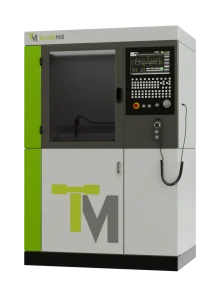
TensileMill CNC Classic Upgrade – Flat Tensile Specimen Preparation Machine
TensileMill CNC Classic Upgrade is a hybrid CNC specimen preparation system for machining flat tensile and Charpy/Izod impact specimens in-house. It combines TensileSoft™ guided software with a FANUC controller, standardized geometry templates, rigid cast-iron construction, and a servo-driven spindle. Support for ASTM E8, ASTM E23, ISO 6892-1, DIN 50125, and JIS Z2201 helps labs produce repeatable test-ready specimens.
Read more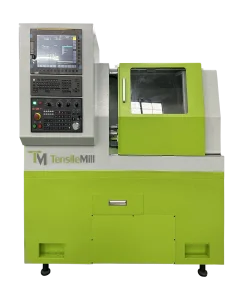
TensileTurn CNC Classic Upgrade – Round Tensile Specimen Preparation Machine
TensileTurn CNC Classic Upgrade is a compact CNC lathe for accurate, repeatable preparation of round tensile specimens. It supports specimen diameters up to 1.5 inches, materials up to 55 HRC, and multi-sample preparation with a triple clamping fixture. Touchscreen-guided TensileSoft workflows, standard specimen libraries, and full CNC access help labs reduce outsourcing and maintain consistent geometry.
Read more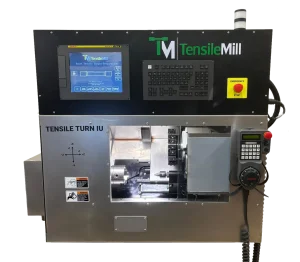
TensileTurn CNC Industrial Upgrade – Round Tensile Specimen Preparation Machine
TensileTurn CNC Industrial Upgrade is a compact CNC lathe for preparing standardized round tensile specimens in laboratory and production environments. Guided TensileSoft software lets operators select ASTM E8, ASTM B557, ISO, or DIN specimen profiles or enter custom dimensions. It machines round, square, or irregular stock into round bars, threaded tensile specimens, fatigue bars, and button-head samples while improving repeatability and turnaround.
Read more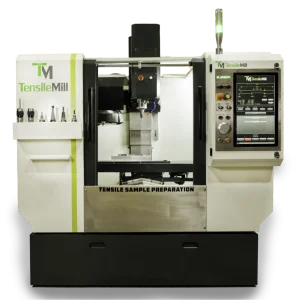
TensileMill CNC XL – Flat Tensile Specimen Preparation Machine
TensileMill CNC XL is a high-capacity flat tensile specimen preparation machine for laboratories and production floors handling larger or tougher materials. It combines extended table travel, increased spindle power, precision servo motors, Mach4-based control, and the TensileSoft interface to machine ASTM E8, ASTM A370, ISO 6892-1, and DIN 50125 specimens with repeatable dimensional accuracy, faster turnaround, and reduced outsourcing.
Read more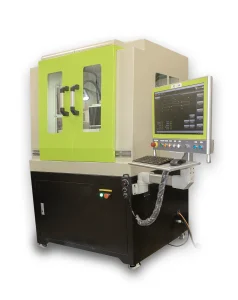
TensileMill CNC MINI – Compact Flat Tensile Specimen Preparation Machine
TensileMill CNC MINI is a compact flat tensile specimen preparation system for laboratories that need in-house CNC machining without a large industrial footprint. Built around a heavy cast-iron frame, smooth linear rails, high-powered servos, a 24,000 rpm ISO20 spindle, and guided TensileSoft/Carbon software, it prepares ASTM, ISO, DIN, and JIS-style specimens with repeatable geometry for metals, composites, and polymers.
Read more