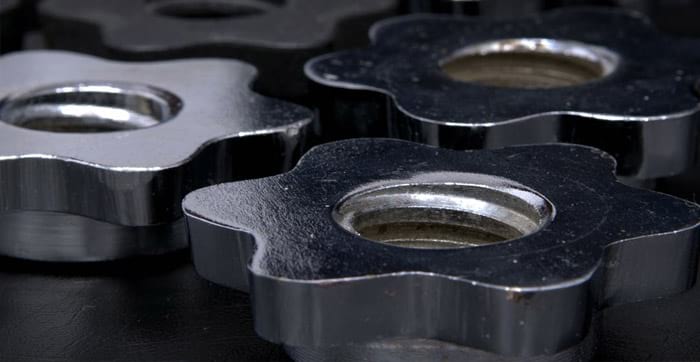
Metal Testing Equipment
Metal testing equipment is used to assess the mechanical and structural performance of metals during manufacturing, processing, and final quality control. These systems assess hardness, tensile strength, ductility, impact resistance, and other performance indicators of materials, thereby guaranteeing that they comply with stringent engineering and safety standards.
At NextGen Material Testing, we offer a comprehensive selection of certified metal testing machines that are engineered to guarantee precision, repeatability, and adherence to international standards such as ASTM, ISO, and DIN. Our material testing systems are capable of supporting a diverse array of applications, including advanced analysis in research laboratories and quality control on the factory floor.
NextGen provides fully integrated solutions that are customized to meet your operational needs, including hardness testing systems, universal testing machines (UTMs), impact testers, metallography preparation tools, and tensile specimen milling equipment.

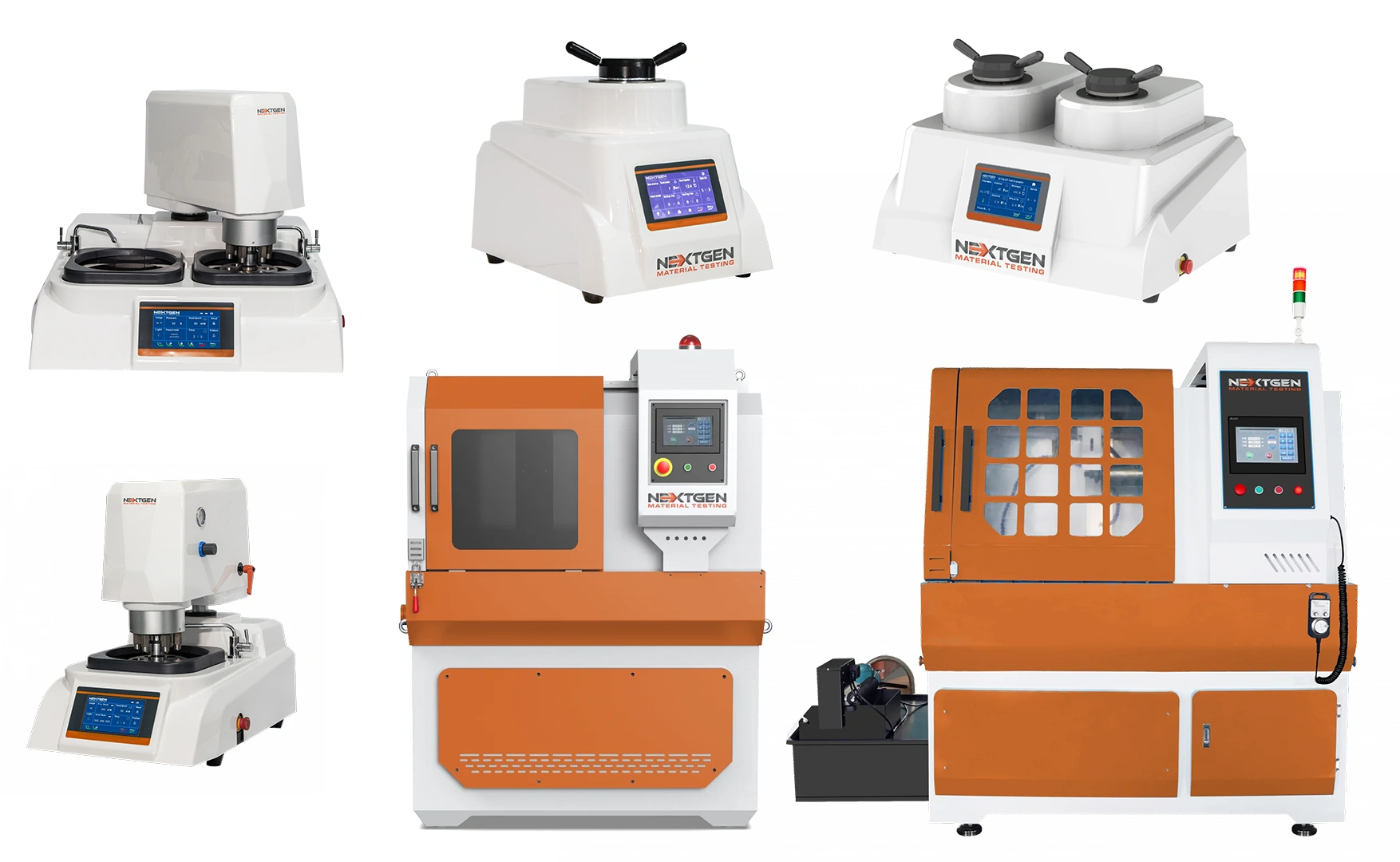 Metallography plays a critical role in understanding the internal structure and grain behavior of metals. Before any microstructural analysis or surface testing can take place, samples must be properly prepared. NextGen offers a complete suite of
 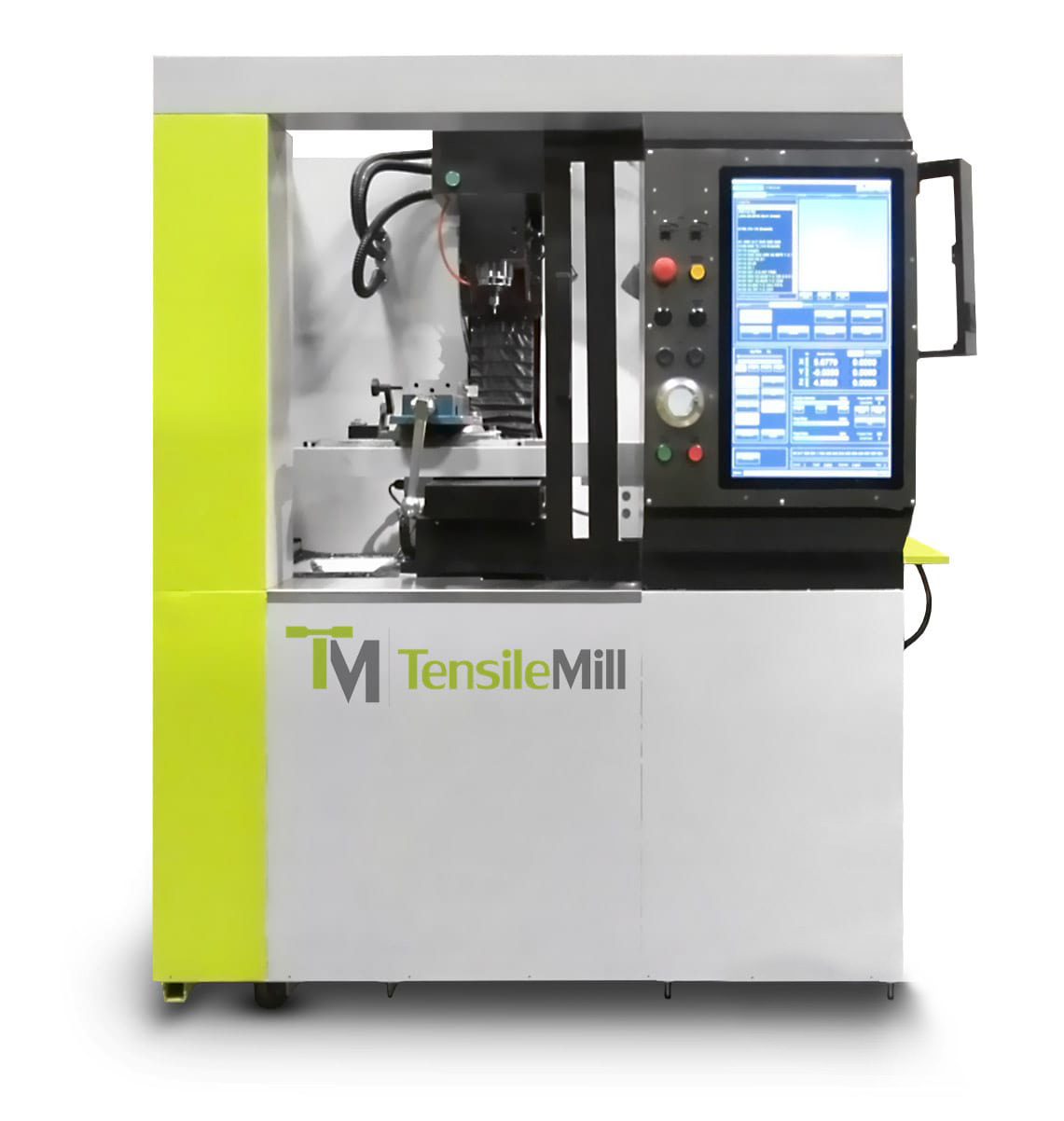 Proper specimen preparation directly affects the reliability of tensile test results. Deviations in specimen dimensions or surface finish can result in misleading data and failed certifications. At NextGen, we supply advanced flat and round
 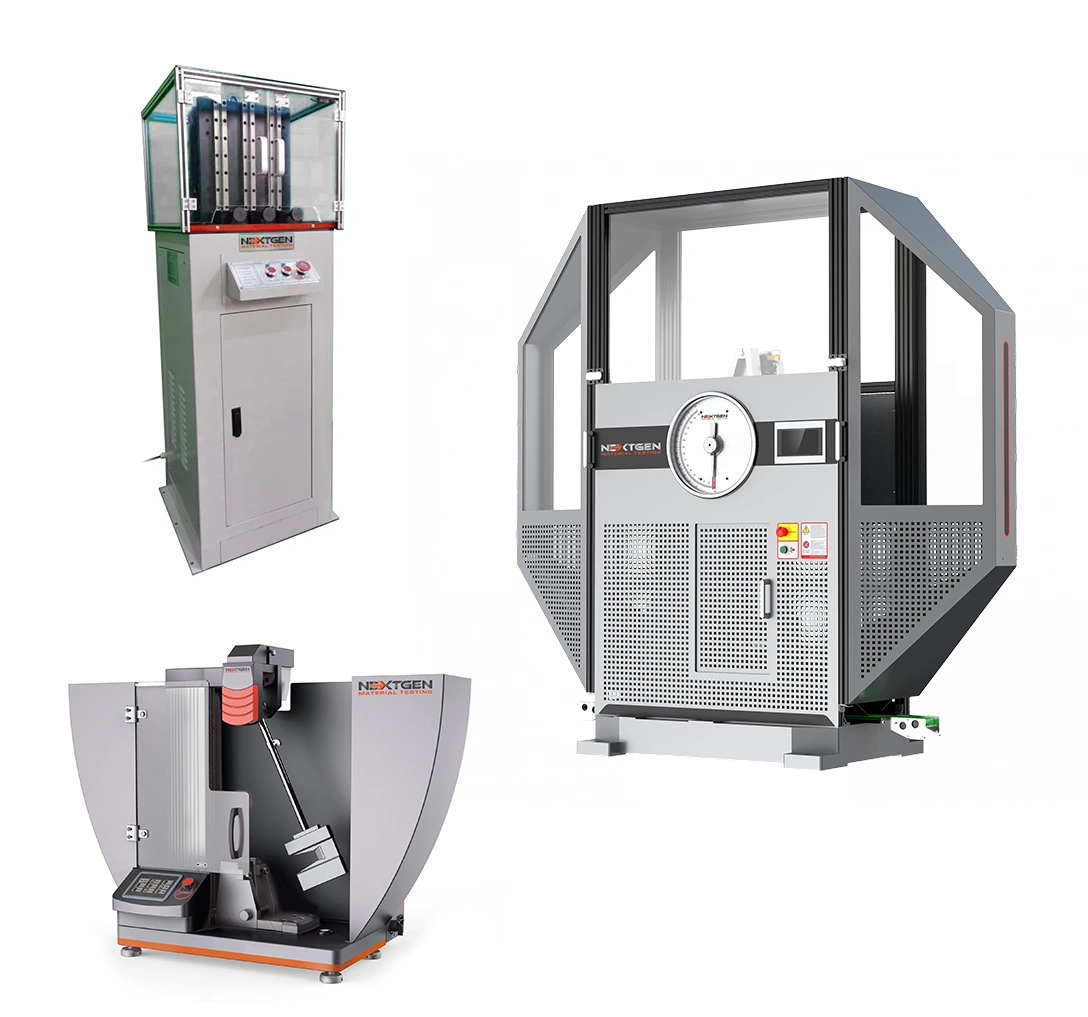 Impact testing is used to measure how materials respond to fast, high-energy loading conditions. It’s a vital method for assessing toughness, ductility, and the tendency of a material to fail in brittle or ductile modes—particularly in safety-critical applications. NextGen provides high-performance Charpy and Izod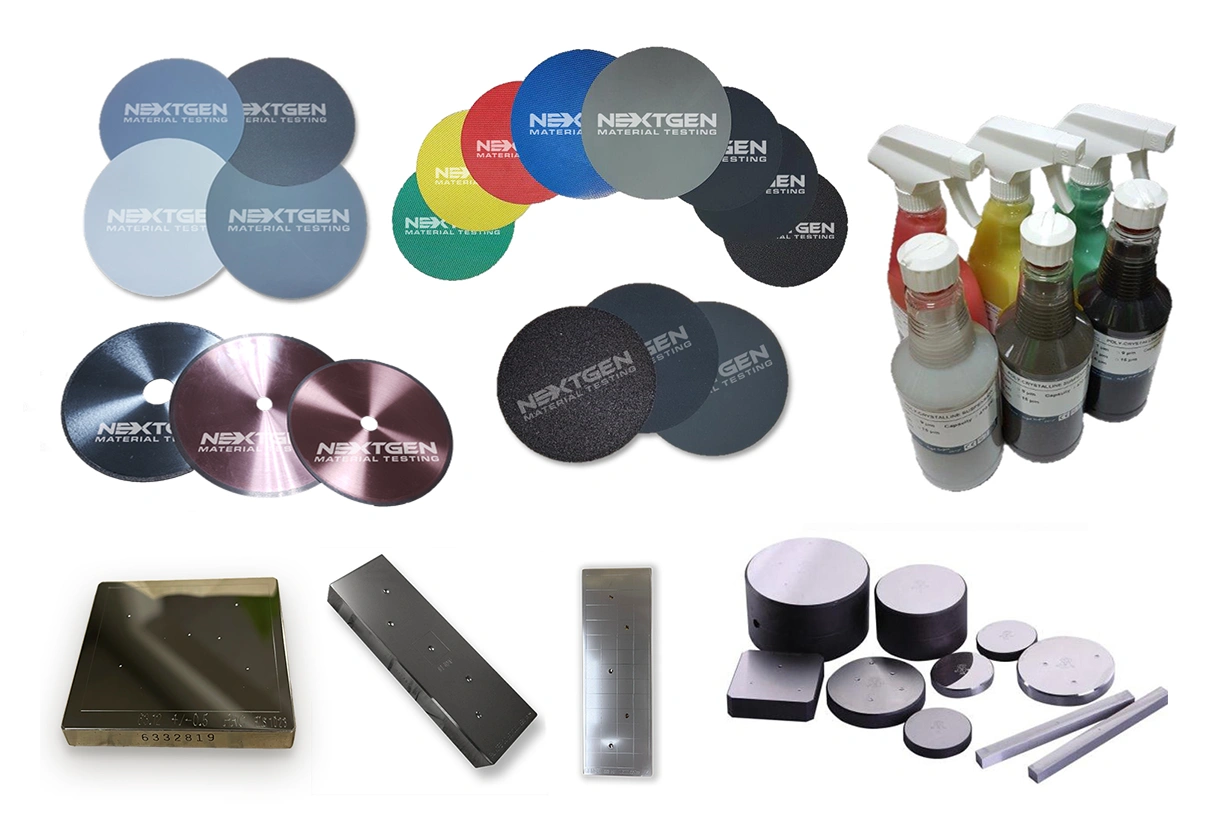
Sub-categories

Metal Hardness Testing Equipment - Bench Top and Portable Solutions
Metal hardness testing equipment helps laboratories and production teams determine resistance to permanent indentation, material uniformity, and expected performance of metals and alloys. This category brings together benchtop and portable solutions for Rockwell, Brinell, Vickers, Knoop, Leeb, and related methods. It supports routine inspection, failure analysis, heat-treatment verification, incoming material control, and standards-based hardness testing across diverse industrial applications.

Universal Testing Machines for Metal Testing
Universal testing machines for metal testing measure mechanical properties such as tensile strength, compression strength, bending behavior, yield performance, and elongation. This category includes electromechanical and servo-hydraulic systems that can be configured with appropriate grips, fixtures, load cells, and software. These machines support laboratories and manufacturers that need accurate, repeatable data for metals, alloys, fasteners, welds, and structural components.
Horizontal Universal Testing Machines for Metal Testing
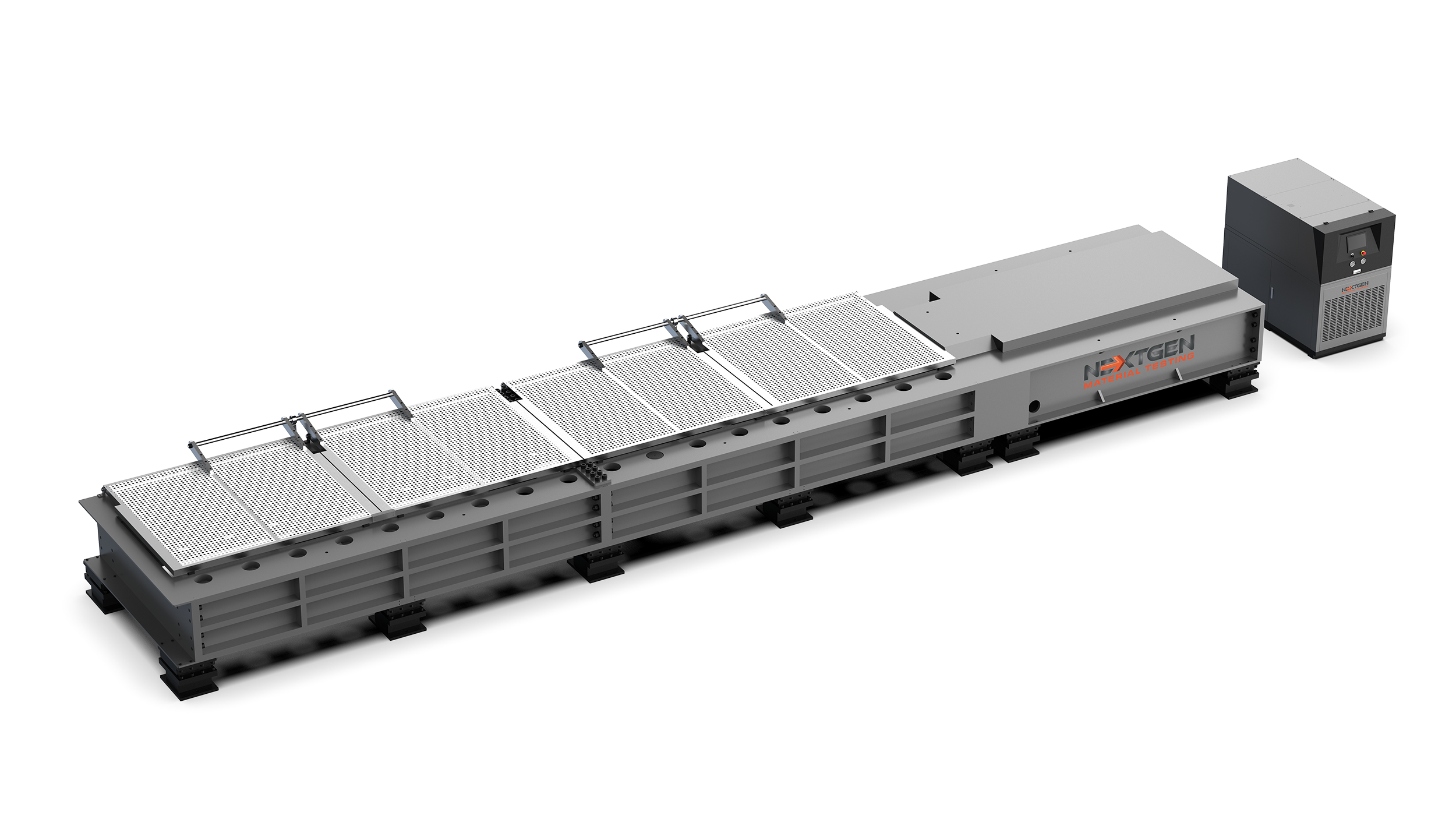
Horizontal universal testing machines are designed for tensile, proof-load, elongation, and breaking-force testing of long, heavy, or awkward metal specimens that do not fit standard vertical frames. This category supports wire rope, cable, chain, shackles, steel strand, slings, and full-length assemblies. Configurable bed length, capacity, stroke, grips, fixtures, extensometers, guarding, and software help labs perform accurate large-specimen testing.
Metallography Sample Preparation Equipment
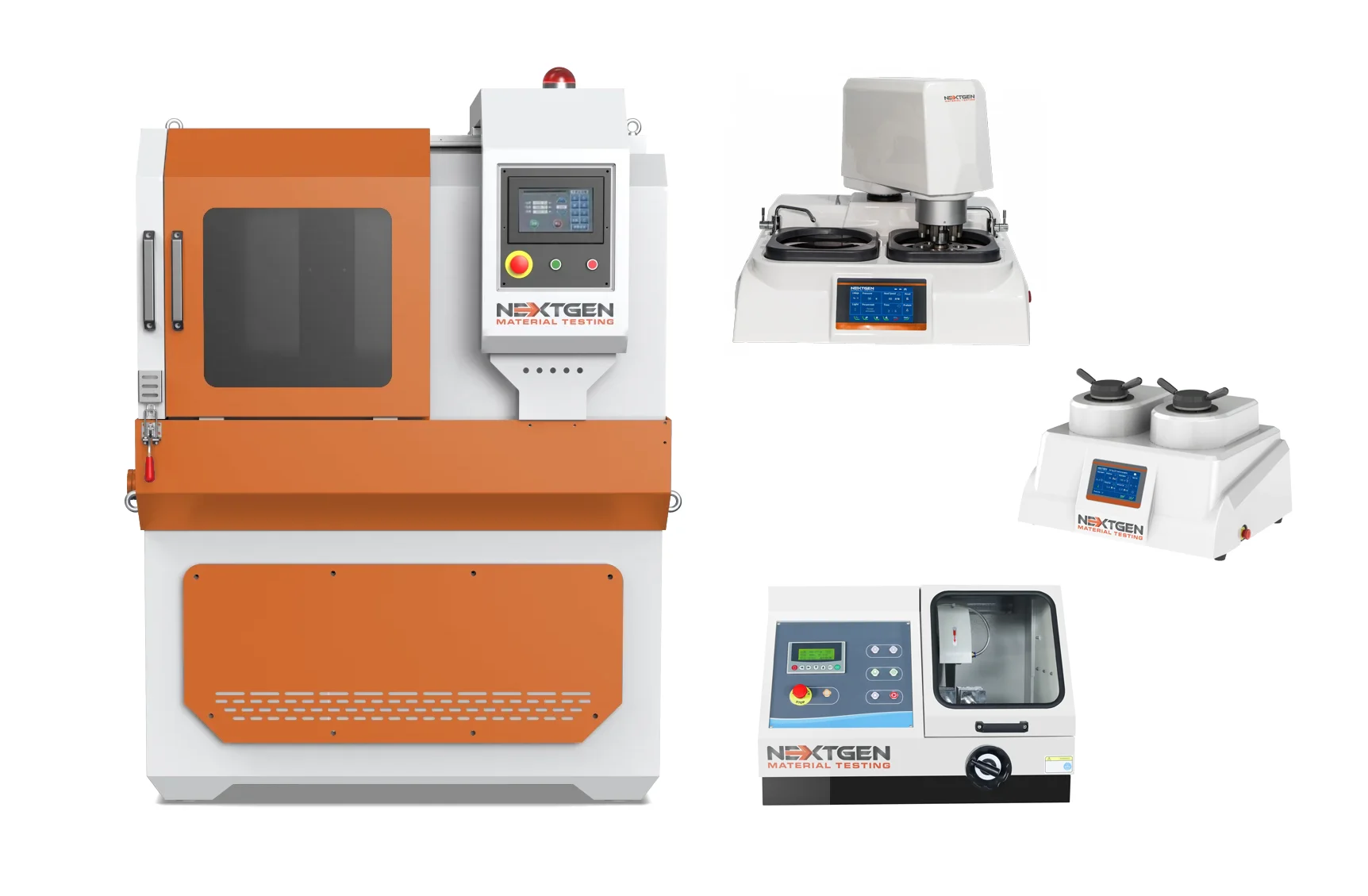
Metallography sample preparation equipment helps laboratories prepare metal and alloy specimens for reliable microstructural examination. This category covers cutting, mounting, grinding, polishing, and related preparation stages used before optical or electron microscopy. Proper preparation reduces scratches, deformation, heat damage, and edge loss, making it easier to evaluate grain structure, inclusions, phases, coatings, and material quality with confidence.
Tensile Sample Preparation Equipment
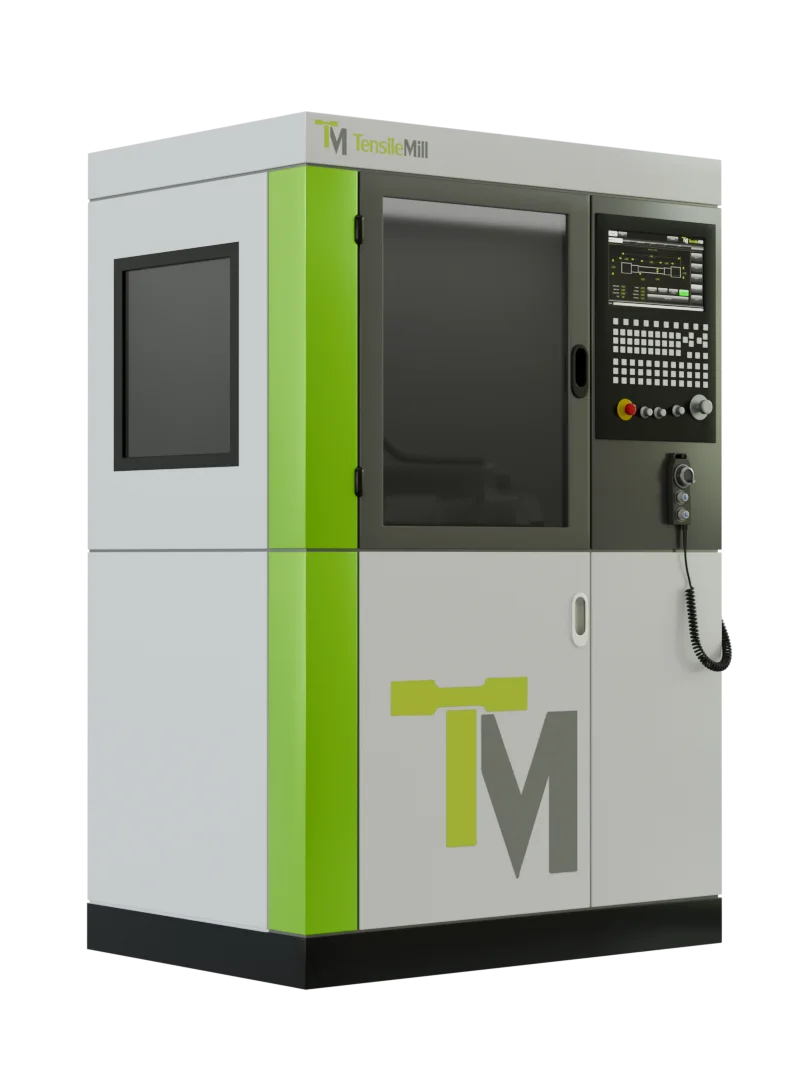
Tensile sample preparation equipment helps laboratories produce consistent flat and round specimens before mechanical testing. This category supports CNC machining, polishing, and guided sample-preparation workflows for metals, alloys, composites, plastics, and other structural materials. Reliable preparation improves dimensional repeatability, surface quality, gauge geometry, and test validity, helping QC, research, and production teams reduce outsourcing while supporting ASTM, ISO, DIN, and custom specimen requirements.

Pendulum Impact Testers - Charpy and Izod Systems
Pendulum impact testers are used to measure the energy absorbed by a metal specimen during Charpy or Izod fracture testing. This category supports high strain-rate impact evaluation for quality control, material comparison, and standards-based toughness assessment. Suitable systems help laboratories test standard or subsize specimens, document absorbed energy, and understand how metals behave under sudden loading conditions.
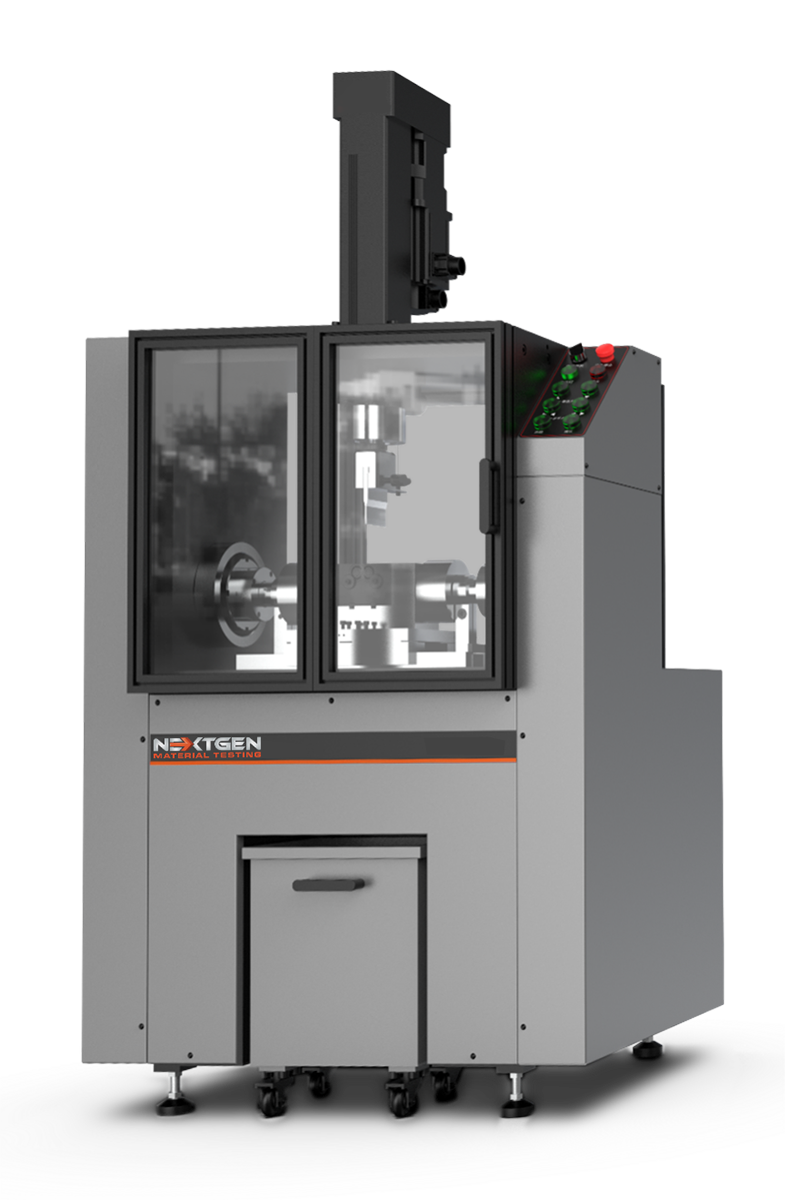
Flexural & Bend Testing Systems for Metal Testing
Flexural and bend testing systems help laboratories evaluate how metals behave under controlled bending, flattening, and formability conditions. This category supports sheet metal bend testing, three-point bend testing, ductility evaluation, and fixture-based hydraulic or electromechanical testing workflows. These systems are useful for quality control, product development, and standards-based assessment where deformation behavior, bend performance, and failure response must be measured accurately.
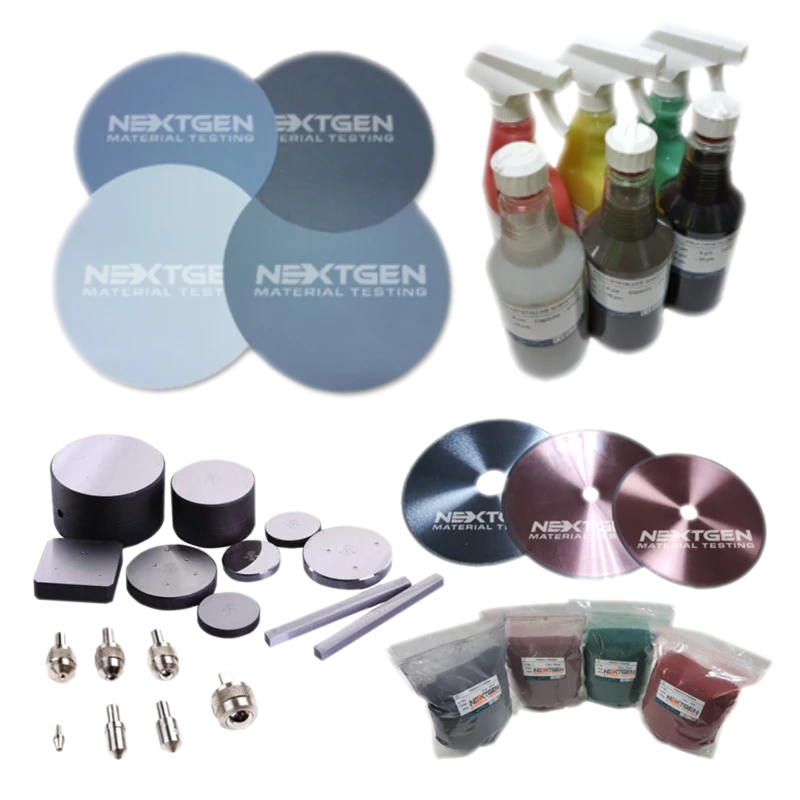
Consumables - Hardness Testing, Metallography, Tensile and More…
Testing consumables support day-to-day laboratory work across hardness testing, metallography, tensile sample preparation, abrasion testing, and related material evaluation workflows. This category includes essential items such as certified hardness blocks, indenters, cutting discs, grinding papers, polishing cloths, mounting materials, etchants, and replacement accessories. Reliable consumables help maintain accuracy, repeatability, traceability, and smooth sample preparation across routine QC and testing operations.
Products
NG-FLX Series A — Flexural & Bend Testing Systems
NG-FLX Series A is an electromechanical flexural and bend testing system for controlled sheet metal bending, three-point bend testing, flattening tests, ductility evaluation, and formability assessment. Designed for metal testing workflows, it helps laboratories measure how metallic specimens respond to bending and deformation under controlled conditions, supporting product development, quality control, and standards-based evaluation of sheet and formed metal parts.
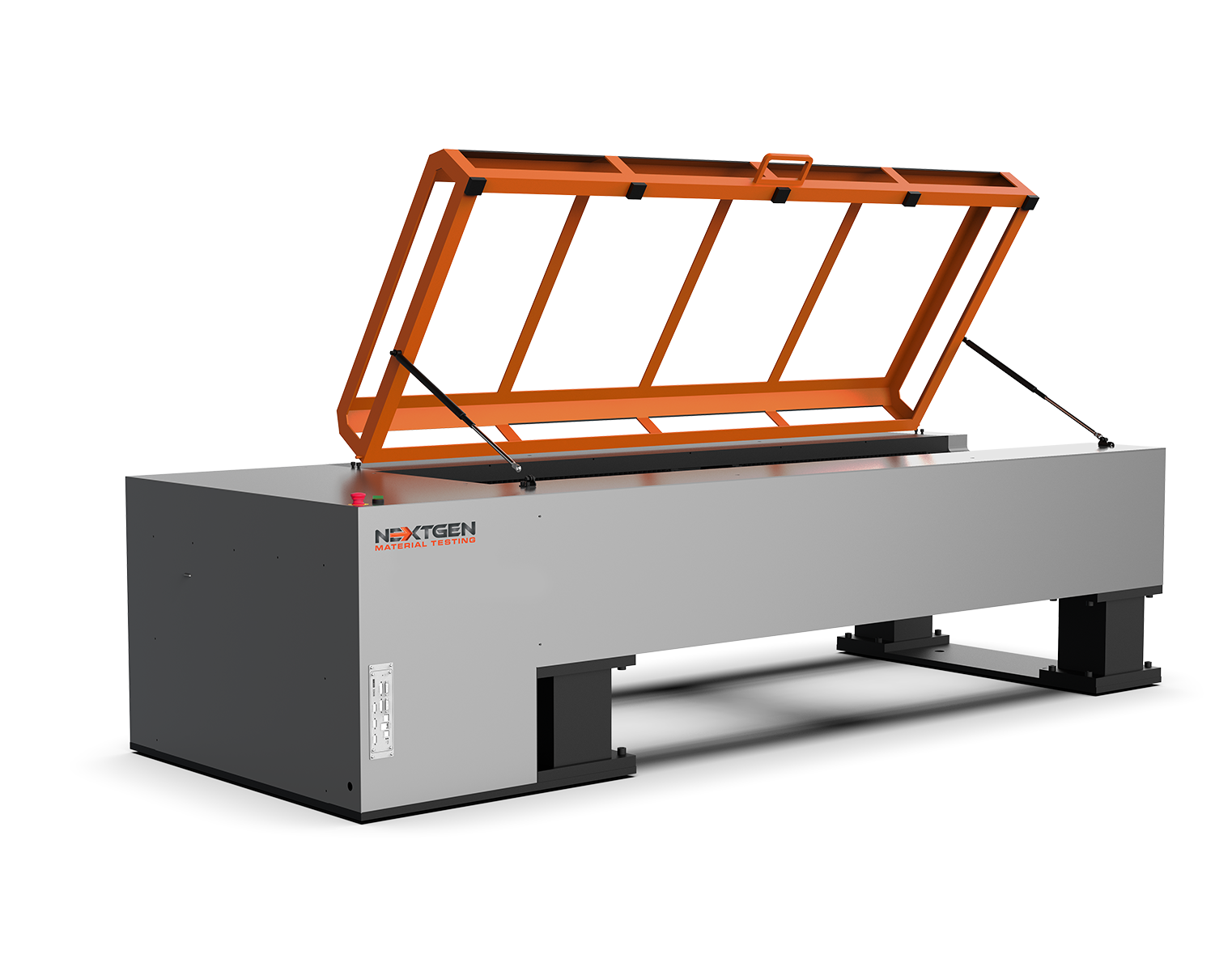
NG-EML Series H Horizontal Universal Testing Machines
NG-EML Series H is a horizontal universal testing machine line for tensile, proof load, elongation, and breaking force testing of long or difficult-to-handle specimens. The horizontal frame provides better access and support for cables, wire ropes, chains, shackles, steel strands, and finished metal assemblies, helping laboratories perform stable, repeatable high-force testing when a standard vertical UTM is not practical.

Automatic Longitudinal Polisher System for Tensile Specimens – NG-AutoPol
NG-AutoPol is an automatic longitudinal polishing system for metallic tensile and fatigue specimens. It removes machining marks, grinding stress, and residual surface stress after turning or milling, producing a uniform low-stress finish along the specimen axis. Touchscreen control, interchangeable fixtures, adjustable 5–50 N force, 10–100 mm/s speed, multi-grit automation, and ASTM E8, ASTM E466, ASTM E606, EN 6072, and NADCAP-ready workflows support repeatable preparation.
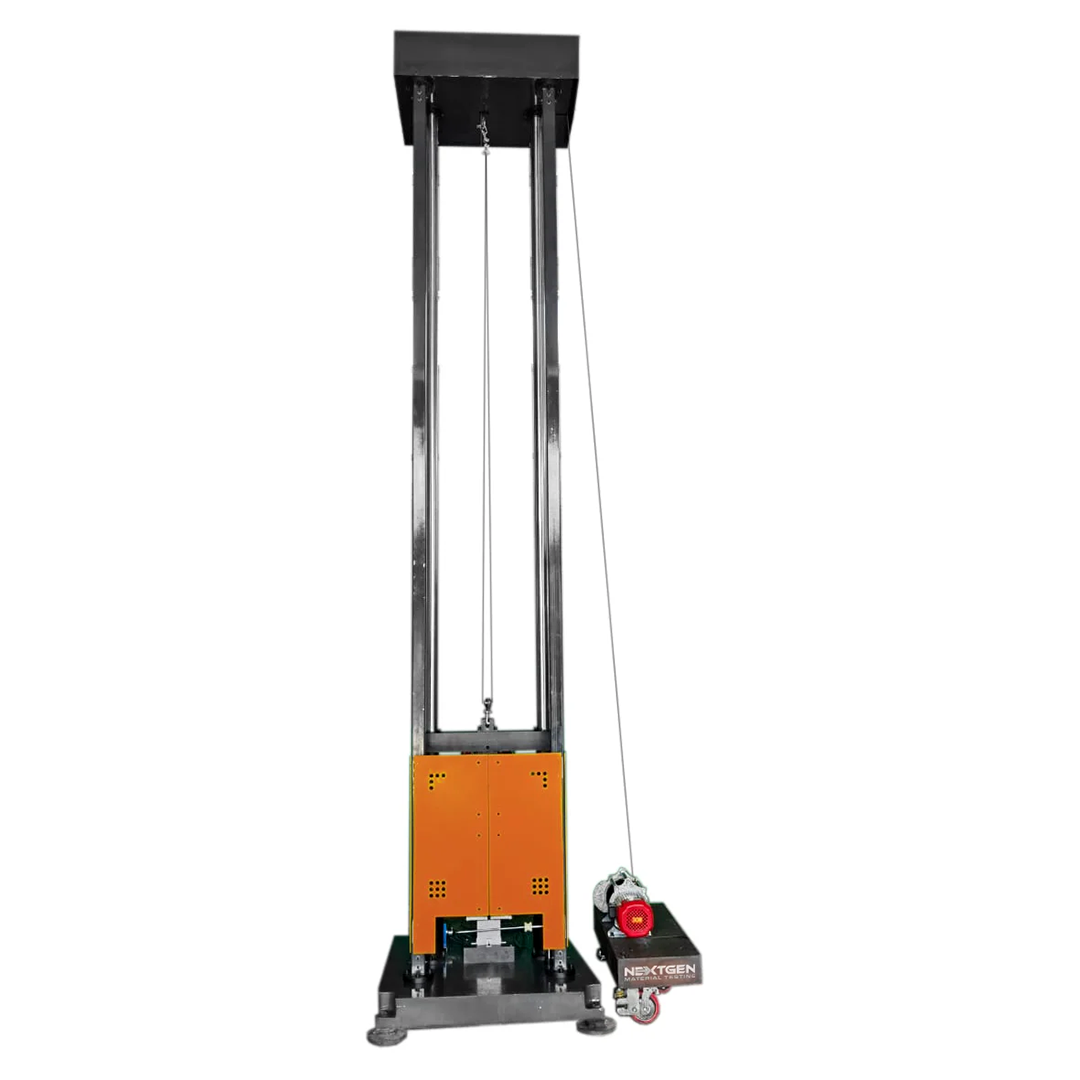
DWT-1800 Computer Controlled Drop Weight Impact Testing Machine
DWT-1800 is a computer-controlled drop weight impact testing machine for evaluating impact resistance in metal and non-metal materials. Capable of high-energy tests up to 1800 joules and low-energy tests from 3.72 joules, it supports ferritic steel NDT evaluation, conduit testing, tubing, cable hardware, and electrical enclosures. PLC control, touchscreen setup, automated hammer movement, and sensors improve safety and accuracy.
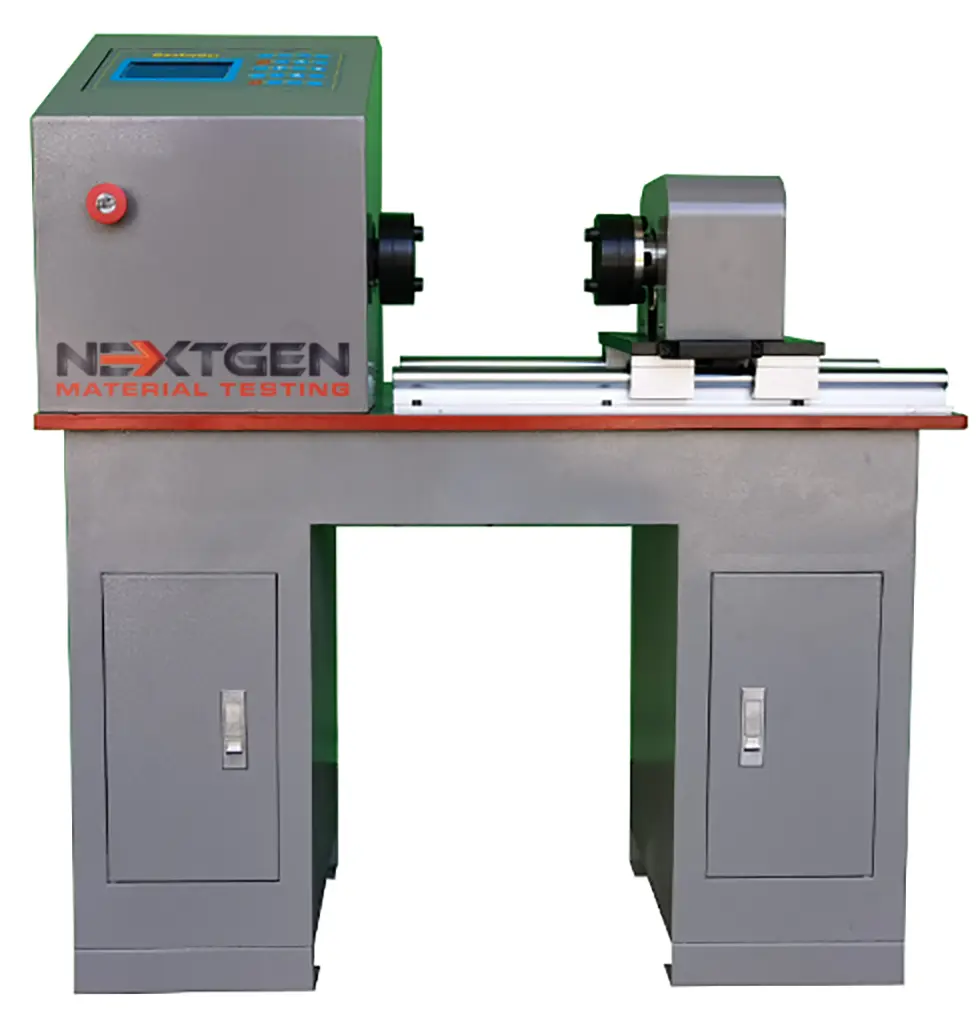
NextGen GenTor Horizontal Torsion Tester
NextGen GenTor is a horizontal torsion tester for measuring torque, torsion angle, deformation, and torsional strength in metals and components. With capacity options from 200 N·m to 6000 N·m, computer-controlled software, real-time data display, and torque accuracy within ±1.0%, it supports research, production testing, and quality control where reliable torsion performance data is required.
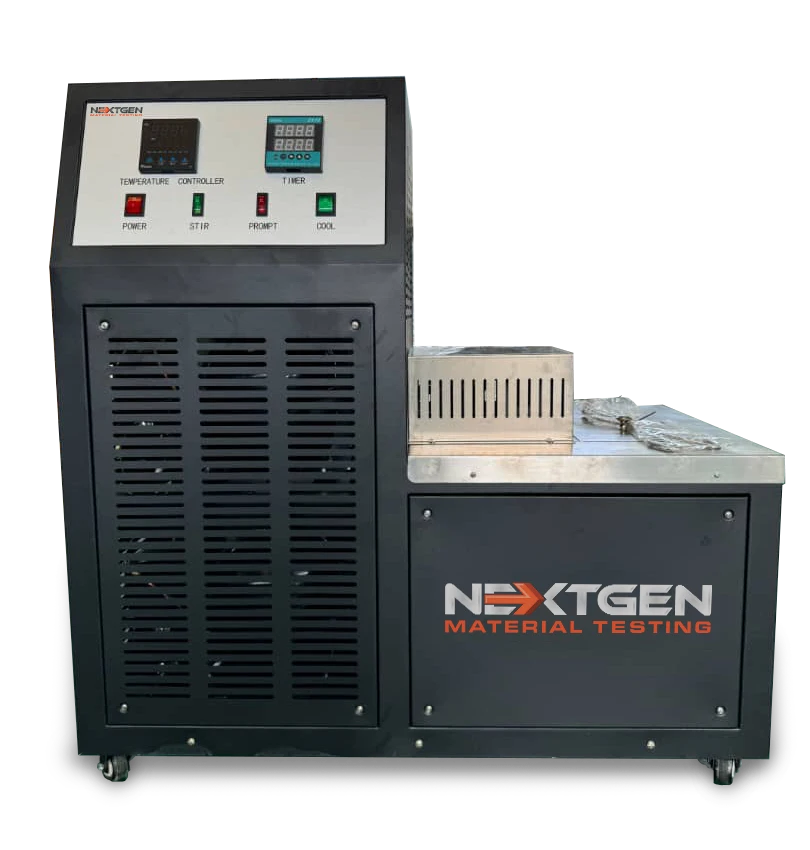
Impact Specimen Cooling Temperature Chamber – NG-ISCC Series
NG-ISCC Series is a low-temperature chamber for conditioning Charpy impact specimens before pendulum impact testing. Available in -60°C, -80°C, -100°C, and -196°C configurations, it uses compressor refrigeration or liquid nitrogen depending on the model. Uniform cooling, stable setpoint control, ≤ ±0.5°C accuracy, 0.01°C resolution, and ethanol-based cooling media help labs improve repeatability in ASTM E23 and ISO 148 workflows.

Drop Weight (Falling Weight Impact) Tester – NG-FWT1 & NG-FWT2 (Up to 2000 J)
NG-FWT1 and NG-FWT2 are low-capacity vertical drop weight impact testers for controlled falling-weight tests up to 2000 J. They help evaluate impact resistance, damage tolerance, energy absorption, and shock response in materials, weldments, production batches, and finished components. Controlled drop height, impact speed, and energy settings support repeatable testing for R&D, quality control, and product validation.