Rotary Abrasion Tester Single & Dual Wheel

Rubber Testing Equipment
Standards
ASTM D1044, ASTM D3884, ASTM D4060, ASTM F1978, DIN 53754, DIN 53799, DIN 53109, DIN 52347, ISO-5470, ISO-7784-2, ISO 9352





Description
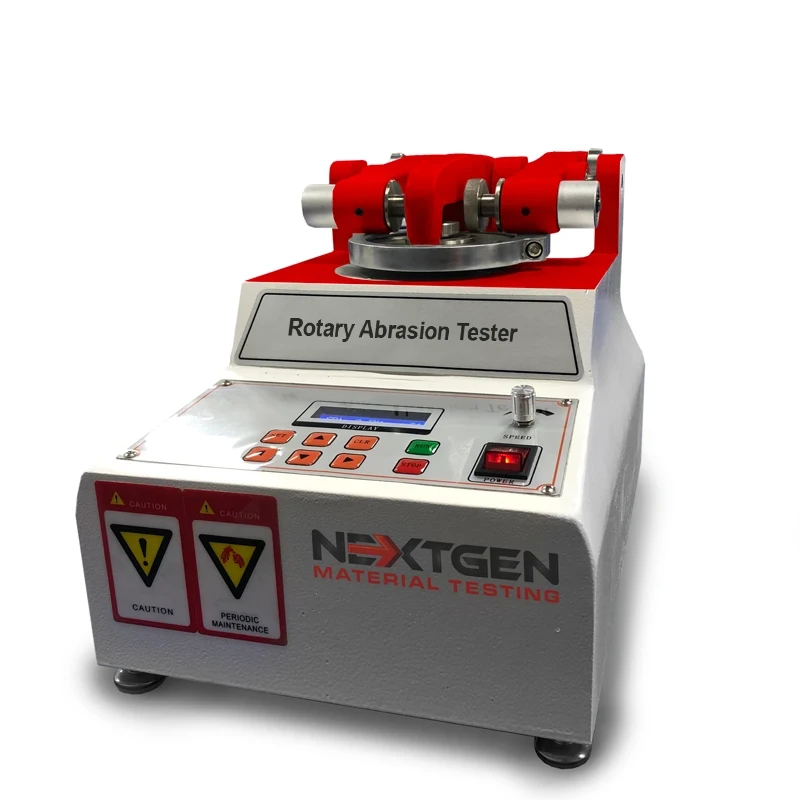
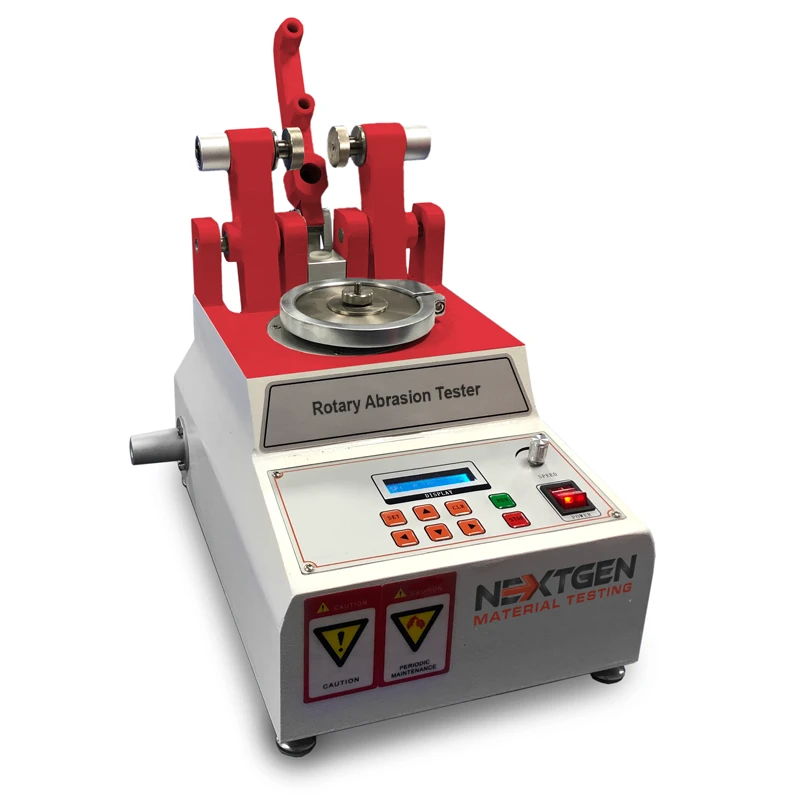
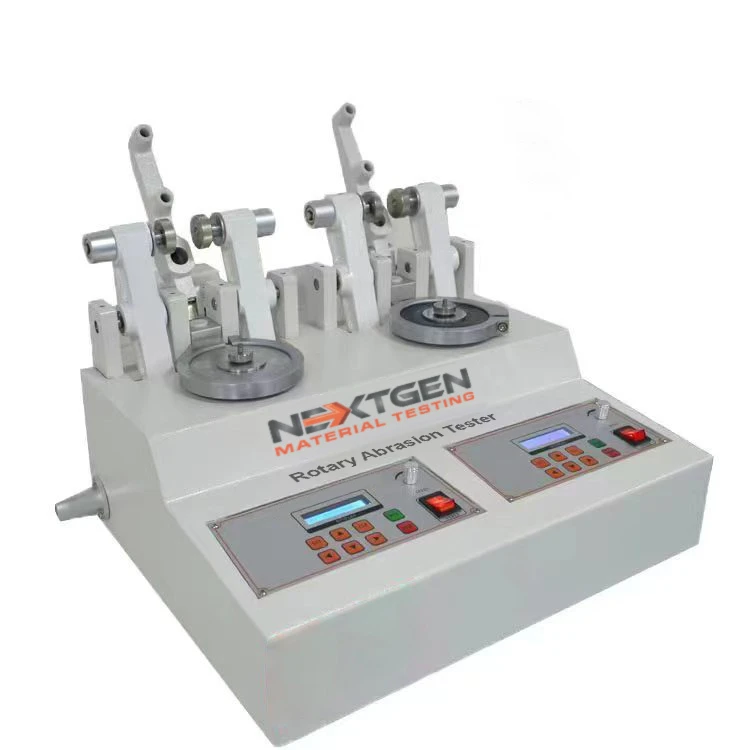
GenRotary is NextGen's Rotary Abrasion Tester is widely used to evaluate wear resistance. It can conduct tests on a wide range of materials such as: cloth, paper, paint, plywood, leather, tile, glass, rubber etc. It tests the specimen by rotating it while in contact with the grinding wheel and applying the required pressure. The Loss of weight reflects on the change in weight of the specimen. The unit also comes standard with an intelligent power failure recovery function.
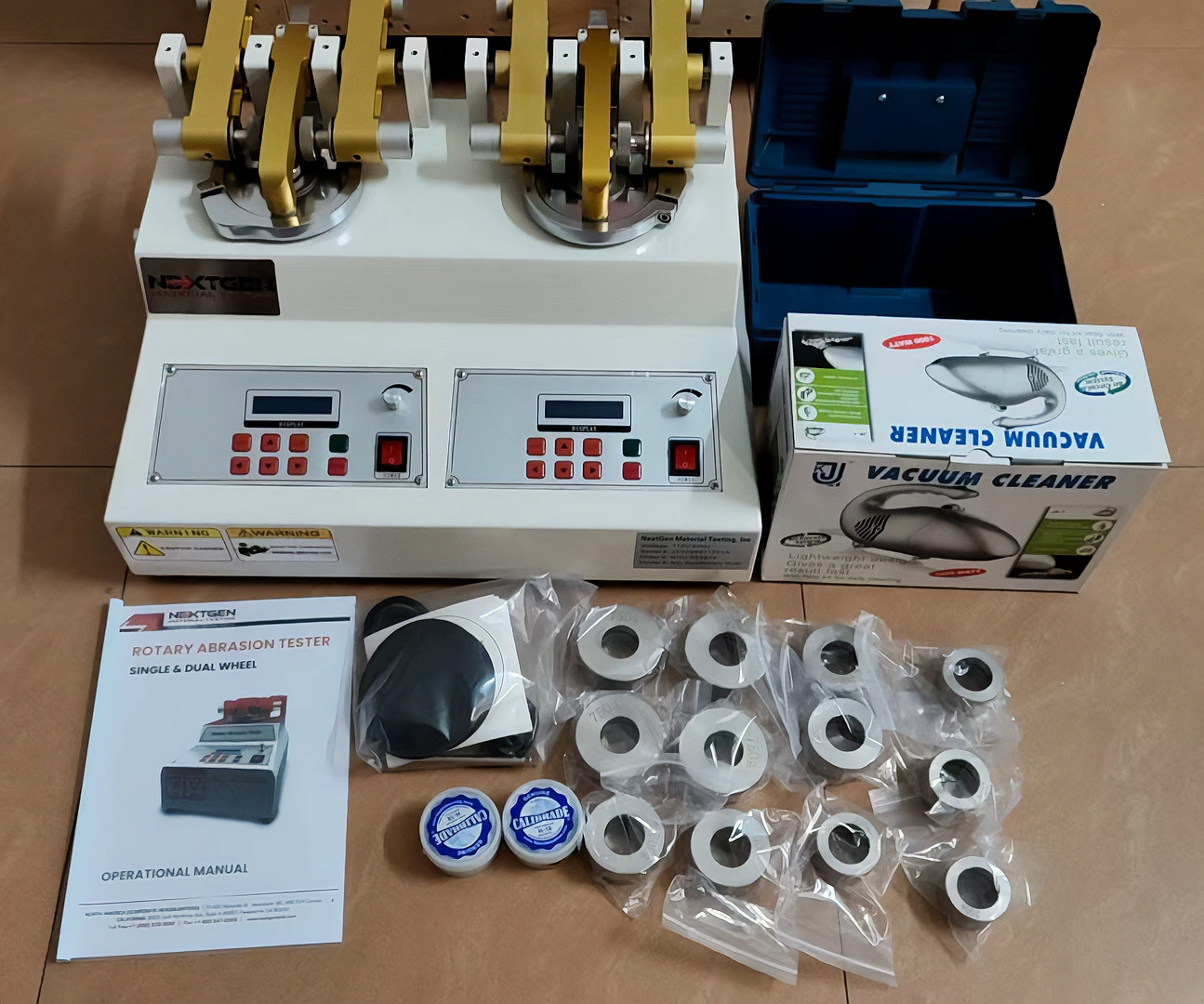
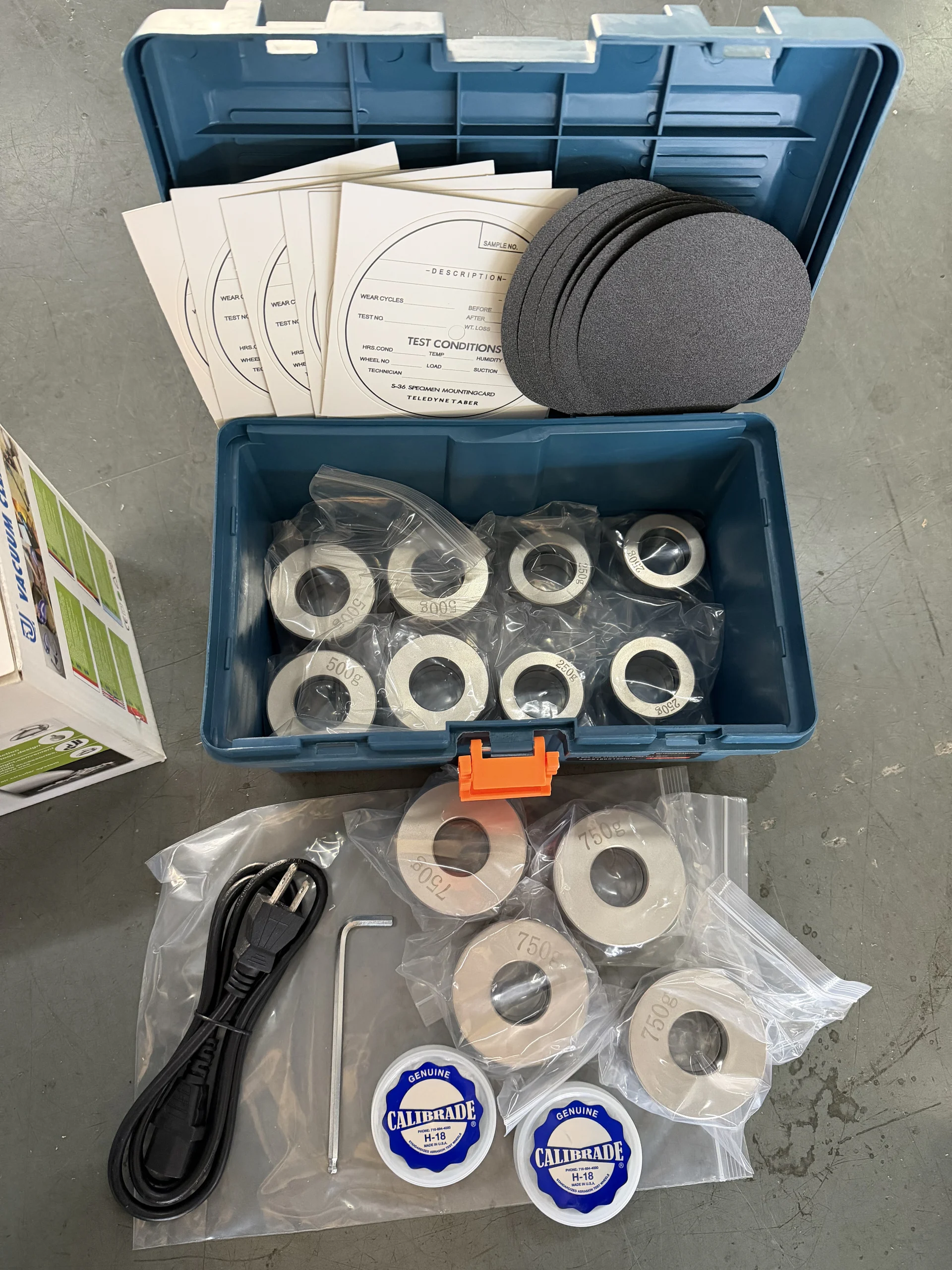
The test applies to material thicknesses between 6.35mm to 40mm. A flat square or round specimen of roughly 100mm is mounted on the system which rotates at a fixed speed vertically. Rotary's wheels are lowered onto the material at a specific pressure. The X pattern of abrasion produced by the double rotary action allows for an accurate identification of the materials' wear and tear. The Rotary abraser comes standard with a full range of auxiliary weights, specimen holders, abrasive wheels, wheel refacer and vacuum unit.
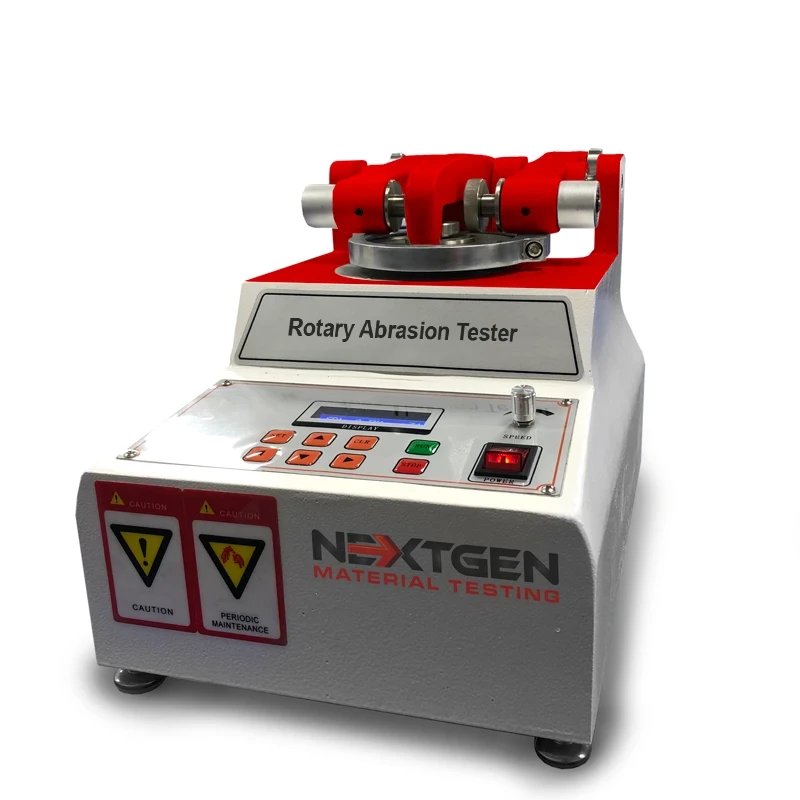
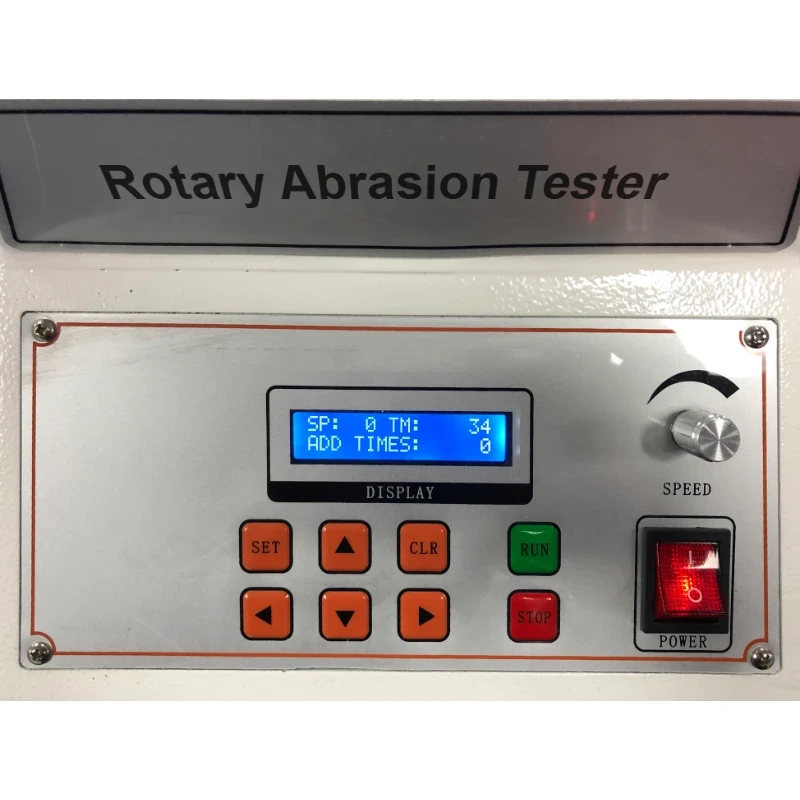
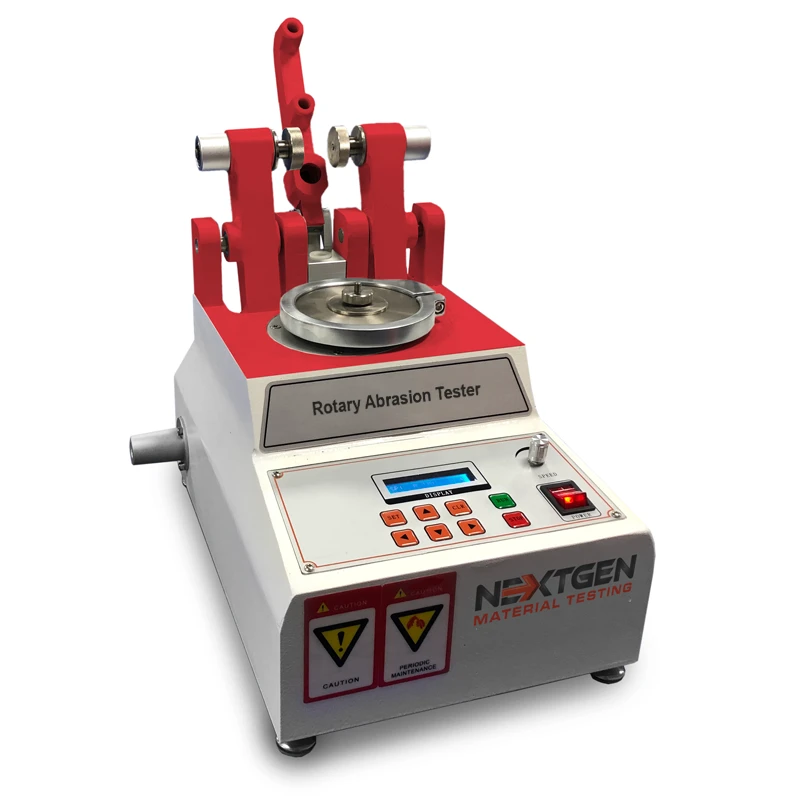
Technical Specifications of Rotary Abrasion Tester Single Wheel
| Specimen Size (Outer Diameter) | 108mm ID:8mm ,3mm |
| Abrasion Wheel | 2"(max.45mm), 1/2"(W) |
| Wheel Center Distance | 63.5mm |
| Rotating Speed | 60/72 rpm |
| Loads | 250g, 500g, 1000g |
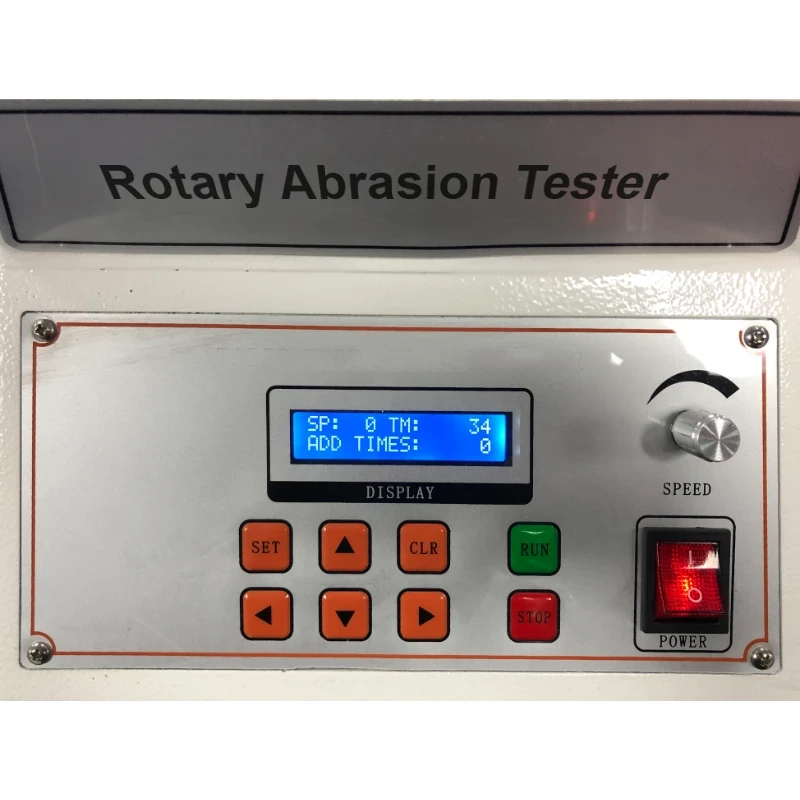
| Counter | LCD Touch screen, 0-999,999 Automatic shutdown |
| Wheel and Specimens disk center space | 37-38mm |
| Machine Size (L*W*H) |
20.86" x 12.60" x 12.20" 53cm x 32cm x 31cm (Including vacuum cleaner) |
| Weight (kg) | 40 lbs / 18kg (Excluding vacuum cleaner) |
| Power | AC110V / AC220V/50Hz |
| Wear index calculation formula | Abrasion loss weight/test turnover number x1000 |
Rotary Abrasion Tester Dual Wheel
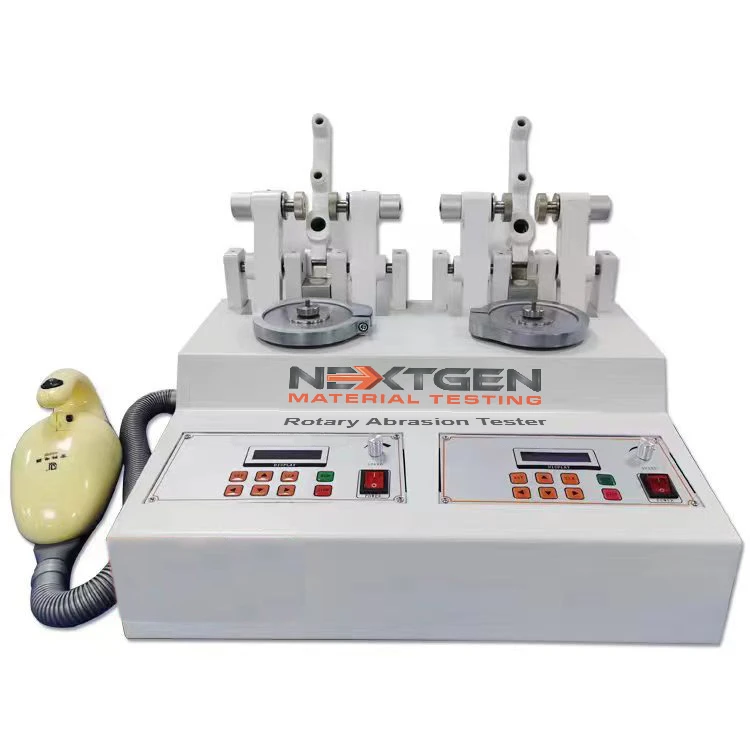
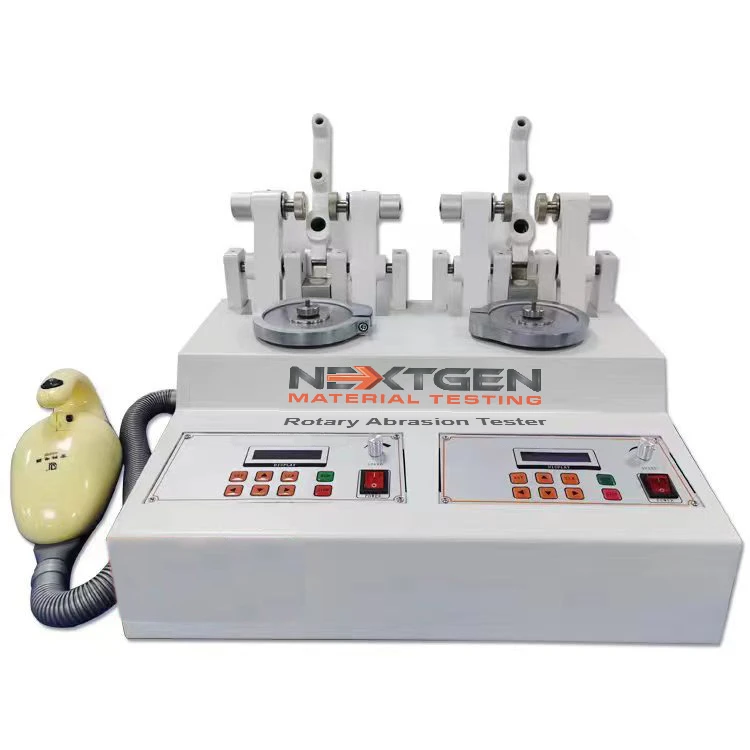
The dual wheel abrasion tester is suitable for testing a variety of materials such as fabrics, paper, coatings, plywood, leather, floor tiles, glass, and natural plastics, among others. The testing procedure involves positioning a rotating specimen between a pair of wearing wheels and applying a specified load. As the test material rotates, it impels the wearing wheels to cause abrasion on the test material. The weight loss resulting from the wear is determined by the difference in weight of the test material before and after the test.
Rotary Abrasion Tester Dual Wheel Features
- Unique wear process:
The distinctive wear process entails placing the test material on a turntable, where two grinding wheels exert a specific weight on the material to induce wear. As the material wears, the surface goes through all-around particle abrasion, forming a complete circular pattern. The grinding wheel spins along with the spinning sample plate, causing them to move against each other, which gradually wears away the material.
- Simulating Real-World or Standard Testing Conditions:
This testing machine can mimic real-world usage conditions or follow specific testing standards. It offers the flexibility to choose from different wear materials and accessories for various tests. Moreover, it allows you to select from two speeds (60 and 72 revolutions per minute) and three different loads.
- Vacuum Cleaning for Removing Debris:
A vacuum pump's suction arm is connected to an adjustable part at the back of the machine through a hinge. This allows you to easily adjust the height to match the thickness of different samples.
Technical Specifications of Rotary Abrasion Tester Dual Wheel
| Specimen Size (Outer Diameter) | 108mm ID:8mm |
| Abrasion Wheel | 2"(max.45mm), 1/2"(W) |
| Wheel Center Distance | 63.5mm |
| Rotating Speed | 60/72 rpm, adjustable |
| Loads | 250g, 500g, 1000g |
| Counter | LCD Touch screen, 0-999,999 Automatic shutdown |
| Wheel and Specimens disk center space | 37-38mm |
| Distance between test piece and vacuum cleaner | 3mm |
| Machine Size (L*W*H) |
35.5" x 27.5" x 16.5" 90cm x 70cm x 42cm |
| Weight | 132lbs / 60kg |
| Power supply | AC 110V, 10A |
FAQs
Designed to take advantage of a broad range of power supply specifications, including AC110V and AC220V, with a frequency of 50Hz, the Rotary Abrasion Tester can handle a wide range of power supply specifications. The ability to operate on dual voltage ensures that the tester is versatile and adaptable within an array of global applications, enabling it to be seamlessly integrated into laboratories and testing facilities around the world regardless of the local electrical standards.
As a result of the inclusion of both AC110V and AC220V options, not only does the tester enhance its international usefulness, but it also ensures its reliability and performance consistency in different types of operational environments. It is possible to use the tester without the need for power conversion equipment, resulting in a simplified setup process and a reduction of operational complexity for facilities.
The Rotary Abrasion Tester Single Wheel has a weight of 18 kilograms, which is equivalent to approximately 40 pounds, excluding the vacuum cleaner. This weight indicates the robust construction of the machine, which ensures its stability as well as durability during testing due to its robust design. Even though the tester is constructed from a solid metal composite, it remains relatively lightweight, which facilitates its ease of installation and possible relocation within a laboratory setting despite its solid construction.
With its manageable weight and compact dimensions, the tester can be used effectively and versatilely in a variety of testing environments due to its easy usability and versatility. It allows straightforward integration into existing laboratory workflows without specialized support structures or extensive space allocations. This balance between durability and portability makes the Rotary Abrasion Tester an accessible and practical choice for material testing applications focused on evaluating abrasion resistance.
The Rotary Abrasion Tester Single Wheel, including the vacuum cleaner, measures 53 cm in length, 32 cm in width, and 31 cm in height. In imperial measurements, this translates to approximately 20.86 inches by 12.60 inches by 12.20 inches. These dimensions reflect the compact and efficient design of the tester, making it suitable for various laboratory environments without excessive space.
Including a vacuum cleaner within this size range indicates that the tester is designed to be self-contained, and is therefore designed for convenience as well as to maintain a clean testing environment by effectively removing debris generated during the abrasion process. The compact yet comprehensive setup ensures that the Rotary Abrasion Tester can easily be incorporated into quality control and research workflows, ensuring reliable and accurate abrasion testing capabilities while optimizing the amount of space needed in the laboratory.
The wheel and specimen disk center space, set between 37-38mm in the Single Wheel Rotary Abrasion Tester, is critical for ensuring proper alignment and contact pressure between the abrasion wheel and the test specimen. This precise spacing facilitates an optimal abrasion path and ensures that the wheel's force is uniformly distributed across the specimen's surface. The accuracy of this space directly influences the test's reliability, as it affects how evenly the abrasive forces are applied, which is essential for consistent and comparable results.
By maintaining a specific distance between the wheel and specimen disk centers, the tester can accurately simulate the wear conditions in actual use. This detail is crucial for assessing the durability and resistance of various materials to surface wear and abrasion. This detail underpins the development of products designed to withstand regular use and extend their service life.
The Rotary Abrasion Tester Single Wheel offers a range of load options to suit various testing requirements, including 250g, 500g, and 1000g. These options allow for the application of different forces to the test specimen, enabling the tester to simulate a variety of wear conditions. The flexibility to adjust the load is crucial for accurately assessing the abrasion resistance of materials under different stress levels, which can differ greatly in real-world applications.
With the availability of these specific load values, the tester will be able to accommodate testing on many types of materials, from those requiring a light touch to assess surface wear to more durable materials that can withstand greater forces, and everything in between. This versatility makes the Rotary Abrasion Tester a valuable tool in quality control processes, material development, and research.
The Single Wheel Rotary Abrasion Tester's functionality is significantly enhanced by its rotating speed feature, which allows the abrasion wheel to operate at speeds of 60 or 72 revolutions per minute (rpm). These specific speeds are designed to closely mimic the wear conditions materials might face in actual use, providing a realistic assessment of their abrasion resistance.
Having the option to select between two speeds offers testing flexibility, as it can accommodate different standards and types of materials for a wide range of testing requirements. For example, a lower speed might be used for materials that are more prone to wear, whereas a higher speed might be applied to harder materials. This adaptability ensures that the tester can be used across a wide range of industries, from automotive and footwear to coatings and textiles.
The wheel center distance of 63.5mm in the Rotary Abrasion Tester Single Wheel plays a crucial role in ensuring abrasion testing accuracy and consistency. This specific measurement between the center of the abrasion wheel and the specimen holder is critical for applying the correct pressure and abrasion pattern across the test material. The 63.5mm distance simulates real-world wear conditions accurately, providing a standardized approach to evaluating material durability and wear resistance.
The precision of the wheel center distance ensures uniform contact between the abrasion wheel and the specimen, leading to reliable and reproducible test results. This uniformity is essential for comparing the abrasion resistance of different materials under the same testing conditions. The specified distance contributes to the Rotary Abrasion Tester's effectiveness in assessing materials' performance in applications where surface wear significantly impacts product lifespan and functionality.
The Rotary Abrasion Tester Single Wheel uses an abrasion wheel with specifications of 2 inches in diameter (maximum width of 45mm) and a width of 1/2 inch. This dimension of the abrasion wheel is designed to ensure precise and consistent application of abrasive forces to the test specimen, reflecting the tester's capacity to simulate wear conditions experienced by materials in real-world scenarios. The size and design of the wheel allow for a wide range of abrasion tests, accommodating various materials and testing standards.
The abrasion wheel's specifications are crucial for accurate and reliable results in evaluating materials' resistance to abrasion and wear. By standardizing the wheel size and width, the Rotary Abrasion Tester provides a consistent testing environment, essential for comparing results across different materials and test conditions. This feature makes the tester an invaluable tool in quality control, research and development, and material certification processes.
The Single Wheel Rotary Abrasion Tester accommodates specimens with specific size requirements to ensure accurate and reliable testing outcomes. The specimens prepared for testing should have an outer diameter (OD) of 108mm, an inner diameter (ID) of 8mm, and a thickness of 3mm. These dimensions are crucial for ensuring that the specimens fit correctly within the tester and are subjected uniformly to abrasive forces during the test cycle.
The Rotary Abrasion Tester accurately simulates wear conditions and measures materials' abrasion resistance under standardized conditions. This specification ensures consistency across tests, providing valuable data for comparing the durability and performance of different materials. By adhering to these size requirements, users can achieve reliable results essential for material selection, quality control, and research applications. This is in industries where abrasion resistance is a critical material property.
Related Products
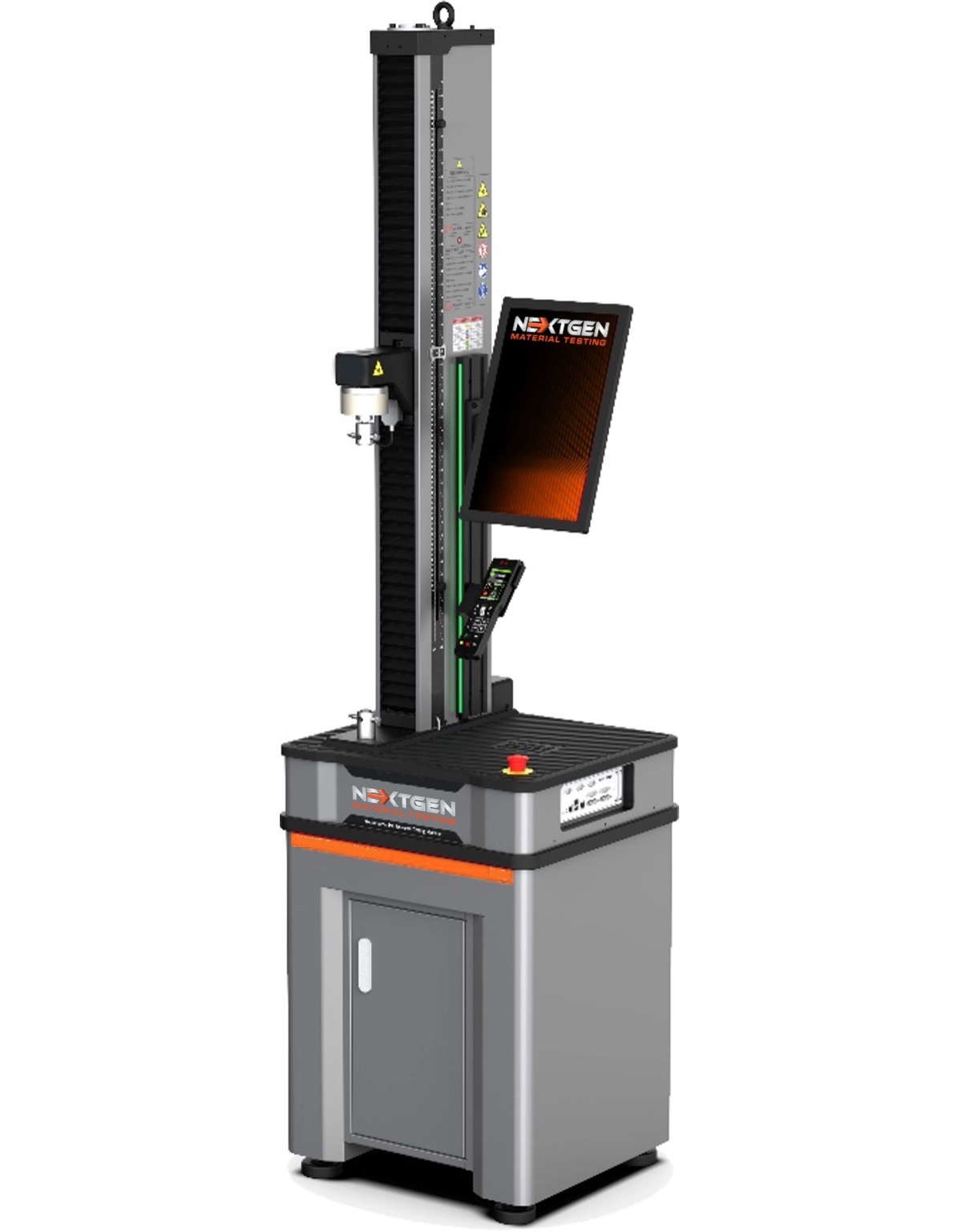
NG-EML Series A – Single Column Bench Top Universal Testing Machine (50 N – 5 kN)
NG-EML Series A is a compact single-column benchtop universal testing machine for low-force tensile, compression, and flexural testing. Covering 50 N to 5 kN capacity options, it is suited for rubber, plastics, adhesives, films, foams, wires, metals, composites, and consumer products. Its electromechanical frame, high-speed servo actuation, GenTest software, and standards support make it practical for R&D and routine QC.
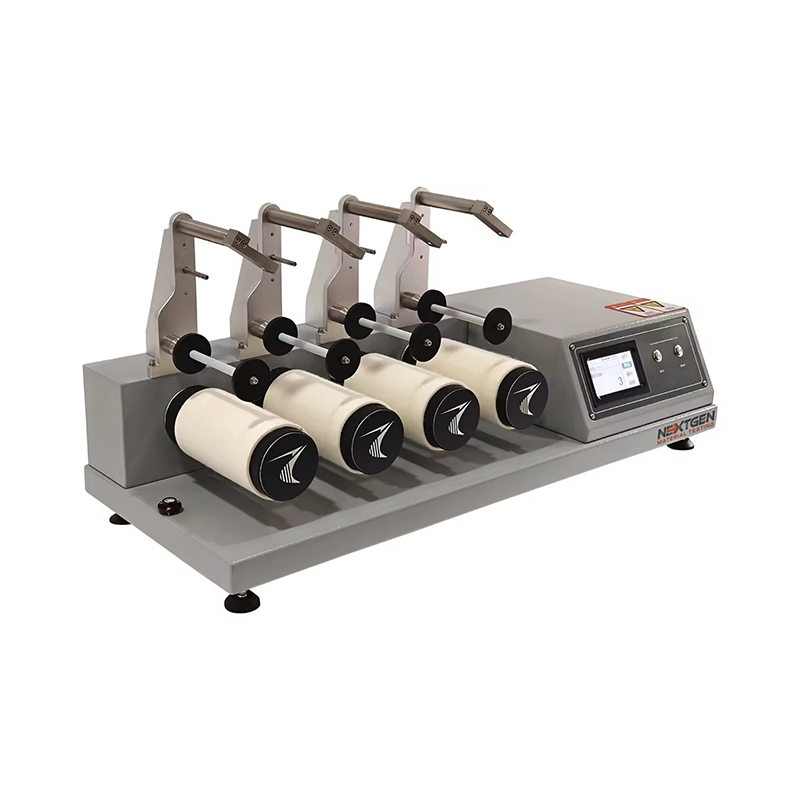
ICI / Mace Snag Tester
The ICI / Mace Snag Tester evaluates the snagging resistance of fabrics by simulating real-world wear in a controlled laboratory setup. Using a rotating drum and mace-style hammer action, it creates repeatable snagging conditions so samples can be compared against reference fabrics. Compliance with ASTM D3939, JIS L1058, and GB/T 11047 makes it suitable for textile durability and quality-control testing.
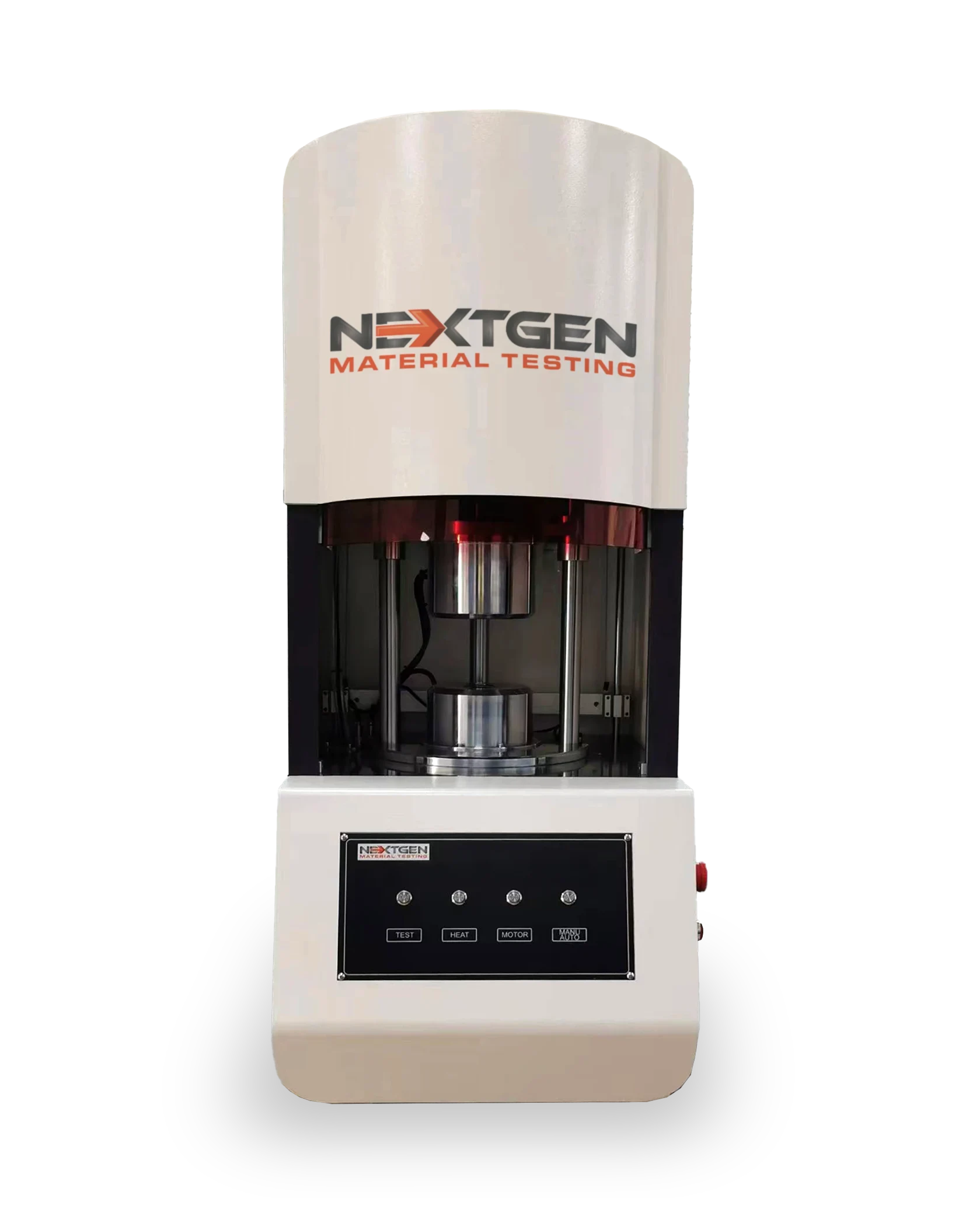
Moving Die Rheometer (MDR)
The Moving Die Rheometer is a rotorless rubber rheometer for assessing curing and processing characteristics of vulcanized rubber compounds. It measures torque response during oscillation in a sealed heated cavity, generating cure curves and parameters such as ML, MH, and cure times. ASTM D5289, ISO 6502, DIN 53529 compliance, database storage, Excel export, diagnostics, and programmable strain support reliable QC and R&D analysis.
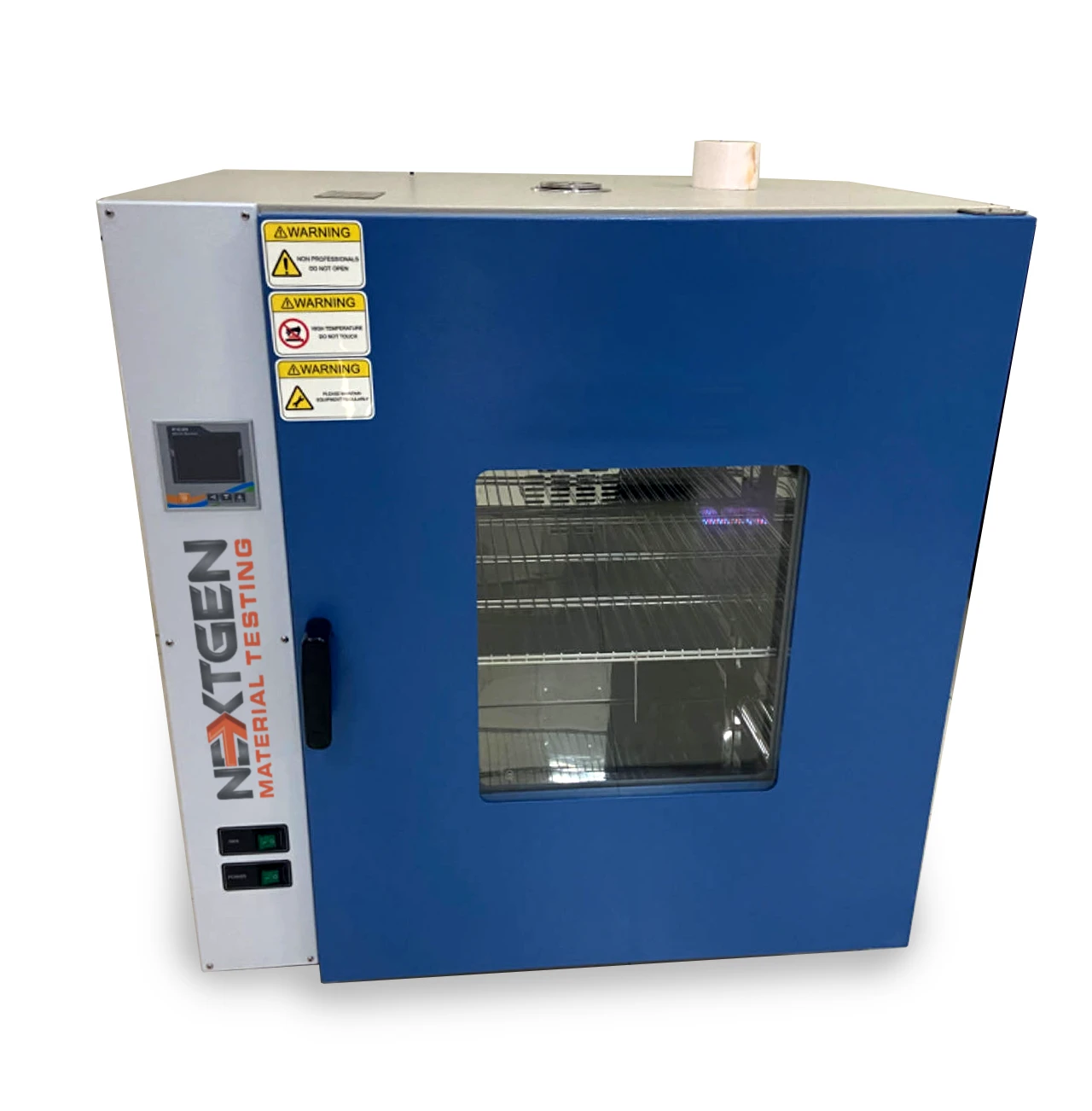
Aging Oven – High-Temperature Chamber – NG-AGOV-ADV
NG-AGOV-ADV is a high-temperature aging oven for testing how rubber, plastics, elastomers, insulating materials, and similar products respond to long-term heat exposure. It simulates accelerated aging, thermal stability, and heat resistance conditions up to 300°C using forced convection, PID control, programmable cycles, stainless chamber construction, adjustable trays, over-temperature protection, and real-time monitoring. ISO 188, ASTM D573, IEC 60216-4-1, and GB/T 3512 support compliance workflows.
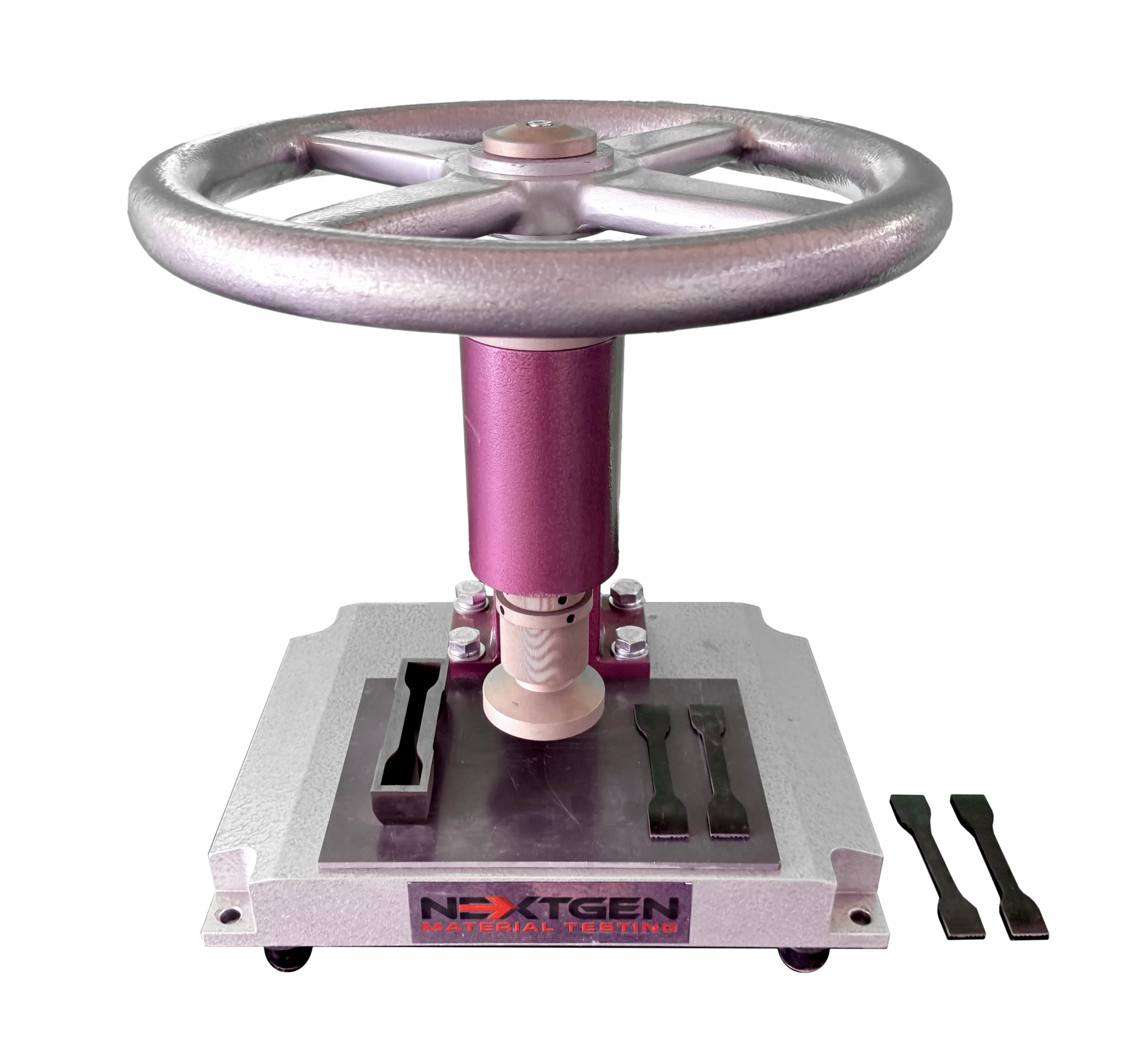
NG-T-Press M Series - Manual Cutting Press System for Rubber Tensile Specimens
NG-T-Press M Series is a compact manual cutting press for preparing rubber, tape, and specialty material specimens for tensile and mechanical testing. With optional knives for standards such as ASTM D412, ASTM E8, ASTM B557, and ASTM A370, plus 30 kN punching force, quiet operation, and a 25 mm stroke, it helps labs create accurate, repeatable test samples with minimal setup.
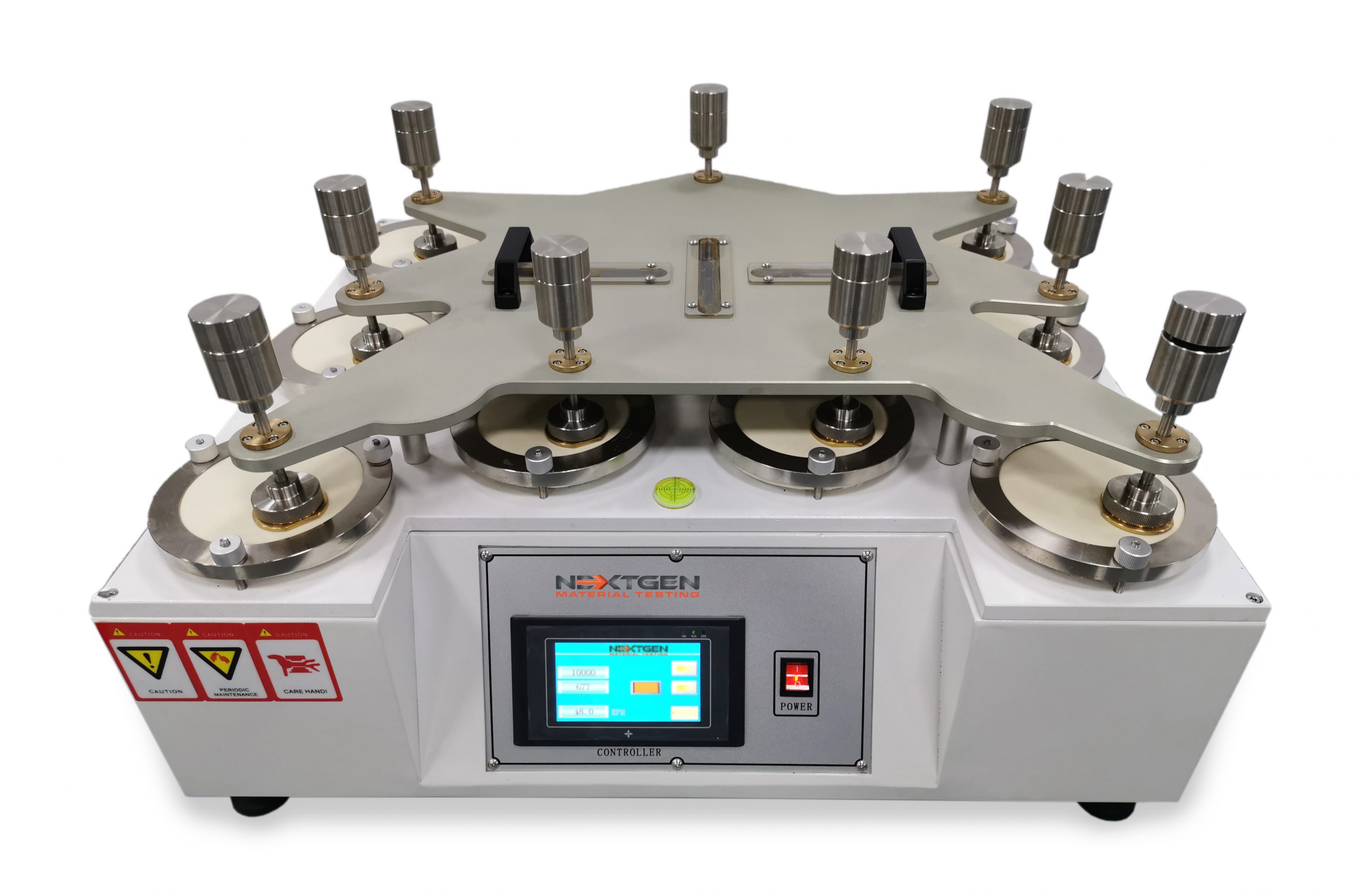
9-Station Martindale Abrasion Tester
GenDale 9-Station Martindale Abrasion Tester measures abrasion resistance and appearance change in shoe fabrics, linings, coated fabrics, textiles, and related materials. Its Martindale rubbing motion supports wet or dry testing, with PLC programmable control, adjustable speed, touchscreen operation, and simultaneous specimen handling to improve throughput. Standards alignment with ISO 12947, ISO 5470-2, and ISO 20344 makes it useful for footwear and textile QC.
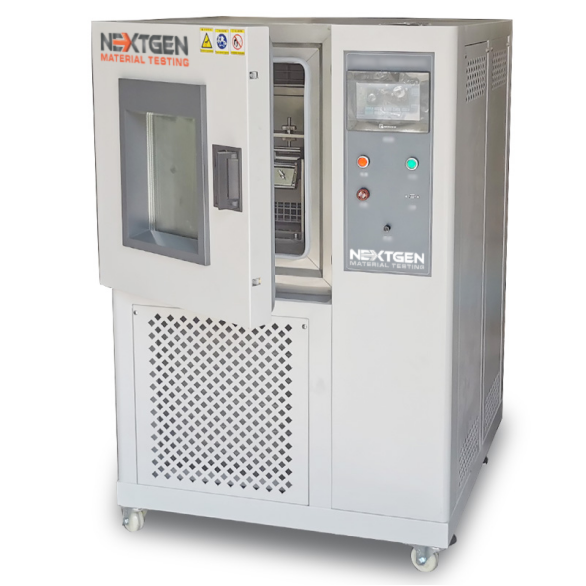
GenRoss-CH - Ross Flex Tester with Low Temperature Chamber
GenRoss-CH is a Ross flex tester with an integrated low-temperature chamber for evaluating cold resistance and folding durability of shoes and shoe materials. With a -20°C to +150°C temperature range, programmable temperature control, 90° bending angle, adjustable cycling speed, and capacity for up to six test pieces, it supports repeatable footwear and rubber material testing under controlled conditions.
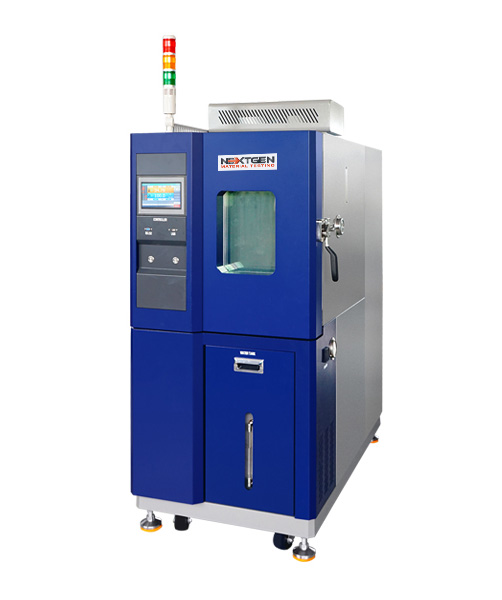
NextGen Environmental Chambers NG-EC 100,150,225,408,1000
NextGen NG-EC Environmental Chambers provide controlled temperature and humidity conditions for material, product, and quality-control testing. Available in 100, 150, 225, 408, and 1000 L sizes, they feature insulated steel construction, stainless interior walls, mechanical compression refrigeration, circulating air ducts, adjustable sample racks, a viewing window, and 7-inch touchscreen control to support stable, repeatable environmental simulation.
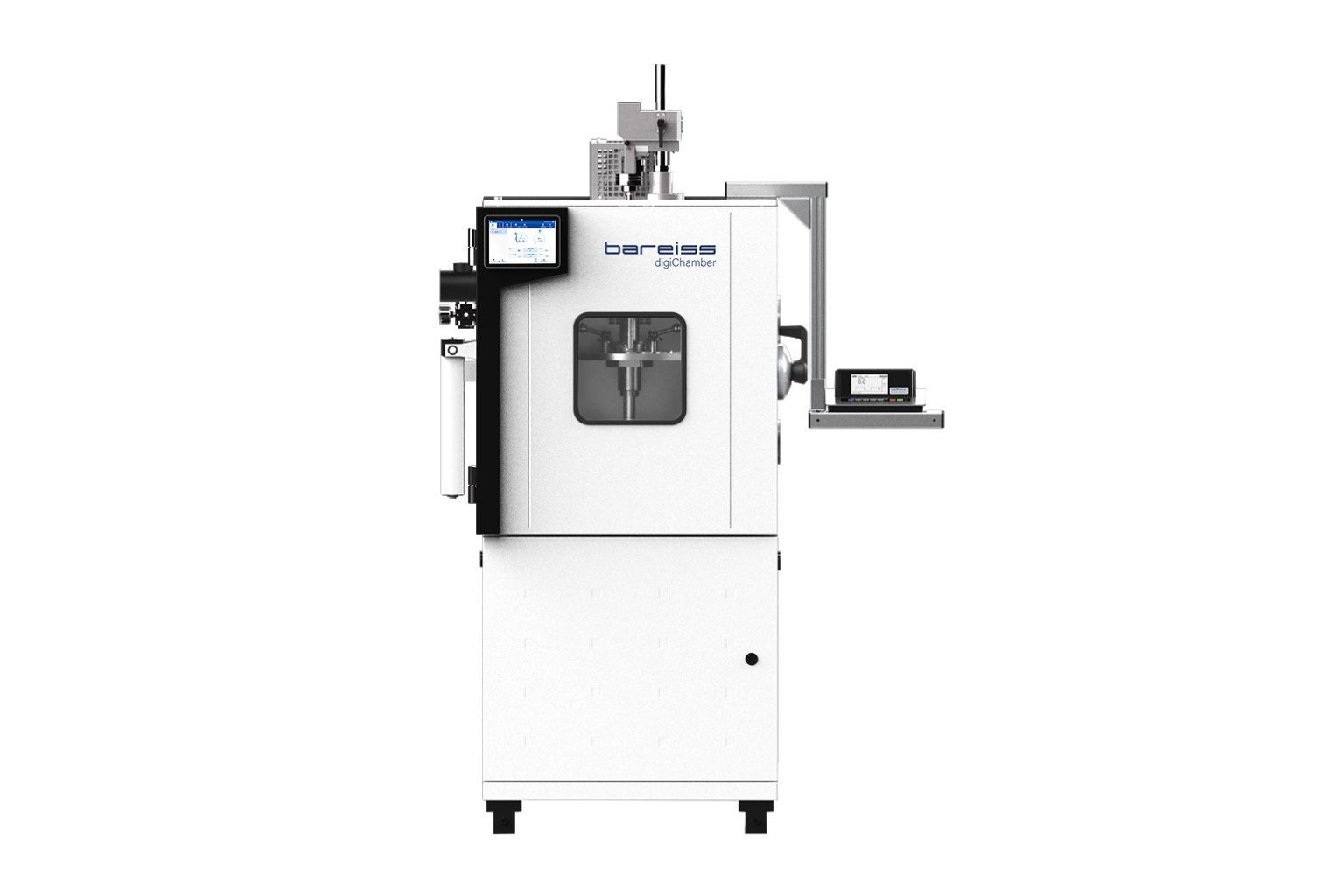
digiChamber - Temperature Controlled Hardness Testing
digiChamber is a temperature-controlled rubber hardness testing system designed by Bareiss for Shore A and IRHD N testing under extreme environmental conditions. It combines an automatic test sequence, large 200-liter chamber, 7-inch touchscreen, digiCenter software, and multi-sample tray handling to evaluate rubber parts at controlled temperatures, helping automotive, tire, and quality-control labs verify hardness performance under realistic thermal stress.
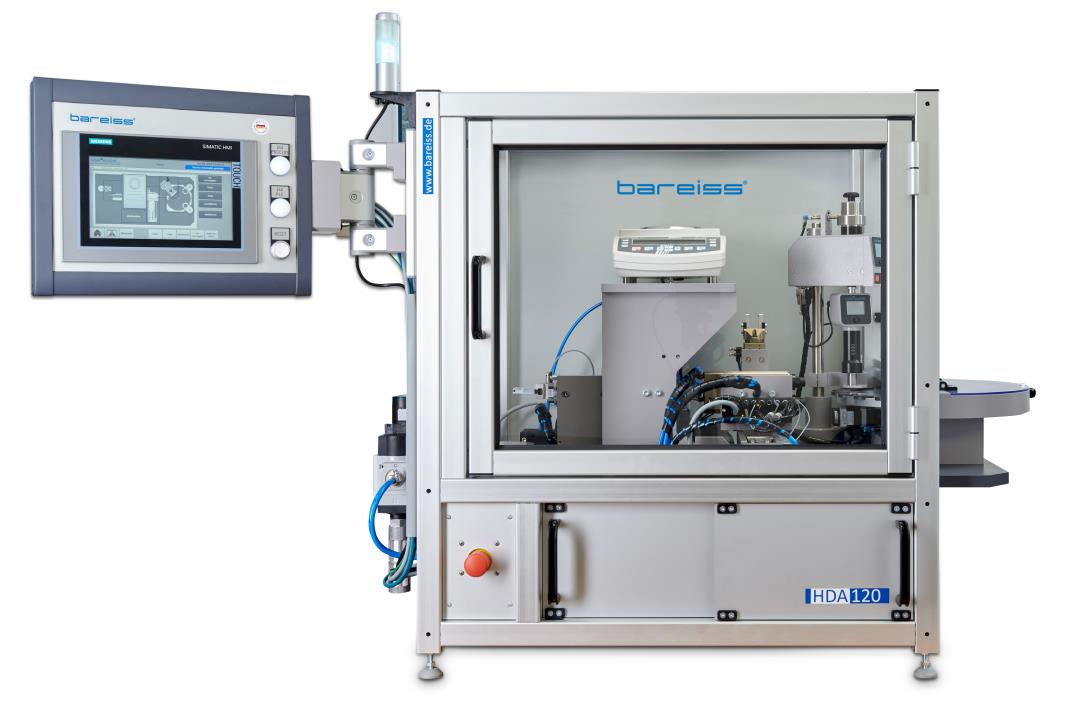
HDA 120 - Hardness and Density Automation Test System
HDA 120 is a semi-automatic hardness and density automation system for rubber and plastic sample characterization. It can handle up to 20 samples, perform three hardness measurements on a rotary table, and transfer specimens for density determination using a pneumatic gripping system. Data interfaces, touchscreen operation, ISO-compliant methods, and automated handling help improve throughput, traceability, and repeatability.
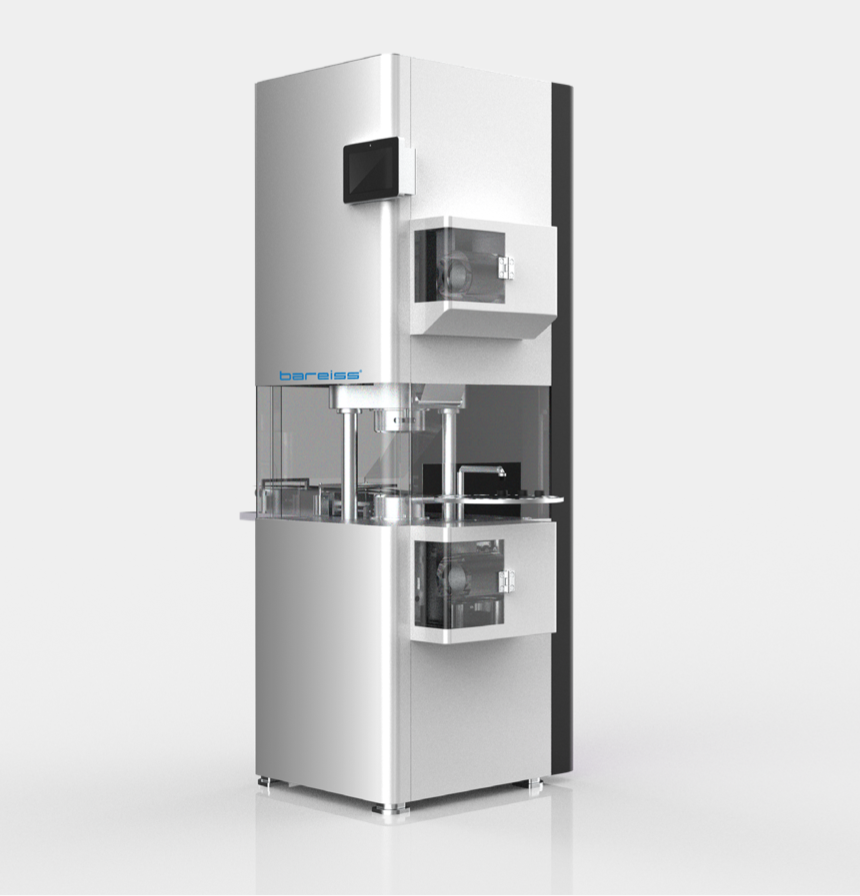
RPA Ultra - Advanced Rubber Process Analyzer Rheometer
RPA Ultra is an advanced rubber process analyzer rheometer for measuring dynamic and static properties of raw rubber compounds and elastomers during processing and cure. Its closed-cavity moving die design, direct-drive deformation control, broad torque range, frequency capability up to 100 Hz, and high-pressure pneumatic sealing help labs characterize viscoelastic behavior, cure response, modulus, viscosity, tan δ, and processing performance.
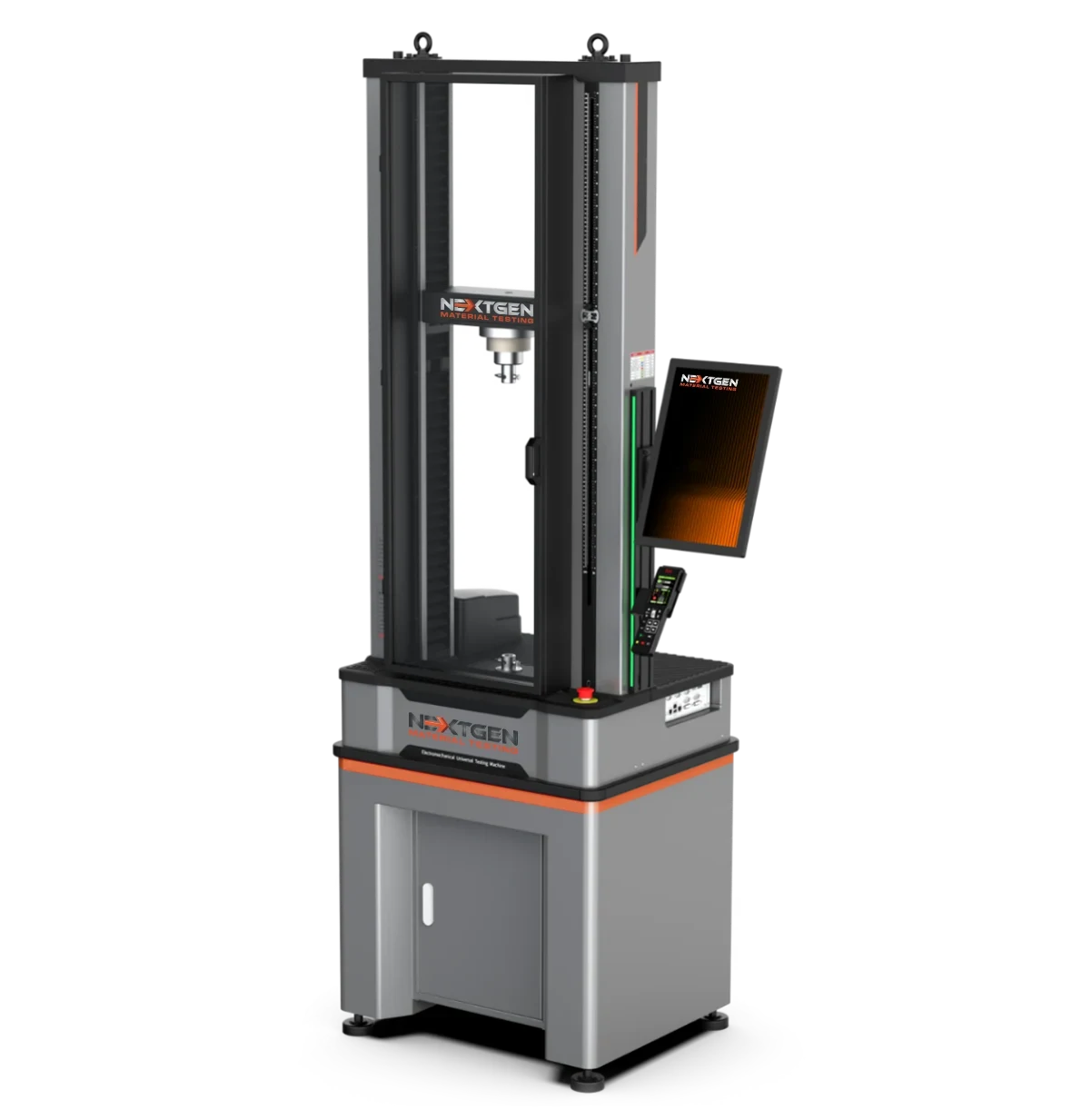
NG-EML Series B – Dual Column Bench Top Universal Testing Machine (100 N – 10 kN)
NG-EML Series B is a dual-column benchtop electromechanical universal testing machine for precision testing from 100 N to 10 kN. Built for research and industrial labs, it supports tension, compression, flexural, and component testing of composites, high-strength metals, polymers, films, foams, and rubber. Its compact rigid frame, advanced control accuracy, and GenTest software help deliver repeatable results in limited lab space.
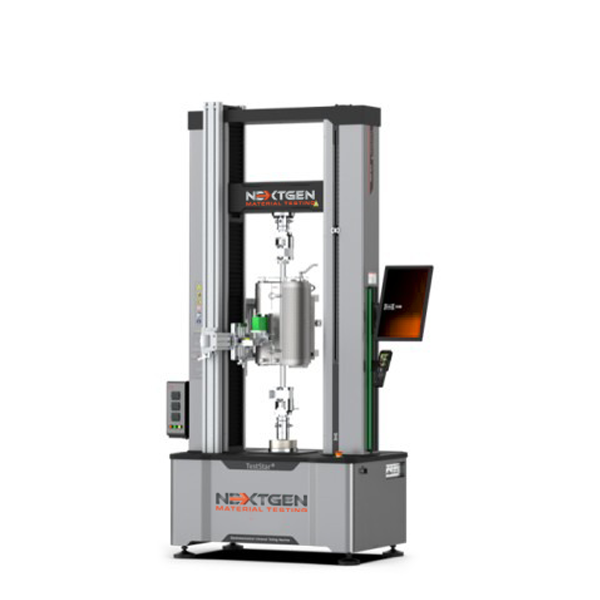
NG-EML Series C – Dual Column Bench Top and Floor Standing Universal Testing Machine (5 kN – 50 kN)
NG-EML Series C is a dual-column electromechanical universal testing machine available in bench-top and floor-standing formats from 5 kN to 50 kN. Built for tension, compression, flexural, shear, and peel testing, it combines Class 0.5 accuracy, a servo direct-drive system, high-rigidity frame, touchscreen control, and GenTest software to support precise testing of metals, composites, rubber, plastics, and polymers.
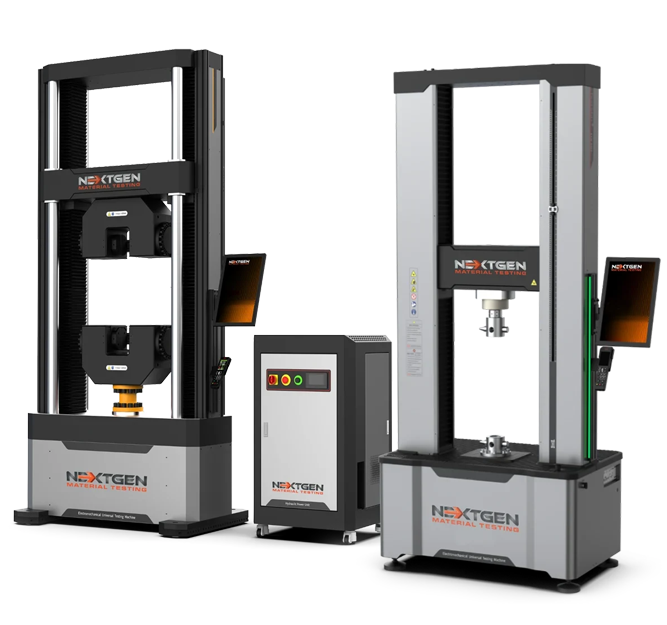
NG-EML Series D – Floor Standing Universal Testing Machine (50 kN – 1000 kN)
NG-EML Series D is a heavy-duty floor-standing electromechanical universal testing machine for high-capacity tensile, compression, and flexural testing. Available from 50 kN to 1000 kN, it is built for high-strength steels, advanced composites, alloys, and challenging research materials. Its rigid dual-column frame, servo direct-drive system, closed-loop control, safety protections, and GenTest software support stable, accurate testing.
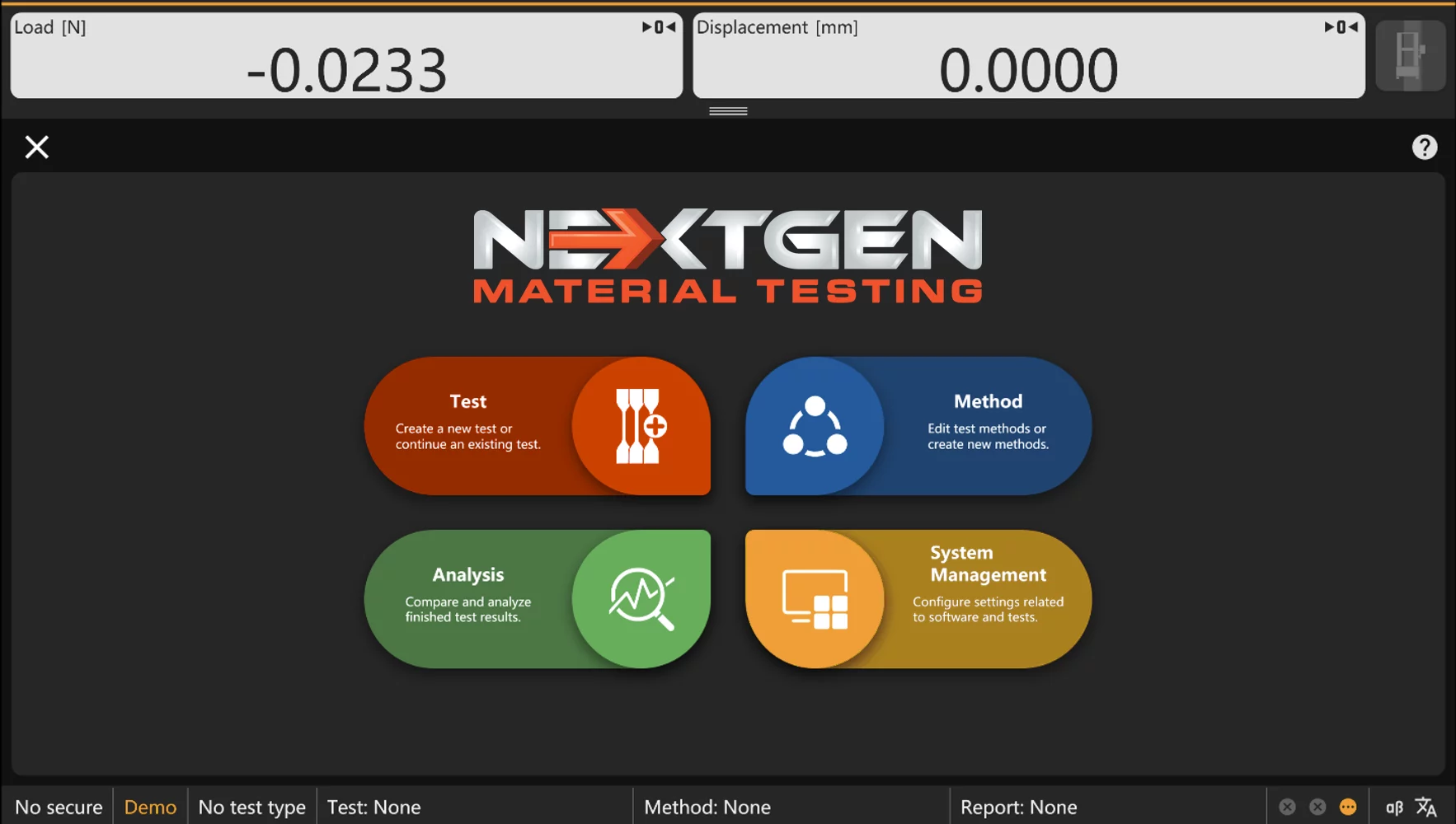
GenTest – Advanced UTM Testing Software
GenTest is NextGen’s advanced UTM testing software for electromechanical universal testing machines, managing test setup, live control, data acquisition, calculations, curves, and reporting from one method-driven environment. Preconfigured ASTM, ISO, DIN, EN, and BS templates help operators load the correct control mode, speeds, gauge length, formulas, and result fields for tensile, compression, and flexural tests.
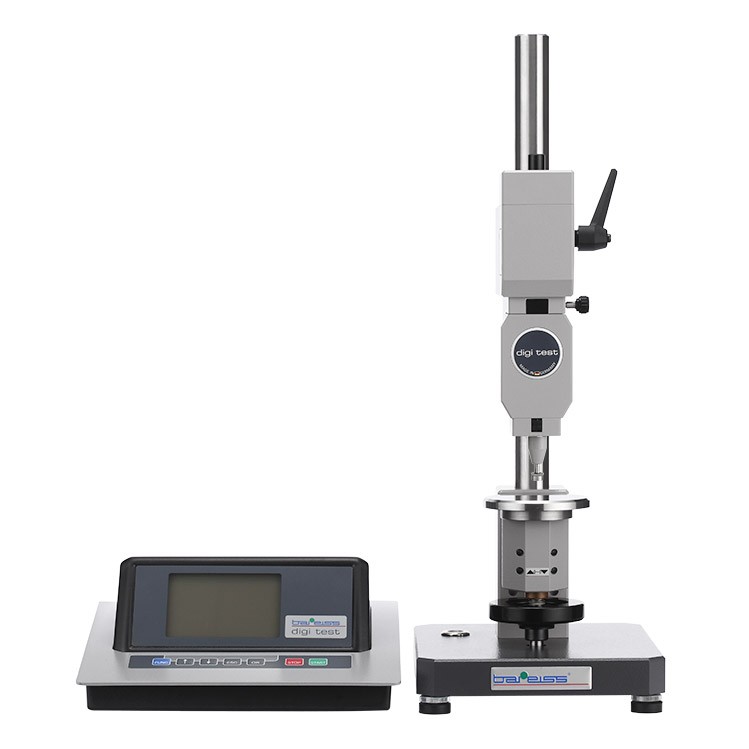
Automatic Shore, IRHD and VLRH Hardness Testing System
Digi Test II is an automatic Shore, IRHD, and VLRH hardness testing system for rubber, plastics, foams, elastomers, O-rings, tubes, hoses, and shaped parts. It combines an electronic control unit, loading module, test stand, and interchangeable measuring heads with automatic range recognition, programmable measuring time, USB output, and low-operator-influence operation. DIN, ISO, ASTM, BS, and DAkkS certificate support strengthen repeatability.
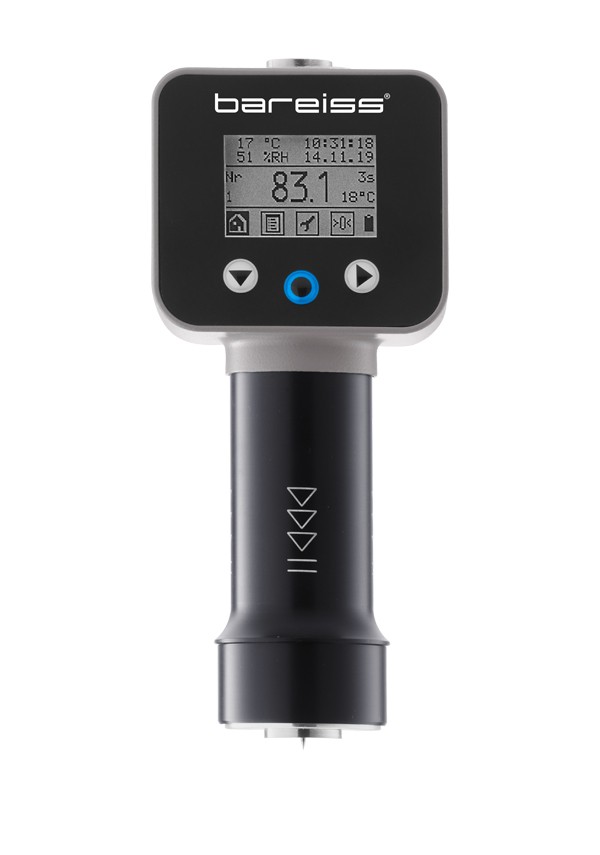
Advanced Portable Shore Durometer System with Test Stand Options
HPE III is an advanced portable Shore durometer system for hardness testing of rubber, plastics, and related materials. It measures hardness while also displaying specimen or environmental temperature and humidity, helping users track conditions during testing. A large LCD display, aluminum casing, patented ergonomic hand grip, USB connection, historical data display, rechargeable operation, and compatible manual or automatic test stands improve repeatability.
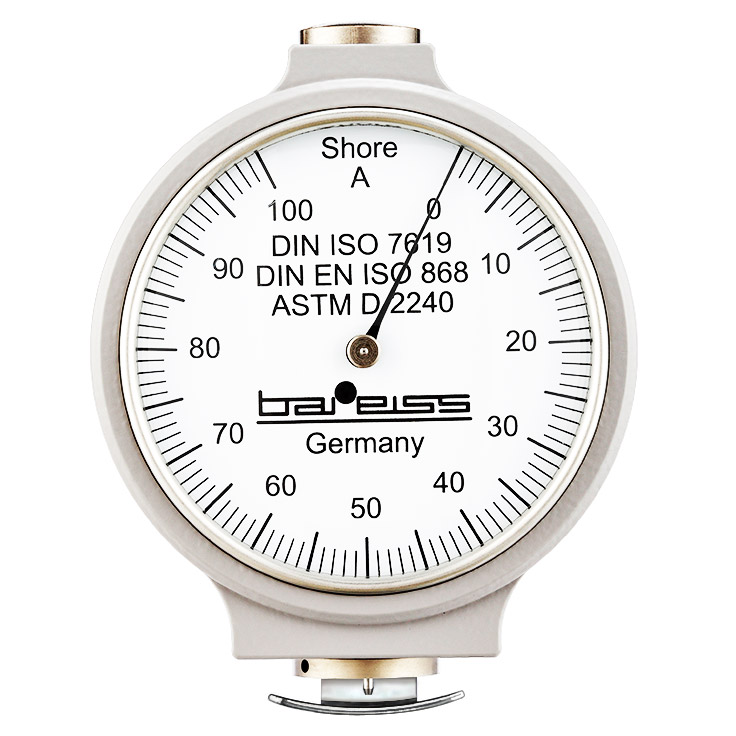
Classic Analogue Shore Durometer with Test Stand Options
The Classic Analogue Shore Durometer is a German-manufactured hardness tester for rubber and plastic materials, available with manual or automatic test stand options. Known as a long-standing Shore hardness benchmark, it supports portable measurements, ergonomic operation, reference blocks, control rings, calibration accessories, and DAkkS/DKD certificate options. DIN 53505, EN ISO 868, ASTM D2240, and JIS K 6253 compatibility supports reliable verification.
Akron Abrasion Tester
GenKron Akron Abrasion Tester measures abrasion resistance by tracking volumetric loss from a rotating specimen exposed to a standard grinding wheel. Designed for harder rubber materials such as shoe soles, tires, and similar compounds, it uses controlled rubber wheel speed, grinding speed, adjustable inclination, specified loading, and LCD cycle counting to support repeatable wear comparisons in rubber product development and quality control.
Burst Strength Tester for Fabric
GenBurst is a burst strength tester for measuring the rupture resistance of fabric, leather, paper, and similar sheet materials under hydraulic pressure. Available in manual and automatic models, it uses a hydraulic diaphragm system with pressure transducers, capacity up to 100 kgf/cm², and ISO 2759 and ASTM D2210 compliance to support standardized durability, packaging, textile, and quality-control testing.
DIN Abrasion Tester
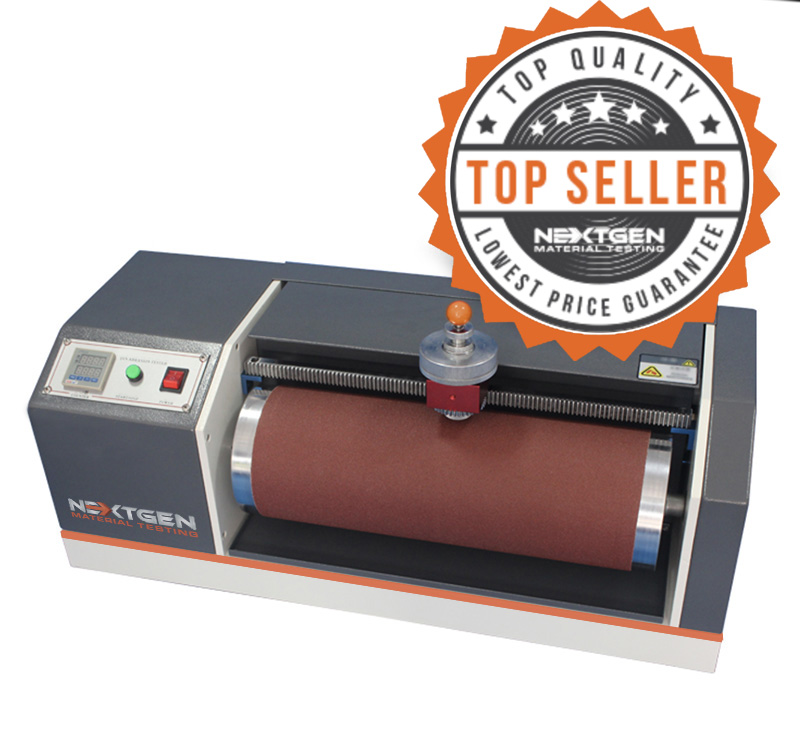
GenDin is a DIN abrasion tester for measuring abrasion resistance of vulcanized rubber, thermoplastic elastomers, footwear materials, tires, seals, and other rubber components exposed to frictional wear. The test moves a specimen across an abrasive sheet on a rotating drum and reports volume loss or abrasion index. ASTM D5963, ISO 4649, DIN 53516, EN ISO 20344, and SATRA TM174 support standardized comparisons.
Demattia Flex Cracking Tester
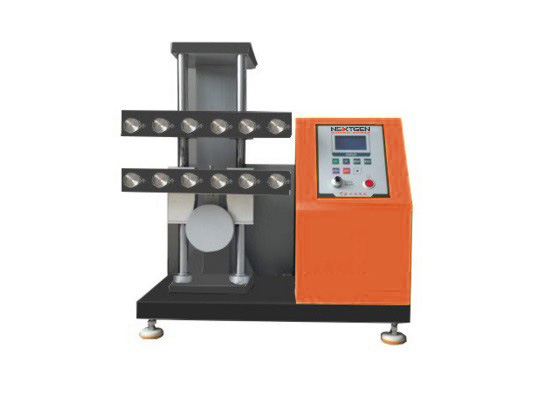
GenFlex Demattia Flex Cracking Tester evaluates the ability of rubber products to withstand repeated flexing without developing cracks. It simulates standard flexing conditions of speed, stroke, and deformation to assess flex endurance in rubber and elastomer specimens. With selectable specimen formats, high-cycle LCD counting, controlled reciprocating motion, and stable fixture spacing, it helps laboratories compare compound durability for products exposed to repeated bending.
Discoloration Meter
The Discoloration Meter simulates sunlight and heat exposure to evaluate how fabrics, rubber, plastics, and other materials resist fading or discoloration. Available in compact and larger chamber configurations, it uses UV lamps, controlled temperature up to 200°C, sample racks, and an LED control display to support repeatable colorfastness testing for quality control, material comparison, and durability evaluation under accelerated environmental conditions.
Electric Crocking Tester - GenCrock
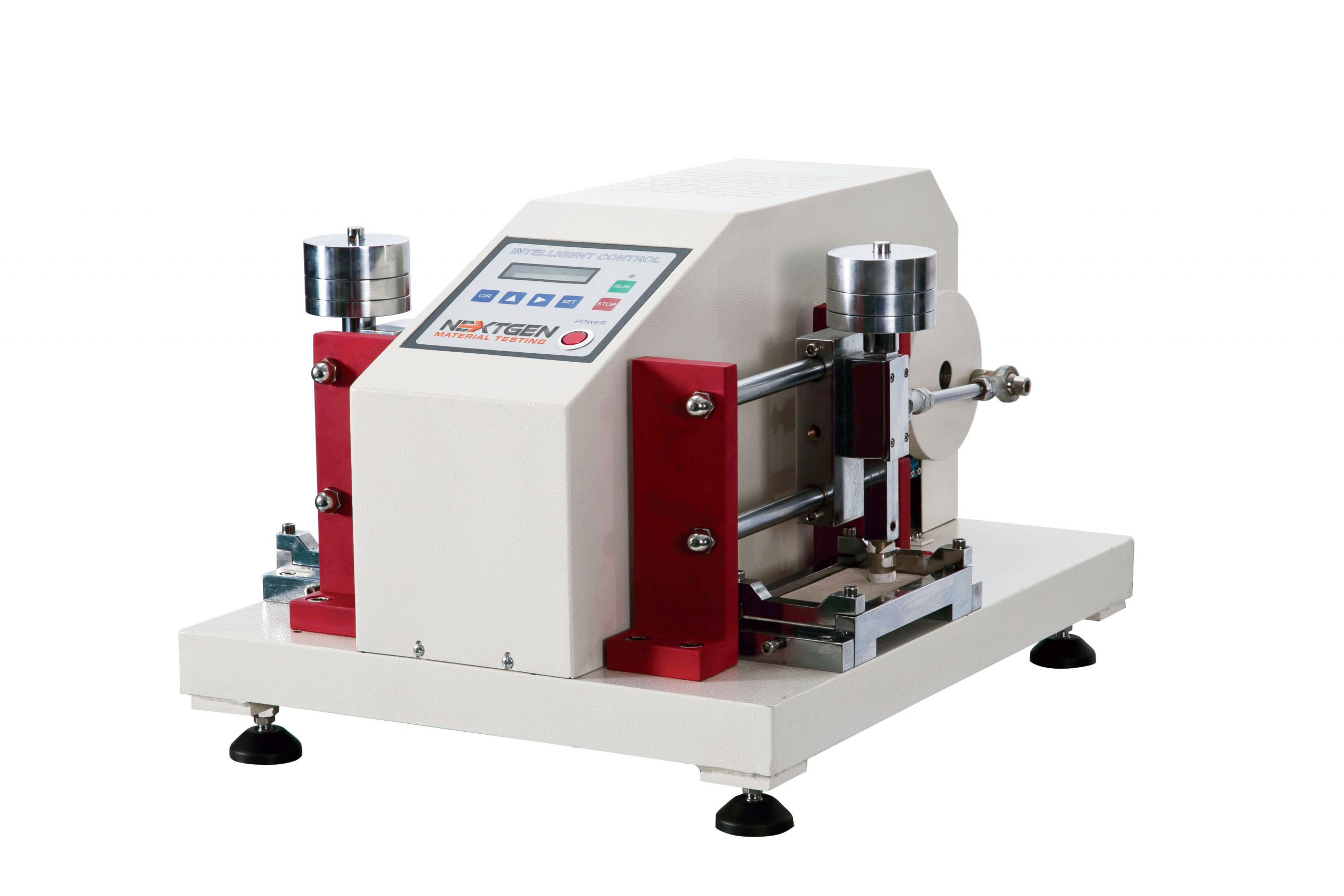
GenCrock is an electric crocking tester for evaluating color transfer and fading on fabric, leather, and dyed surfaces after dry or wet rubbing. The specimen is fixed to the base and rubbed with a controlled abrasive hammer carrying wet or dry cloth. This repeatable setup helps laboratories rate dyeing quality, colorfastness, and surface durability for textile, leather, and product QC.
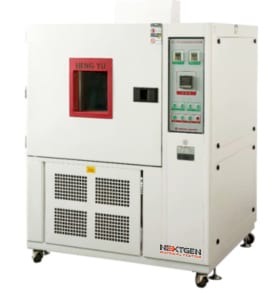
Freezing Tester - GenFreeze
GenFreeze is a freezing tester for evaluating rubber, leather, plastics, PU leather, footwear materials, and related products under cold-climate conditions. It allows operators to adjust flexing or impact-style fixtures according to the test demand, then expose specimens inside a controlled low-temperature chamber. Stainless construction, PID control, safety protection, viewing window, lighting, and intelligent power-failure recovery support repeatable cold-resistance testing.
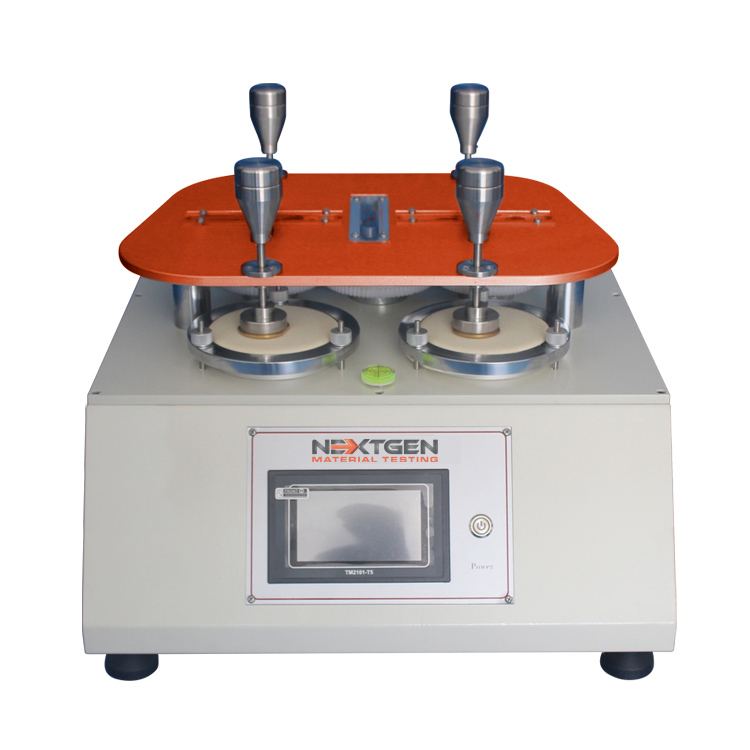
Martindale Abrasion Tester - GenDale
GenDale is a Martindale abrasion tester for evaluating abrasion resistance and visible wear in shoe fabrics, linings, textiles, and related materials. It tests up to four specimens at once using controlled multi-directional rubbing motion, with results based on the number of cycles until wear or hole formation appears. The system supports footwear, textile, and material QC labs needing repeatable durability comparisons.
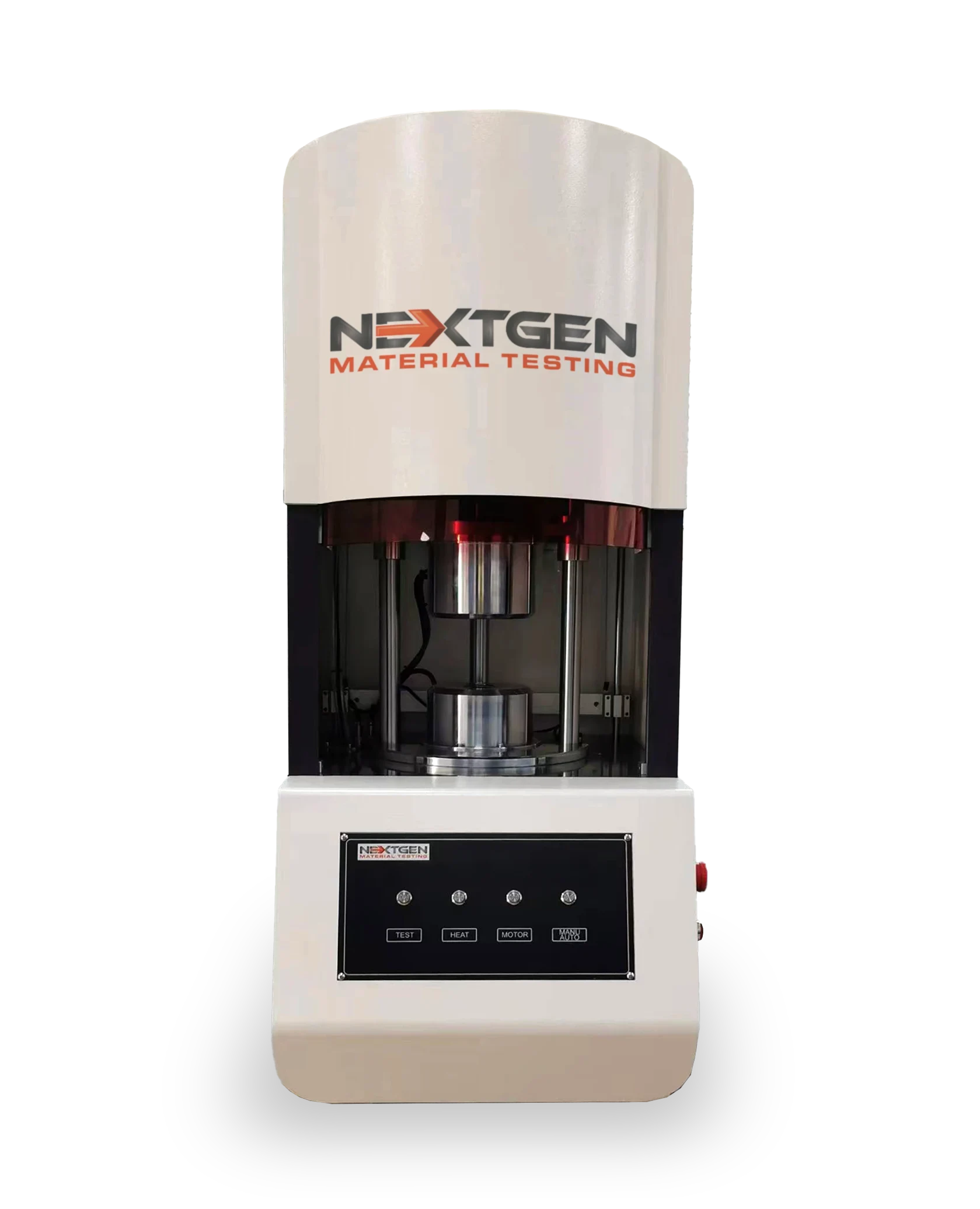
Mooney Viscosity Testing Machine - GenMooney
GenMooney is a Mooney viscosity testing machine for measuring viscosity, scorch behavior, and stress relaxation in unmixed or mixed unvulcanized natural, synthetic, and regenerated rubber. It combines fast heating, stable temperature control, high-precision torque measurement, automated calibration, data acquisition, and software reporting to support ASTM D1646, ISO 289, ISO 667, and GB/T 1233 workflows in rubber QC and formulation development.
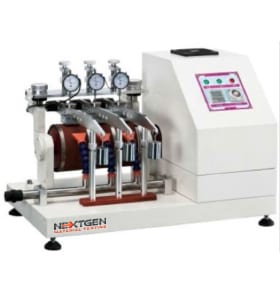
NBS Rubber Abrasion Tester - GenNBS
GenNBS is an NBS rubber abrasion tester for evaluating abrasion resistance of vulcanized rubber and related compounds, especially shoe soles and heels. It measures volumetric loss as specimens contact standardized abrasive media mounted on a rotating cylinder. Intelligent power-failure recovery, 45±5 rpm rotation, three specimen load sets, LCD counting, #40 grinding paper, and ASTM D1630 and D394 support make it useful for standardized rubber wear testing.
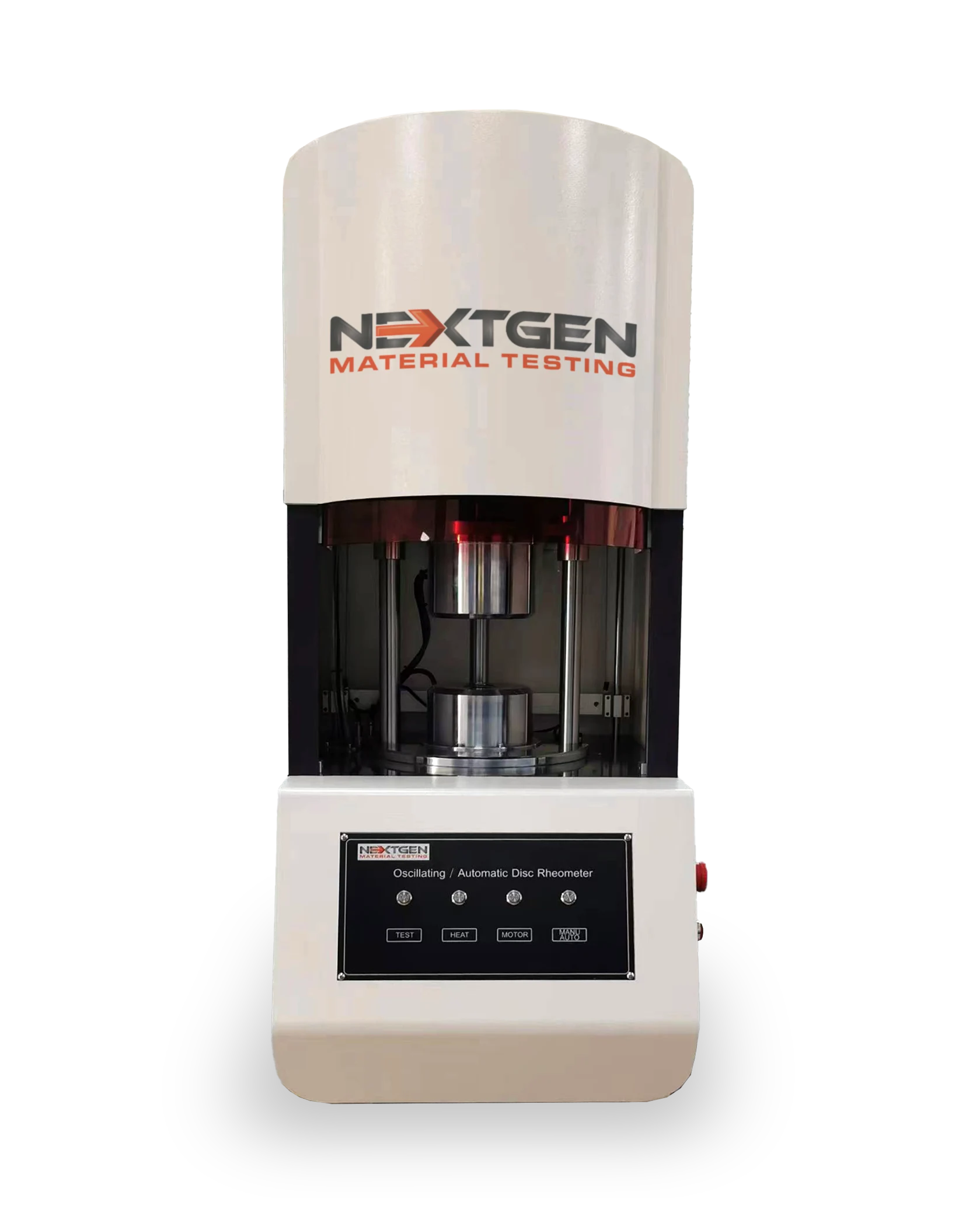
Oscillating / Automatic Disc Rheometer (ODR)
NG-ODR is an oscillating disc rheometer for measuring curing and processing characteristics of rubber compounds. It records torque response as a rubber sample is held in a heated sealed cavity and sheared by an oscillating disc, producing vulcanization curves and key parameters for QC, research, and production. Database storage, Excel export, curve comparison, statistical tools, and ASTM D2084, ASTM D5289, and ISO 6502 support reliable analysis.
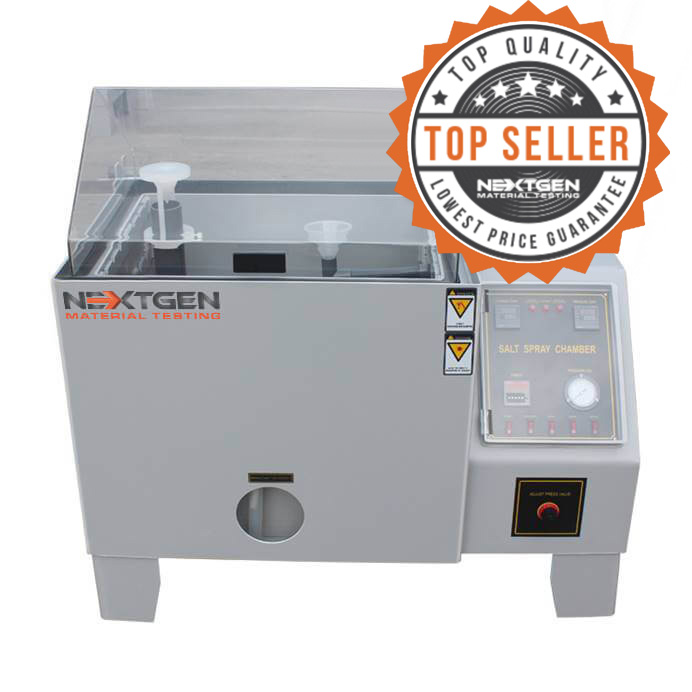
Salt Spray Tester - GenSalt
GenSalt is a salt spray tester for accelerated corrosion testing of metals, coated components, paints, varnishes, electroplating, anodizing, and rust-prevention treatments. It simulates controlled salt-fog exposure to evaluate how materials and protective finishes withstand corrosive environments. ASTM B117 alignment, reinforced PVC construction, SUS304 saturated air tank, precision air-pressure control, titanium heating tube, timing memory, and safety alarms support reliable long-duration QC testing.
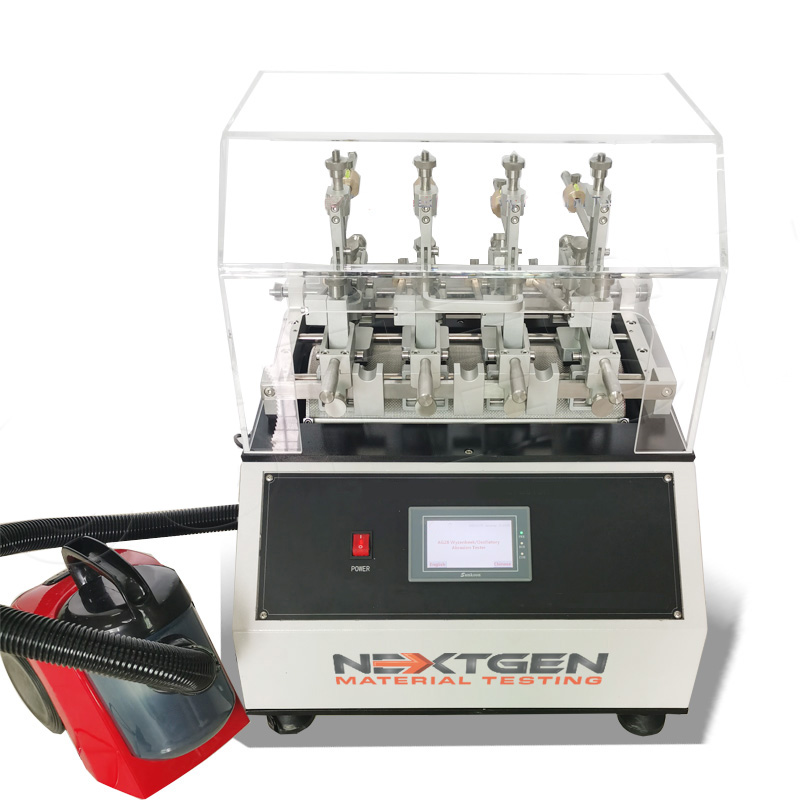
Wyzenbeek Abrasion Tester - GenWyze
GenWyze is a certified Wyzenbeek abrasion tester for measuring abrasion resistance of fabrics, upholstery materials, and selected coated or metallic surfaces. The specimen is pulled over a curved frame and rubbed against an abradant until visible wear appears, with results reported in cycles or double rubs. Four test chambers, adjustable load, ASTM D4157, ASTM D3597, ISO 12402-7, and automotive-method compatibility support standardized durability comparisons.
Vertical Rebound Resilience Tester - GenRebound
GenRebound is a vertical rebound resilience tester for measuring the elasticity and rebound behavior of hard rubber compounds and similar materials. Based on the free-fall hammer method, it records rebound height after controlled impacts and calculates results from repeated measurements. ASTM D2632 and ISO 10012 alignment, horizontal setup adjustment, electronic readout, and repeatable drop positioning make it useful for shock and vibration compound development.
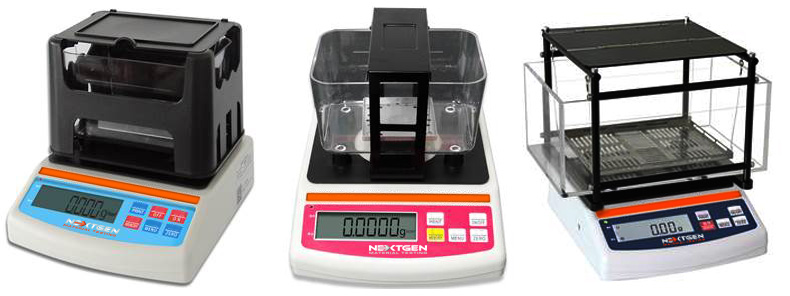
Digital Densimeter Systems
NextGen Digital Densimeter Systems measure density, specific gravity, volume, and related material properties for rubber, plastics, tires, shoe materials, composites, leather, elastomers, and other solids. Using high-accuracy digital measurement with instant readout, storage, RS-232 output, temperature and medium settings, and Archimedes-based buoyancy methods, they help QC and R&D labs produce fast, repeatable density data under ASTM, ISO, JIS, and GB/T standards.
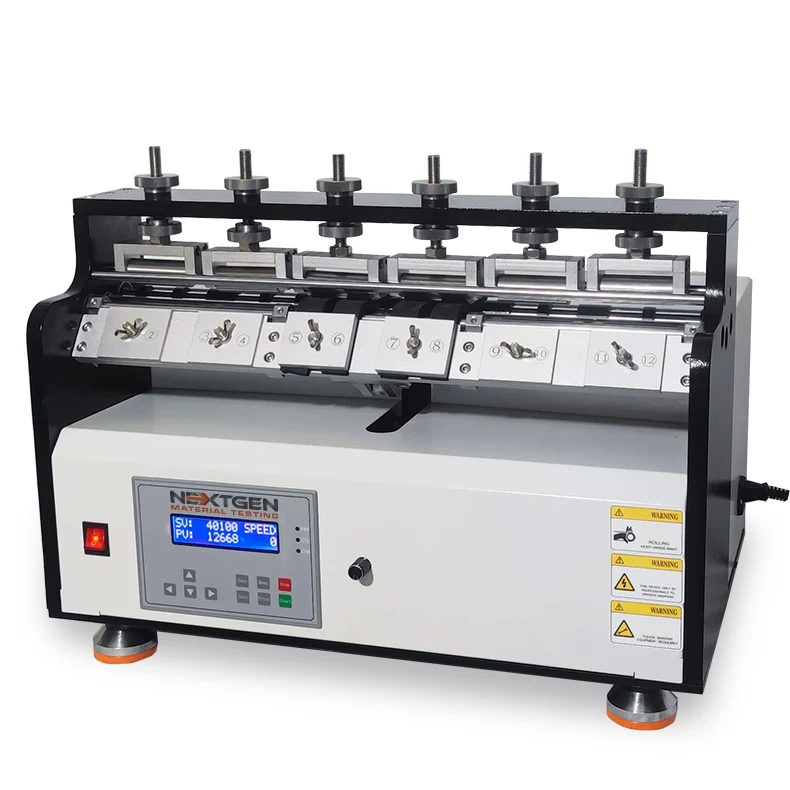
Ross Flex Tester
Ross Flex Tester evaluates the resistance of vulcanized and synthetic elastomers to cut growth and flex cracking under repeated bending. Designed for shoe soles and flexible sheet-like materials such as PU, PVC, TPR foams, rubber, leather, textiles, and plastics, it bends specimens through 90° over a 10 mm rod. Digital control, memory function, vacuum holding, and 6- or 12-grip configurations support repeatable testing.