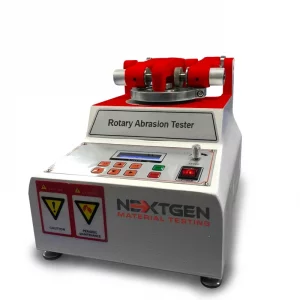
ASTM D3884 is a standard guide for evaluating the abrasion resistance of textile fabrics using a rotary platform abrader (often associated with Taber-type abrasion testing). It is commonly used when teams need a repeatable lab approach for comparing fabric constructions, fiber types, and finishes under controlled abrasion conditions.
Because abrasion results can be highly sensitive to abradant choice, specimen tension/loading, and the evaluation method, test planning and equipment configuration matter as much as the instrument itself. If you need help matching your material, end-use, and reporting requirements to the right setup, talk with our team.
ASTM D3884 — Standard Guide for Abrasion Resistance of Textile Fabrics (Rotary Platform Abrader Method)
ASTM D3884 provides guidance for determining abrasion resistance of textile fabrics using a rotary platform abrader. It is typically used to generate comparative abrasion performance data for fabrics and to support internal quality control, product development, and material selection decisions.
This is a “guide” rather than a product specification. It supports a controlled abrasion test workflow, but the usefulness of results depends on choosing test conditions and evaluation criteria that make sense for the intended end-use.
Quick Definition
Standard type: Guide.
What it does: Guides abrasion resistance evaluation of textile fabrics using a rotary platform abrader.
What you get: Comparative abrasion performance results under defined conditions (best for comparing materials and monitoring variation, not for directly predicting service life).
What This Standard Covers
ASTM D3884 covers abrasion resistance determination for textile fabrics using a rotary platform abrader. The method is frequently selected when a lab needs a consistent way to apply controlled abrasive action to a fabric specimen and then evaluate abrasion damage using a chosen endpoint.
In practice, users must define the specific test conditions and evaluation approach that will be used for comparisons (for example, the chosen abradant, test duration/cycles, and the damage/endpoint definition).
Why This Standard Matters in Testing
Abrasion resistance is influenced by many interacting factors such as fiber properties, yarn and fabric construction, finishes, and test conditions. ASTM D3884 is widely used because it provides a structured framework to run abrasion tests in a way that is repeatable enough for comparison work—especially for detecting meaningful differences among fabrics or identifying manufacturing/finishing variation within a style or lot.
For procurement, QA/QC, and R&D, the standard is often part of a broader durability screening program where abrasion data is combined with other fabric performance testing and, when needed, end-use trials.
Common Materials, Product Types, or Applications Covered
ASTM D3884 is used across many textile fabric categories where surface wear is a concern.
Common material forms: Woven, knit, and nonwoven fabrics.
Common application areas: Apparel fabrics, household/upholstery textiles, industrial fabrics, and certain floor-covering related textiles where controlled abrasion comparisons are required.
Common Test or Verification Workflow
A typical ASTM D3884 workflow is organized around defining the abrasion conditions and the evaluation endpoint before testing starts.
Common workflows: (1) define the end-use intent and comparison goal, (2) select abrasion conditions and an evaluation endpoint, (3) prepare and condition specimens, (4) run abrasion exposure on the rotary platform abrader, (5) evaluate and record abrasion damage per the chosen endpoint, (6) report results in a way that supports comparison across materials or lots.
Practical caution: If you change abradant type, loading/tensioning approach, conditioning practice, or evaluation criteria, you can change the outcome significantly. For meaningful trend data, keep configuration and consumables consistent and document them clearly.
Equipment Commonly Used for This Standard
ASTM D3884 typically points to a rotary platform abrader system and supporting accessories that help keep the abrasion exposure and evaluation consistent.
Common equipment: Rotary platform abrader (Taber-type) with appropriate specimen mounting hardware; abrasion wheels/abradants and related consumables; defined loading/weight accessories used with the abrader; debris removal provisions (commonly vacuum pickup on many systems); specimen cutting tools/templates; a balance for mass-change style endpoints when used; and basic measurement/inspection tools appropriate to the chosen endpoint.
Selection notes for quoting: Most purchasing decisions come down to (a) the abrader configuration and controls, (b) consumable/wheel availability and how they are managed, (c) debris removal/vacuum integration, and (d) how your lab plans to evaluate abrasion damage (visual rating, mass loss approaches, thickness change, or other agreed criteria).
How to Read This Designation or Revision
Designation: “D3884” is the ASTM standard number under ASTM Committee D13 (textiles).
Revision suffix: A hyphenated year (for example, D3884-22) indicates the publication year of that edition. You may also see reapproval or editorial suffixes in some citations (for example, “R” designations or “e1”), so equipment and reporting decisions should be tied to the exact edition referenced in your customer or internal requirement.
Revision sensitivity: Even when the standard number stays the same, updates can affect how labs define conditions and document results. Always align your procedure, consumables, and reporting template to the cited revision.
Related Standards, Methods, or Frameworks
ASTM D3884 is one of several abrasion approaches used for textiles. Depending on the fabric type and the kind of wear being simulated, other abrasion methods may be referenced alongside (or instead of) D3884.
- ASTM D3389
- ASTM D3885
- ASTM D3886
- ASTM D4157
- ASTM D4158
- ASTM D4685
- ASTM D4966
- AATCC 93
- ASTM D7255 (for leather abrasion)
Get help configuring an ASTM D3884 abrasion test setup
If you are specifying a rotary platform abrader for ASTM D3884, the right configuration depends on your fabric type, the endpoint you need to report, and how you plan to control consumables and debris removal. You can request a detailed quote for an ASTM D3884-ready system and accessories matched to your lab workflow.