Metal Testing Equipment
Flat tensile specimen preparation machines are designed for producing flat tensile samples in the dog-bone geometry used for mechanical testing. These machines shape raw blanks into consistent, repeatable specimens that match standard dimensions for tensile testing. The ability to maintain steady geometry across multiple samples is important for comparing material performance, verifying batch quality, or conducting research and development work.
This category includes systems suitable for different levels of use, from small research and academic laboratories preparing limited quantities, to quality control environments with daily sample throughput, and industrial testing facilities that require continuous preparation capacity. Machines vary in working envelope, cutting capabilities, and automation level, allowing users to select a model that aligns with material type, testing frequency, and available workspace.
Flat tensile preparation equipment may be used with metals, polymers, composites, and other structural materials. Many systems feature guided machining workflows, making it possible to achieve stable specimen dimensions with minimal CNC experience. This helps support consistent testing conditions when working under ASTM, ISO, or other recognized tensile testing standards.
Products
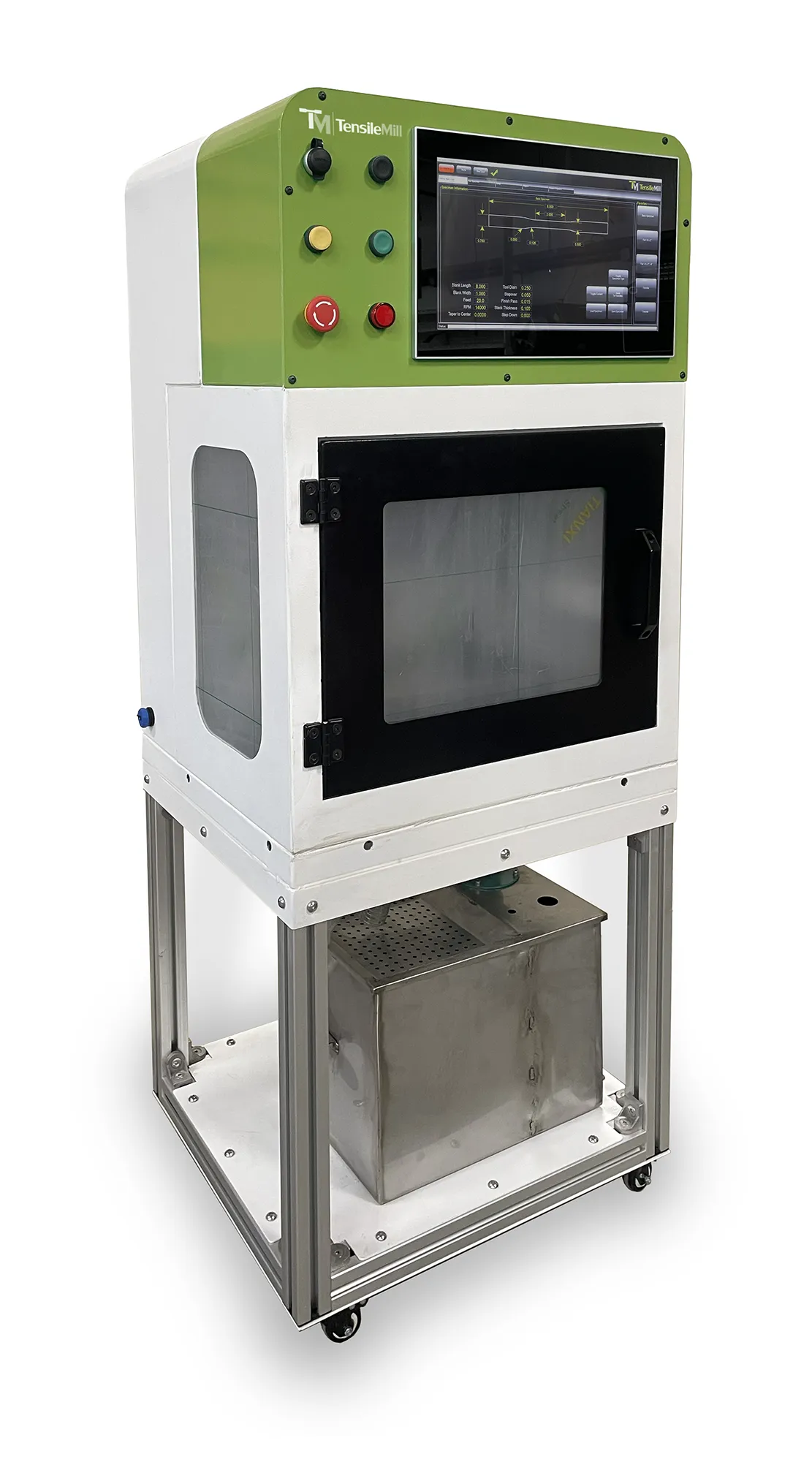
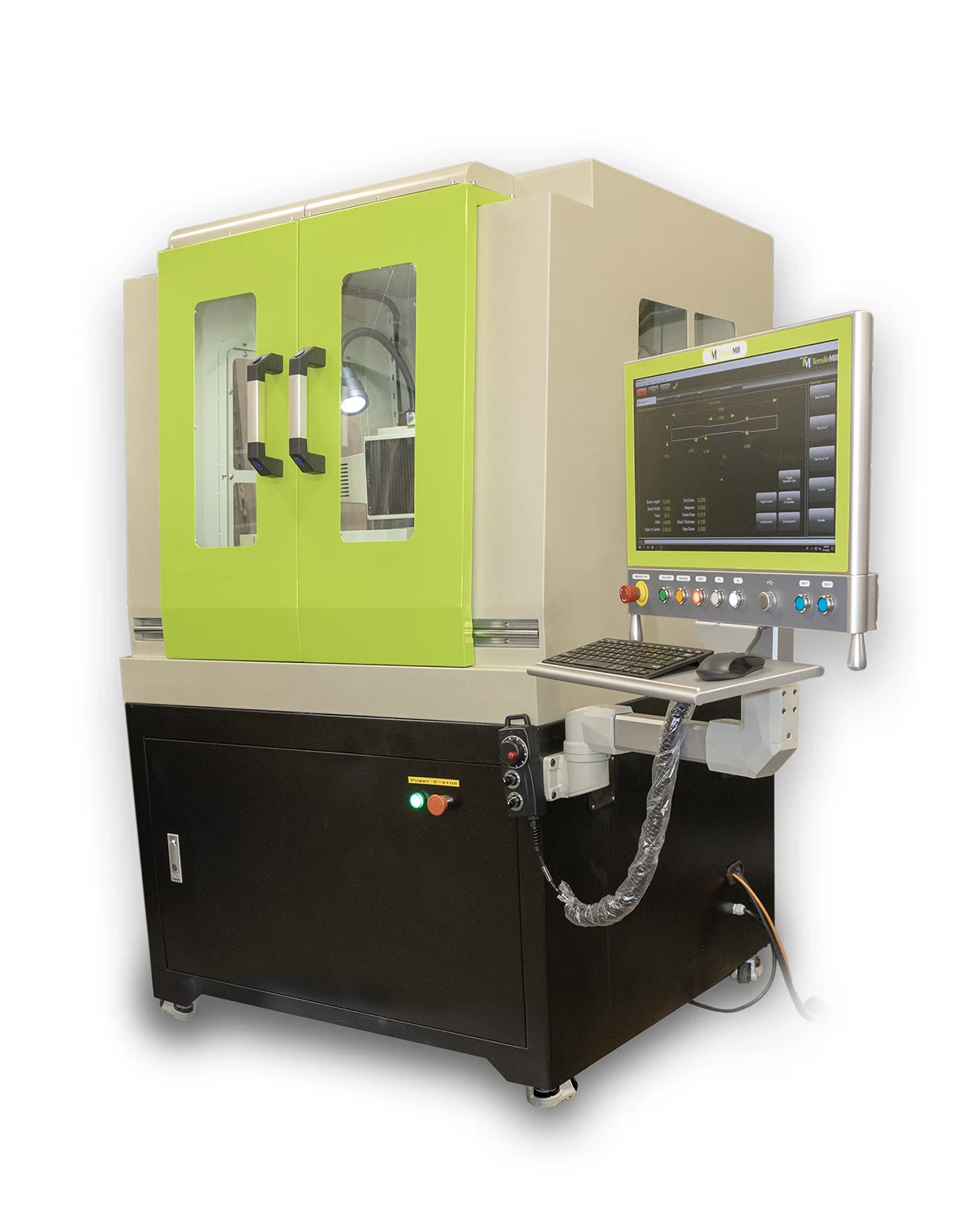
TensileMill CNC MICRO – Compact Flat Tensile & Impact Specimen Preparation Machine
TensileMill CNC MICRO is a compact 2-axis machine for preparing flat tensile and impact specimens in-house. Designed for metals, plastics, and composites, it supports standard and custom specimen geometries for QC, R&D, product development, and material qualification. Touchscreen-guided operation, a clean enclosed layout, and dedicated specimen-preparation workflow help non-machinists produce repeatable samples without relying on a full CNC shop.
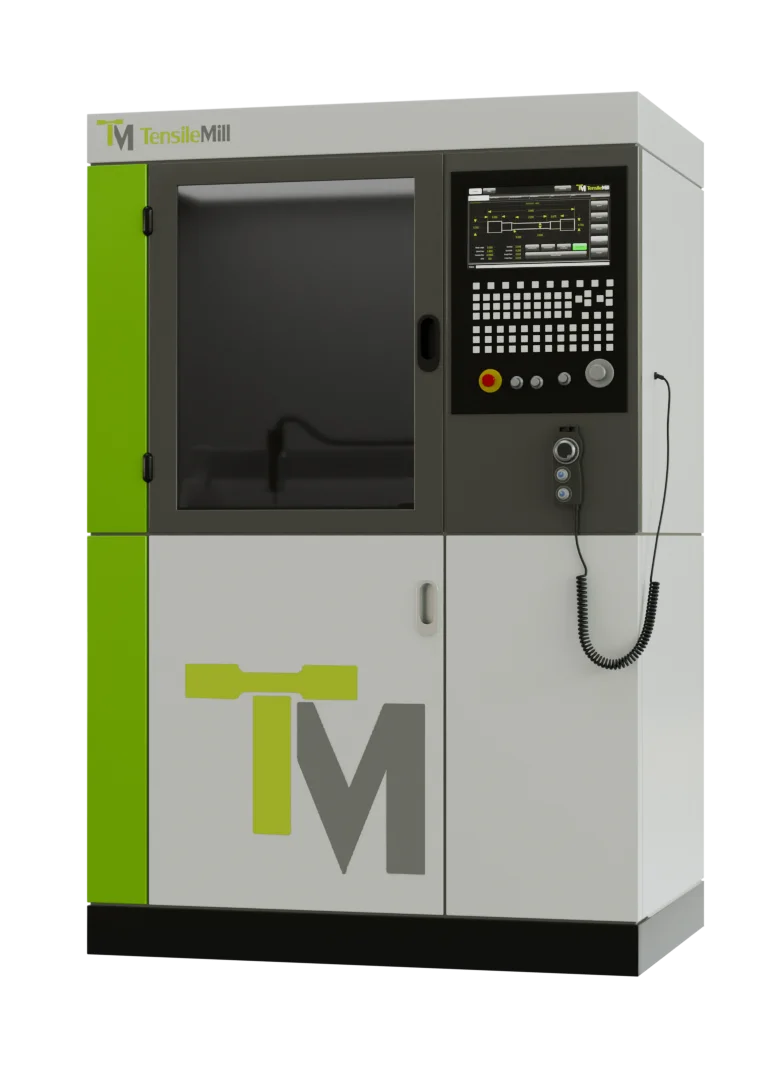
TensileMill CNC Classic Upgrade – Flat Tensile and Charpy/Izod Impact Specimen Preparation System
TensileMill CNC Classic Upgrade is a hybrid CNC specimen preparation system for machining flat tensile and Charpy/Izod impact specimens in-house. It combines TensileSoft™ guided software with a FANUC controller, standardized geometry templates, rigid cast-iron construction, and a servo-driven spindle. Support for ASTM E8, ASTM E23, ISO 6892-1, DIN 50125, and JIS Z2201 helps labs produce repeatable test-ready specimens.
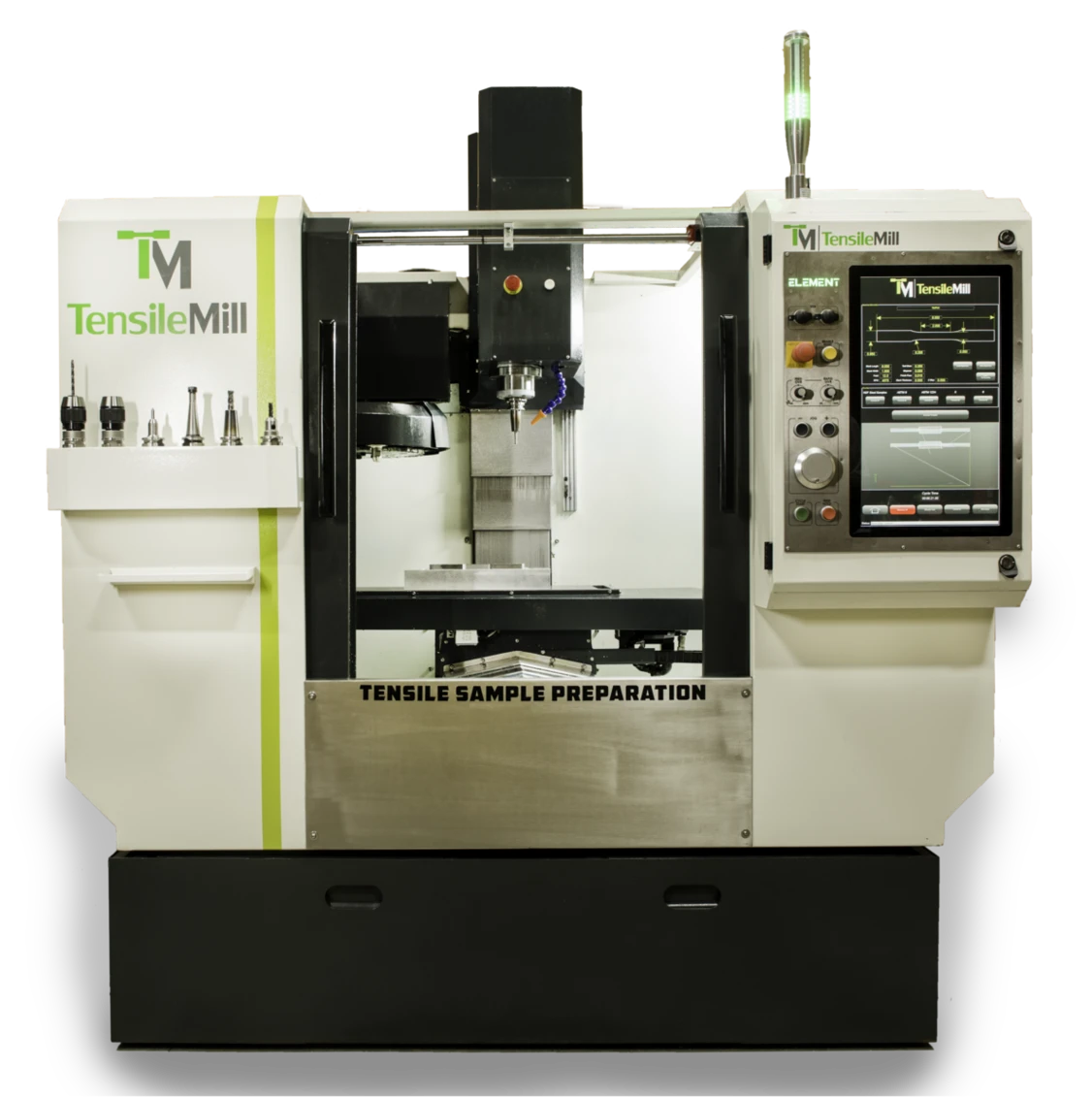
TensileMill CNC XL – Flat Tensile Specimen Preparation Machine
TensileMill CNC XL is a high-capacity flat tensile specimen preparation machine for laboratories and production floors handling larger or tougher materials. It combines extended table travel, increased spindle power, precision servo motors, Mach4-based control, and the TensileSoft interface to machine ASTM E8, ASTM A370, ISO 6892-1, and DIN 50125 specimens with repeatable dimensional accuracy, faster turnaround, and reduced outsourcing.
TensileMill CNC MINI – Compact Flat Tensile Specimen Preparation System
TensileMill CNC MINI is a compact flat tensile specimen preparation system for laboratories that need in-house CNC machining without a large industrial footprint. Built around a heavy cast-iron frame, smooth linear rails, high-powered servos, a 24,000 rpm ISO20 spindle, and guided TensileSoft/Carbon software, it prepares ASTM, ISO, DIN, and JIS-style specimens with repeatable geometry for metals, composites, and polymers.
FAQs
Yes. NextGen Material Testing offers live demonstrations and trial specimen preparation to help clients evaluate system performance with their own materials. During the trial, raw blanks are prepared using the selected configuration, and the process is recorded for review. The finished specimens are then sent back for inspection along with a machining summary. This allows your team to see the surface quality, dimensional precision, and overall workflow before making a purchase decision. To schedule a demonstration or send samples, please contact our team directly.
Yes. Every system comes with on-site or remote installation support and detailed operator training. Our technicians assist with initial calibration, tool setup, and test machining to make sure the equipment is ready for daily use. Training sessions cover the full workflow, from specimen design selection to machining and maintenance, helping operators become confident with the control interface in a short time. Follow-up sessions and refresher training are also available for laboratories integrating new staff or expanding their testing capabilities.
Yes. Flat tensile specimen preparation systems are well suited for R&D environments, educational institutions, and laboratories that produce a limited number of specimens. Even in small batches, the machines maintain the same precision, surface finish, and standard compliance as in full-scale production. Compact models such as the TensileMill CNC MINI are specifically designed for research setups where space is limited but accuracy remains essential. These systems allow quick program adjustments, making them ideal for projects that involve different materials or nonstandard geometries.
The systems we provide are compatible with major international standards for flat tensile testing, including ASTM E8, ASTM A370, ISO 6892-1, and DIN 50125. Each of these standards defines geometry, gauge length, and surface finish requirements to ensure consistent test results across materials and testing facilities. Operators can select these standards directly from the software interface or adjust parameters to match internal laboratory procedures or regional standards such as JIS Z2241.
Preparation time depends on the material, thickness, and selected geometry. For most metals and polymers, a single flat specimen can be prepared in 5 to 12 minutes, including mounting, milling, and finishing. Systems with automatic tool changers and preprogrammed standard profiles can further reduce the cycle time, especially during continuous testing. When processing larger batches or harder materials, preparation may take longer, but dimensional consistency remains stable throughout the entire run.
Yes. Our hybrid machine — the TensileMill CNC Classic Upgrade — is designed to prepare both flat tensile and Charpy/Izod impact specimens. The system uses interchangeable fixtures and software workflows to switch between dog-bone tension specimens and standard notched impact bars without the need for two separate machines. This setup suits labs that test both strength and impact resistance in one workflow.
No. Flat tensile specimen preparation systems are built for easy and guided operation. The user interface displays each machining step clearly, from selecting the standard to setting up the blank and starting the cut. Operators can monitor tool movement and progress through a simple touchscreen without entering complex CNC code.
For experienced users, advanced functions such as toolpath adjustment and machining sequence control are still available. This balance allows both new and skilled technicians to achieve precise, repeatable results without the need for specialized CNC training.
Flat tensile specimen preparation machines can produce standard dog-bone, sub-size, and custom-profile specimens. The system automatically follows the selected geometry, including the gauge length, shoulder radius, and overall dimensions defined by the chosen testing standard.
For research or nonstandard applications, users can enter custom specimen dimensions using the touchscreen interface or upload a CAD-based toolpath. This flexibility allows laboratories to prepare specialized shapes for prototype testing, coating analysis, or advanced R&D work while keeping the same accuracy and repeatability as standardized specimens.
Yes. The systems we provide are designed to support ASTM, ISO, DIN, and JIS tensile testing standards within a single software environment. Operators can select standard dimensions directly from the built-in library or input custom values when required. This makes it possible to prepare specimens for different test procedures without reprogramming or external machining. Custom templates can also be saved for repeated use, allowing each laboratory to maintain consistency across multiple projects and testing protocols.
Surface finish is managed by controlling feed rate, cutting speed, and tooling geometry. Most systems include a variable-speed spindle and servo-driven motion, allowing smooth cutting across metals, polymers, or composites.
For fine surface preparation, users can apply multi-step passes or use polishing and sanding attachments. The TensileSoft™ interface and compatible systems provide precise control of finishing parameters to achieve the required surface quality for accurate mechanical testing. In laboratories, a visual or profilometer inspection is typically performed to confirm that the finish meets the testing standard’s requirements.
Flat tensile specimens are produced through milling, where the cutting tool removes material from a fixed blank or sheet to form the dog-bone shape defined by standards such as ASTM E8 and ISO 6892-1. This method is ideal for thin materials, plates, and laminated composites.
Round tensile specimens, by contrast, are made through turning on a CNC lathe, where the material rotates while being shaped into a controlled diameter and gauge length. They are commonly used for bar stock, machined parts, and materials that require uniform stress distribution during testing.
Each method serves a specific purpose: flat specimens are chosen for materials where thickness and surface condition are key testing factors, while round specimens are used when testing isotropic strength or bulk material performance.
Flat tensile specimens can be prepared from many structural and testing materials that can be milled or machined. These include:
- Metals: steel, aluminum, copper, titanium, and other alloys used in production or research.
- Polymers and plastics: thermoplastics, thermosets, and engineering-grade resins.
- Composites: carbon- and glass-fiber laminates, layered plates, and reinforced sheets.
- Other materials: sintered metals or experimental compounds used for R&D.
The systems we provide, including solutions from our partners, handle different hardness levels and cutting parameters while keeping geometry stable across multiple specimens.