The Brinell hardness test is a commonly used hardness testing method that measures the hardness of materials. It does so by pressing a hard ball indenter into the surface of the material under a specified load and calculating the hardness based on the size of the indentation. This test is crucial for assessing metal and alloy material properties, verifying their suitability for different industrial applications. Developed over a century ago, the Brinell test remains a reliable and standardized method for hardness measurement in materials science.
Even if you are not directly involved in material testing, you may have come across the term “Brinell test” in various contexts, such as quality control in manufacturing or material selection in engineering. Its enduring relevance highlights the test’s importance in assessing the quality of materials used in high-stakes applications.
The purpose of this article is to explain the Brinell test – its history, the testing procedure, the applications, advantages, limitations, and the equipment used. No matter if you are a professional in the field or just curious about material testing, you will find valuable insights into Brinell hardness testing.
General Information about the Brinell Hardness Test
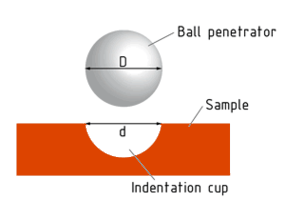 The Brinell hardness test involves pressing a hard ball indenter, usually made of tungsten carbide, into the material’s surface with a specified force. The diameter of the ball is typically 10 mm, but smaller diameters such as 2.5 mm can also be used for specific applications. The force applied ranges from 500 to 3000 kgf, depending on the material being tested and the indenter’s size.
The test procedure begins by applying a load to the material for a specified period, generally between 10 and 30 seconds, in order to cause plastic deformation of the material. After removing the load, the diameter of the indentation left on the material’s surface is measured using a microscope or an automatic reading device. The Brinell Hardness Number (BHN) is then calculated based on the indentation’s diameter, the applied load, and the indenter’s diameter.
One of the key advantages of the Brinell test is its ability to provide a comprehensive measure of a material’s hardness, taking into account its resistance to deformation over a relatively large area. This makes it particularly useful for testing materials with uneven or coarse grain structures. Additionally, the Brinell test is standardized under several international standards, including ASTM E10 and ISO 6506.
History of the Brinell Hardness Test
The Brinell hardness test was developed by Swedish engineer Johan August Brinell in 1900. Brinell, who was actively involved in the Swedish iron industry. His aim was to create a reliable and standardized method for measuring the hardness of metals, particularly steel. The goal was to provide a test that could yield consistent results and be used for quality control in metallurgy and engineering.
Brinell’s method involved pressing a hard steel or tungsten carbide ball into the surface of the material with a known force and then measuring the diameter of the resulting indentation. This allowed for the calculation of the Brinell Hardness Number, which provides a quantitative measure of material hardness. The Brinell test was advantageous because it offered a direct correlation with the material’s ultimate tensile strength (UTS), particularly useful in steel applications.
The Brinell hardness test quickly gained acceptance and became the first widely used and standardized hardness test in engineering and metallurgy. It was appreciated for its simplicity and effectiveness, especially in evaluating the hardness of larger samples with coarse or inhomogeneous grain structures, such as castings and forgings.
Over time, the Brinell test has been incorporated into a number of international standards, ensuring its continued relevance and reliability in material testing. Despite the development of other hardness testing methods, the Brinell test remains a fundamental technique due to its ability to provide comprehensive hardness measurements and its historical significance in the field of materials science.
Brinell Hardness Testing Applications
We have already mentioned above the fact that Brinell hardness tests are widely used across a wide array of industries. Here is a closer look at these industries and examples of how this method might be applied to these industries.
Automotive Industry
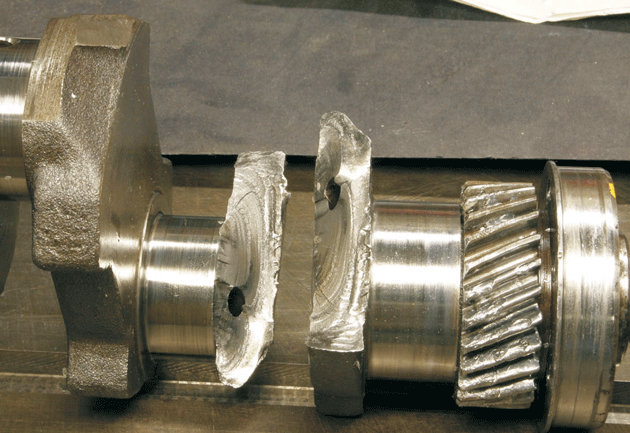
First of all, the automotive industry relies heavily on the Brinell hardness test for assessing the hardness and quality of various metal components. Key applications include testing engine blocks, crankshafts, and gears. These components are subjected to high stress and wear. The Brinell test is particularly useful for large castings and forgings used in automotive manufacturing.
Aerospace Industry
In the aerospace industry, the Brinell hardness test is used to evaluate structural components and engine parts. Materials such as aluminum and titanium alloys, require precise hardness measurements to guarantee that they can withstand extreme conditions encountered during flight. The Brinell method is often used to test components such as turbine blades or landing gear in order to increase their reliability as well as assure their safety.
Construction Industry

The construction industry relies on the Brinell hardness test to assess the quality of structural steel and other metal components used in building and infrastructure projects. This includes testing steel beams, girders, and reinforcing bars to ensure they have the necessary hardness to support loads and resist deformation. The Brinell test helps maintain structural integrity and safety of buildings, bridges, and other constructions.
Manufacturing Industry
In manufacturing, the Brinell hardness test is frequently used to determine the quality and durability of metal parts and products. This includes testing materials like cast iron, steel, and non-ferrous metals used in machinery, tools, and equipment. The test helps manufacturers maintain consistent quality control and optimize production processes by confirming that materials meet specified hardness criteria. Common products tested include machine frames, heavy-duty gears, and industrial valves.
Energy Sector
The energy sector, including oil and gas, uses the Brinell hardness test to evaluate the hardness of pipeline materials, drilling equipment, and structural components of refineries and power plants. Materials used in these applications must withstand harsh environmental conditions and high pressures. Testing confirms that critical infrastructure materials are durable and capable of performing under extreme conditions.
Metallurgy
Metallurgy’s Brinell hardness test is a fundamental tool for research and development. It is used to study the properties of different metal alloys and to develop new materials with desired hardness characteristics. Metallurgists use the test to investigate the effects of heat treatment and alloying on metal hardness, contributing to advancements in material science and engineering.
Heavy Machinery
The Brinell hardness test is one of the most commonly used methods in the heavy machinery industry to determine the quality of components such as blades for bulldozers, buckets for excavators, and mining equipment. Because these components are subjected to a large amount of wear and abrasion, the hardness of these components is crucial to their longevity and performance.
Quality Control
Finally, the Brinell hardness test is an integral part of the quality control processes in a broad range of industries. A hardness test helps in verifying that raw materials and finished products comply with the specified requirements when it comes to hardness. This is extremely important in order to maintain product consistency, reliability, and safety at all times. The Brinell test is often used by quality control laboratories for routine inspections of materials and for the certifying of their hardness before the materials are used in production processes.
Advantages and Limitations of the Brinell Hardness Test
The Brinell hardness test, which is widely used in numerous industries, offers several unique advantages and some limitations that are crucial for accurate hardness measurement. To choose the most appropriate testing method for specific materials and applications, it is important to understand these factors.
Advantages of Brinell Hardness Testing
Brinell hardness tests offer a variety of advantages that make them a preferred choice.
1. Adaptability to Testing Different Materials
One of the key advantages of the Brinell hardness test is its ability to test a broad range of materials. It is applicable to metals, alloys, and even some non-metals. For instance, it can test both soft metals like lead and tin, as well as harder materials like steel and iron.
2. Ability to Handle Large and Coarse Samples
The Brinell test is particularly useful for testing large and coarse-grained materials, such as castings and forgings. The large indentation size created by the test minimizes the impact of surface irregularities, providing a more representative hardness value for materials with uneven or rough surfaces. This feature makes it ideal for assessing the hardness of heavy-duty components like engine blocks and large-diameter pipes used in various industries.
3. High Load Application Capabilities
The Brinell hardness test can apply very high loads, up to 3000 kgf. This high load capability makes it possible for the test to accurately measure the hardness of materials that exhibit significant resistance to indentation, such as hardened steel and heavy machinery components.
Limitations of Brinell’s Hardness Test
Despite its many advantages, the Brinell hardness test has certain limitations that need to be considered.
1. Sensitivity to Surface Conditions
One limitation of the Brinell hardness test is its sensitivity to surface conditions. Rough or uneven surfaces can affect indentation measurement accuracy, leading to unreliable hardness values. Therefore, surface preparation is often necessary to obtain accurate results.
2. Not Suitable for Small or Thin Samples
The Brinell test is unsuitable for small or thin samples because the large indentation size can lead to excessive deformation or damage. Thin materials may not provide sufficient depth for accurate indentation measurements, resulting in inaccurate hardness values. For such samples, alternative hardness testing methods like the Rockwell or Vickers tests may be more appropriate.
3. Time-Consuming Nature of the Test
The Brinell hardness test is relatively slow compared to other hardness testing methods. The dwell time under load typically ranges from 10 to 30 seconds, and additional time is required for measuring the indentation and calculating the hardness value. This long process can be a drawback in high-volume production environments where rapid testing is necessary.
As we can see, while the Brinell hardness test offers significant advantages in terms of flexibility, the ability to handle large and coarse samples, and high load application capabilities. However, it also has limitations related to surface condition sensitivity, suitability for small or thin samples, and its time-consuming nature.
Brinell Test in Material Testing

A Brinell hardness test is an important tool for quality control and material selection, especially for smaller and mid-sized manufacturers. The result of the test determines component’s hardness, and the component is able to withstand operational stresses to ensure that it meets specific performance specifications.
The Brinell test is particularly valuable for assessing materials’ homogeneity and consistency. By measuring hardness variations across different areas of a component, it can identify inconsistencies, irregularities, or potential defects in the material. For example, in the case of cast iron products, this test can reveal whether the hardness is uniformly distributed, which is critical for parts that will be subjected to varying loads and stresses.
Meanwhile, here is a practical example: John manufactures gears for automotive applications. Gears must be highly durable and wear-resistant. Each batch of gears can be tested using the Brinell hardness test to ensure they meet the specified hardness criteria. By doing so, he is able to ensure that the gears will perform reliably under the high-stress conditions that are typical of automotive engines and transmissions. The purpose of this quality control measure is not only to enhance the performance of the product but also to build trust with customers by consistently delivering high-quality components.
Importance of High-Quality Equipment in Brinell Testing
No doubt, reliable Brinell hardness test results require the use of top-quality equipment throughout the entire process. Using high-quality equipment makes certain that the test load is applied precisely and that the indentation measurements are accurate. Conversely, using substandard equipment can lead to inaccurate measurements, inconsistencies, and ultimately unreliable hardness values. This can compromise the quality and performance of the tested materials, potentially leading to product failures and safety issues.
High-quality Brinell testing equipment typically includes features such as automatic load application, advanced optical or electronic measurement systems, and user-friendly interfaces. These features help to minimize human error, increase measurement accuracy, and improve the overall efficiency of the testing process.
Looking for Advanced Equipment for the Brinell Hardness Test?
At NextGen Material Testing, we can guarantee that our tools are capable of handling all your testing needs. Let us introduce you to a few of our bestselling products for Brinell testing, which have been trusted by professionals in the industry for years.
BrinGen – 3000 Series – Digital Brinell and Automatic Brinell Hardness Tester
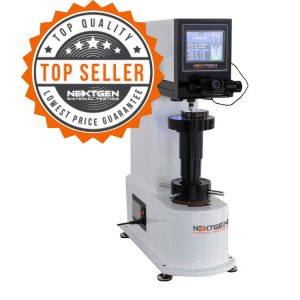 First of all, the BrinGen 3000 Series – Digital Brinell and Automatic Brinell Hardness Tester is engineered for ultimate accuracy and user-friendliness, making it an excellent choice for laboratories, workshops, and inspection facilities. This system applies a fixed force (load) to a metal specimen using a tungsten carbide indenter to determine material hardness.
The BrinGen 3000 Series supports test loads ranging from 62.5 kgf to 3000 kgf, making it possible to test an array of materials, from soft metals to hardened steels. It features a closed-loop system, providing precise control of test force application.
Next, one of the standout features is its fully automatic test cycle, which includes load application, holding, and unloading. This automation minimizes human error and improves reproducibility. Additionally, the large LCD display and user-friendly interface make it easy to operate and monitor the testing process.
Equipped with a 20X optical microscope, the BrinGen 3000 Series allows for precise measurement of the indentation diameter, with a resolution capability of 0.005 mm. This level of precision is crucial for accurate hardness values, especially for materials with coarse or uneven surfaces.
The BrinGen 3000 Series is compliant with ISO 6506 and ASTM E10 standards. This compliance guarantees reliable and internationally accepted test results.
BrinGen Scope – Optically Advanced CCD Brinell Measuring Scope
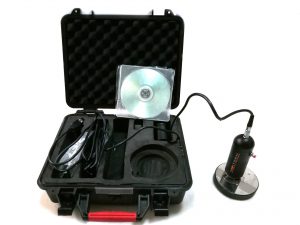 Our second product, the BrinGen Scope, is an optically advanced CCD Brinell measuring scope designed for ease of use, accuracy, and reliability. It offers automatic and accurate measurement of hardness with the single push of a button, significantly reducing the potential for human error.
The scope provides a real-time display of measurement results, including auto-measurement results, tolerance values, and other relevant information. It includes various hardness conversion tables, such as the ASTM-E140 Scale Conversion Table, and supports custom conversion tables, allowing for easy conversion between different hardness testing methodologies.
The results interface is user-friendly, displaying basic results clearly and offering functions to add or remove result columns. It also features real-time statistical data and hardness values presented in histogram format.
The BrinGen Scope offers a number of options, including selection between HBS and HBW types, editing of ball diameter and test force, and selection of distance units (nm, µm, mm, etc.). It supports multiple languages and generates various types of reports, including user-defined reports, which document various inspection results.
Moreover, calibration of the BrinGen Scope is straightforward, with two methods available: entering the hardness value of a standard sample into the calibration window or typing the diameter distance into the calibration window.
The BrinGen Scope package includes a camera and LED lights mounted in stainless and aluminum housing, a calibration film, software with a protection key, and a user guide in video format.
Concluding Insights into Brinell Hardness Testing
Overall, the Brinell hardness test is a valuable method for assessing material properties, particularly metals and alloys. It is fundamental in many industries to provide reliable measurements that verify that materials meet specific standards and withstand operational stresses.
Using advanced Brinell testing equipment can significantly increase hardness measurement accuracy and reliability. These tools are designed to minimize human error, provide precise measurements, and guarantee compliance with industry standards.
If you are searching for Brinell hardness testing equipment, products like the BrinGen 3000 Series and the BrinGen Scope can meet your requirements and help you achieve reliable results. At NextGen, we are dedicated to assisting you in the field of material testing. If you need more information or have questions, please do not hesitate to contact us directly or request an online quote.
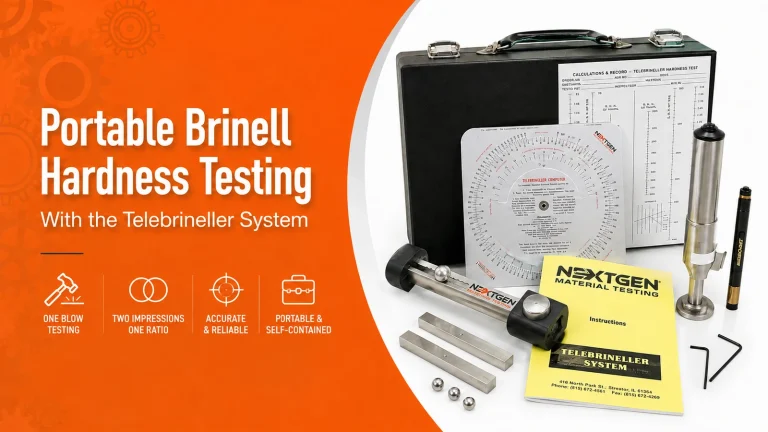 Portable Brinell Hardness Testing With the Telebrineller SystemHardness on a pressure vessel weld, a length of track or a mill housing has to be verified where the part already sits. Nobody is cutting a coupon out of a finished fabrication to satisfy a...Read the articleReducing Human Error in Brinell Hardness Testing with the BrinGen 3000 SeriesThe importance of accurate hardness testing cannot be ignored in industries requiring both strength and durability. When working with very small surface areas, such as a 2.5mm ball indentation in Brinell hardness testing, achieving high accuracy is a key component of the procedure. However, this level of precision can be challenging without the right toolset, often leading to inconsistencies and human errors. Human error is a common problem in Brinell hardness testing, affecting accuracy and reliability. Imagine the significant impact on your organization’s testing process if you had a tool capable of completely removing these errors. Such a tool would not only increase the reliability of your tests but also increase confidence in your measurements,...Read the articleUniversal Metal Testing Solution: Brinell Hardness Tester – BrinGen 3000The universal Brinell Hardness Tester is a BrinGen 3000. Brinell hardness testing supports industrial manufacturing processes. Designed to meet the demand for laboratory metals testing on-site, the BrinGen 3000 is a Brinell hardness testing unit supplies maximum fixed force load against a specimen. Brinell Hardness Test Evolution First used as a standardized hardness test at the turn of the 20th century in Sweden for testing of steel and other alloy metallurgy and engineering applications, the Brinell Hardess Test has since become an international standard. Brinell Hardness Testing calculates permanent change of metal specimens under force, using a tungsten carbide ball indenter. Ratio of indentation size to strength indicates resistance of material...Read the articleA Complete Overview of the BrinGen – 3000 Series Brinell Hardness TesterWhen testing metal hardness, many professionals face the same challenge: inconsistent results caused by manual testing errors, limited load control, or outdated equipment. These issues lead to unreliable data, failed quality checks, and costly delays in production or certification. In industries where precision matters, even a small measurement error can affect the entire outcome of a project. NextGen Material Testing knows the value of accurate and repeatable Brinell hardness testing. We are proud to introduce the BrinGen-3000 Series, our advanced digital and automatic Brinell hardness tester with a closed-loop system. This device fulfills modern standards and laboratory needs with complete automation, high accuracy, and simple operation, even for...Read the articleBrinGen-3000 Series – Digital and Automatic Closed Loop Brinell Hardness TesterBrinell Hardness Testers are ideal for testing materials that have a structure that is too coarse or that have a surface that is too rough to be tested with other hardness scales, such as castings and forgings. These testers are more tolerant of surface conditions due to the indenter size and the heavier forces applied, which allows the indentation to cover more area. Some metals such as Aluminum and Copper are commonly tested with the lower Brinell loads while the harder Steels and Cast Irons are tested with the higher loads. The BrinGen 3000 Series has an easy-to-use interface for converting your indentation diameter reading into a Brinell hardness value directly from the instruments display, making the workflow much more streamlined. It also has...Read the article
Machines Behind This Article
Brinell Hardness TestersBrinGen 3000 Series – Digital and Automatic Brinell Hardness TesterBrinGen 3000 Series is a digital Brinell hardness tester for evaluating indentation resistance in metals such as cast iron, unquenched steel, non-ferrous metals,...View product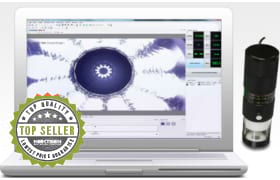 Brinell Hardness TestersBrinGen Scope – CCD Brinell Measuring ScopeBrinGen Scope is an advanced CCD Brinell measuring scope for manual or digital Brinell hardness testing systems. Designed to work with a computer or laptop, it...View product
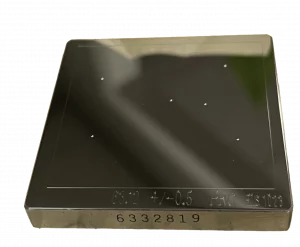 Brinell Hardness TestersHardness Test Blocks, Indenters and AccessoriesHardness test blocks, indenters, and accessories support daily verification and reliable operation of metal hardness testing systems. The range includes certified...View product
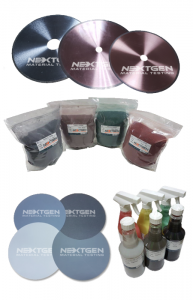 Brinell Hardness TestersMetallography ConsumablesMetallography consumables cover the materials needed for sectioning, mounting, grinding, polishing, etching, and cleaning specimens before microscopic examination....View product