Vicat setting time is a standardized cement paste measurement used for specification compliance and quality control. It identifies when a paste prepared under defined conditions reaches the initial and final set criteria of the selected method. It does not directly predict concrete haul time, cold joint formation, finishing time or field workability, because those depend on the complete mixture: water content, admixtures, aggregates and temperature.
This guide covers what Vicat setting time measures, how the apparatus produces the number, which test conditions make results drift, and what separates a manual instrument from an automatic one.
Setting Time Is Not Early Strength
Initial and final set describe the stiffening of a standardized cement paste, not the development of concrete strength. The two are related through the same hydration reactions, but they answer different questions, and a cement that sets quickly is not automatically a cement that gains strength quickly.
Two moments are reported. Initial set marks the point where the paste has stiffened enough that placing and compacting should already be finished. Final set marks the point where it has become a rigid solid, which is when formwork planning, surface finishing and early curing decisions come into play. Both are useful for characterizing cement behaviour and for checking the applicable cement specification, but they are not a jobsite clock. Concrete and mortar setting behaviour can require different test methods, because the complete mixture does not behave like cement paste alone.
Normal Consistency Comes Before Any Setting Result
A setting time is meaningful only when the paste was prepared at the consistency the governing method requires. ASTM C187 determines the water required for normal consistency, and EN 196-3 defines its own corresponding procedure. Water content changes paste consistency and can influence setting behaviour, so it has to be standardized rather than judged by feel. That is why the work starts with normal consistency, measured with the same apparatus fitted with a plunger instead of a needle.
The operator mixes a paste, fills the mould, and drops the plunger. The water content is adjusted and the test repeated until penetration falls in the range the method defines, and the water demand that achieves it becomes the water content for the setting test that follows. ASTM C187 covers that determination, and the corresponding European procedure sits inside EN 196-3 along with setting time and soundness.
Laboratories that skip this step and mix by feel produce setting times that cannot be compared with anyone else’s, including their own from last month.
How the Needle Produces a Number
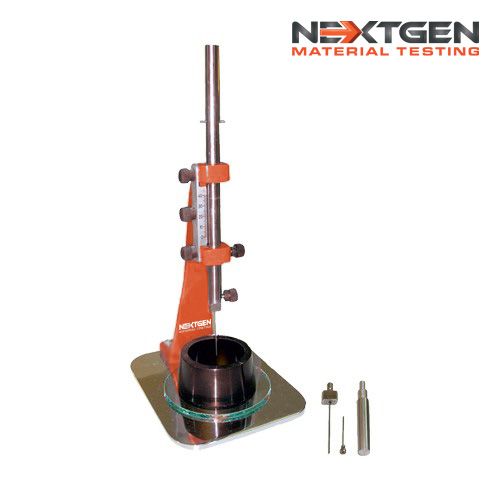
The apparatus is a weighted sliding assembly carrying a standardized penetration needle or plunger, free to fall, with a scale that reads how far it went into the paste. The needle geometry, its attachment and the endpoint criteria all depend on the governing method, so ASTM C191 and EN 196-3 configurations should not be described as interchangeable. The instrument, the accessories and the report all have to match the standard being followed.
The clock starts when water first touches cement. The needle is dropped at intervals into fresh positions on the surface, never the same spot twice, and the penetration is recorded each time. ASTM C191 takes initial set as the moment the needle penetrates 25 mm, obtained by interpolation between readings, and final set when the needle no longer sinks visibly into the paste. The method is deliberately mechanical, because the judgment it removes from the operator is exactly the judgment that made older tests unreliable.
European practice uses the same instrument with different criteria, reading initial set from the distance the needle stops above the base plate and final set from a shallow penetration with a ring attachment. Numbers from the two systems describe the same physical event, but they are not interchangeable in a specification, and a report should always name the method it followed.
Filling the mould is part of the measurement, not preparation for it. The paste goes in without compaction, because tamping it changes the very stiffness the needle is about to probe, and the surface is struck off level so the scale reads from a known plane. A mould filled in stages, or topped up after the first penetration, gives a result that belongs to nothing.
Manual and Automatic Instruments Run the Same Test Differently
A manual apparatus is a rod, a needle, a scale and a person with a stopwatch. It is accurate, it is cheap to keep running, and it is entirely dependent on someone being at the bench every ten or fifteen minutes for several hours. For a laboratory testing occasionally, that is a reasonable trade.
The manual apparatus also needs a small supporting kit that is easy to underestimate: a balance accurate enough for the cement and the mixing water, a measure for the water, a stopwatch started at the moment of contact, a glass dish, a tray and a trowel. Missing any of them is how a laboratory ends up estimating something the method wanted measured.
An automatic instrument replaces the operator’s arm and eye with a drive and a displacement sensor. Ours uses a high precision LVDT sensor in a split, frictionless arrangement, keeps the same 300 g sliding assembly the method specifies, stores up to 200 test groups, and exports through RS485 into report software. The value is not that it is faster, because the cement sets at its own pace regardless. The value is that a test which spans five or six hours no longer competes with everything else the technician has to do, and that nobody has to be present at the exact minute the needle reaches 25 mm.
Where Vicat Results Actually Drift
- Temperature of the room, the mixing water and the cement itself.
- Evaporation from the surface of the paste while it waits between penetrations.
- The delay between the moment water met cement and the first reading.
- Needle condition, including cement dried on it from the previous drop.
- Spacing of penetrations, since landing in an old hole reads disturbed paste.
Setting time is sensitive, which is the point of it, and that sensitivity cuts both ways. Each of those five conditions is written into the standard precisely because it moves the result: warmer conditions shorten setting and cooler conditions stretch it, a surface losing water stiffens before the body of the paste does, and every minute between mixing and the first penetration belongs to the test whether it was recorded or not.
Control them the way the method describes rather than by habit. Condition the room and the mixing water, cover the paste between penetrations, start the clock when water meets cement, keep the needle clean and undamaged, and space the penetrations so that no reading lands in disturbed paste.
None of these need special equipment to control. They need a written procedure and a laboratory that follows it when nobody is watching.
Reading the Result Beyond the Certificate
Two failure patterns are worth naming because they are frequently confused. False set is early stiffening that recovers with further mixing, and it usually traces back to the form of calcium sulfate in the cement rather than to the mix. Flash set is early stiffening that does not recover, releases heat and effectively ends the batch. A laboratory that records how the paste behaved, not only when the needle reached its mark, gives the site something it can act on.
Admixtures move these numbers deliberately, and that is precisely why the base cement needs a known setting behaviour. A retarder added to a cement whose initial set is already long produces a paste that stays workable far past the point anyone intended. The same logic runs through hot and cold weather work, where the choice to warm the mixing water or to cool the aggregate is only defensible if somebody knows the setting behaviour it is being applied to.
Cement specifications use both numbers as limits rather than as targets. A minimum initial set protects the site from a cement that goes off before it can be placed, and a maximum final set protects the schedule from one that never seems to harden. If a valid Vicat result falls outside the applicable limit, treat it as a potential nonconformance and follow the governing specification or laboratory procedure for confirmation and investigation. The result identifies a compliance issue in the tested cement paste; on its own it does not diagnose the cause or predict how concrete will set in the field.
The Other Vicat Test, and Why It Is Not This One
Search results mix two unrelated methods that share a name. The one described here belongs to cement. The other, Vicat softening temperature, belongs to plastics: a needle of defined area under a fixed load rests on a specimen while the temperature rises, and the softening point is the temperature at which it penetrates one millimetre.
Different material, different apparatus, different standards. If your requirement mentions a heating rate and a temperature in degrees, you are looking at the plastics test, and that work runs on an HDT and Vicat testing machine rather than on a cement bench.
Looking for Vicat softening temperature of plastics? That work runs on the NG-HDT HDT and Vicat system, not on a cement bench.
Choosing Between the Two Instruments
The decision is mostly about how often the test runs and who is available to run it. Occasional testing and teaching work sit comfortably on a manual apparatus. Daily quality control, several cements in parallel, or a laboratory under an accredited scope where records matter as much as results, all point to the automatic instrument.
Both belong to the wider cement and concrete testing range, alongside the mixers, curing chambers and fineness equipment that surround the same workflow. A setting time is rarely the only thing a laboratory reports about a cement.

What to Send Us for a Recommendation
Tell us which standard you work to, how many setting time tests you run in a typical week, whether the laboratory is accredited or working towards it, and whether results need to leave the instrument as files rather than as a written sheet. That is enough for us to say which apparatus fits, what supporting kit you still need, and whether the automatic version will pay for itself in your case or simply sit on the bench looking modern.
Tell us the method and the weekly volume through the quote request form.
 Flexural (Bend) Testing Explained: 3-Point vs 4-Point, Standards, and SetupFlexural (bend) testing explained: what it measures, three-point vs four-point setups, the standards for plastics, metals, composites and concrete, and how to choose the right fixtures and...Read the articleGenTest Software Setup Guide for NextGen NG-EML Universal Testing MachinesGenTest setup affects the full UTM testing workflow: method storage, PC-to-controller communication, user permissions, simulation files, live data acquisition, and report output. This guide follows the GenTest setup video step by step for NextGen NG-EML electromechanical universal testing machines. It covers installation, license activation, workspace configuration, UTM controller connection, safety and peripheral setup, user management, DEMO Mode, simulation files, Control Panel setup, Quick Test, and test method creation. GenTest is the software layer where the test method, machine connection, operator input, live data, calculated results, and report output come together. For operators, service teams, QA/QC labs, and R&D users, the goal is to...Read the articleHow to Choose the Right Universal Testing Machine for Plastic TestingChoosing a universal testing machine for plastic testing often sounds easier than it really is. Many buyers start with force capacity, frame size, or the idea of buying extra room for future work. That may seem like a safe decision, but it can push a lab toward a system that costs more, takes up more space, and does not match daily testing needs. The challenge comes from how broad plastics testing can be. One lab may focus on tensile testing for rigid molded specimens, another may run flexural tests on semi-rigid components, while others may handle thin films, sheets, reinforced plastics, or a wider mix of quality control and development work. Once applications vary, the machine can no longer be chosen by force range alone. A better decision starts...Read the article
Machines Behind This Article
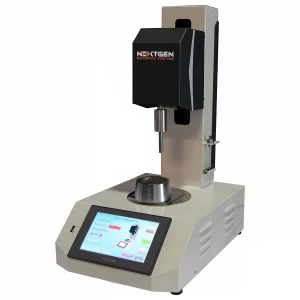 Cement & Concrete TestingAutomatic Vicat ApparatusThe Automatic Vicat Apparatus determines cement paste standard consistency and setting time with less operator intervention than a manual frame. It uses automated...View product
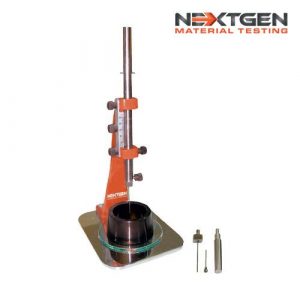 Cement & Concrete TestingManual Vicat ApparatusThe Manual Vicat Apparatus is used to determine cement and concrete setting time through controlled penetration of a needle or plunger into a prepared sample. Its...View product
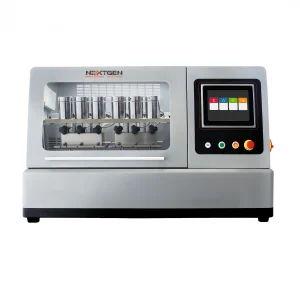 Plastic TestingNG-HDT – HDT/Vicat Testing Machine for PlasticsNG-HDT is an HDT/Vicat testing machine for measuring heat deflection temperature and Vicat softening temperature of thermoplastics, including pipes and fittings....View product
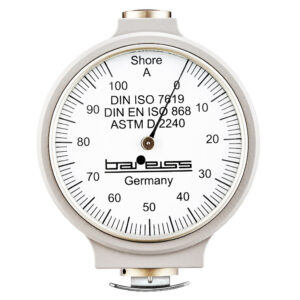 Plastic TestingAnalogue Shore Durometer with Test StandThe Classic Analogue Shore Durometer is a German-manufactured hardness tester for rubber and plastic materials, available with manual or automatic test stand...View product
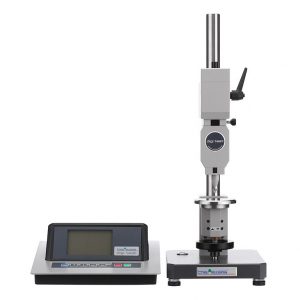 Plastic TestingAutomatic Shore, IRHD and VLRH Hardness Testing SystemDigi Test II is an automatic Shore, IRHD, and VLRH hardness testing system for rubber, plastics, foams, elastomers, O-rings, tubes, hoses, and shaped parts. It...View product
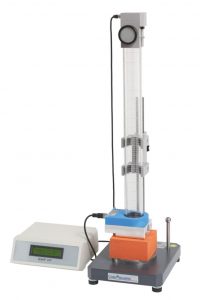 Plastic TestingBall Rebound TesterThe Ball Rebound Tester measures rebound resilience in foam, polyurethane, rubber, and similar materials. Designed for DIN EN ISO 8307 and ASTM D3574 testing, it...View product
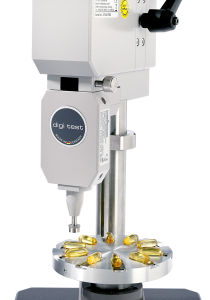 Plastic TestingCapsule and Soft Gel Hardness TesterGelomat is an automatic capsule and soft gel hardness tester for gelatin capsules, softgels, plasticine, edible gelatin, and similar materials. Available with 0–2 N...View product
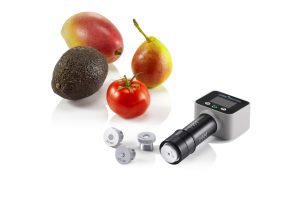 Plastic TestingFruit Firmness TesterNextGen’s Fruit Firmness Tester is a portable German-manufactured device for measuring firmness in fruits, vegetables, meat, and fish. Interchangeable anvils...View product
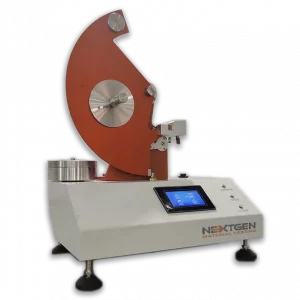 Plastic TestingGenElm Series – Elmendorf Tearing Tester (64 N and 128 N)GenElm Series is an Elmendorf tearing tester for measuring tear resistance of plastic film, sheeting, textiles, paper, board, and other flexible materials....View product
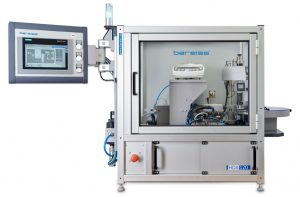 Plastic TestingHDA 120 – Hardness and Density Automation SystemHDA 120 is a semi-automatic hardness and density automation system for rubber and plastic sample characterization. It can handle up to 20 samples, perform three...View product
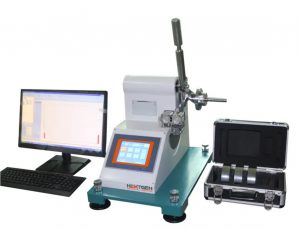 Plastic TestingHigh-Energy Elmendorf Tearing TesterNG-HE Elmendorf is a high-energy tearing strength tester for plastics, films, textiles, paper, and other flexible materials. It supports tear-force ranges up to 128...View product
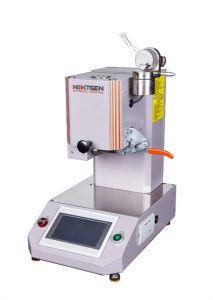 Plastic TestingMelt Flow IndexerThe Melt Flow Indexer measures melt flow rate, melt index, and melt volume rate of thermoplastic materials for quality control, research, and material development....View product