Every Blaine apparatus on the market measures the same thing by the same principle, and any of them will produce a fineness number. The question a cement laboratory is really deciding is a different one: how much of the procedure stays in the operator’s hands, and what that costs in agreement between people, between shifts and between sites.
That is worth working through carefully, because the automation level is the one specification on a Blaine apparatus that changes the shape of the uncertainty rather than the size of it. If you are still looking for what the method measures and why fineness matters, our article on what an automatic Blaine apparatus is and does covers that ground first.
Four Places Where the Operator Enters the Result
A Blaine test looks like one measurement, but it is a short chain of operations, and the automation level decides how many of them a person performs.
Where judgement enters
The Four Steps That Separate One Instrument From Another
The physics is identical in every case. What differs is how many of these four a technician still owns, and therefore how much of the scatter belongs to the person rather than to the cement.
Packing the bed
Weighing the sample and compacting it to the porosity the standard requires. Stays with the operator on every instrument, manual or automatic.
Moving the fluid
Drawing the manometer liquid up to the start level. Manual on a classical apparatus, handled by the instrument on an automatic one.
Catching the marks
Deciding the instant the level crosses each reference mark. A human reaction on a classical unit, an electronic detection on a digital or automatic one.
Holding the constant
Running the reference cement and keeping the instrument constant current. Automatic units carry this themselves.
Notice which one never moves. Packing the bed stays manual at every level of automation, which is why an automatic apparatus improves reproducibility without ever removing the operator from the result.
That last point is the honest centre of the decision. Buying automation does not buy freedom from technique. It removes three of the four places a person can differ, and leaves the one that most rewards training.
What Actually Changes When Timing Goes Electronic
On a classical apparatus the operator watches a liquid level and works a stopwatch. Human reaction time enters twice, once at each mark, and it does not cancel. On a fine cement the transit time is short enough that this is a real share of the measurement rather than a rounding detail.
Electronic timing removes that variation. It is the single cheapest improvement available in Blaine testing, and it is why the digital step exists as a category at all: the cell, the packing, the filter papers and the procedure stay exactly as the laboratory already runs them, and only the clock changes.
What electronic timing does not do is make a badly packed bed acceptable. A bed compacted harder than the method specifies resists more airflow, the transit time lengthens, and the instrument reports a cement finer than the one in the cell. It reports that wrong number to a tenth of a second, and with a stable calculation routine it will report it consistently, which is the trap: better precision on an uncontrolled input reads as reliability.
What an Automatic Apparatus Takes Off the Bench
The automatic version handles fluid aspiration, timing and instrument constant calibration on its own, which takes operator judgement out of the result at three of the four points above.
It is worth being concrete about what that covers, because the word automatic is used loosely. On the BlaineGen Plus the instrument calibrates itself by calculating the K constant to the EN or the ASTM procedure; it aspirates the fluid, times the fall and detects the passage between the marks on the glass tube without a hand on a stopwatch; it performs the calculation and shows the result on its own display; and it stores the test data rather than leaving the record to a notebook. ASTM C204 describes an automatic method procedure alongside the manual one, so this is a recognised way of running the test rather than a shortcut around it.
The last of those, automatic storage, is the one laboratories underrate at the point of purchase and rely on afterwards. A fineness value that can be retrieved with its date, its operator and its reference check attached is a different asset from a number copied into a logbook, and the difference becomes visible during an audit rather than during a shift.
The practical value shows up in places a specification sheet does not describe. A plant running fineness on every mill hour across three shifts has three sets of hands on the same test, and the differences between them are exactly what a monthly quality review argues about. When aspiration and mark detection are performed the same way at three in the morning as at ten in the morning, that argument narrows to the sampling and the packing, which is where it belongs.
The second effect is on the instrument constant. The conversion from transit time to surface area is anchored to a reference cement rather than to a physical dimension, so keeping it current is part of the method rather than an annual service task. An instrument that manages that itself removes a step laboratories quietly postpone when the schedule tightens.
Blaine apparatus
Two Configurations of One Method
Both report specific surface area by air permeability, to the same standards. The difference is how many steps the technician still performs.
Digital
BlaineGen Classic
Conventional cell and packing steps with electronic timing and a fixed calculation routine, so an existing procedure carries over with minimal adjustment.
One or two operators, moderate volumePrimary unit in a smaller laboratory, or a second unit beside an automatic one
What the Standards Require Regardless of Automation
Automation changes who performs a step, not whether the step is required. The procedure written in EN 196-6 and ASTM C204 still governs the bed porosity, the reference cement and the reporting, and an automatic instrument satisfies them by performing the same operations more consistently rather than by being exempt from them.
This matters when a purchase is justified to an auditor. An automatic apparatus is not a compliance argument on its own. What it supports is the claim that the procedure is executed the same way every time, which is a different and more useful statement. The instrument that carries GB/T 8074 and NF P15-403 alongside the European and American documents also removes a recurring conversation in groups whose plants report to different national standards.
The Two Conditions That Sit Outside the Instrument
Two things govern a Blaine result no matter which apparatus produces it, and neither is a feature anyone can buy.
The first is the reference material. The instrument constant is derived from a cement of known specific surface area rather than from a physical dimension, so the quality of that reference sets the ceiling on everything downstream. NIST issues standard reference materials for cement fineness that are used to qualify cements against ASTM C204, and successive lots carry a letter suffix, so a laboratory checks which lot its certificate refers to rather than assuming the one it used last time is still current.
The second is the room. Air permeability depends on the properties of the air moving through the bed, and those change with conditions, so a room with controlled temperature is what allows results to be compared across days rather than only within one. A laboratory that automates the instrument and leaves the room uncontrolled has improved the repeatability of one morning and not the comparability between months.
What the number is anchored to
The Chain That No Level of Automation Reaches
Scroll sideways to read the full diagram
This is the part of a Blaine result that a purchase decision cannot reach. A laboratory that automates the instrument and leaves the reference material or the room unattended has improved the repeatability of one morning without improving the comparability between months.
How to Decide Without Guessing
The decision is usually framed as a budget question and answered badly. Three questions settle it faster.
How many fineness determinations does a shift produce, and how many people run them? One trained technician on a handful of samples a day will get consistent results from a digital instrument, and the money is better spent elsewhere in the laboratory. Three operators across three shifts is the case automation was built for.
What is the cost of a disputed result? In a plant where fineness feeds a grinding circuit decision, a number nobody trusts stops a control action, and the cost of that hesitation is measured against production rather than against the instrument. Where fineness is reported to a customer under a supply agreement, the same disagreement becomes a commercial conversation.
And how disciplined is the packing step today? This is the uncomfortable one, because it is the step automation does not fix. A laboratory whose scatter comes from inconsistent bed preparation will see that scatter persist after the upgrade, and the honest response is training first, instrument second.
The three questions in order
Which Level the Answer Actually Lands On
Scroll sideways to read the full diagram
The order matters more than the answers. Packing discipline is the first question rather than the last, because it is the only one where a yes to everything below it still does not justify the purchase.
Where Fineness Sits in the Laboratory Around It
Fineness is one station of a cement laboratory rather than the whole of it. It sits beside setting time, mortar strength, curing and autoclave testing, and the equipment decisions interact more than they appear to: a laboratory that automates one bench and leaves the next one manual usually finds the bottleneck simply moved.
The Blaine apparatus range is supplied with installation and calibration by our engineers, training on the procedure for your team, and support that continues for the life of the instrument, and the rest of the cement laboratory comes from the same place, from mortar mixers and curing cabinets to Vicat setting time and autoclave testing.
Next step
Tell us the shift, not the budget
Send us how many fineness samples a shift produces, how many operators run them, and which standard your internal procedure cites. We will tell you whether the digital apparatus covers it or whether the automatic version is the honest answer, and what the difference actually buys in your case.
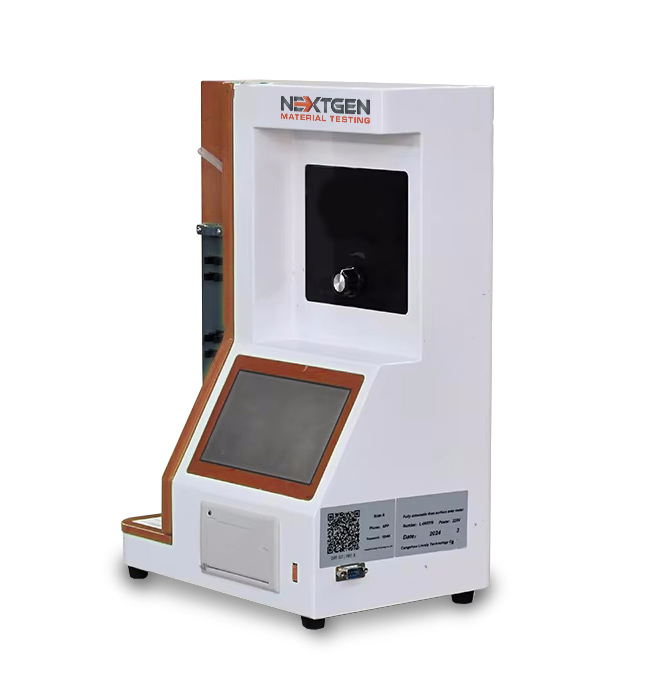

 Blaine ApparatusBlaineGen Classic – Digital Blaine ApparatusBlaineGen Classic is a digital Blaine apparatus for measuring cement, lime, and powder fineness by the air permeability method. It determines specific surface area...View product
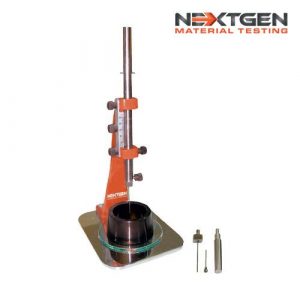 Cement & Concrete TestingManual Vicat ApparatusThe Manual Vicat Apparatus is used to determine cement and concrete setting time through controlled penetration of a needle or plunger into a prepared sample. Its...View product