What is an automatic Blaine apparatus? It is one of the tools that are well-utilized in the cement industry. If you are wondering what it is and how it can help your enterprise, then this short guide might prove useful to you.
The different types of standardized fineness tests will also be discussed to a certain degree. This will help to highlight why a Blaine apparatus is beneficial and what other tests you may need to include in your operations and processes.
What Is an Automatic Blaine Apparatus?
An automatic Blaine apparatus is a piece of equipment that is used to measure how fine powdery products are such as cement. The fineness is measured and expressed as total surface area in square centimeters per gram.
It is used for different standard testing methods. Some of the relevant standards include the following:
The Blaine apparatus is used for air permeability tests. It is one of the standardized tests used in this industry. However, it is not a stand-alone method and you will need to perform other tests in tandem with it.
Standardized Tests for Cement Fineness
There are three standard tests used in the cement industry to determine the properties of a specific surface area. They include the following:
- Air Permeability Test (includes both Blaine and Nurse methods)
- Sieve Method
- Sedimentation Test (Wagner turbidimeter method)
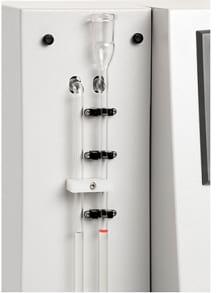
Air Permeability Tests
These tests include both the Blaine and Nurse Methods. We will focus on the Blaine measurement method but remember that there are some similarities between these two types of tests.
The Blaine test was first published by R.L. Blaine in 1943 and its measurement is outlined in ASTM C204. This measurement was adopted by ASTM in 1946. This test, as well as the Nurse method for that matter, measures the airflow rate through a bed of powder particles. In this case, the bed is made up of cement.
Air permeability tests like the Blaine method are based on the Kozeny-Carman approximate theory, also known as the Kozeny equation. This equation is used as a standard for calculating the drop in pressure of fluids that are flowing through a packed bed of solids.
In air permeability tests, the Kozeny constant (or K constant) is used to compute the flow rate of air through a packed bed of cement. The setup requires one side to have atmospheric pressure and a vacuum on the other end.
Remember that it has been determined that the resistance of the cement particles to the flow of air is directly proportional to the fineness of the grain.
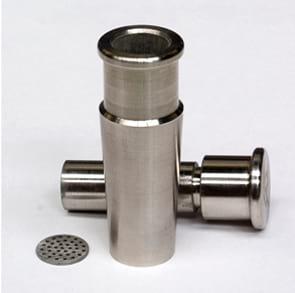
Here’s a simplified rundown of how this test is performed:
- A cement sample is placed on a perforated plate. This is a permeability cell in an air permeability apparatus like the Blaine’s.
- A manometer is attached at the top of the permeability cell and then air pressure is applied.
- The bottom end of the cell is also connected to the manometer.
- The air’s flow rate is then recorded and adjusted according to different test standards. The airflow rate, the difference in air pressure, and other related data are recorded.
- The process is repeated until the ratios reach constancy.
As per the recommendations of international standards, cement must have a fineness of 10%. Portland cement fineness is set at 10%. Rapid hardening cement and Portland pozzolana cement, on the other hand, should have a fineness of 5%. The range of fineness according to industry standards, therefore, is anywhere from 5% to 10%.
The fineness of cement tells you how much of the cement that you are producing has coarse and fine particles. It is expected that some types of cement, like rapid hardening ones, have a finer particle compared to other types.
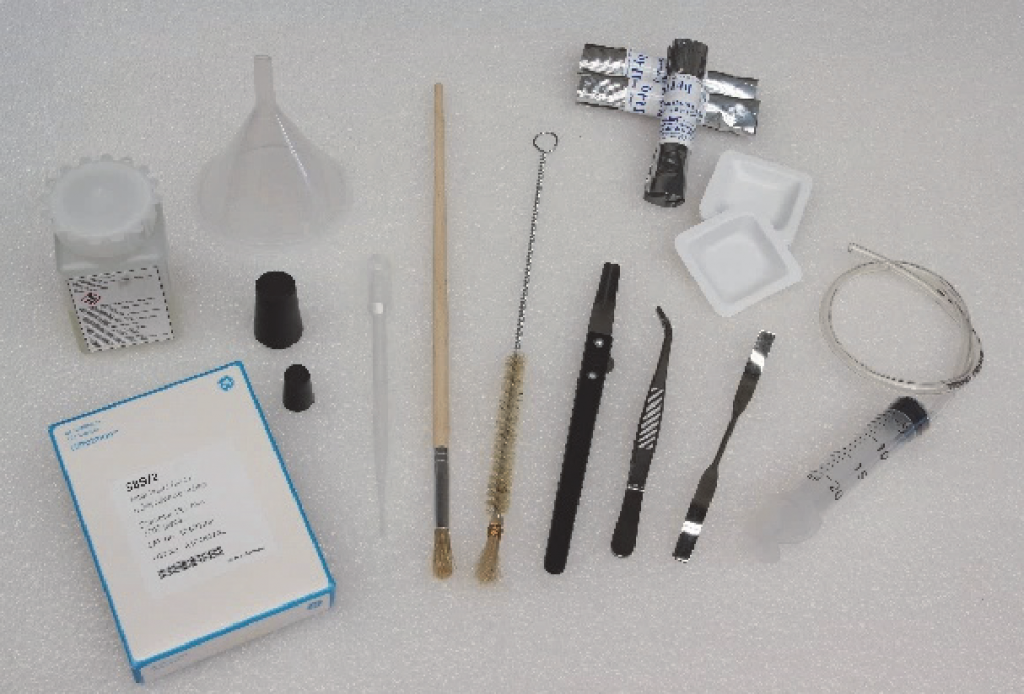
Sieve Method
In the sieve method, a sample of cement is sieved through a standard sieve prescribed by international standards. The fineness of cement is computed using different parameters. One is the weight of the particles that are bigger than 90 microns. Another one is the percentage of the cement particles that are retained.
The rate of hydration is different from one type of cement to the next. A thin layer of water is formed when water is added to the cement. This layer tends to grow bigger as the particles of cement separate.
Smaller cement particles tend to react a lot faster to water compared to larger particles. Some would think that your cement should have all smaller particles. However, this property presents a problem. When cement mixes too fast with water, it leaves little time for mixing, placing, and handling. The types of cement that you manufacture should have a different ratio of particle sizes. The ratios and proportions should differ, depending on the intended use of the cement. For example, some types of cement tend to be quick-drying while others aren’t. 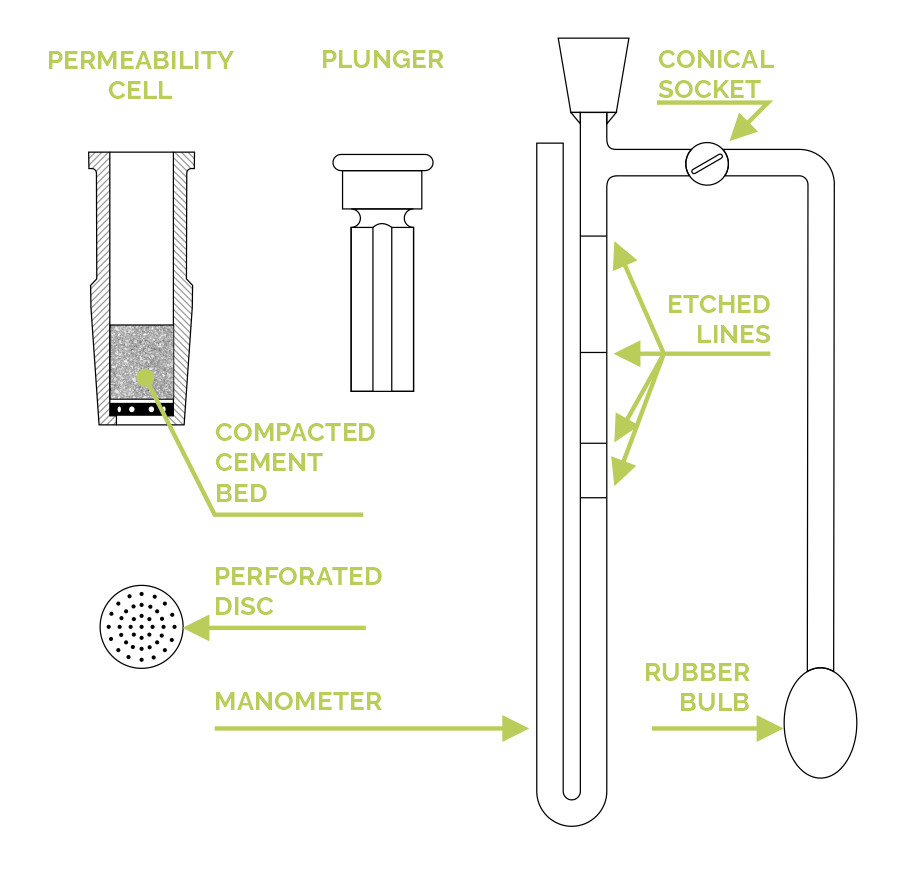
Downsides of the Sieve Method
The sieve method doesn’t reflect the real sizes of cement particles. Note that a lot of cement grains are usually finer than 90 microns. The smaller particles tend to form lumps, which tend to distort the grain size that is being reported.
Sedimentation Test
Sedimentation tests, like the Wagner turbidimeter test, are no longer in use today. We will only discuss this type of test briefly. In this type of test, 1 gram of sample cement is spread out evenly into a tank filled with kerosene.
Light rays are then passed through this mixture. The turbidity of the solution is then recorded at regular intervals.
Benefits and Features of an Automatic Blaine Apparatus
An automatic Blaine apparatus comes with several useful features. It has automatic control and single-touch operation. The measurements it makes are fluid, repeatable, and error-free.
Some models are outfitted with a lockable ball valve. This feature helps maintain a tamper-proof calibration. There are apparatus models that are very accurate up to 200 m/sec timing accuracy.
Another useful feature is its ability to monitor and configure a variety of cement types. You also don’t need to make manual adjustments depending on the EN or ASTM. The Blaine value is automatically calculated. This includes formula corrections depending on temperature changes.
Related to that is the ability of an automatic Blaine apparatus to automatically measure the temperature during each test.
Test Operation
The cement is compressed during the testing operation. The material will be subjected to varying conditions based on the testing standards being applied. It is expected that the cement powder will take in a certain amount of air as it is compacted.
Note that the fineness of the cement grains is directly proportional to their resistance to airflow. It is also assumed that the testing conditions will also remain the same.
Through these tests, operators in cement plants can control and determine a uniform milling process. The results aid in identifying specific surfaces and particle sizes of different powder materials.
Benefits of Automation
With the help of an automatic Blaine apparatus, you can reduce human errors in the testing process. Here are some of the benefits that you can get from this:
- The automatic storage of all the test results and related data
- There is no need for manual calculations
- All adjustments can be made during run time
- You can immediately see the test results on-screen and make adjustments accordingly
- Some of the automated tests that can be performed include pass detection between glass tube marks, the timing of the fall, and fluid aspiration
- Automatic calibrations can be made or programmed as needed
- Measurements are highly accurate
- Test operations tend to be more consistent
- You eliminate errors that are made due to human fatigue
- Improves response times and calculations are made much better
Note that some Blaine apparatus models have computer-controlled modes, where there is no need for human intervention during the tests. Some also have stand-alone modes where you can observe the tests and make manual adjustments as needed.
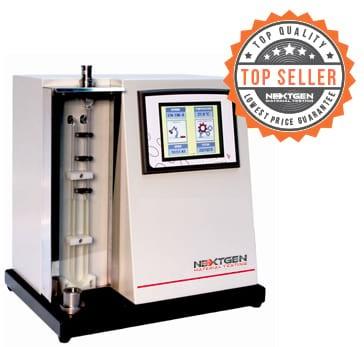
BlaineGen Plus
BlaineGen Plus is one of the highly recommended Blaine air permeability apparatus units in the cement industry. It has been manufactured according to the specifications of the following testing standards:
- ASTM C 204 – this standard is also known as the Fineness of Hydraulic Cement by Air Permeability Method.
- EN196-6 – also known as the tracked changes method for determining cement fineness.
The test methods applied by GlaineGen Plus follow the air permeability test procedures that have been described briefly above.
Features and Specs of BlaineGen Plus
BlaineGen Plus comes with a 5.7″ color LCD touch screen. It is also equipped with precision photodiodes which can detect upper and lower level values during tests.
It also comes with a detachable protective screen in a stainless frame. The screen itself is made from highly durable polycarbonate.
The temperature resolution is rated at 0.1 °C and the time resolution is at 0.01 s.
The entire system is packaged with an on-screen wizard that performs all of the tests automatically. All you have to do is to enter the specific protocols for each test as prescribed in the various test standards such as ASTM C 204 and EN 196-6.
The displays that you see on the screen are in real-time. The results and parameters displayed include the verified volume, porosity, passing time, density, and others.
Note that you can save up to 20 different types of cement in the BlaineGen Plus memory. This allows you to program independent calculations for each type of cement.
Why Do We Like BlaineGen Plus?
Here are some of the reasons why we recommend the BlaineGen Plus apparatus:
- It meets the standards stipulated under ASTM C 204 and EN 196-6.
- It fulfills all the validation requirements for automatic refinement determination as it is specified in chapter 12 of ASTM C 204-07.
- The user interface is very user-friendly and the controls are easy to use.
- The tests that it performs are highly repeatable and very accurate.
- It does not require larger samples. You just need to use the dimensions specified by current industry standards.
- It highly reduces the chances of human error.
The BlaineGen Plus apparatus offers automated testing, recording, and reporting. Using an automatic Blaine apparatus reduces human errors from creeping into your test results. It is a more efficient tool for fine-tuning your manufacturing processes. Request a quotation today.
Machines Behind This Article
 Blaine ApparatusBlaineGen Plus – Automatic Blaine ApparatusBlaineGen Plus is an automated Blaine apparatus for determining cement fineness by the air permeability method. Built for EN 196-6 and ASTM C204 workflows, it...View product
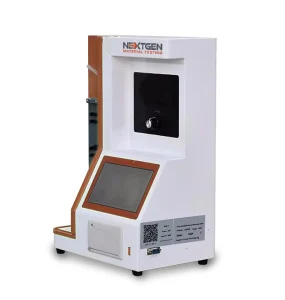 Blaine ApparatusBlaineGen Classic – Digital Blaine ApparatusBlaineGen Classic is a digital Blaine apparatus for measuring cement, lime, and powder fineness by the air permeability method. It determines specific surface area...View product
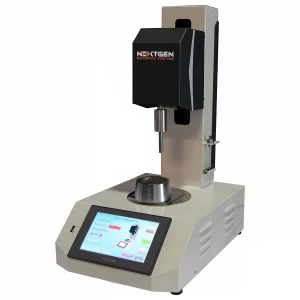 Cement & Concrete TestingAutomatic Vicat ApparatusThe Automatic Vicat Apparatus determines cement paste standard consistency and setting time with less operator intervention than a manual frame. It uses automated...View product
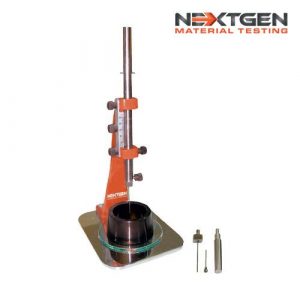 Cement & Concrete TestingManual Vicat ApparatusThe Manual Vicat Apparatus is used to determine cement and concrete setting time through controlled penetration of a needle or plunger into a prepared sample. Its...View product