A buyer asks for a material with good abrasion resistance and expects a single number back. There isn’t one. Wear depends on what rubs against what, under what load, in what motion, and every abrasion method freezes a different combination of those into a test. A compound that wins on one machine can lose on another, and both results are correct.
This guide walks through the methods a materials laboratory actually meets, what each one measures, what it reports, and where the number stops being comparable to anyone else’s.
Abrasion Resistance Is a Method Result, Not a Property
Four things separate one abrasion test from another, and all four change the answer.
The abradant comes first. Coated abrasive cuts, a wire screen tears, a wool fabric polishes, and a bonded wheel does something between cutting and ploughing. Then the motion: a specimen dragged in a straight line across fresh abrasive wears differently from one following a figure of eight over the same patch, and differently again from one held against a turning drum. Load and contact area set the pressure. Finally, the reported quantity itself, because mass loss, volume loss, cycles to a defined end point and a visual rating are not different units of the same thing.
So an abrasion result travels with its method, its abradant batch and its load. Written without them, it is decoration. It should also not be read as a direct prediction of service life unless a documented correlation has been established for that material and that application.
Rotating Drum Testing for Rubber
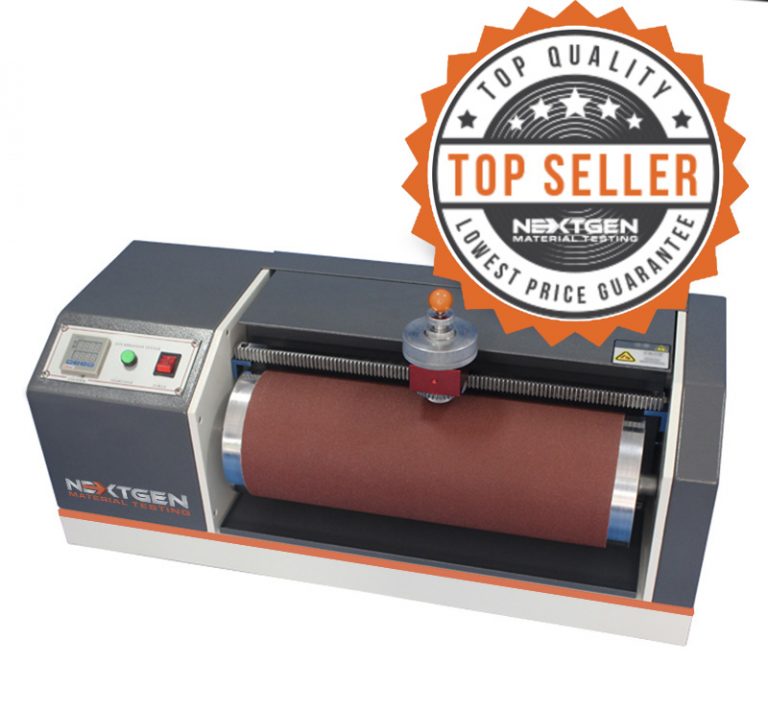
The rotating drum method is the workhorse for comparative abrasion testing of rubber. A cylindrical specimen travels across an abrasive sheet mounted on a rotating drum under defined conditions. Depending on the procedure used, ASTM D5963 expresses the result either as volume loss in cubic millimetres or as an abrasion resistance index against a reference compound tested on the same cloth.
The mechanics are tightly specified because that is what makes the comparison work. Our DIN Abrasion Tester runs a 150 mm drum at 40 rpm with a 16 mm specimen, loads of 2.5, 5 or 10 N, 60 grit cloth, and a 40 m test path, which works out to roughly 84 rotations. Those numbers come straight from the method family described in ASTM D5963 and ISO 4649.
Two habits matter more than the machine here. Report volume loss rather than mass loss when compounds of different density are being compared, since a heavier compound loses more grams for the same amount of rubber removed. And treat the abrasive cloth as a consumable with a life, because a cloth that has been polished smooth by silica filled compounds quietly reports every later specimen as more wear resistant than it is.
Index Testing for Shoe Soling
The NBS method answers a narrower question and answers it well. Specimens run against an abrasive drum alongside a standard reference compound, and the result is expressed as a percentage index rather than as an absolute loss, which is exactly what a soling laboratory needs when comparing formulations.
Our GenNBS takes three specimens of 25.4 by 25.4 by 6.35 mm, applies 2,265 g and turns at 45 rpm, with the reference rubber and the abrasive supplied as part of the consumable set. The approach follows ASTM D1630, and the reference compound is the part people forget to budget for. Without a current reference, an index has nothing to be an index of.
Martindale Cycles for Fabric, Leather and Coated Materials
Textiles moved away from straight line rubbing a long time ago, because clothing and upholstery are not worn in one direction. The Martindale principle rubs the specimen against a standard wool abradant along a Lissajous figure, a path that keeps changing direction so no single yarn orientation is favoured.
The reported quantity is usually cycles to a defined end point, most often thread breaks or a hole, judged at intervals. ISO 12947-2 sets out how those inspections are spaced and what counts as failure. The same instrument, with different holders and a lighter load, also runs pilling assessment, which is why a textile laboratory rarely buys the two functions separately.
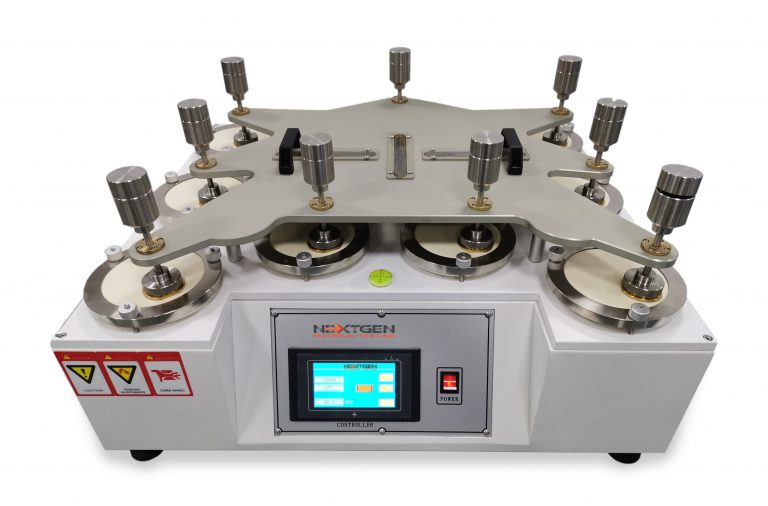
We build the machine in two formats. The GenDale covers routine work, and the nine station version runs nine specimens at once with a 60.5 mm abrasion stroke and a 200 g holder assembly, or a 24 mm stroke and 155 g for pilling. For a laboratory testing several fabrics a day, station count is the whole economic argument, since the test is measured in tens of thousands of cycles.
Double Rubs for Upholstery Specifications
North American upholstery specifications are usually written in double rubs, and that phrasing points at the Wyzenbeek method. The fabric is held under tension over a curved surface while an abradant, either cotton duck or wire screen, is drawn back and forth across it. One complete forward and back movement is one double rub.
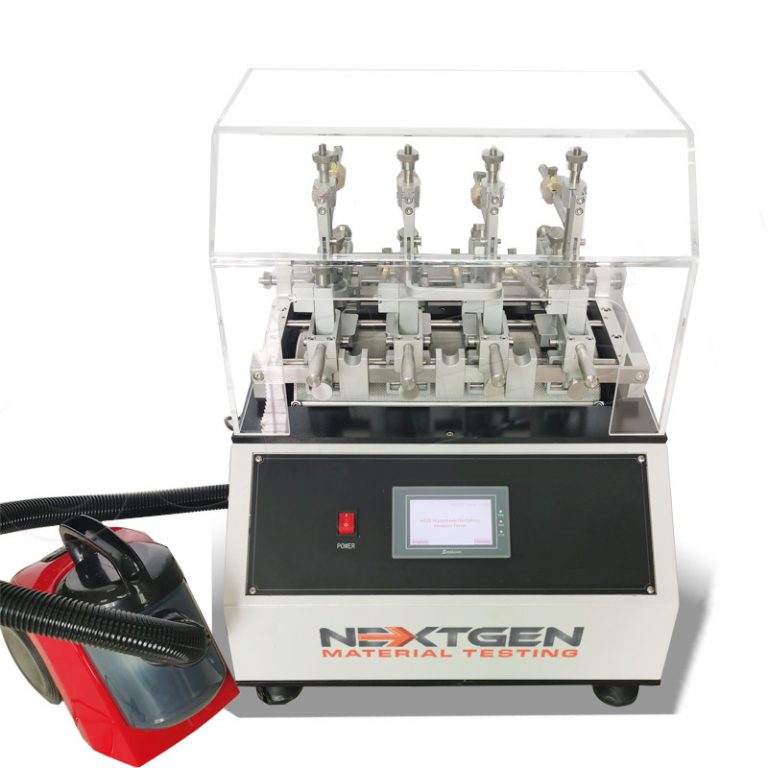
Our GenWyze holds four chambers with a 76 mm stroke, a 13.4 N load and 17.8 N of specimen tension, all adjustable, following ASTM D4157, using the abradant and test conditions the applicable procedure requires, including cotton duck or wire screen where specified. A word of caution that saves arguments later: a Wyzenbeek double rub count and a Martindale cycle count describe different tests and cannot be converted into each other, whatever conversion table a supplier offers.
Rotary Platform and Straight Line Methods
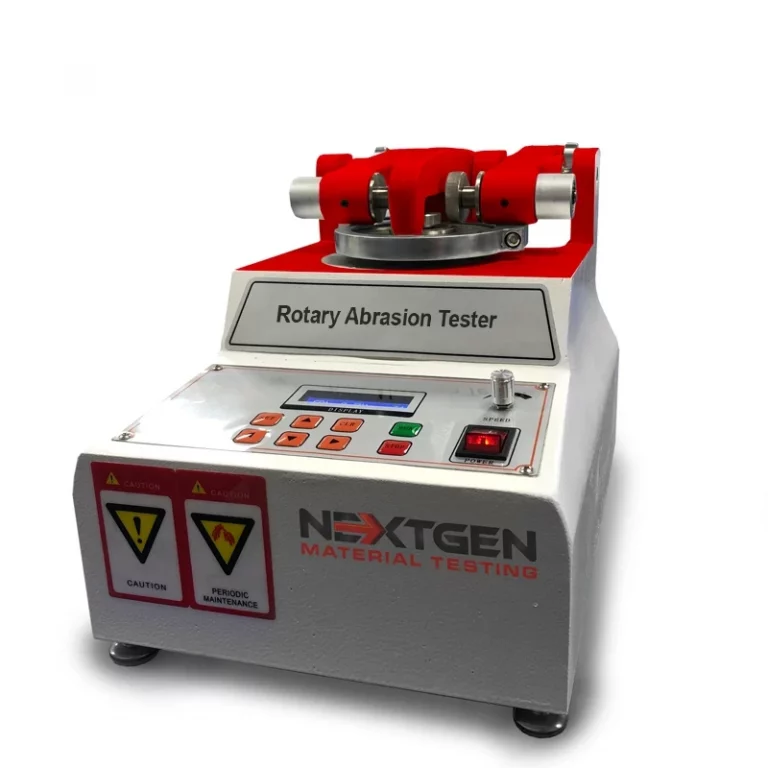
Coatings, laminates, flooring and rigid plastics are usually tested on a rotary platform. The specimen turns on a horizontal disc while two loaded wheels ride on it, so the abrasion path is an annulus and the wheels themselves are the abradant. The same machine geometry serves several material families, but the governing standard changes with the product and with the property being measured. ASTM D4060 covers abrasion resistance of organic coatings, ASTM D1044 applies the same rotary platform concept to transparent plastics where haze is evaluated, and ASTM D3884 covers textile fabrics. A shared machine does not make results from those methods interchangeable.
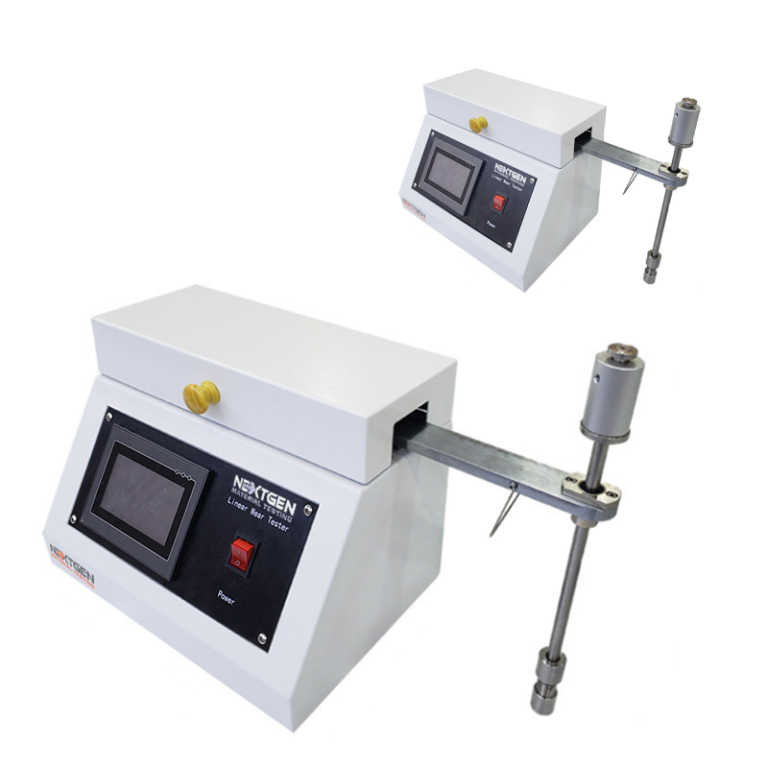
Our rotary abrasion tester comes as a single or dual wheel machine, runs at 60 or 72 rpm and takes 250, 500 or 1000 g loads. Where the requirement calls for straight line rubbing instead, on printed surfaces, coatings or small components, the linear abrasion tester runs 2 to 60 rpm from a touch screen. Leather and finished footwear parts have their own tradition again, which the GenVeslic covers with a 500 g rubbing finger at 40 cycles per minute.
Tyre and technical rubber laboratories often add the Akron tester, where a rubber wheel is pressed against a grinding wheel at an adjustable slip angle up to 35 degrees. The angle is the interesting part, because it introduces the sliding component that a rolling tyre actually experiences.
What the Machine Reports Changes the Conversation
Four reporting styles cover almost everything, and knowing which one you are being handed prevents most misreadings.
- Mass loss is quick and works within one material family, but it hides density differences between compounds.
- Volume loss divides that mass by density and is the fair comparison between different formulations.
- An index against a reference compensates for abradant variation, and it appears both in NBS testing and in some rotating drum rubber procedures.
- Cycles or double rubs to an end point suit textiles, where failure is a visible event rather than a weight change.
A fifth style, visual rating against photographic standards, is common in pilling and colour work and is more repeatable than engineers expect, provided the assessment cabinet and the assessor are both controlled.
Getting Numbers That Repeat Next Month
Abrasion testing has a reputation for scatter, and most of it is earned by the consumables rather than by the machines.
- The method and its year, because criteria and abradants change between revisions.
- The abradant, its grade and how many specimens it has already seen.
- Load and specimen dimensions, since pressure rather than force does the wearing.
- Conditioning of textile specimens, temperature and humidity, before the run.
- The control material result from the same session, one of the strongest practical checks for drift in the test system between sessions.
Abradant is the first suspect. Wool fabric, cotton duck, abrasive cloth and grinding wheels all change with use. Many methods specify how the abradant is conditioned, verified, cleaned, dressed or replaced, so follow the procedure in the governing method rather than applying one replacement rule across different abrasion systems. The second suspect is conditioning. Textiles change stiffness and moisture content with the room, so specimens are conditioned in a controlled atmosphere before testing, and a laboratory that skips it will see seasonal drift in its own data. Third comes specimen preparation, since edges that are not cut cleanly start failures that the material would not have shown.
Finally, keep a control material. Running a known compound or fabric at a fixed interval turns an invisible drift into a visible one, and it costs a few specimens a month.
Matching the Method to the Product
If the specification names a method, that ends the discussion, and the job is to run it properly. When there is no specification, the useful question is what the surface will meet in service. Rubber against road or floor points to the drum methods. A seat cover meeting clothing points to Martindale or Wyzenbeek depending on the market. A coating meeting grit and cleaning points to the rotary platform. A shoe sole compared against another shoe sole points to an index method.
All of these machines sit in the rubber testing and textile testing ranges, and most laboratories end up owning two of them rather than one, because their customers cite different standards.
Tell Us the Specification and the Material
Send us the standard you have to satisfy, the material and its typical hardness or construction, how many specimens you run in a week, and whether you need an index against a reference compound. We will come back with the machine, the abradant and reference consumables, and the replacement interval you should plan for, rather than a list of everything we sell.
Send the specification and the weekly volume through the quote request form. If your programme also covers hardness, ageing or rheology on the same compounds, say so, because those benches share consumables and space more often than people plan for.
Keep Reading in Footwear and Leather Testing
See the Footwear and Leather Testing rangeMachines Behind This Article
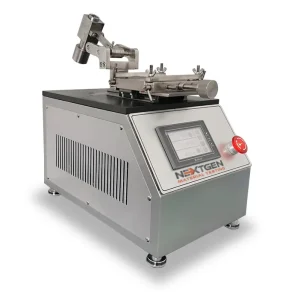 Footwear and Leather TestingGenVeslic – Leather and Surface Abrasion TesterGenVeslic is a reciprocating leather and surface abrasion tester for evaluating color fastness, finish wear, fading, and staining transfer under controlled rubbing...View product
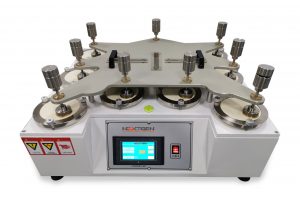 Rubber Testing9-Station Martindale Abrasion TesterGenDale 9-Station Martindale Abrasion Tester measures abrasion resistance and appearance change in shoe fabrics, linings, coated fabrics, textiles, and related...View productRubber TestingAkron Abrasion TesterGenKron Akron Abrasion Tester measures abrasion resistance by tracking volumetric loss from a rotating specimen exposed to a standard grinding wheel. Designed for...View product
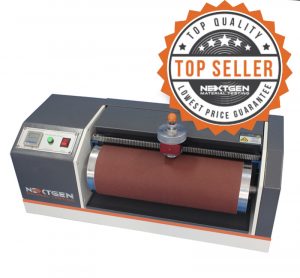 Rubber TestingDIN Abrasion TesterGenDin is a DIN abrasion tester for measuring abrasion resistance of vulcanized rubber, thermoplastic elastomers, footwear materials, tires, seals, and other rubber...View product
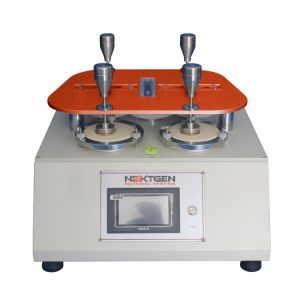 Rubber TestingGenDale – Martindale Abrasion TesterGenDale is a Martindale abrasion tester for evaluating abrasion resistance and visible wear in shoe fabrics, linings, textiles, and related materials. It tests up...View productRubber TestingGenNBS – NBS Rubber Abrasion TesterGenNBS is an NBS rubber abrasion tester for evaluating abrasion resistance of vulcanized rubber and related compounds, especially shoe soles and heels. It measures...View product
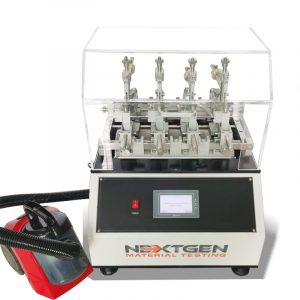 Rubber TestingGenWyze – Wyzenbeek Abrasion TesterGenWyze is a certified Wyzenbeek abrasion tester for measuring abrasion resistance of fabrics, upholstery materials, and selected coated or metallic surfaces. The...View product
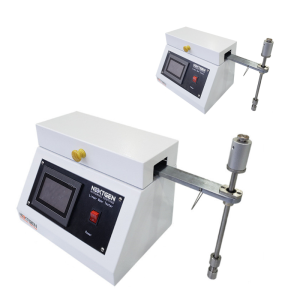 Rubber TestingLinear Abrasion TesterThe Linear Abrasion Tester evaluates abrasion resistance, scratch resistance, and color transfer performance under dry or wet test conditions. Designed for samples...View product
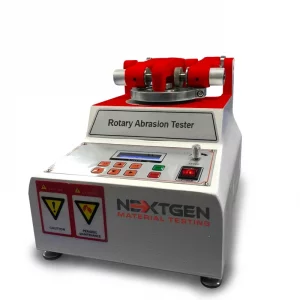 Rubber TestingRotary Abrasion Tester (Single and Dual Wheel)NextGen’s Rotary Abrasion Tester is available in single- and dual-wheel configurations for evaluating surface wear resistance on rubber, plastics, fabrics, paper,...View product
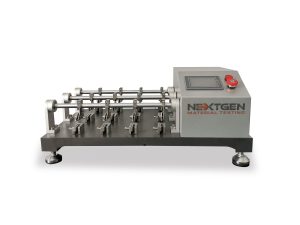 Footwear and Leather TestingGenBally Flex – Resistance Flexing TesterGenBally Flex is a multi-station resistance flexing tester for evaluating leather, coated fabrics, textiles, and footwear upper materials under repeated bending....View product
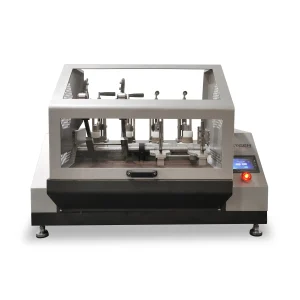 Footwear and Leather TestingGenFlex Sole – Whole Footwear Flexing TesterGenFlex Sole is a whole footwear flexing tester for assessing finished shoes under repeated bending conditions. It helps laboratories identify cracking, sole...View product
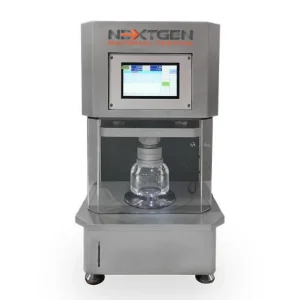 Textile TestingGenBurst Pro – Hydraulic Bursting Strength TesterGenBurst Pro is a hydraulic bursting strength tester for measuring bursting strength and burst distension in woven fabrics, knitted fabrics, nonwovens, paper, and...View product