Did you know that fabric snagging is one of the most common causes of product returns in the fashion and upholstery industries? In fact, studies show that up to 15% of consumer complaints in these industries are due to the premature wear and tear of fabrics, often caused by snagging. For manufacturers and quality control professionals, preventing fabric damage during normal wear is a top priority. This is where tools like ICI / Mace Snag Testers for fabric and textiles come into play.
Whether you’re working in textiles or focused on fabric quality, this guide will show you how the 4-position ICI / Mace Snag Tester can help you make more informed decisions and achieve more durable products.
What is the ICI Mace Snag Tester?
An ICI Mace Snag Tester is a device used to assess the resistance of fabrics to snagging under real-world conditions. Generally, it is designed for apparel manufacturing, upholstery production, and textiles used in high-traffic environments. The machine replicates the snagging processes that fabrics endure during normal wear, thereby determining how susceptible the material is to snagging or pulling.
How Does the ICI Mace Snag Tester Work?
The ICI Mace Snag Tester operates by mounting fabric samples on a rotating drum, while a mace-like object, usually a spiked ball or hammer, is suspended by a chain. As the drum rotates, the mace moves unpredictably across the fabric, catching fibers and simulating real-life snagging conditions. After a set number of rotations, the tested fabric is evaluated based on the number and severity of snags, which allows manufacturers to determine the durability of the fabric and adjust it to improve performance.
Introducing the 4-position ICI / Mace Snag Tester from NextGen
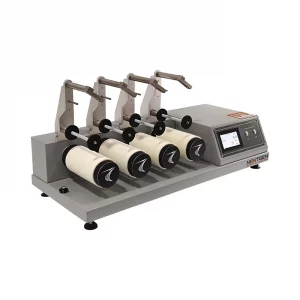 The Fabric Textile 4-position ICI / Mace Snag Tester from NextGen is an advanced tool specifically designed to help manufacturers and quality control professionals accurately assess fabric durability against snagging. Unlike generic snag testers, our model stands out by simulating real-world conditions with high precision, offering a reliable way to evaluate how fabrics will hold up under normal wear. Whether testing garments, upholstery, or other high-traffic textiles, NextGen’s tester is built to replicate the unpredictable snagging conditions that fabrics face in everyday use.
With its 4-position setup, this machine allows users to test multiple fabric samples at once, significantly improving efficiency without compromising the quality of results. The tester uses a rotating drum system, where each fabric sample is subjected to a mace-like object that moves unpredictably across the fabric surface, simulating real-world conditions. This approach provides manufacturers with a detailed and consistent measure of a fabric’s resistance to snags, allowing them to make more informed decisions about material selection.
Designed with user-friendliness in mind, the NextGen ICI / Mace Snag Tester features quick sample preparation, straightforward operation, and reliable results every time. The durable build means that it can handle the stresses of regular use. Thus, providing an invaluable addition to any quality control laboratory. Moreover, it supports NIST-certified consumables, guaranteeing the highest level of testing accuracy and compliance with industry standards.
Key Features of the 4-position ICI / Mace Snag Tester
Our 4-position ICI / Mace Snag Tester is equipped with a range of features that make it a must-have tool for manufacturers who are interested in fabric durability and quality control. Here is a closer look at them:
-
Realistic Snag Simulation: The tester accurately replicates the unpredictable snagging that fabrics encounter during everyday use. By simulating real-world wear conditions, its precise design allows the tester to more precisely assess how well fabrics resist pulling and catching.
-
Accurate Fabric Assessment: Using controlled drum rotation and a mace-like hammer, the tester generates snags in the fabric. This provides a reliable way to compare fabric’s performance against standard reference materials.
-
Comprehensive Rating System: The tester delivers a snagging rating, helping manufacturers determine the fabric’s durability. This data is particularly relevant for selecting fabrics intended for high-traffic environments.
-
User-Friendly Design: Efficiency and ease of use are core elements of this machine. It is designed for quick sample preparation and straightforward operation, resulting in consistent outcomes without requiring extensive technical setup or training.
ICI / Mace Snag Tester compliance with International Standards
Our 4-position ICI / Mace Snag Tester is fully compliant with key international standards, guaranteeing accurate, reliable, and widely accepted results. Compliance with international standards is important for quality control in fabric and textile testing. They provide clear guidelines for measuring snagging resistance.
ASTM D3939/D3939M-2013 (2017): Standard Test Method for Snagging Resistance of Fabrics (Mace)
ASTM D3939/D3939M-2013 (2017) standard, developed by ASTM International, outlines the procedure for testing the snagging resistance of fabrics using a Mace Snag Tester. The method is commonly used in North America and other regions for testing fabrics intended for clothing, upholstery, and similar products.
This standard specifies the conditions under which the fabric samples should be tested, including the number of cycles, test sample preparation, and the mace configuration. It provides uniformity in testing across different laboratories and provides a framework for comparing fabrics against reference materials.
JIS L1058: Testing Method for Snag Resistance of Textiles
JIS L1058 is a Japanese Industrial Standard that governs the testing of textile snag resistance. It is widely recognized both within Japan and internationally for its meticulous approach to textile testing, especially for fabrics exposed to frequent wear and tear.
JIS L1058 focuses on replicating real-world snagging scenarios in a controlled environment, specifying the exact dimensions, weights, and rotation speeds that should be used during testing. The standard also provides criteria for evaluating and rating the severity of snags on fabric samples. By complying with JIS L1058, the NextGen ICI / Mace Snag Tester assures that fabrics meet the high standards of durability required in industries such as automotive interiors, upholstery, and apparel, particularly in markets where Japanese quality standards are recognized.
GB/T 11047-2008: Textiles – Testing Method for Snagging Resistance of Fabrics
GB/T 11047-2008 is another significant standard that defines how the snagging resistance of textiles should be tested. A company seeking to export or produce textiles for the Chinese market must comply with GB/T 11047-2008.
This standard outlines a comprehensive method for testing snagging resistance, specifying the necessary equipment, testing conditions, and evaluation criteria. In compliance with this standard, the 4-position ICI / Mace Snag Tester provides manufacturers with confidence that their fabrics meet necessary regulatory requirements.
Working Principle of the 4-position ICI / Mace Snag Tester
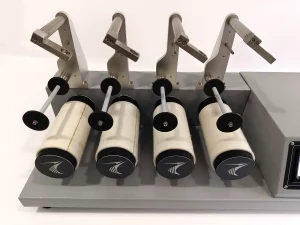 Now, we will cover the specific working principle of the 4-position ICI / Mace Snag Tester, a more refined and efficient approach to fabric durability testing.
The 4-position ICI / Mace Snag Tester operates through a series of well-coordinated steps designed to accurately replicate real-world snagging scenarios. Here’s a detailed look at how this process works:
1. Sample Preparation
Before testing begins, fabric samples are cut to a specified size according to the required standards (e.g., ASTM D3939). These samples are then securely placed on the rotating drums of the 4-position Mace Snag Tester, with each drum capable of holding a separate sample. This multi-sample capability allows for simultaneous testing of up to four different fabrics, optimizing time and efficiency in quality control procedures.
2. Hammer Placement
Once the fabric samples are in place, a mace-like hammer is attached to each rotating drum via a chain. This hammer is a critical part of the snagging simulation process. It rests gently on the fabric’s surface before testing begins. Its design—featuring evenly spaced needles—makes sure that it interacts with the fabric in a realistic way, simulating the snags and pulls fabrics experience in daily use.
3. Drum Rotation
With the samples and hammers in place, the machine’s motor activates, rotating the drums at a precise, constant speed of 60 ± 2 rotations per minute. As the drum turns, the hammer moves along the fabric’s surface. However, because it’s suspended by a chain, it doesn’t move in a uniform or predictable manner. Instead, it flips, bounces, and rotates freely across the fabric, closely replicating the unpredictable snagging that fabrics encounter in real-life scenarios.
4. Snagging Action
As the mace-like hammer moves over the fabric sample, its needles catch on the fibers, creating snags or pulls. This motion replicates the way fabrics are snagged by numerous objects during daily use, such as jewelry, furniture edges, or rough surfaces. The 4-position ICI / Mace Snag Tester is designed to produce realistic snags that vary in size and severity, giving a comprehensive picture of how different fabrics will respond under similar conditions.
5. Test Duration and Controlled Cycles
The drum rotates for a set number of cycles, as defined by the testing standard in use (e.g., ASTM D3939 specifies a certain number of cycles to ensure consistency). During these rotations, the hammer continues to flip and move, creating snags across the entire surface of the fabric sample. This controlled testing assures that the fabric is exposed to uniform snagging forces, providing reliable and repeatable results.
6. Evaluation and Snag Severity Assessment
Once the test cycle is complete, fabric samples are removed from the drums for evaluation. The number, size, and severity of the snags are assessed by comparing the tested fabric against standardized reference fabrics. These reference fabrics are pre-rated for snagging severity, offering a clear benchmark for determining the fabric’s performance.
7. Snagging Rating
Finally, the fabric is assigned a snagging rating based on its comparison with reference materials. This rating helps manufacturers understand the fabric’s durability and its likelihood of snagging during normal wear. The rating system is particularly valuable for manufacturers who need to select fabrics for high-traffic applications, making certain that the materials used will maintain their appearance and functionality over time.
Technical Specifications of the 4-position ICI / Mace Snag Tester
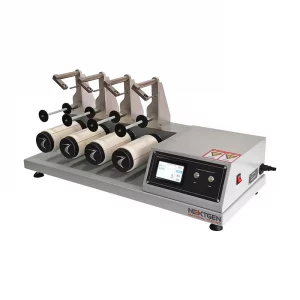 Let us take a closer look at the technical specifications of the 4-position ICI / Mace Snag Tester.
The following are the summarized technical details:
-
Model: 4-position ICI / Mace Snag Tester
-
Number of Positions: 4
-
Rotary Drum Size:
-
Diameter: 82mm (including 3mm outer rubber thickness)
-
Width: 210mm
-
-
Rotation Speed: 60 ± 2 rotations per minute
-
Total Weight of Nail: 160g ± 10g (with 11 equally spaced needles)
-
Needle Specifications:
-
Exposed Length: 10mm
-
Tip Radius: R0.13mm
-
-
Fixed Guide Rod:
-
Working Width: 125mm
-
Diameter: 10mm
-
-
Weight: 243 lbs / 110 kg
Why Choose the 4-position ICI / Mace Snag Tester?
The 4-position ICI / Mace Snag Tester from NextGen is a top-tier solution for manufacturers and quality control professionals aiming to improve fabric durability. With its precise reproduction of real-world snagging conditions, this tester verifies that fabrics can withstand everyday wear and tear. This is essential for industries focused on high-traffic textile applications like apparel and upholstery. Its advanced features, user-friendly design, and compliance with international standards make it a good choice for comprehensive fabric testing.
By delivering accurate, repeatable results, our tester allows manufacturers to optimize fabric performance and reduce product returns. Hence, whether you’re looking to improve fabric quality or achieve compliance with industry standards, the 4-position ICI / Mace Snag Tester provides all the functionality you need for effective material testing.
For more information, you can request an online quote or contact us directly. It is our goal to help you make the best decision for your needs.
Machines Behind This Article
Rubber TestingICI/Mace Snag TesterThe ICI / Mace Snag Tester evaluates the snagging resistance of fabrics by simulating real-world wear in a controlled laboratory setup. Using a rotating drum and...View product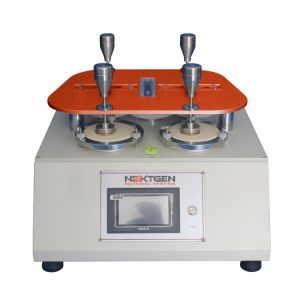 Rubber TestingGenDale – Martindale Abrasion TesterGenDale is a Martindale abrasion tester for evaluating abrasion resistance and visible wear in shoe fabrics, linings, textiles, and related materials. It tests up...View product
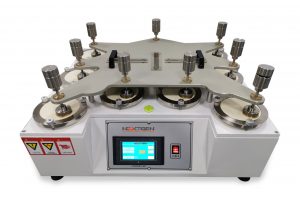 Rubber Testing9-Station Martindale Abrasion TesterGenDale 9-Station Martindale Abrasion Tester measures abrasion resistance and appearance change in shoe fabrics, linings, coated fabrics, textiles, and related...View product
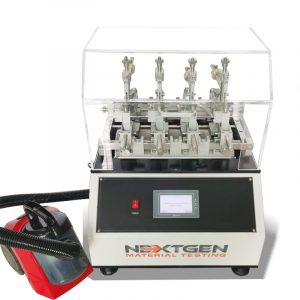 Rubber TestingGenWyze – Wyzenbeek Abrasion TesterGenWyze is a certified Wyzenbeek abrasion tester for measuring abrasion resistance of fabrics, upholstery materials, and selected coated or metallic surfaces. The...View product