The Moving Die Rheometer (MDR) is a tool in rubber testing used to evaluate rubber compounds’ curing characteristics in both quality control and research. It measures how rubber responds to vulcanization by applying oscillating strain and recording the resulting torque. Equipped with a sealed, biconical die system, the Moving Die Rheometer meets all major industry standards such as ASTM D5289, ISO 6502, and DIN 53529. Due to this, MDR plays an important role in providing accurate and consistent measurements of rubber’s mechanical properties, such as stiffness and viscosity, which are necessary for maintaining the quality of rubber products.
Material testing labs often struggle to find reliable testing equipment suited to their specific needs. Despite the range of MDR models on the market, only a few deliver the accuracy and repeatability needed for high-stakes applications. Inconsistent or subpar equipment can lead to major setbacks in product development and manufacturing.
NextGen has a thorough understanding of the need for reliable testing solutions. Our Moving Die Rheometer stands out for its precision, durability, and advanced features. In this article, we will present our MDR’s capabilities, technical specifications, and applications in detail. If you are looking for a Moving Die Rheometer, this review will provide the insights you need.
Introduction of the NextGen’s Moving Die Rheometer
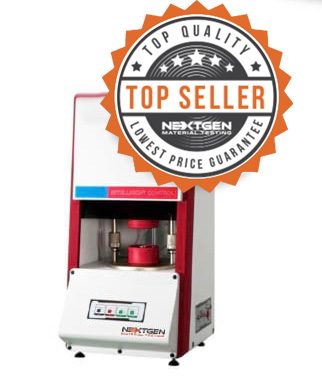 The NextGen Moving Die Rheometer – NG-MDR represents a cutting-edge evolution in rubber testing technology, built on the foundation of the traditional Oscillating Disc Rheometer. Meeting the stringent standards of ASTM D5289, ISO 6502, and DIN 53529, this advanced system allows for reproducible test results between different instruments and manufacturing locations. Its design guarantees data accuracy and consistency regardless of operational environments, resulting in reliability from factory to factory, worldwide.
Custom-engineered for durability and dependability, our Moving Die Rheometer thrives in continuous production settings. This ensures repeatability but also peace for operators, knowing they can rely on precise data even in the most demanding environments. The NG-MDR is crafted specifically to provide a detailed and accurate assessment of vulcanized rubber compounds’ curing and processing characteristics. It captures critical parameters such as the torque applied to the oscillating die, which reflects the material’s stiffness and other vital vulcanization metrics.
What sets NextGen’s rotor-free Moving Die Rheometer apart is its exceptional stability. Operating by placing a rubber sample in a sealed test cavity under positive pressure and elevated temperature, the device applies shear strain through a rotor (oscillating disc) embedded in the sample. The force (torque) required to oscillate the disc is measured, directly correlating to the rubber compound’s stiffness, or shear modulus. This enables manufacturers to precisely monitor and control the vulcanization process, resulting in consistently high-quality rubber products.
Functionality of the NextGen Moving Die Rheometer
The NextGen Moving Die Rheometer offers a comprehensive suite of features designed to simplify rubber testing and enhance data management. Its database functionality allows users to store, access, and print curves, drawings, and results with ease, providing flexibility and control over the entire testing process. This database capability is complemented by the option to export test results in Excel format, making data sharing and further analysis straightforward.
In addition to basic data handling, the NG-MDR offers a range of advanced analysis functions, including statistical calculations, deviation settings, standard curve configuration, and CPK (Process Capability Index) calculations. These features allow for precise, in-depth analysis of the vulcanization process, giving users a better insight into the material’s behavior.
The rheometer’s interface is equipped with tools that support local zoom and curve comparison, enabling users to closely examine and compare test data. It also offers convenient features like range selection, vulcanization time customization, and screen capture for easy documentation. Furthermore, users can reanalyze previous test data, with the option to modify or update reports based on specific requirements.
The system’s ability to handle multiple data sequences makes sure that retrieving and organizing test information is both efficient and user-friendly.
Key Features and Applications of the Moving Die Rheometer – NG-MDR

The NextGen Moving Die Rheometer is built to provide precise, reliable results even in demanding environments. Its rugged construction guarantees that the machine frame delivers stable readings regardless of operating conditions, maintaining accuracy under continuous use.
The machine’s sealed, fanless housing prevents debris and contaminants from infiltrating sensitive components, significantly increasing the unit’s longevity and maintaining performance over time. This feature makes certain that the Moving Die Rheometer performs optimally in industrial environments, where exposure to dust or other particles is common.
A notable highlight is the wearless torque drive, which eliminates the need for regular mechanical parts maintenance, offering unmatched precision and durability throughout its lifespan. As a result of this feature, torque measurements are consistent, and operational costs and downtime are reduced.
Customizable strain modification is another key advantage. The strain can be software-programmed from 0.01° to 5.0°, allowing users to customize the testing process to specific material characteristics. Due to this flexibility, the device can be used to test a wide range of rubber compounds and testing requirements.
For reliability and ease of maintenance, the advanced diagnostics and internal condition monitoring of the NG-MDR help to keep the machine in optimal working condition.
For more specific testing requirements, the optional cooling systems add versatility, enabling temperature control adjustments to meet various testing conditions. This feature is especially beneficial in applications requiring rapid cooling between test cycles or precise temperature management.
Technical Specifications of NextGen’s MDR
To gain a better understanding of the technical specifications of our product, please refer to the following details:
-
Temperature Range: Room Temperature to 22°C – 200°C
-
Temperature Accuracy: Within ±0.3°C
-
Temperature Display Resolution: 0.01°C
-
Oscillation Frequency: 1.6Hz (100r/min)
-
Heating Rate: 120°C / min
-
Torque Range: 0 – 20nm
-
Minimum Torque Reading: 0.001nm
-
Number of Swing Angles: ± 0.5°C, ± 1°C, ± 2°C (standard matching angle: 1 degree)
-
Swing Angle: 100r/min (1.66Hz)
-
Control: Computer-controlled
-
Communication Mode: COM Port
-
Air Pressure: 65psi (4.6 bar) – Air compressor not included
-
Specimen Dimensions: 5cm
-
Display: NextGen Software
-
Dimensions (W x D x H): 51.5 x 22 x 24.5 inches (131 x 56 x 62 cm)
-
Weight: 498lbs (226kg)
-
Power Requirements: 110V/60Hz or 220V/50Hz
-
Power Consumption: 1000 W
Standard Configurations of NextGen’s Moving Die Rheometer
The NextGen’s Moving Die Rheometer comes with key components that facilitate smooth operation and optimal performance. Each unit includes the following standard configurations:
-
Sealing Rings: 10 pieces
-
Heating Plates: 2 pieces
-
High-Temperature Paper: 3 copies
-
Desktop (PC): 1 set
-
Printer: 1 set
-
Hexagonal Wrench: 1 set
Why NextGen’s MDR is the Right Choice
Our Moving Die Rheometer offers advanced rubber testing capabilities that are critical to determining rubber compound quality and performance. With its high precision, durability, and range of customizable features. It also meets the rigorous demands of both quality control and research applications. By delivering reproducible and accurate results across different environments, the NG-MDR provides a reliable solution for vulcanization testing and more.
NGs Moving Die Rheometer is ideal for rubber manufacturing industries, including automotive, aerospace, and consumer goods, where precise characterization of rubber properties is critical. Whether you need to ensure product quality, optimize processing conditions, or perform research and development, the NextGen MDR offers the robust functionality you need to succeed.
At NextGen Material Testing, we are committed to supporting your material testing needs. If you are interested in learning more about our Moving Die Rheometer or have additional questions, please feel free to hesitate to contact us directly or request an online quote. We are here to help you achieve accurate and reliable test results for your applications.
Machines Behind This Article
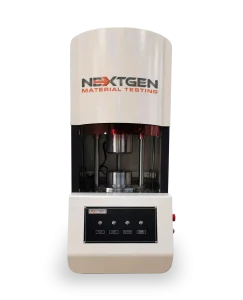 Rubber TestingMoving Die Rheometer (MDR)The Moving Die Rheometer is a rotorless rubber rheometer for assessing curing and processing characteristics of vulcanized rubber compounds. It measures torque...View product
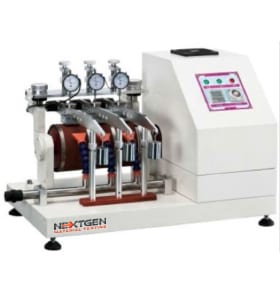 Rubber TestingGenNBS – NBS Rubber Abrasion TesterGenNBS is an NBS rubber abrasion tester for evaluating abrasion resistance of vulcanized rubber and related compounds, especially shoe soles and heels. It measures...View product
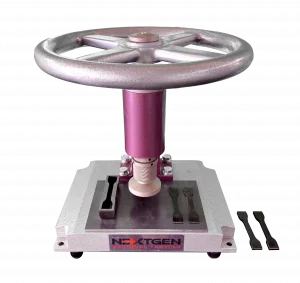 Rubber TestingNG-T-Press M Series – Manual Cutting Press for Rubber SpecimensNG-T-Press M Series is a compact manual cutting press for preparing rubber, tape, and specialty material specimens for tensile and mechanical testing. With optional...View product
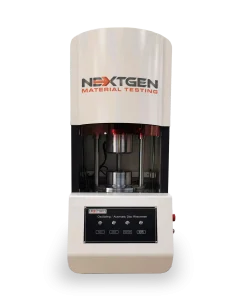 Rubber TestingOscillating Disc Rheometer (ODR)NG-ODR is an oscillating disc rheometer for measuring curing and processing characteristics of rubber compounds. It records torque response as a rubber sample is...View product
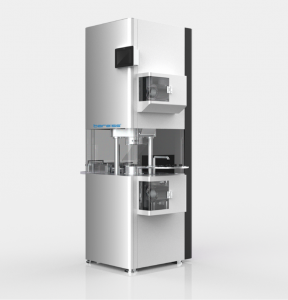 Rubber TestingRPA Ultra – Rubber Process AnalyzerRPA Ultra is an advanced rubber process analyzer rheometer for measuring dynamic and static properties of raw rubber compounds and elastomers during processing and...View product
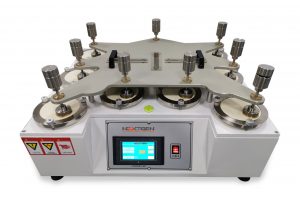 Rubber Testing9-Station Martindale Abrasion TesterGenDale 9-Station Martindale Abrasion Tester measures abrasion resistance and appearance change in shoe fabrics, linings, coated fabrics, textiles, and related...View product
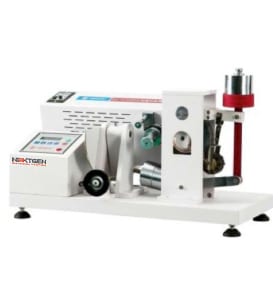 Rubber TestingAkron Abrasion TesterGenKron Akron Abrasion Tester measures abrasion resistance by tracking volumetric loss from a rotating specimen exposed to a standard grinding wheel. Designed for...View product
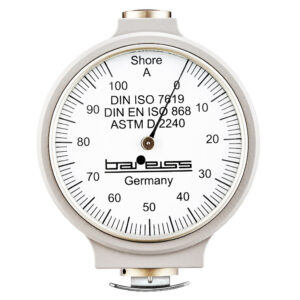 Rubber TestingAnalogue Shore Durometer with Test StandThe Classic Analogue Shore Durometer is a German-manufactured hardness tester for rubber and plastic materials, available with manual or automatic test stand...View product
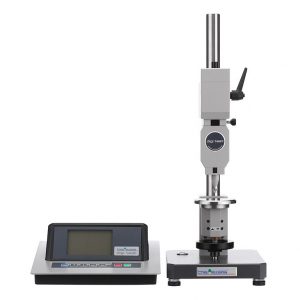 Rubber TestingAutomatic Shore, IRHD and VLRH Hardness Testing SystemDigi Test II is an automatic Shore, IRHD, and VLRH hardness testing system for rubber, plastics, foams, elastomers, O-rings, tubes, hoses, and shaped parts. It...View product
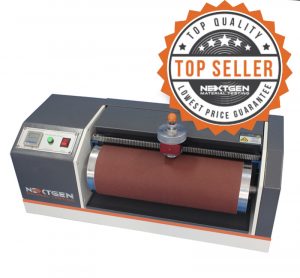 Rubber TestingDIN Abrasion TesterGenDin is a DIN abrasion tester for measuring abrasion resistance of vulcanized rubber, thermoplastic elastomers, footwear materials, tires, seals, and other rubber...View product
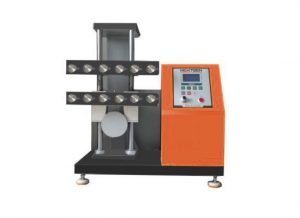 Rubber TestingDemattia Flex Cracking TesterGenFlex Demattia Flex Cracking Tester evaluates the ability of rubber products to withstand repeated flexing without developing cracks. It simulates standard...View product
 Rubber TestingDigital Densimeter SystemNextGen Digital Densimeter Systems measure density, specific gravity, volume, and related material properties for rubber, plastics, tires, shoe materials,...View product