ISO 6502:2016 is a guide standard for using curemeters to evaluate vulcanization characteristics of rubber compounds. It focuses on practical use and application guidance around curemeter-based cure characterization rather than acting as a product specification.
If you are working from a customer drawing or internal control plan that cites ISO 6502, and you are unsure how to align your curemeter setup or reporting to the cited edition, talk with our team about your application before locking in equipment or test conditions.
ISO 6502:2016 — Rubber — Guide to the use of curemeters
ISO 6502:2016 is an ISO International Standard that provides guidance for determining vulcanization characteristics of rubber compounds using curemeters. In practice, it is commonly used to support consistent cure characterization in compound development, incoming checks, production control, and troubleshooting.
Status note: ISO 6502:2016 is marked as withdrawn on the ISO listing, with a newer version available under the ISO 6502-1 series. Many organizations still reference withdrawn editions in legacy specifications, so the cited document version should be treated as a controlled requirement.
| Item | Details (ISO listing) |
|---|---|
| Reference | ISO 6502:2016 |
| Title | Rubber — Guide to the use of curemeters |
| Document type | Guide |
| Status | Withdrawn |
| Publication date / edition | 2016-01 / Edition 4 |
| Technical committee | ISO/TC 45/SC 2 |
| ICS | 83.060 (Rubber) |
Quick Definition
ISO 6502:2016 is a guidance document for running and interpreting curemeter tests used to characterize the vulcanization (curing) behavior of rubber compounds.
What This Standard Covers
ISO 6502:2016 addresses the use of curemeters for determining vulcanization characteristics of rubber compounds. It is oriented toward practical use: how cure characterization is performed and how results are typically handled in a controlled testing environment.
Because this is a guide, organizations often pair it with internal procedures (or other ISO 6502 series parts) that define the exact instrument type, test program, and reporting format for a specific compound family or production line.
Why This Standard Matters in Testing
Curemeter testing is widely used to understand how a rubber compound transitions from an uncured to a cured state under controlled temperature and deformation conditions. Consistent cure characterization supports compound development, production control, and comparative studies across lots, suppliers, or formulations.
For many rubber products, the cure response is tied directly to downstream performance and manufacturability. Using a recognized guidance standard helps labs reduce avoidable variability when multiple sites, shifts, or instrument models are involved.
Common Materials, Product Types, or Applications Covered
ISO 6502:2016 is applied to vulcanizable rubber compounds, including compounds used for molded rubber goods and rubber components produced through typical manufacturing processes where cure behavior is a key quality and process-control input.
This type of cure characterization is commonly used anywhere rubber compounding and vulcanization control are important (R&D compounding labs, QA/QC labs, and production plants).
Common Test or Verification Workflow
A typical ISO 6502-aligned workflow uses a curemeter to run a controlled cure program on a prepared rubber specimen and generates a cure curve (instrument response versus time). From this curve, labs often compare cure behavior between batches and may calculate or report selected characteristic values defined by their procedure or the referenced specification.
Common workflow elements: specimen preparation and conditioning (per lab procedure), instrument verification/calibration controls, running a defined temperature/time program, reviewing the cure curve for consistency, and reporting results in the format required by the controlling specification or customer requirement.
Equipment Commonly Used for This Standard
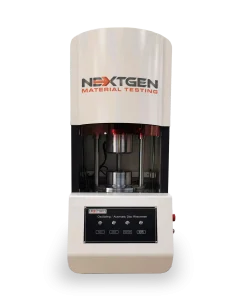
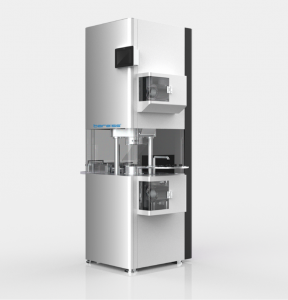
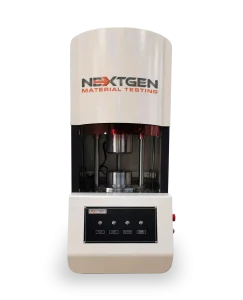
ISO 6502:2016 points primarily to curemeter (rubber rheometer) systems used to characterize vulcanization behavior under controlled conditions. Equipment selection is usually driven by the curemeter type used in the controlling requirement, along with temperature capability, control stability, and data handling needs.
Common equipment families: curemeters/rubber rheometers with controlled temperature dies, force/torque sensing and closed-loop control, software for curve acquisition and reporting, and supporting tools for specimen cutting/preparation.
If you are comparing curemeter models, die configurations, temperature ranges, or software/reporting packages to match a customer-controlled method, you can request a detailed quote for a configuration aligned to your lab workflow.
How to Read This Designation or Revision
ISO 6502:2016 indicates the ISO standard number (6502) and the published year (2016). ISO identifies this edition as withdrawn, and the ISO catalog also indicates that a newer version is available under the ISO 6502-1 series.
Revision sensitivity: curemeter equipment, software calculations, and reporting expectations can change depending on the exact edition and the specific ISO 6502 series document cited by a customer or internal specification. Always align your procedure and reporting to the exact designation stated on the controlling document.
Related Standards, Methods, or Frameworks
The ISO 6502 family has been reorganized into parts, and ISO 6502:2016 is referenced by ISO as having a newer version available (ISO 6502-1). When a requirement simply states “ISO 6502,” it is important to clarify whether it means a legacy withdrawn edition or a specific ISO 6502 series part.
In rubber test programs, cure characterization is often managed alongside other compound and product tests (for example, physical property testing) under an overall QA/QC plan. The governing document set (customer specs, internal methods, and the cited ISO documents) should be treated as the authority for what must be reported.
Talk to Us About ISO 6502 Curemeter Testing Setups
If you need help matching a curemeter configuration, software outputs, or documentation package to a specific ISO 6502 citation (including legacy references), contact our team with the exact designation and your material/application details.