Rubber testing is fundamental to verifying the performance and safety of materials used in industries like automotive, aerospace, and manufacturing. In fact, poor testing methods can lead to failures in up to 70% of rubber products used in critical applications. Proper specimen preparation is a key step in reliable testing.
The purpose of this blog is to introduce the NG-T Press M Series – Manual Cutting Press System for Rubber Tensile Specimens. This system is designed to meet the highest requirements of high-precision rubber testing.
NG-T Press M Series – Manual Cutting Press System
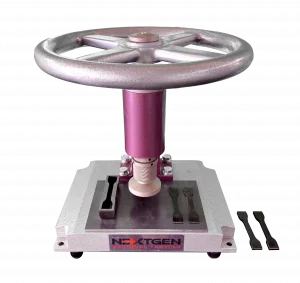 The NG-T Press M Series is a manual cutting press system created specifically to prepare high-precision rubber tensile specimens for testing. This system is engineered to deliver consistent cutting results while being user-friendly and compact, making it suitable for both laboratories and small production environments. With a maximum punching force of 30kN and a puncture stroke of 25mm, the NG-T Press M Series prepares specimens for testing in an accurate manner.
Our cutting press system is highly versatile and capable of cutting rubber, tape, and special materials. Its compact design, easy-to-operate interface, and minimal noise output make it an efficient solution for any lab. Additionally, optional cutting knives compliant with ASTM standards further improve its functionality, allowing precise cuts for a broad range of testing requirements.
Technical Characteristics of the NG-T-Press M Series
The NG-T Press M Series offers a range of technical features that make it an efficient and reliable tool for the preparation of rubber tensile specimens. Here are some of its key specifications:
-
Max punching force: 30kN
-
Puncture stroke: 25mm
-
Punching head diameter: 84mm
-
Dimensions: 19.70″ x 15.75″ x 19.70″ / 500 x 400 x 400mm
-
Weight: 187lbs / 85kg
-
Cutting knives: Optional, compliant with ASTM E8, ASTM B557, ASTM A370, ASTM D412
Standards Compliance from the NG-T Press M Series Cutting Press System
Our cutting press system complies with a number of international standards, thereby providing a precise and reliable method for preparing rubber specimens for testing. Below are the main standards it meets and what they represent.
ASTM D412 – Standard Test Methods for Vulcanized Rubber and Thermoplastic Elastomers – Tension
This standard specifies test methods for determining the tensile properties of vulcanized rubber and thermoplastic elastomers. It outlines how to prepare and test specimens to measure key properties like tensile strength, elongation, and stress at specific elongation points.
ASTM E8 – Standard Test Methods for Tension Testing of Metallic Materials
ASTM E8 focuses on tension testing of metallic materials but is also relevant for rubber testing equipment due to its guidance on specimen preparation and testing procedures. This standard helps determine the material’s yield strength, tensile strength, and elongation.
ASTM B557 – Standard Test Methods for Tension Testing Wrought and Cast Aluminum- and Magnesium-Alloy Products
This standard defines methods for tension testing aluminum and magnesium alloys, covering procedures for specimen preparation and testing. It guarantees that materials meet their required mechanical properties, such as tensile strength and elongation.
ASTM A370 – Standard Test Methods and Definitions for Mechanical Testing of Steel Products
ASTM A370 outlines mechanical testing methods for steel products, including tension and hardness tests. The standard makes sure that materials conform to the required mechanical properties like tensile strength, ductility, and hardness.
Who Benefits from the NG-T Press M Series Cutting Press System
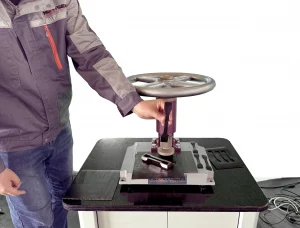 This series of NG-T Presses is designed to satisfy the needs of a wide range of key users, including rubber manufacturers, testing laboratories, and research laboratories. Due to its robust design, reliability, and compliance with industry standards, it is a valuable tool for these industries.
Rubber Manufacturers
Rubber manufacturers require precision when preparing tensile specimens for testing, as the quality of the specimen directly affects the reliability of the test results. The cutting press system provides consistent specimen preparation, minimizing variability and errors. This allows manufacturers to confidently assess the strength and durability of their rubber products, improving quality control processes and reducing potential product failures.
Testing Laboratories
Testing laboratories need equipment that is both reliable and easy to operate. The tool offers a simple, user-friendly interface, allowing technicians to quickly and efficiently prepare specimens without extensive training. Its low noise output also makes it suitable for lab environments. Utilizing our system allows laboratories to simplify their testing workflow and ensure compliance with strict ASTM standards.
Research Facilities
In research environments, precise and repeatable specimen preparation is a necessity for developing new rubber materials and testing their properties. The NG-T Press M Series provides the accuracy needed for experimental setups so that research teams can focus on analyzing material performance without worrying about inconsistent specimen preparation. The optional ASTM-compliant knives allow flexibility for different research projects.
As examples of the system in use, rubber manufacturers have improved their testing speed and accuracy, testing labs have improved workflow efficiency and research facilities have achieved consistent results in material testing.
The Future of Rubber Testing with the NG-T Press M Series
The NG-T Press M Series is not only a reliable and efficient tool but also a versatile solution for rubber specimen preparation. Its ability to consistently deliver clean, accurate cuts, combined with its compact design and user-friendly interface, makes it a suitable tool for a number of testing environments. Whether you are working in a high-demand manufacturing setting or a specialized research facility, the cutting press system offers the flexibility and durability needed to support your testing processes over time.
This system’s compatibility with multiple ASTM standards makes certain that the specimens you prepare are ready for high-precision testing, improving overall testing accuracy and productivity. With its robust build and optional cutting knives, the rubber tester meets a variety of professional needs.
At NextGen Material Testing, we have been dedicated to providing the best material testing equipment for many years, making sure that our customers have access to tools that deliver results they can trust. If you have questions or want to know more about how the NG-T Press M Series can benefit your business, feel free to contact us directly or request an online quote. Let our team help you find the perfect solution for your testing needs.
Machines Behind This Article
Rubber TestingNG-T-Press M Series – Manual Cutting Press for Rubber SpecimensNG-T-Press M Series is a compact manual cutting press for preparing rubber, tape, and specialty material specimens for tensile and mechanical testing. With optional...View product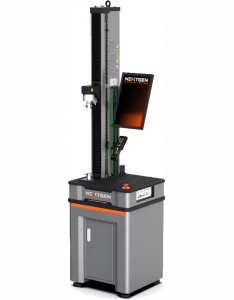 Electromechanical Universal Testing Machines for Rubber TestingNG-EML Series A – Single-Column Universal Testing Machine (50 N – 5 kN)NG-EML Series A is a compact single-column benchtop universal testing machine for low-force tensile, compression, and flexural testing. Covering 50 N to 5 kN...View product
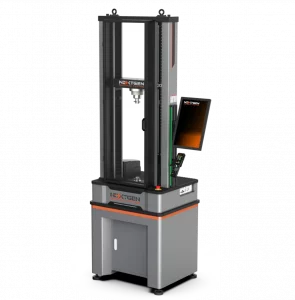 Electromechanical Universal Testing Machines for Rubber TestingNG-EML Series B – Dual-Column Universal Testing Machine (100 N – 10 kN)NG-EML Series B is a dual-column benchtop electromechanical universal testing machine for precision testing from 100 N to 10 kN. Built for research and industrial...View product
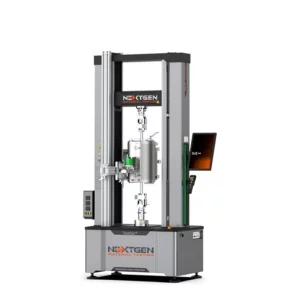 Electromechanical Universal Testing Machines for Rubber TestingNG-EML Series C – Dual-Column Universal Testing Machine (5–50 kN)NG-EML Series C is a dual-column electromechanical universal testing machine available in bench-top and floor-standing formats from 5 kN to 50 kN. Built for...View product