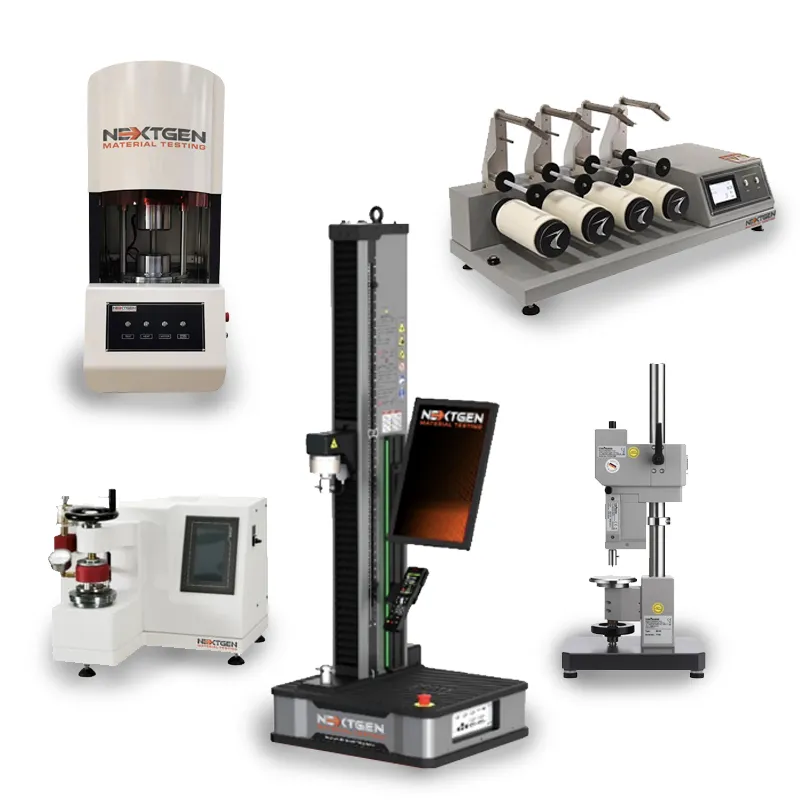
Rubber Testing Equipment
Products
A rubber compound is judged twice: once in the mixing room, where cure behaviour and viscosity decide whether it can be processed at all, and again on the finished part, where hardness, strength, abrasion and aging decide whether it survives service. NextGen supplies instruments for both ends of that process, for raw compound, cured sheet, film and finished components, working to DIN EN ISO 868 and DIN ISO 7619 for hardness and to BS 903 for the physical property tests.
The range covers rheometers and viscometers for the mixing room, hardness and abrasion testers for routine quality control, aging ovens and environmental chambers for durability work, and tensile frames verified to ISO 7500 for strength and elongation. Machines, consumables and calibration come from one supplier, and support continues for the life of the instrument.
For Laboratories
One partner to equip your complete rubber laboratory
Rubber testing rarely stops at one machine. NextGen equips the whole elastomer laboratory, from cure and process testing to hardness, abrasion, ageing and specimen preparation, and stays responsible for it after delivery.
- Equipment, fixtures and software
- Installation, training, calibration
- Lifetime technical support
Sub-categories
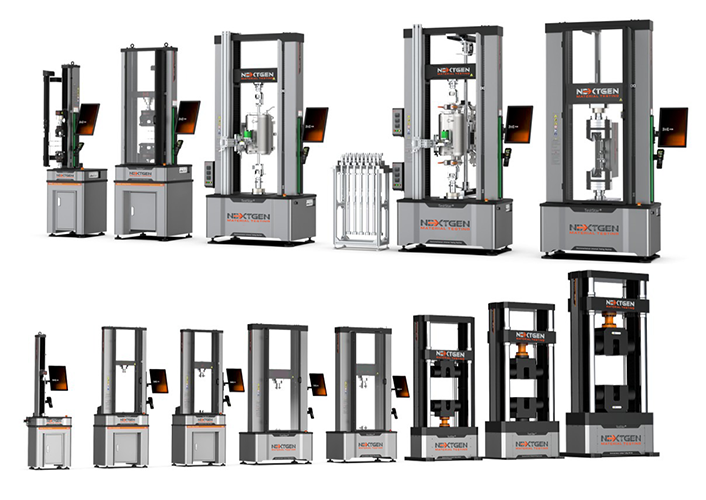
1
Testing machines
Tension, compression and bond strength on elastomers
4
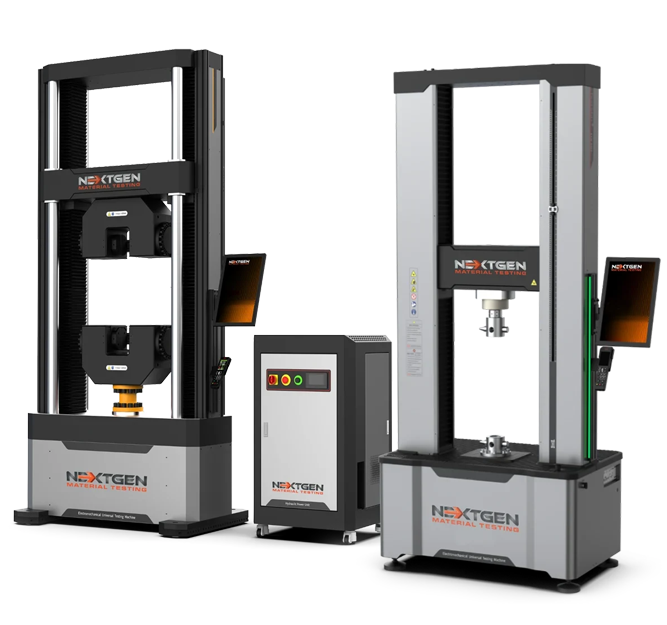 1000 kN
NG-EML Series D – Floor-Standing Universal Testing Machine
NG-EML Series D is a heavy-duty floor-standing electromechanical universal testing machine for high-capacity tensile,…
View product
1000 kN
NG-EML Series D – Floor-Standing Universal Testing Machine
NG-EML Series D is a heavy-duty floor-standing electromechanical universal testing machine for high-capacity tensile,…
View product
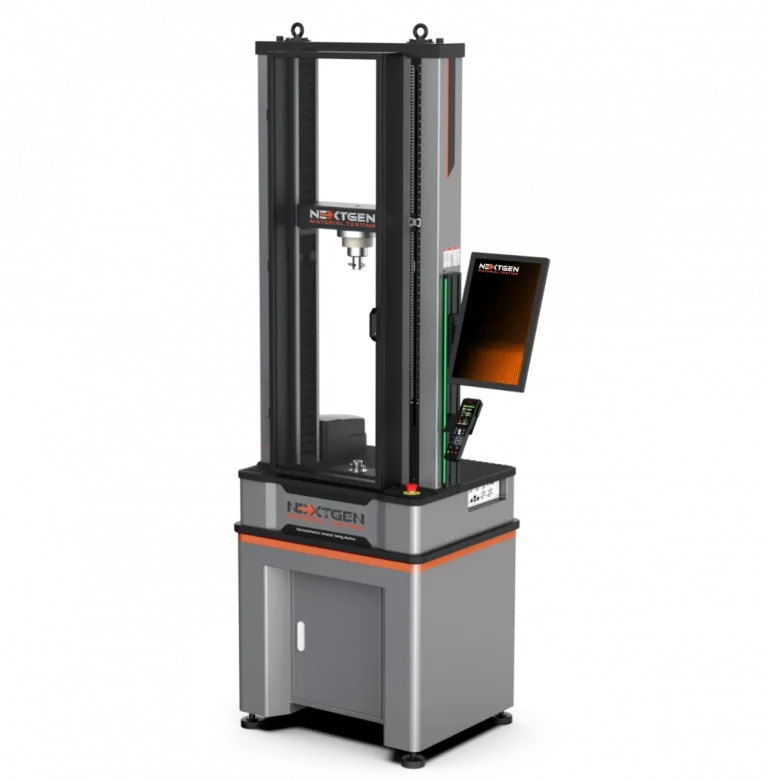 10 kN
NG-EML Series B – Dual-Column Universal Testing Machine
NG-EML Series B is a dual-column benchtop electromechanical universal testing machine for precision testing from 100…
View product
10 kN
NG-EML Series B – Dual-Column Universal Testing Machine
NG-EML Series B is a dual-column benchtop electromechanical universal testing machine for precision testing from 100…
View product
 5 kN
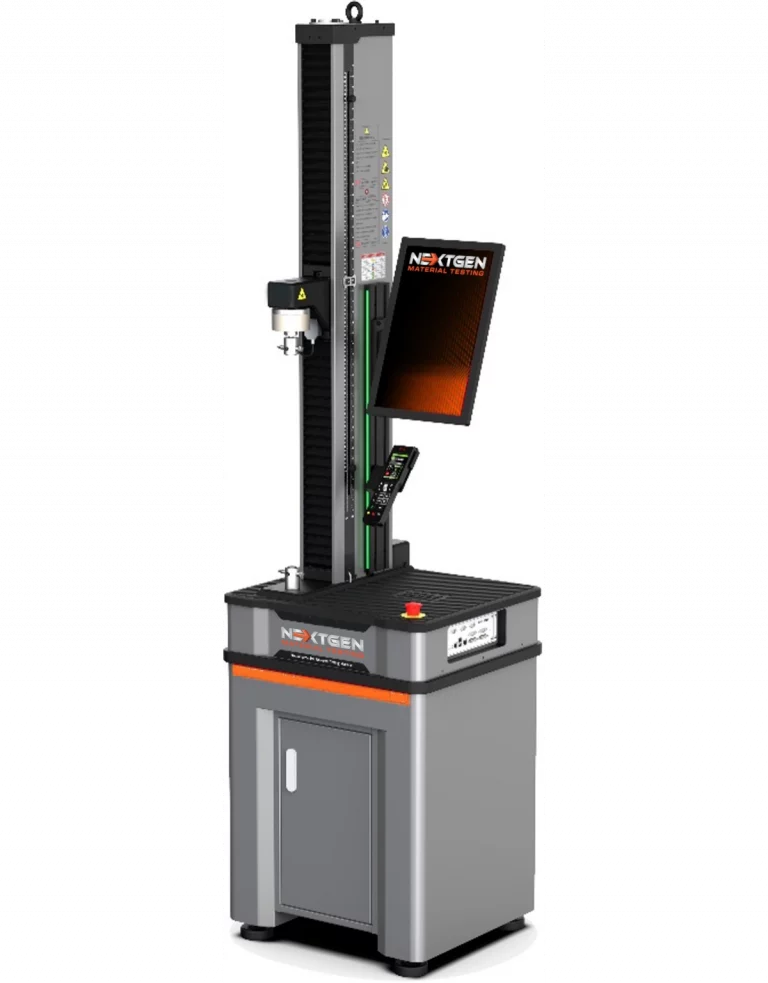
NG-EML Series A – Single-Column Universal Testing Machine
NG-EML Series A is a compact single-column benchtop universal testing machine for low-force tensile, compression, and…
View product
5 kN
NG-EML Series A – Single-Column Universal Testing Machine
NG-EML Series A is a compact single-column benchtop universal testing machine for low-force tensile, compression, and…
View product
 50 kN
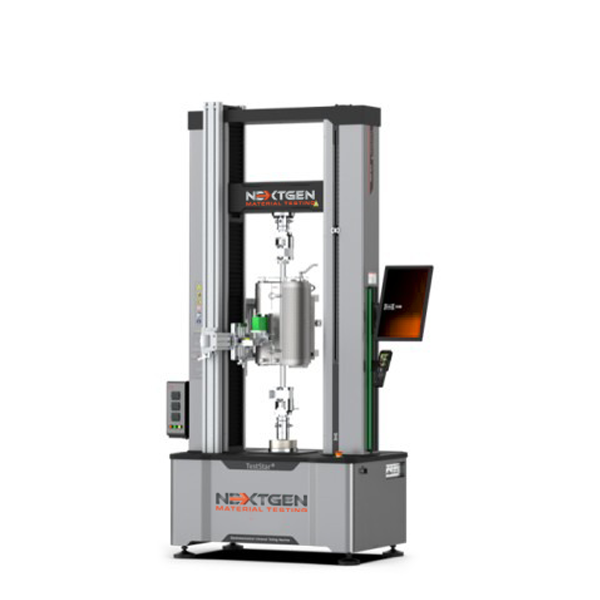
NG-EML Series C – Dual-Column Universal Testing Machine
NG-EML Series C is a dual-column electromechanical universal testing machine available in bench-top and…
View product
50 kN
NG-EML Series C – Dual-Column Universal Testing Machine
NG-EML Series C is a dual-column electromechanical universal testing machine available in bench-top and…
View product
2
Hardness and resilience
Shore and IRHD readings, plus rebound
6
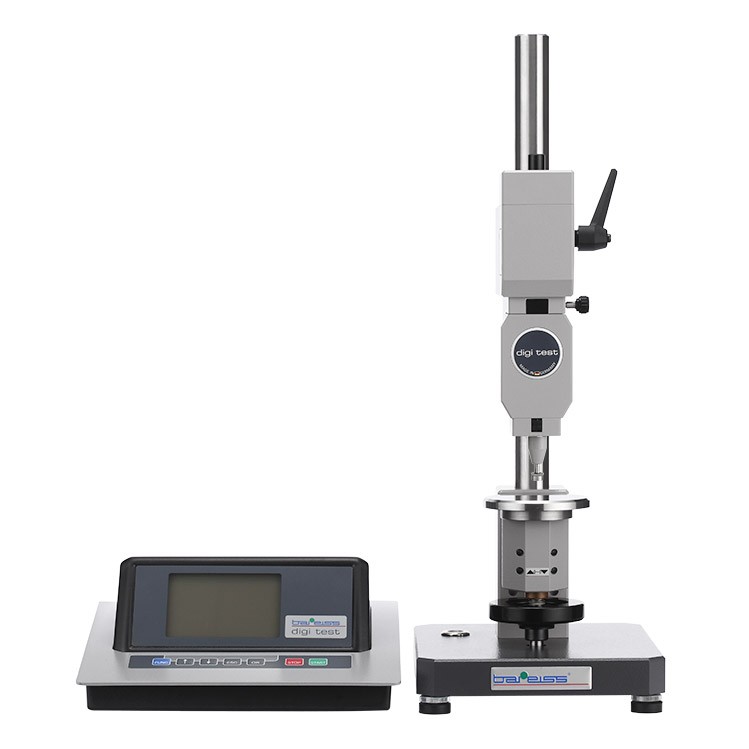 Automatic Shore, IRHD and VLRH Hardness Testing System
Digi Test II is an automatic Shore, IRHD, and VLRH hardness testing system for rubber, plastics, foams, elastomers,…
View product
Automatic Shore, IRHD and VLRH Hardness Testing System
Digi Test II is an automatic Shore, IRHD, and VLRH hardness testing system for rubber, plastics, foams, elastomers,…
View product
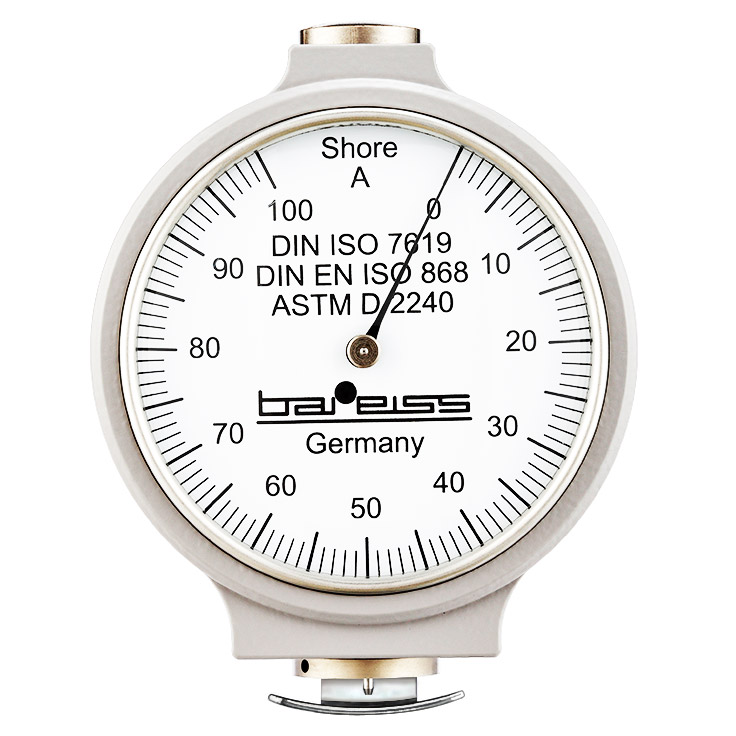 Analogue Shore Durometer with Test Stand
The Classic Analogue Shore Durometer is a German-manufactured hardness tester for rubber and plastic materials,…
View product
Analogue Shore Durometer with Test Stand
The Classic Analogue Shore Durometer is a German-manufactured hardness tester for rubber and plastic materials,…
View product
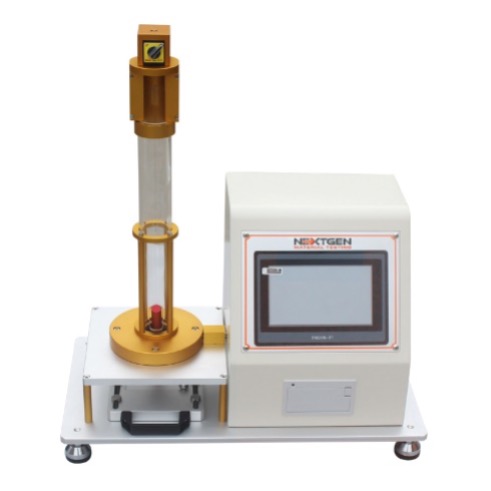 GenRebound – Vertical Rebound Resilience Tester
GenRebound is a vertical rebound resilience tester for measuring the elasticity and rebound behavior of hard rubber…
View product
GenRebound – Vertical Rebound Resilience Tester
GenRebound is a vertical rebound resilience tester for measuring the elasticity and rebound behavior of hard rubber…
View product
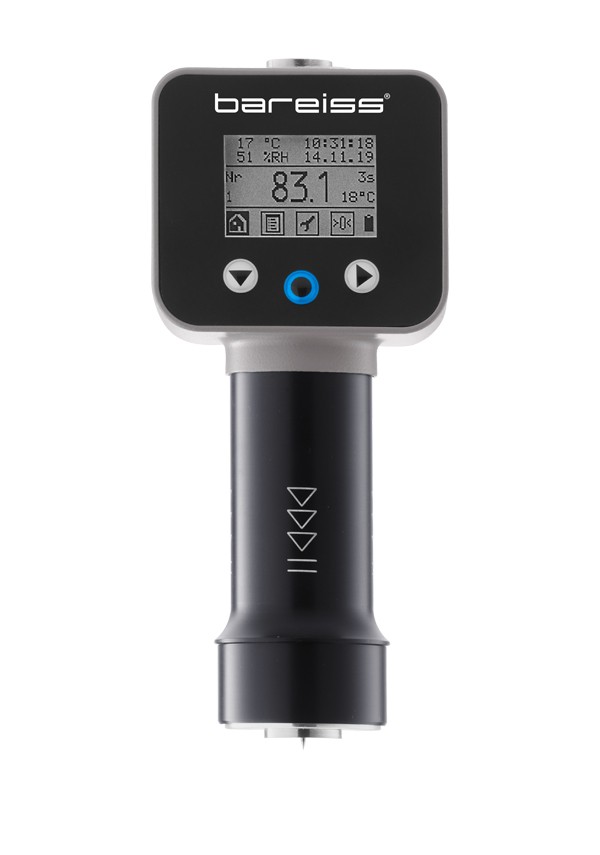 Portable Shore Durometer System with Test Stand
HPE III is an advanced portable Shore durometer system for hardness testing of rubber, plastics, and related…
View product
Portable Shore Durometer System with Test Stand
HPE III is an advanced portable Shore durometer system for hardness testing of rubber, plastics, and related…
View product
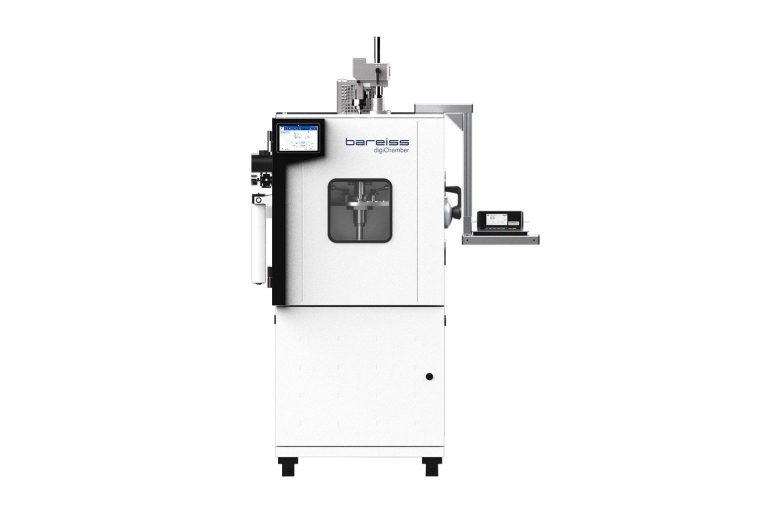 200 L
digiChamber – Temperature-Controlled Hardness Tester
digiChamber is a temperature-controlled rubber hardness testing system designed by Bareiss for Shore A and IRHD N…
View product
200 L
digiChamber – Temperature-Controlled Hardness Tester
digiChamber is a temperature-controlled rubber hardness testing system designed by Bareiss for Shore A and IRHD N…
View product
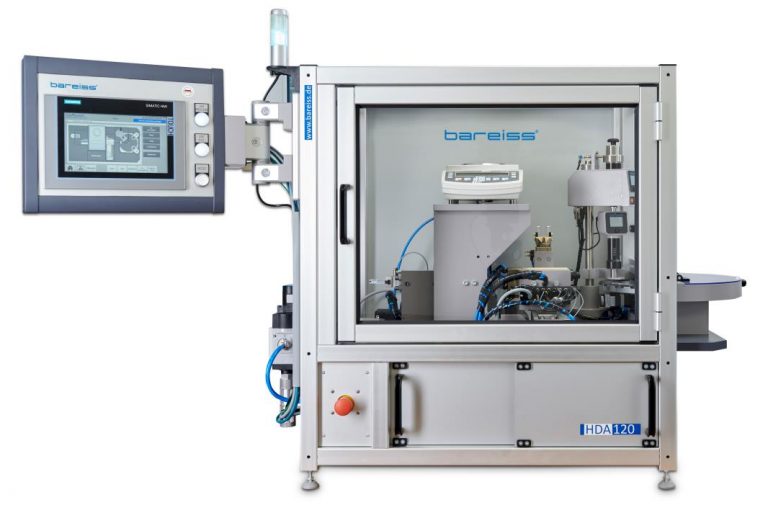 HDA 120 – Hardness and Density Automation System
HDA 120 is a semi-automatic hardness and density automation system for rubber and plastic sample characterization.
View product
HDA 120 – Hardness and Density Automation System
HDA 120 is a semi-automatic hardness and density automation system for rubber and plastic sample characterization.
View product
3
Abrasion and flex
Wear, flex cracking and snagging over long cycles
12
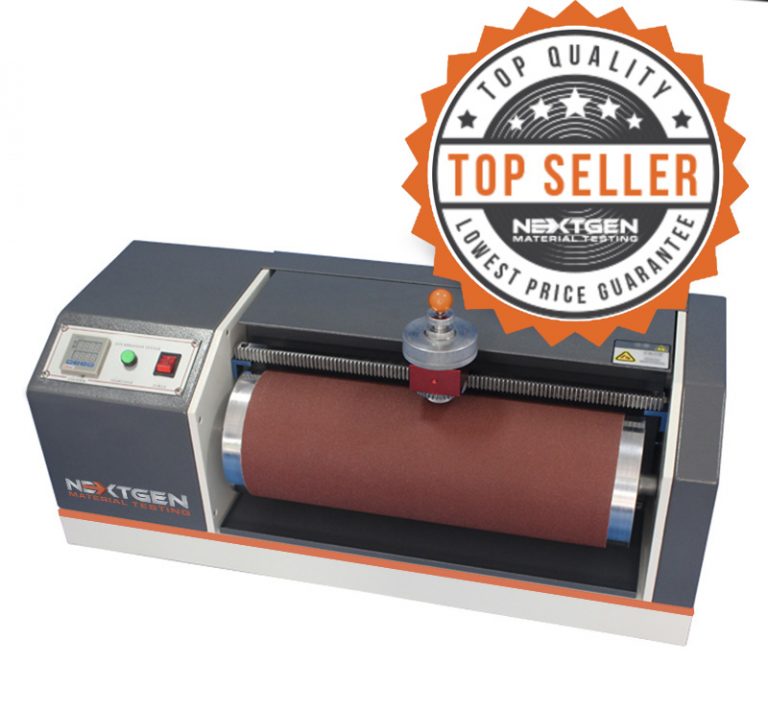 DIN Abrasion Tester
GenDin is a DIN abrasion tester for measuring abrasion resistance of vulcanized rubber, thermoplastic elastomers,…
View product
DIN Abrasion Tester
GenDin is a DIN abrasion tester for measuring abrasion resistance of vulcanized rubber, thermoplastic elastomers,…
View product
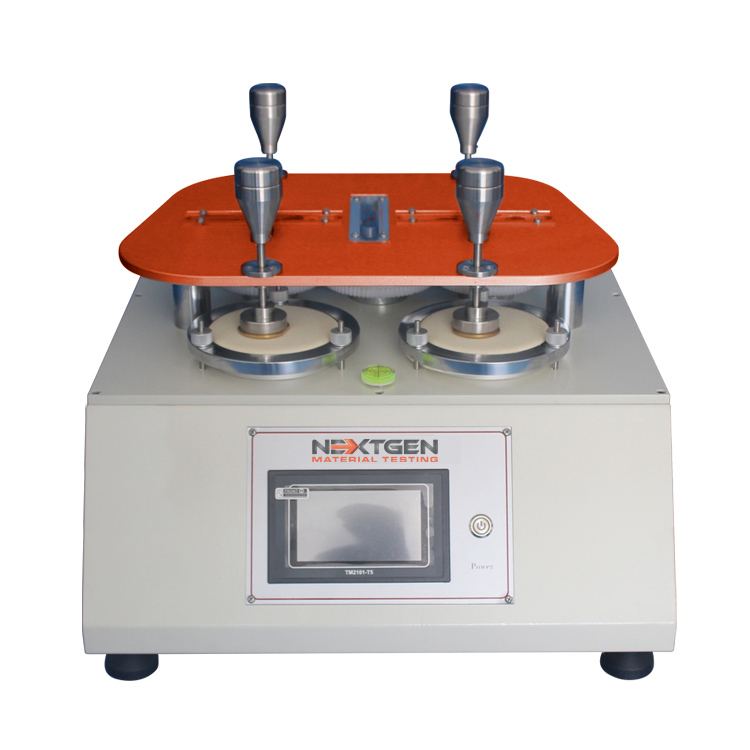 GenDale – Martindale Abrasion Tester
GenDale is a Martindale abrasion tester for evaluating abrasion resistance and visible wear in shoe fabrics, linings,…
View product
GenDale – Martindale Abrasion Tester
GenDale is a Martindale abrasion tester for evaluating abrasion resistance and visible wear in shoe fabrics, linings,…
View product
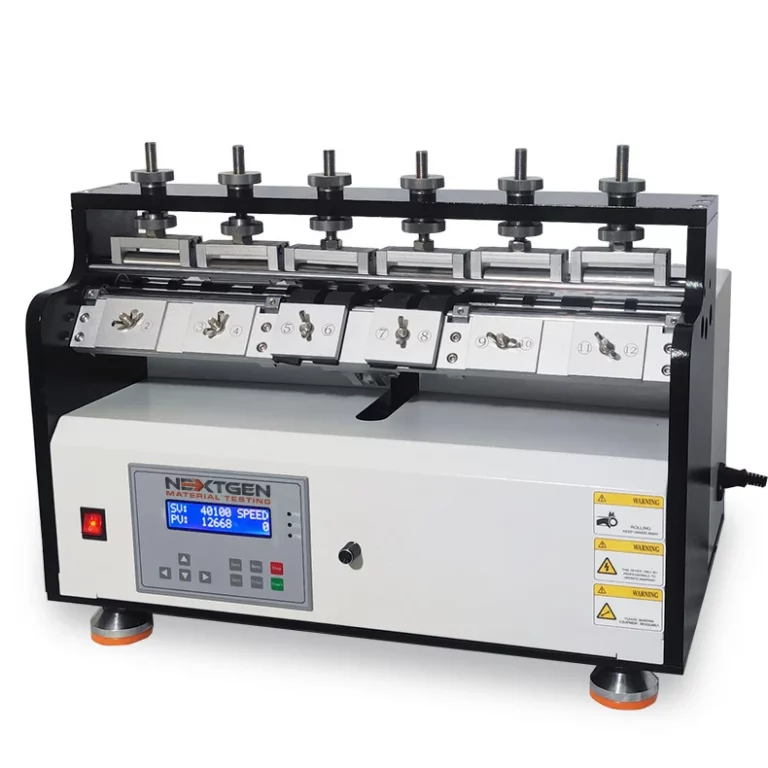 Ross Flex Tester
 evaluates the resistance of vulcanized and synthetic elastomers to cut growth and flex cracking…
View product
Ross Flex Tester
Ross Flex Tester evaluates the resistance of vulcanized and synthetic elastomers to cut growth and flex cracking…
View product
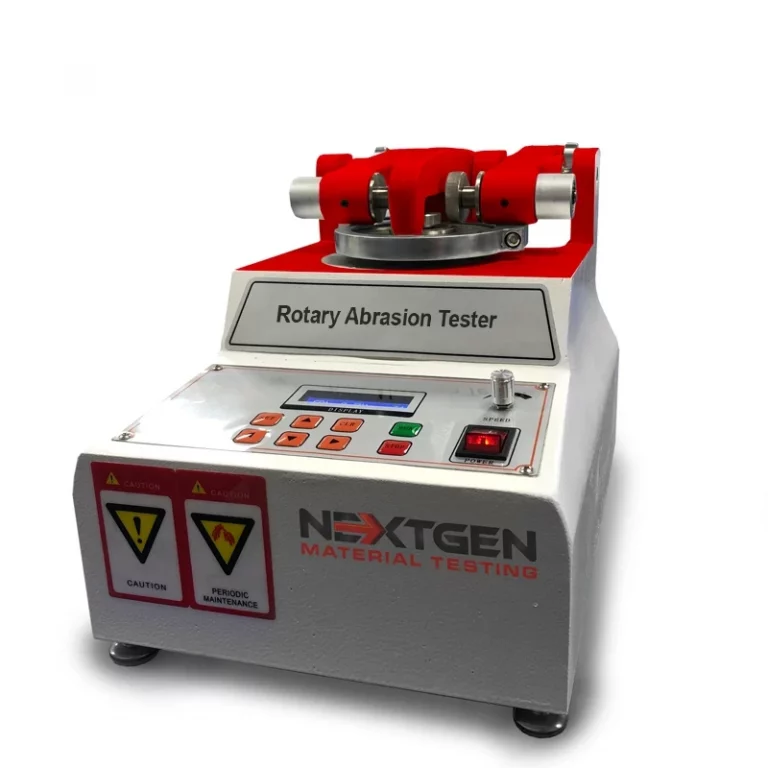 Rotary Abrasion Tester
NextGen’s Rotary Abrasion Tester is available in single- and dual-wheel configurations for evaluating surface wear…
View product
Rotary Abrasion Tester
NextGen’s Rotary Abrasion Tester is available in single- and dual-wheel configurations for evaluating surface wear…
View product
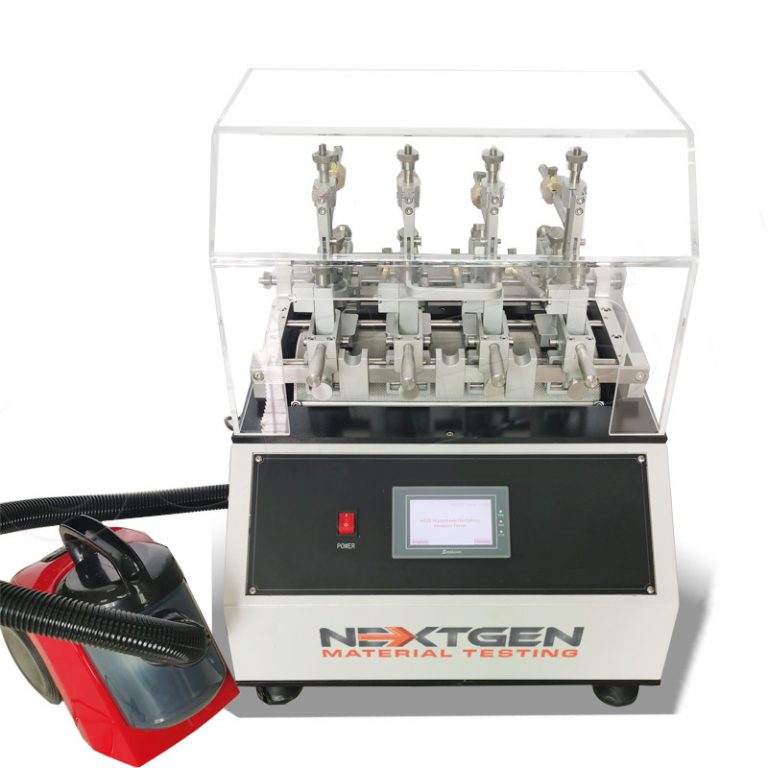 GenWyze – Wyzenbeek Abrasion Tester
GenWyze is a certified Wyzenbeek abrasion tester for measuring abrasion resistance of fabrics, upholstery materials,…
View product
GenWyze – Wyzenbeek Abrasion Tester
GenWyze is a certified Wyzenbeek abrasion tester for measuring abrasion resistance of fabrics, upholstery materials,…
View product
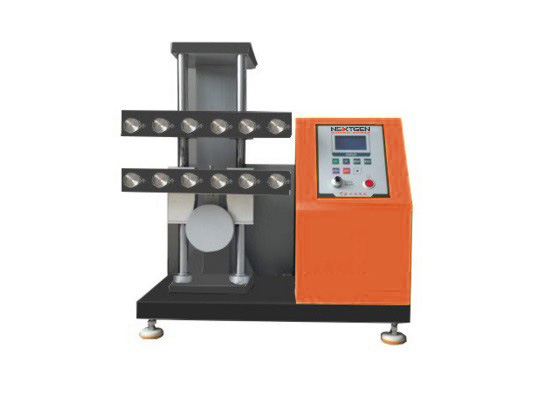 Demattia Flex Cracking Tester
GenFlex Demattia Flex Cracking Tester evaluates the ability of rubber products to withstand repeated flexing without…
View product
Demattia Flex Cracking Tester
GenFlex Demattia Flex Cracking Tester evaluates the ability of rubber products to withstand repeated flexing without…
View product
 GenNBS – NBS Rubber Abrasion Tester
GenNBS is an NBS rubber abrasion tester for evaluating abrasion resistance of vulcanized rubber and related…
View product
GenNBS – NBS Rubber Abrasion Tester
GenNBS is an NBS rubber abrasion tester for evaluating abrasion resistance of vulcanized rubber and related…
View product
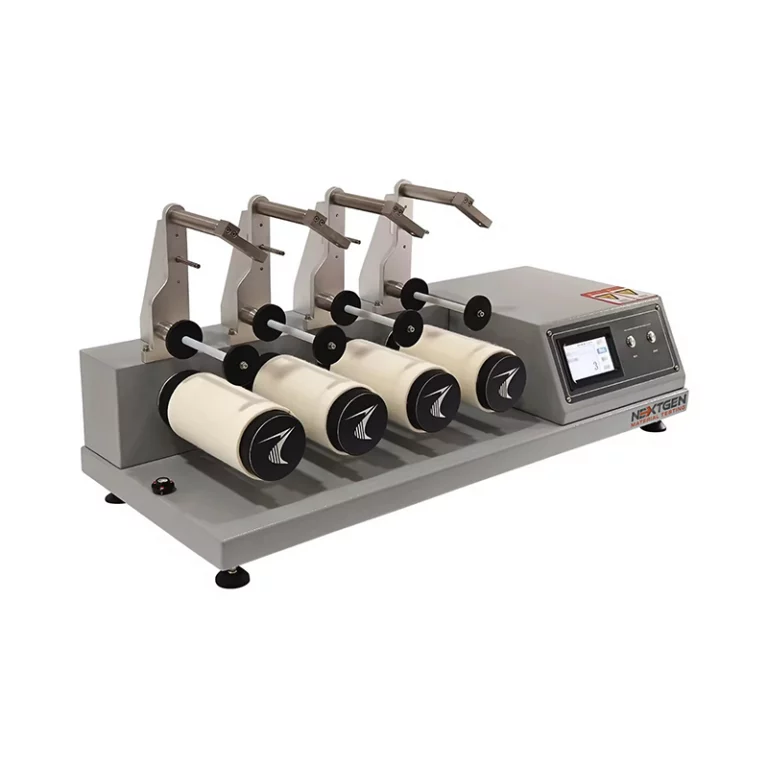 ICI/Mace Snag Tester
The ICI / Mace Snag Tester evaluates the snagging resistance of fabrics by simulating real-world wear in a controlled…
View product
ICI/Mace Snag Tester
The ICI / Mace Snag Tester evaluates the snagging resistance of fabrics by simulating real-world wear in a controlled…
View product
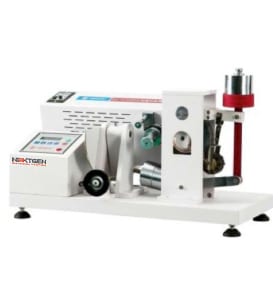 Akron Abrasion Tester
GenKron Akron Abrasion Tester measures abrasion resistance by tracking volumetric loss from a rotating specimen…
View product
Akron Abrasion Tester
GenKron Akron Abrasion Tester measures abrasion resistance by tracking volumetric loss from a rotating specimen…
View product
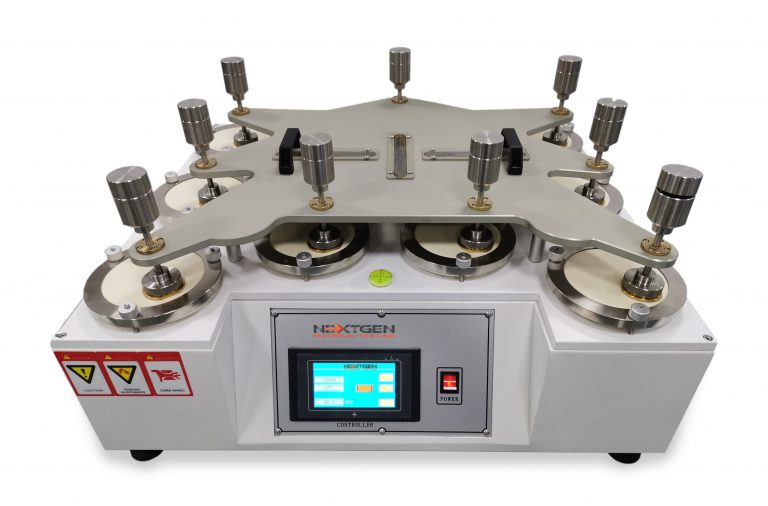 9-Station Martindale Abrasion Tester
GenDale 9-Station Martindale Abrasion Tester measures abrasion resistance and appearance change in shoe fabrics,…
View product
9-Station Martindale Abrasion Tester
GenDale 9-Station Martindale Abrasion Tester measures abrasion resistance and appearance change in shoe fabrics,…
View product
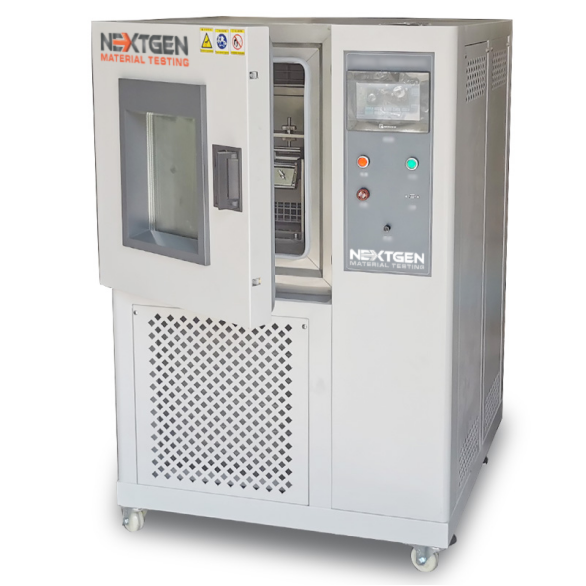 GenRoss-CH – Ross Flex Tester with Low-Temperature Chamber
GenRoss-CH is a Ross flex tester with an integrated low-temperature chamber for evaluating cold resistance and…
View product
GenRoss-CH – Ross Flex Tester with Low-Temperature Chamber
GenRoss-CH is a Ross flex tester with an integrated low-temperature chamber for evaluating cold resistance and…
View product
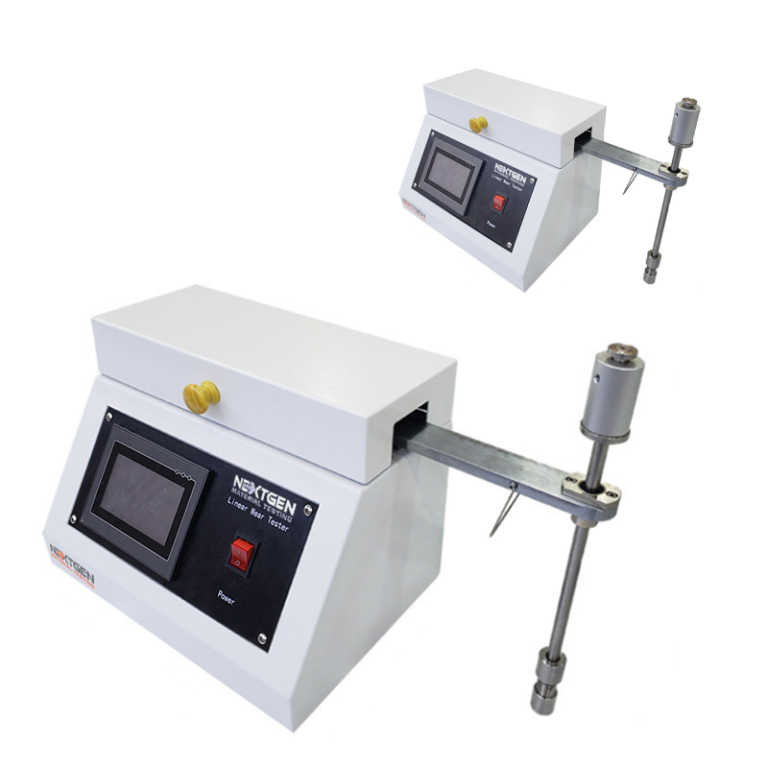 Linear Abrasion Tester
The Linear Abrasion Tester evaluates abrasion resistance, scratch resistance, and color transfer performance under…
View product
Linear Abrasion Tester
The Linear Abrasion Tester evaluates abrasion resistance, scratch resistance, and color transfer performance under…
View product
4
Rheology
Cure behaviour and viscosity of the compound
4
Most requested
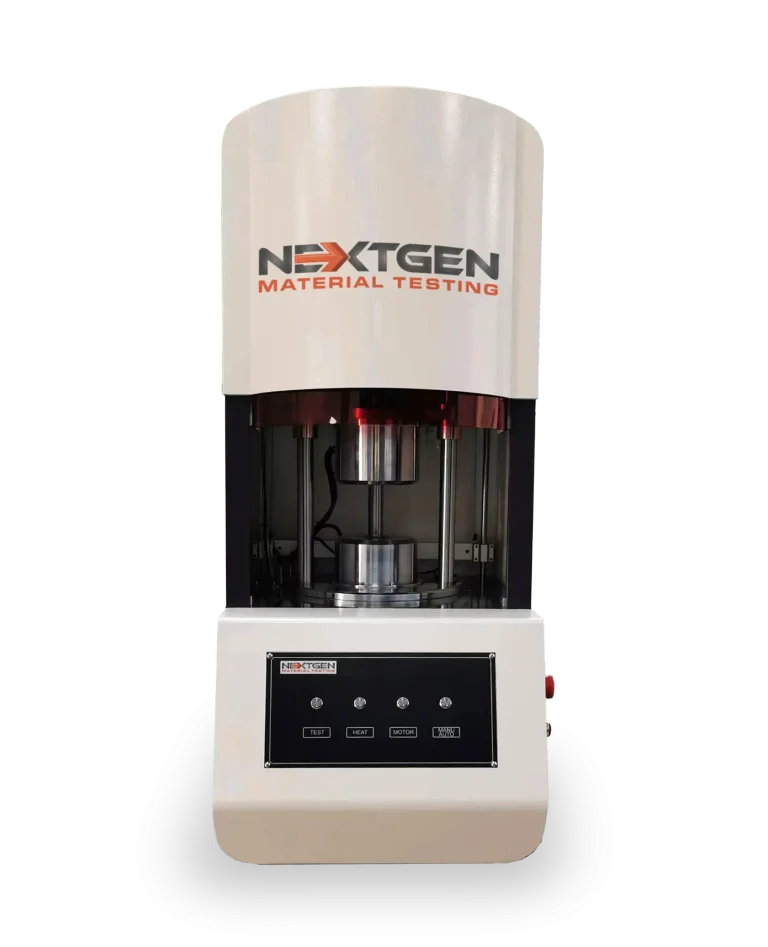 Moving Die Rheometer
The Moving Die Rheometer is a rotorless rubber rheometer for assessing curing and processing characteristics of…
View product
Most requested
Moving Die Rheometer
The Moving Die Rheometer is a rotorless rubber rheometer for assessing curing and processing characteristics of…
View product
Most requested
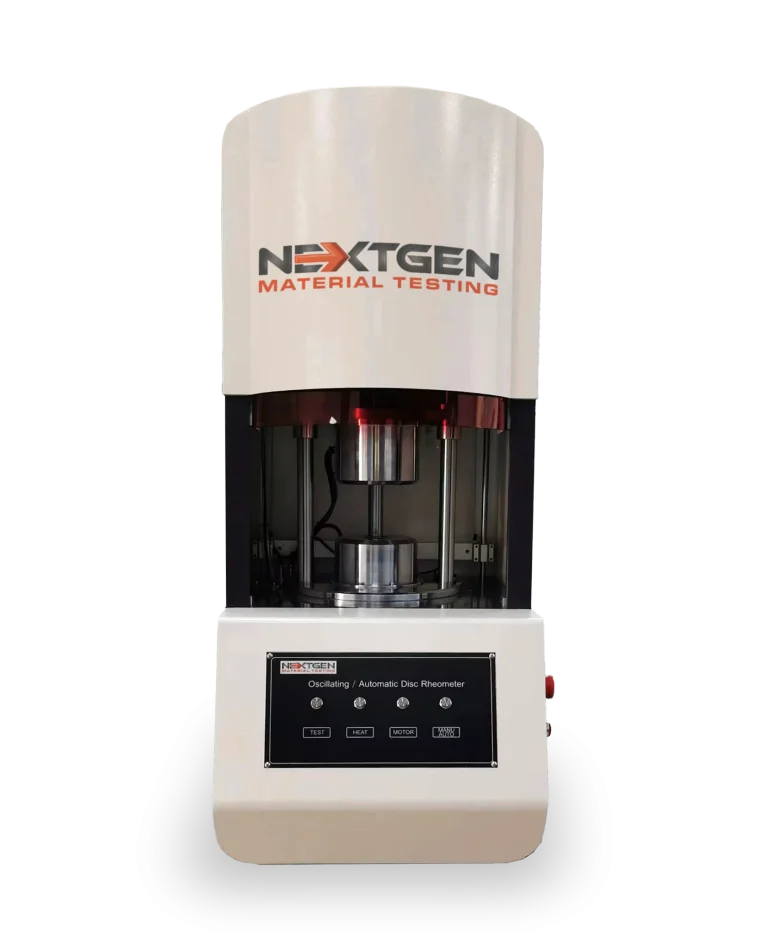 Oscillating Disc Rheometer
NG-ODR is an oscillating disc rheometer for measuring curing and processing characteristics of rubber compounds.
View product
Oscillating Disc Rheometer
NG-ODR is an oscillating disc rheometer for measuring curing and processing characteristics of rubber compounds.
View product
 250 dNm
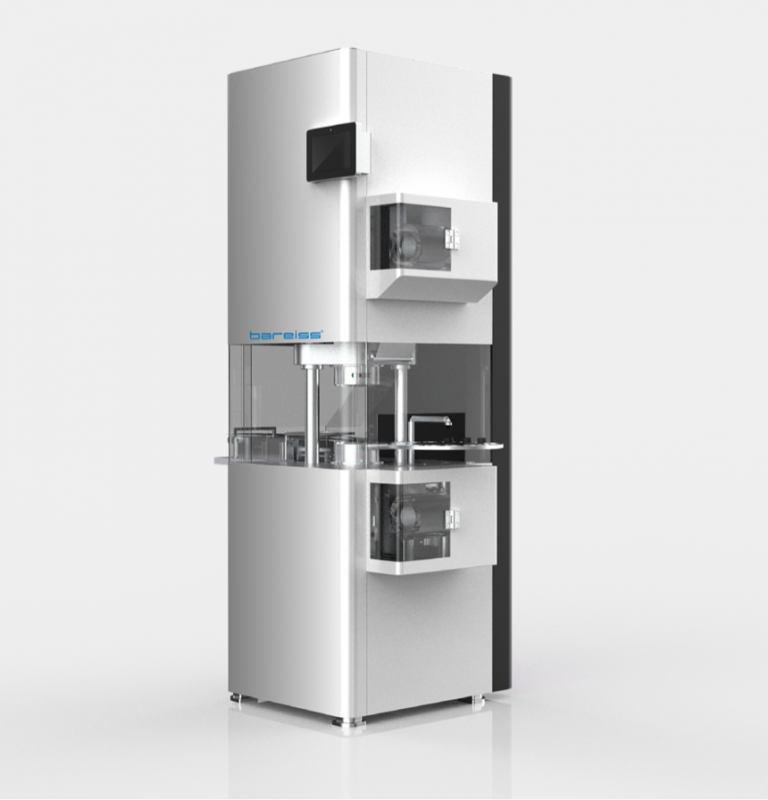
RPA Ultra – Rubber Process Analyzer
RPA Ultra is an advanced rubber process analyzer rheometer for measuring dynamic and static properties of raw rubber…
View product
250 dNm
RPA Ultra – Rubber Process Analyzer
RPA Ultra is an advanced rubber process analyzer rheometer for measuring dynamic and static properties of raw rubber…
View product
 200 °C
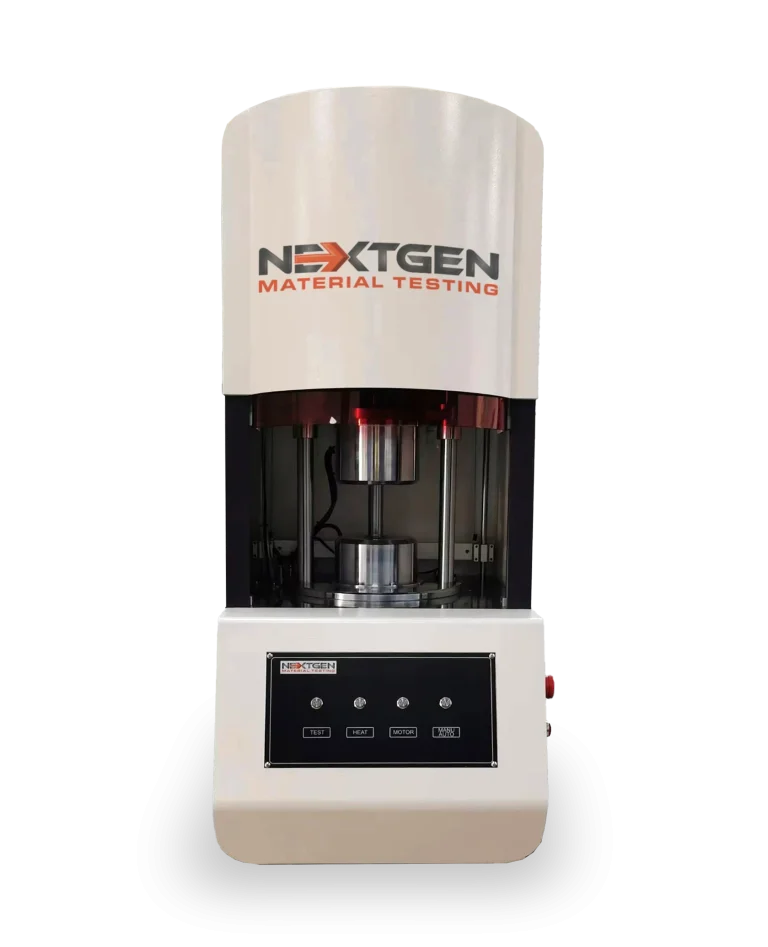
GenMooney – Mooney Viscosity Testing Machine
GenMooney is a Mooney viscosity testing machine for measuring viscosity, scorch behavior, and stress relaxation in…
View product
200 °C
GenMooney – Mooney Viscosity Testing Machine
GenMooney is a Mooney viscosity testing machine for measuring viscosity, scorch behavior, and stress relaxation in…
View product
Moving Die Rheometer
The Moving Die Rheometer is a rotorless rubber rheometer for assessing curing and processing characteristics of…
View product
Most requested
Oscillating Disc Rheometer
NG-ODR is an oscillating disc rheometer for measuring curing and processing characteristics of rubber compounds.
View product
250 dNm
RPA Ultra – Rubber Process Analyzer
RPA Ultra is an advanced rubber process analyzer rheometer for measuring dynamic and static properties of raw rubber…
View product
200 °C
GenMooney – Mooney Viscosity Testing Machine
GenMooney is a Mooney viscosity testing machine for measuring viscosity, scorch behavior, and stress relaxation in…
View product
5
Ageing and environment
Heat, cold, salt spray, light and humidity
6
Most requested
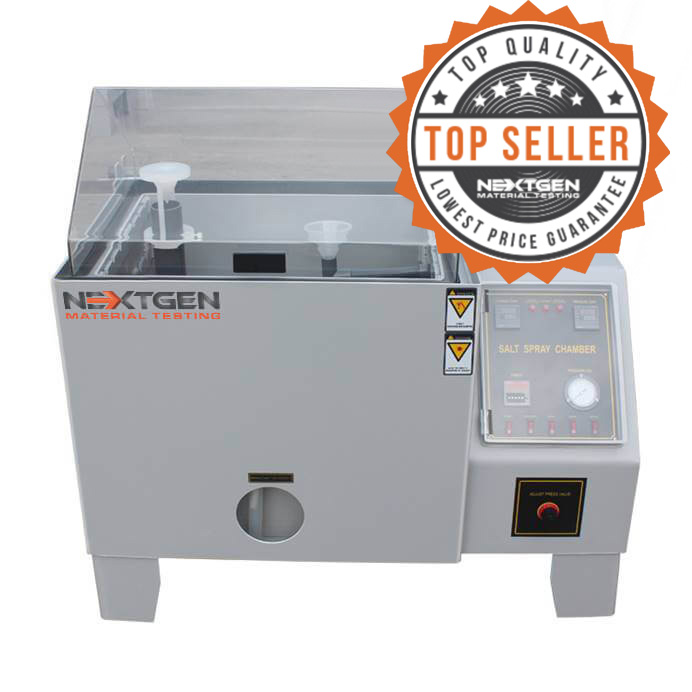 GenSalt – Salt Spray Tester
GenSalt is a salt spray tester for accelerated corrosion testing of metals, coated components, paints, varnishes,…
View product
GenSalt – Salt Spray Tester
GenSalt is a salt spray tester for accelerated corrosion testing of metals, coated components, paints, varnishes,…
View product
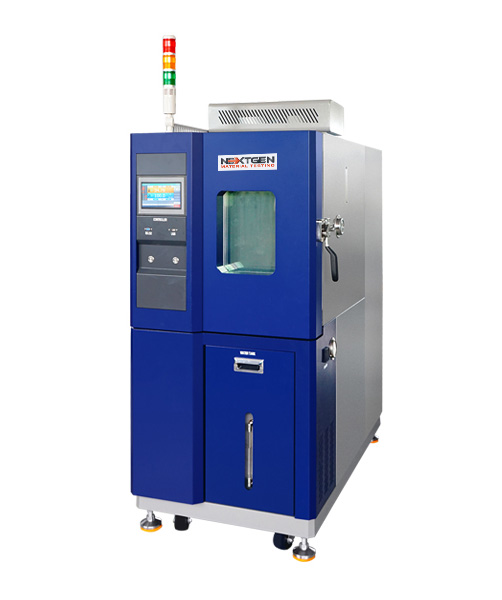 NG-EC Series – Environmental Test Chambers
NextGen NG-EC Environmental Chambers provide controlled temperature and humidity conditions for material, product,…
View product
NG-EC Series – Environmental Test Chambers
NextGen NG-EC Environmental Chambers provide controlled temperature and humidity conditions for material, product,…
View product
 Discoloration Meter
The Discoloration Meter simulates sunlight and heat exposure to evaluate how fabrics, rubber, plastics, and other…
View product
Discoloration Meter
The Discoloration Meter simulates sunlight and heat exposure to evaluate how fabrics, rubber, plastics, and other…
View product
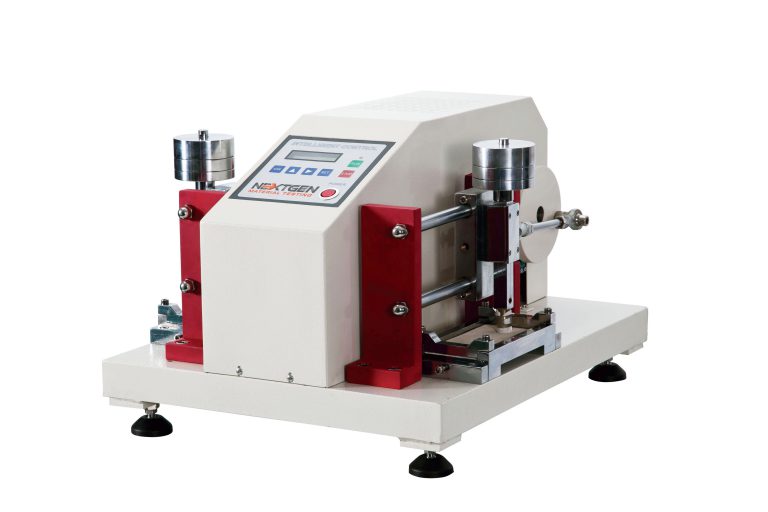 GenCrock – Electric Crocking Tester
GenCrock is an electric crocking tester for evaluating color transfer and fading on fabric, leather, and dyed…
View product
GenCrock – Electric Crocking Tester
GenCrock is an electric crocking tester for evaluating color transfer and fading on fabric, leather, and dyed…
View product
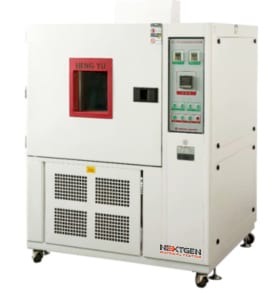 GenFreeze – Freezing Tester
GenFreeze is a freezing tester for evaluating rubber, leather, plastics, PU leather, footwear materials, and related…
View product
GenFreeze – Freezing Tester
GenFreeze is a freezing tester for evaluating rubber, leather, plastics, PU leather, footwear materials, and related…
View product
 300 °C
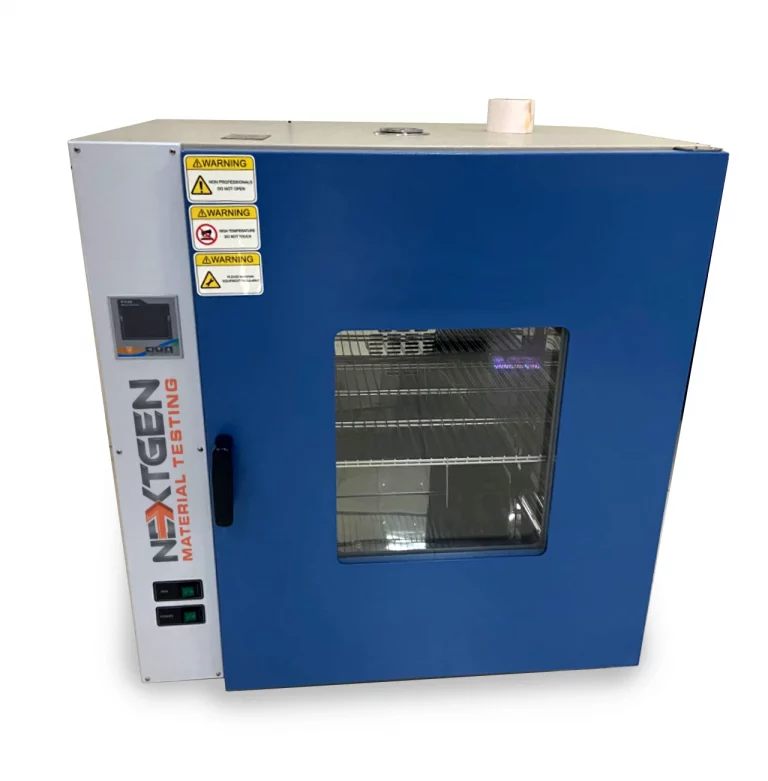
NG-AGOV-ADV – High-Temperature Aging Oven
NG-AGOV-ADV is a high-temperature aging oven for testing how rubber, plastics, elastomers, insulating materials, and…
View product
300 °C
NG-AGOV-ADV – High-Temperature Aging Oven
NG-AGOV-ADV is a high-temperature aging oven for testing how rubber, plastics, elastomers, insulating materials, and…
View product
GenSalt – Salt Spray Tester
GenSalt is a salt spray tester for accelerated corrosion testing of metals, coated components, paints, varnishes,…
View product
NG-EC Series – Environmental Test Chambers
NextGen NG-EC Environmental Chambers provide controlled temperature and humidity conditions for material, product,…
View product
Discoloration Meter
The Discoloration Meter simulates sunlight and heat exposure to evaluate how fabrics, rubber, plastics, and other…
View product
GenCrock – Electric Crocking Tester
GenCrock is an electric crocking tester for evaluating color transfer and fading on fabric, leather, and dyed…
View product
GenFreeze – Freezing Tester
GenFreeze is a freezing tester for evaluating rubber, leather, plastics, PU leather, footwear materials, and related…
View product
300 °C
NG-AGOV-ADV – High-Temperature Aging Oven
NG-AGOV-ADV is a high-temperature aging oven for testing how rubber, plastics, elastomers, insulating materials, and…
View product
6
Physical properties
Density and bursting strength on the same bench
2
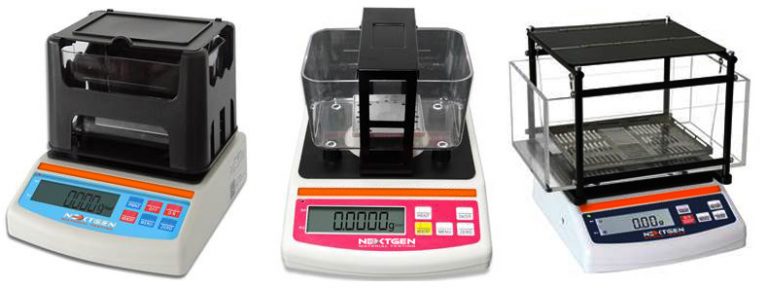 Digital Densimeter System
NextGen Digital Densimeter Systems measure density, specific gravity, volume, and related material properties for…
View product
Digital Densimeter System
NextGen Digital Densimeter Systems measure density, specific gravity, volume, and related material properties for…
View product
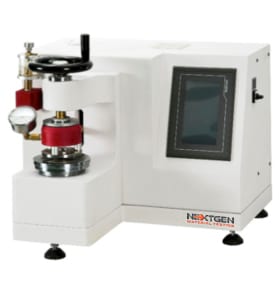 Fabric Burst Strength Tester
GenBurst is a burst strength tester for measuring the rupture resistance of fabric, leather, paper, and similar sheet…
View product
Fabric Burst Strength Tester
GenBurst is a burst strength tester for measuring the rupture resistance of fabric, leather, paper, and similar sheet…
View product
7
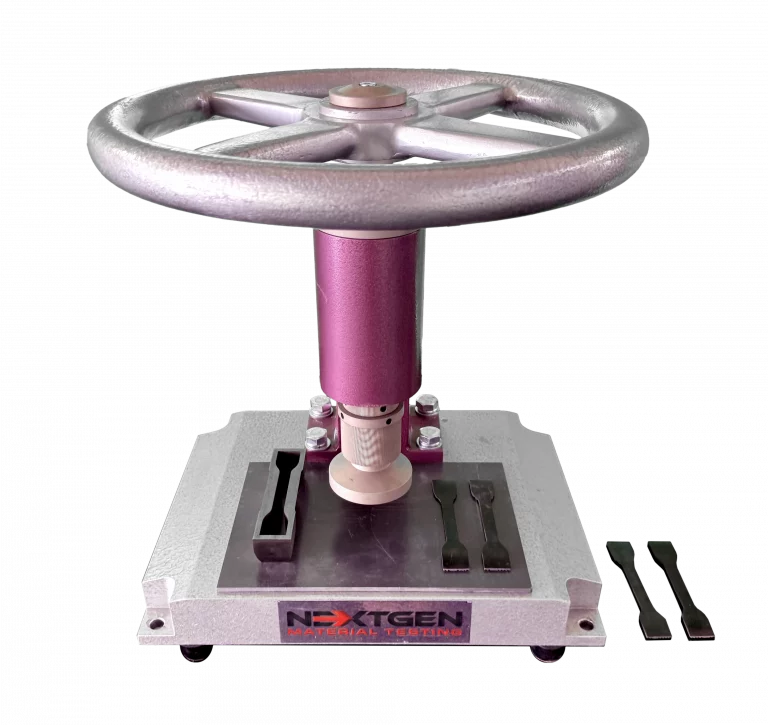
Specimen cutting
Cutting dumbbells and discs to the shape the method needs
1
8
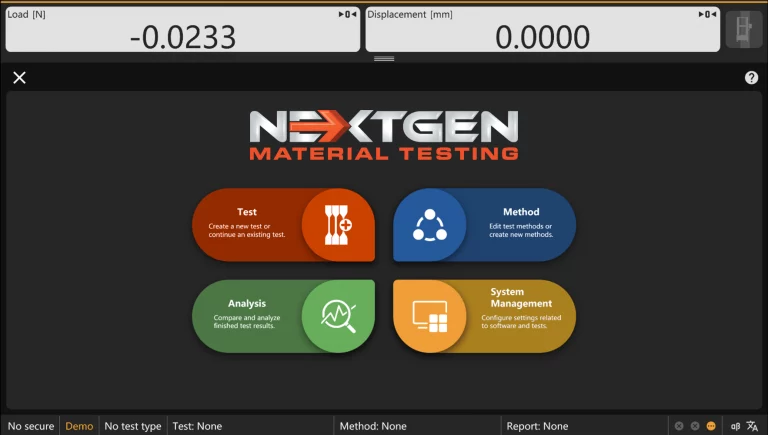
Software
Running the test and keeping the results
1
1
Testing machines
Tension, compression and bond strength on elastomers
4
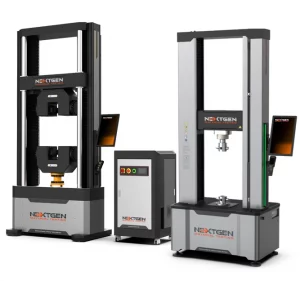 NG-EML Series D – Floor-Standing Universal Testing Machine1000 kN
NG-EML Series D is a heavy-duty floor-standing electromechanical universal testing machine for high-capacity tensile,…
Electromechanical universal testing
NG-EML Series D – Floor-Standing Universal Testing Machine1000 kN
NG-EML Series D is a heavy-duty floor-standing electromechanical universal testing machine for high-capacity tensile,…
Electromechanical universal testing
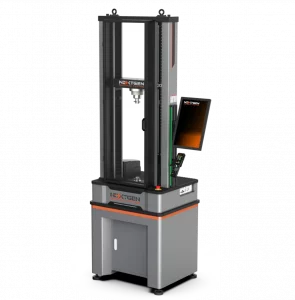 NG-EML Series B – Dual-Column Universal Testing Machine10 kN
NG-EML Series B is a dual-column benchtop electromechanical universal testing machine for precision testing from 100…
Electromechanical universal testing
NG-EML Series B – Dual-Column Universal Testing Machine10 kN
NG-EML Series B is a dual-column benchtop electromechanical universal testing machine for precision testing from 100…
Electromechanical universal testing
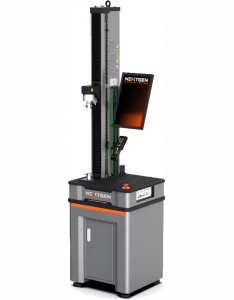 NG-EML Series A – Single-Column Universal Testing Machine5 kN
NG-EML Series A is a compact single-column benchtop universal testing machine for low-force tensile, compression, and…
Electromechanical universal testing
NG-EML Series A – Single-Column Universal Testing Machine5 kN
NG-EML Series A is a compact single-column benchtop universal testing machine for low-force tensile, compression, and…
Electromechanical universal testing
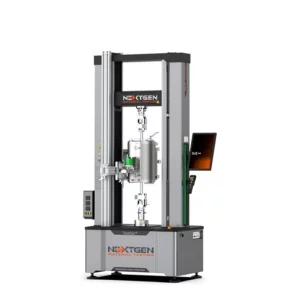 NG-EML Series C – Dual-Column Universal Testing Machine50 kN
NG-EML Series C is a dual-column electromechanical universal testing machine available in bench-top and…
Electromechanical universal testing
NG-EML Series C – Dual-Column Universal Testing Machine50 kN
NG-EML Series C is a dual-column electromechanical universal testing machine available in bench-top and…
Electromechanical universal testing
2
Hardness and resilience
Shore and IRHD readings, plus rebound
6
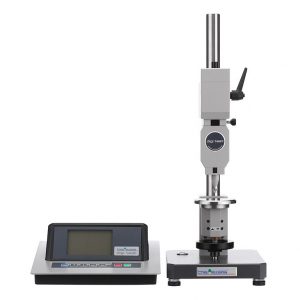 Automatic Shore, IRHD and VLRH Hardness Testing System
Digi Test II is an automatic Shore, IRHD, and VLRH hardness testing system for rubber, plastics, foams, elastomers,…
Hardness testing
Automatic Shore, IRHD and VLRH Hardness Testing System
Digi Test II is an automatic Shore, IRHD, and VLRH hardness testing system for rubber, plastics, foams, elastomers,…
Hardness testing
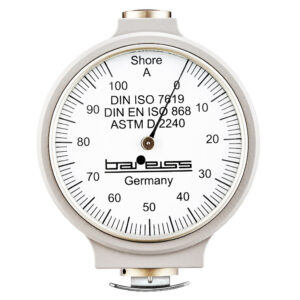 Analogue Shore Durometer with Test Stand
The Classic Analogue Shore Durometer is a German-manufactured hardness tester for rubber and plastic materials,…
Hardness testing
Analogue Shore Durometer with Test Stand
The Classic Analogue Shore Durometer is a German-manufactured hardness tester for rubber and plastic materials,…
Hardness testing
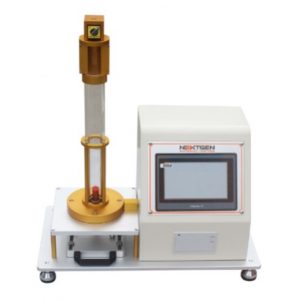 GenRebound – Vertical Rebound Resilience Tester
GenRebound is a vertical rebound resilience tester for measuring the elasticity and rebound behavior of hard rubber…
Rebound resilience testing
GenRebound – Vertical Rebound Resilience Tester
GenRebound is a vertical rebound resilience tester for measuring the elasticity and rebound behavior of hard rubber…
Rebound resilience testing
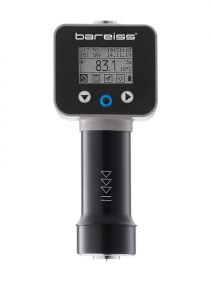 Portable Shore Durometer System with Test Stand
HPE III is an advanced portable Shore durometer system for hardness testing of rubber, plastics, and related…
Hardness testing
Portable Shore Durometer System with Test Stand
HPE III is an advanced portable Shore durometer system for hardness testing of rubber, plastics, and related…
Hardness testing
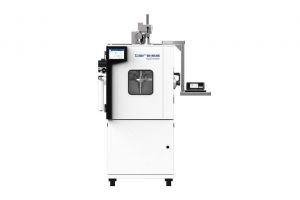 digiChamber – Temperature-Controlled Hardness Tester200 L
digiChamber is a temperature-controlled rubber hardness testing system designed by Bareiss for Shore A and IRHD N…
Hardness testing
digiChamber – Temperature-Controlled Hardness Tester200 L
digiChamber is a temperature-controlled rubber hardness testing system designed by Bareiss for Shore A and IRHD N…
Hardness testing
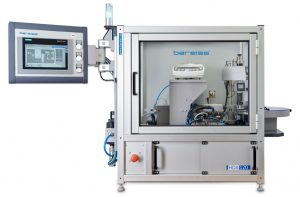 HDA 120 – Hardness and Density Automation System
HDA 120 is a semi-automatic hardness and density automation system for rubber and plastic sample characterization.
Hardness testing
HDA 120 – Hardness and Density Automation System
HDA 120 is a semi-automatic hardness and density automation system for rubber and plastic sample characterization.
Hardness testing
3
Abrasion and flex
Wear, flex cracking and snagging over long cycles
12
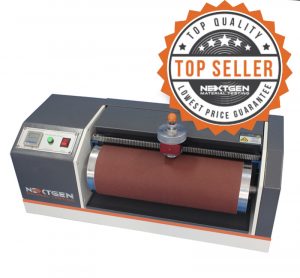 DIN Abrasion Tester
GenDin is a DIN abrasion tester for measuring abrasion resistance of vulcanized rubber, thermoplastic elastomers,…
Abrasion testing
DIN Abrasion Tester
GenDin is a DIN abrasion tester for measuring abrasion resistance of vulcanized rubber, thermoplastic elastomers,…
Abrasion testing
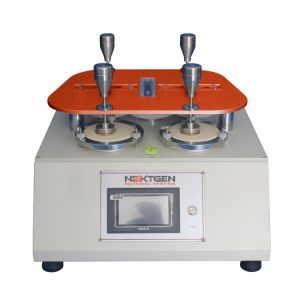 GenDale – Martindale Abrasion Tester
GenDale is a Martindale abrasion tester for evaluating abrasion resistance and visible wear in shoe fabrics, linings,…
Abrasion testing
GenDale – Martindale Abrasion Tester
GenDale is a Martindale abrasion tester for evaluating abrasion resistance and visible wear in shoe fabrics, linings,…
Abrasion testing
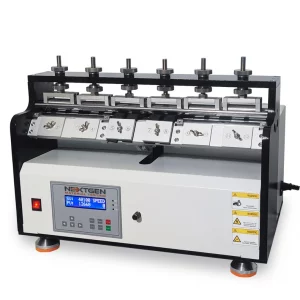 Ross Flex Tester
 evaluates the resistance of vulcanized and synthetic elastomers to cut growth and flex cracking…
Flex cracking testing
Ross Flex Tester
Ross Flex Tester evaluates the resistance of vulcanized and synthetic elastomers to cut growth and flex cracking…
Flex cracking testing
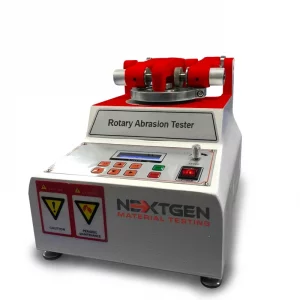 Rotary Abrasion Tester
NextGen’s Rotary Abrasion Tester is available in single- and dual-wheel configurations for evaluating surface wear…
Abrasion testing
Rotary Abrasion Tester
NextGen’s Rotary Abrasion Tester is available in single- and dual-wheel configurations for evaluating surface wear…
Abrasion testing
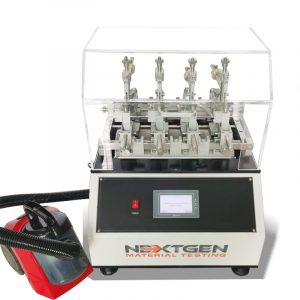 GenWyze – Wyzenbeek Abrasion Tester
GenWyze is a certified Wyzenbeek abrasion tester for measuring abrasion resistance of fabrics, upholstery materials,…
Abrasion testing
GenWyze – Wyzenbeek Abrasion Tester
GenWyze is a certified Wyzenbeek abrasion tester for measuring abrasion resistance of fabrics, upholstery materials,…
Abrasion testing
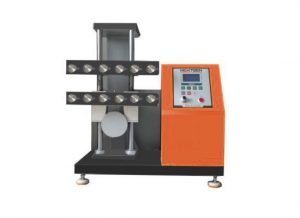 Demattia Flex Cracking Tester
GenFlex Demattia Flex Cracking Tester evaluates the ability of rubber products to withstand repeated flexing without…
Flex cracking testing
GenNBS – NBS Rubber Abrasion Tester
GenNBS is an NBS rubber abrasion tester for evaluating abrasion resistance of vulcanized rubber and related…
Abrasion testing
Demattia Flex Cracking Tester
GenFlex Demattia Flex Cracking Tester evaluates the ability of rubber products to withstand repeated flexing without…
Flex cracking testing
GenNBS – NBS Rubber Abrasion Tester
GenNBS is an NBS rubber abrasion tester for evaluating abrasion resistance of vulcanized rubber and related…
Abrasion testing
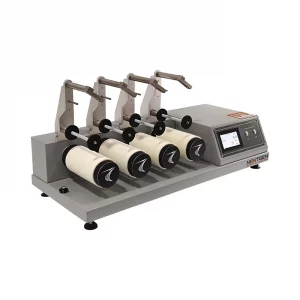 ICI/Mace Snag Tester
The ICI / Mace Snag Tester evaluates the snagging resistance of fabrics by simulating real-world wear in a controlled…
Snagging testing
Akron Abrasion Tester
GenKron Akron Abrasion Tester measures abrasion resistance by tracking volumetric loss from a rotating specimen…
Abrasion testing
ICI/Mace Snag Tester
The ICI / Mace Snag Tester evaluates the snagging resistance of fabrics by simulating real-world wear in a controlled…
Snagging testing
Akron Abrasion Tester
GenKron Akron Abrasion Tester measures abrasion resistance by tracking volumetric loss from a rotating specimen…
Abrasion testing
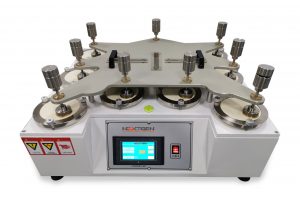 9-Station Martindale Abrasion Tester
GenDale 9-Station Martindale Abrasion Tester measures abrasion resistance and appearance change in shoe fabrics,…
Abrasion testing
9-Station Martindale Abrasion Tester
GenDale 9-Station Martindale Abrasion Tester measures abrasion resistance and appearance change in shoe fabrics,…
Abrasion testing
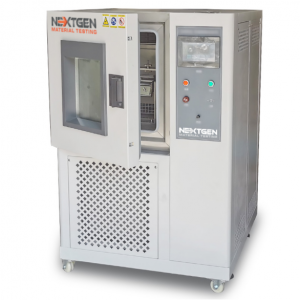 GenRoss-CH – Ross Flex Tester with Low-Temperature Chamber
GenRoss-CH is a Ross flex tester with an integrated low-temperature chamber for evaluating cold resistance and…
Flex cracking testing
GenRoss-CH – Ross Flex Tester with Low-Temperature Chamber
GenRoss-CH is a Ross flex tester with an integrated low-temperature chamber for evaluating cold resistance and…
Flex cracking testing
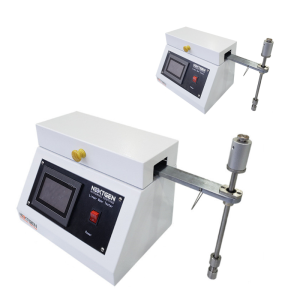 Linear Abrasion Tester
The Linear Abrasion Tester evaluates abrasion resistance, scratch resistance, and color transfer performance under…
Abrasion testing
Linear Abrasion Tester
The Linear Abrasion Tester evaluates abrasion resistance, scratch resistance, and color transfer performance under…
Abrasion testing
4
Rheology
Cure behaviour and viscosity of the compound
4
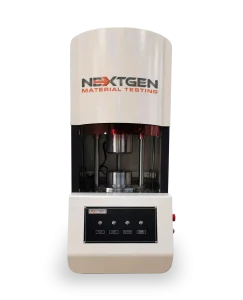 Moving Die Rheometer
The Moving Die Rheometer is a rotorless rubber rheometer for assessing curing and processing characteristics of…
Rheological testing
Moving Die Rheometer
The Moving Die Rheometer is a rotorless rubber rheometer for assessing curing and processing characteristics of…
Rheological testing
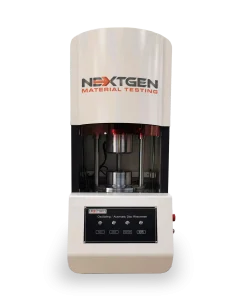 Oscillating Disc Rheometer
NG-ODR is an oscillating disc rheometer for measuring curing and processing characteristics of rubber compounds.
Rheological testing
Oscillating Disc Rheometer
NG-ODR is an oscillating disc rheometer for measuring curing and processing characteristics of rubber compounds.
Rheological testing
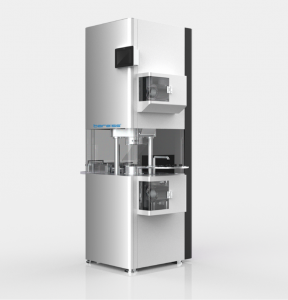 RPA Ultra – Rubber Process Analyzer250 dNm
RPA Ultra is an advanced rubber process analyzer rheometer for measuring dynamic and static properties of raw rubber…
Rheological testing
RPA Ultra – Rubber Process Analyzer250 dNm
RPA Ultra is an advanced rubber process analyzer rheometer for measuring dynamic and static properties of raw rubber…
Rheological testing
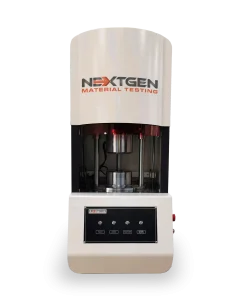 GenMooney – Mooney Viscosity Testing Machine200 °C
GenMooney is a Mooney viscosity testing machine for measuring viscosity, scorch behavior, and stress relaxation in…
Mooney viscosity testing
GenMooney – Mooney Viscosity Testing Machine200 °C
GenMooney is a Mooney viscosity testing machine for measuring viscosity, scorch behavior, and stress relaxation in…
Mooney viscosity testing
5
Ageing and environment
Heat, cold, salt spray, light and humidity
6
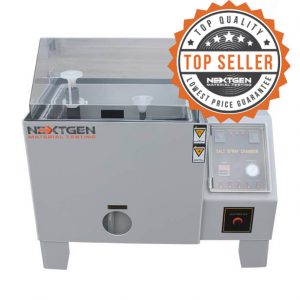 GenSalt – Salt Spray Tester
GenSalt is a salt spray tester for accelerated corrosion testing of metals, coated components, paints, varnishes,…
Salt spray testing
GenSalt – Salt Spray Tester
GenSalt is a salt spray tester for accelerated corrosion testing of metals, coated components, paints, varnishes,…
Salt spray testing
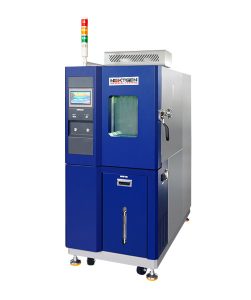 NG-EC Series – Environmental Test Chambers
NextGen NG-EC Environmental Chambers provide controlled temperature and humidity conditions for material, product,…
Environmental conditioning
Discoloration Meter
The Discoloration Meter simulates sunlight and heat exposure to evaluate how fabrics, rubber, plastics, and other…
Discoloration testing
NG-EC Series – Environmental Test Chambers
NextGen NG-EC Environmental Chambers provide controlled temperature and humidity conditions for material, product,…
Environmental conditioning
Discoloration Meter
The Discoloration Meter simulates sunlight and heat exposure to evaluate how fabrics, rubber, plastics, and other…
Discoloration testing
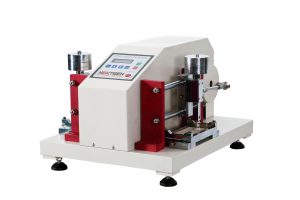 GenCrock – Electric Crocking Tester
GenCrock is an electric crocking tester for evaluating color transfer and fading on fabric, leather, and dyed…
Color fastness testing
GenFreeze – Freezing Tester
GenFreeze is a freezing tester for evaluating rubber, leather, plastics, PU leather, footwear materials, and related…
Low-temperature testing
GenCrock – Electric Crocking Tester
GenCrock is an electric crocking tester for evaluating color transfer and fading on fabric, leather, and dyed…
Color fastness testing
GenFreeze – Freezing Tester
GenFreeze is a freezing tester for evaluating rubber, leather, plastics, PU leather, footwear materials, and related…
Low-temperature testing
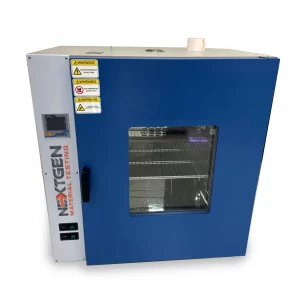 NG-AGOV-ADV – High-Temperature Aging Oven300 °C
NG-AGOV-ADV is a high-temperature aging oven for testing how rubber, plastics, elastomers, insulating materials, and…
Accelerated aging
NG-AGOV-ADV – High-Temperature Aging Oven300 °C
NG-AGOV-ADV is a high-temperature aging oven for testing how rubber, plastics, elastomers, insulating materials, and…
Accelerated aging
6
Physical properties
Density and bursting strength on the same bench
2
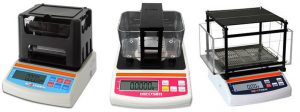 Digital Densimeter System
NextGen Digital Densimeter Systems measure density, specific gravity, volume, and related material properties for…
Density measurement
Fabric Burst Strength Tester
GenBurst is a burst strength tester for measuring the rupture resistance of fabric, leather, paper, and similar sheet…
Bursting strength testing
Digital Densimeter System
NextGen Digital Densimeter Systems measure density, specific gravity, volume, and related material properties for…
Density measurement
Fabric Burst Strength Tester
GenBurst is a burst strength tester for measuring the rupture resistance of fabric, leather, paper, and similar sheet…
Bursting strength testing
7
Specimen cutting
Cutting dumbbells and discs to the shape the method needs
1
8
Software
Running the test and keeping the results
1
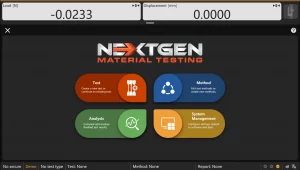
Nothing matches that filter. Show all products
FAQs
NextGen covers rubber and elastomer testing end to end, from the raw compound through to finished parts. The main areas are:
- Cure and rheology: MDR and ODR rheometers, Mooney viscometers and the RPA Ultra.
- Hardness: durometers (Shore A, IRHD), including temperature-controlled options.
- Tensile and tear strength on a universal testing machine.
- Abrasion: DIN, Akron, NBS and Martindale methods.
- Flex, fatigue and aging: crack-growth, flex and heat-aging equipment.
Tell us which properties your specification covers and we'll map them to the right systems. Contact our team or request a quote.
Work back from the property you report:
- Cure behaviour and scorch: a moving die (MDR) or oscillating disc (ODR) rheometer.
- Processing viscosity: a Mooney viscometer.
- Hardness: a durometer.
- Tensile strength, elongation and modulus: a universal testing machine.
- Wear: an abrasion tester suited to your standard.
From there it comes down to your standards, throughput and specimen type. If you'd like a recommendation, contact our team.
The equipment is built to the standards rubber labs work to, mainly ASTM and ISO. Common ones by test:
- Cure: ASTM D5289 (MDR), D2084 (ODR); ISO 6502.
- Mooney viscosity: ASTM D1646; ISO 289.
- Tensile: ASTM D412; ISO 37.
- Hardness: ASTM D2240 (Shore), D1415 (IRHD); ISO 48, 7619.
- Abrasion: ASTM D5963, D1630; ISO 4649 (DIN), 4649.
- Heat aging: ASTM D573; ISO 188.
Each product page lists the exact standards a model meets. If a customer names one you don't see, send it over and we'll confirm it.
With a curemeter. The Moving Die Rheometer (MDR) is the modern standard: it holds a sample at test temperature and records torque as the rubber cures, giving scorch time, cure rate and optimum cure. The Oscillating Disc Rheometer (ODR) measures the same cure curve with the classic oscillating-rotor method. Both tell you how a compound will vulcanize before it reaches production. To match a rheometer to your compounds, request a quote.
Mooney viscosity measures the flow resistance of an uncured compound, which predicts how it will process. It's also used to check scorch. NextGen's Mooney Viscosity Testing Machine (GenMooney) runs the test to ASTM D1646 and ISO 289, and reports viscosity and scorch in one run.
The RPA Ultra is a dynamic rheometer that goes beyond a standard curemeter. It measures cure, plus dynamic properties like storage and loss modulus across strain, frequency and temperature, so you can characterise both processing and final in-service behaviour of a compound. It's the tool of choice for R&D and advanced quality control.
Rubber hardness is measured on the Shore A scale for most elastomers, or in IRHD for softer and thin materials. NextGen supplies manual durometers and the Automatic Shore, IRHD and VLRH system, which applies the load and reads automatically to remove operator variation. Where hardness has to be reported at a set temperature, the digiChamber temperature-controlled hardness tester conditions the specimen and tests it in one place.
On a universal testing machine configured for elastomers. It pulls a dumbbell specimen to failure and records tensile strength, elongation at break and modulus to ASTM D412 and ISO 37. Rubber needs long-travel extension and the right grips, which these frames are set up for. To size a frame to your specimens, request a quote.
Several methods exist because different products wear in different ways. NextGen supplies the main ones:
- DIN abrasion tester (rotating drum, ISO 4649): the common general-purpose method.
- Akron abrasion tester: widely used for tires and industrial rubber.
- NBS abrasion tester (GenNBS): for compounds specified to the NBS method.
- Martindale and linear abrasion: for surface and coated-material wear.
If you're not sure which method your standard calls for, contact our team.
Rubber that flexes in service, such as belts, seals and soles, is tested for crack growth and fatigue. The Demattia Flex Cracking Tester measures crack initiation and growth under repeated flexing, and the GenRoss-CH Ross Flex Tester runs flex testing with an optional low-temperature chamber. Both show how a compound holds up over many cycles rather than a single pull.
Yes, and it matters because rubber stiffens and can turn brittle in the cold. The GenRoss-CH adds a low-temperature chamber for flex testing, and the Freezing Tester (GenFreeze) determines the temperature at which a compound becomes brittle. Tell us your target temperature range and we'll spec the right set-up.
Heat aging predicts how a compound's properties change over time at elevated temperature. The Aging Oven (NG-AGOV) holds specimens at a controlled temperature for a set period, after which they're re-tested for hardness, tensile or elongation to see how much they've changed. It's a standard step for durability and lifetime claims.
With the Digital Densimeter System, which measures specific gravity quickly and repeatably. Density is a simple but valuable check on compound consistency, filler loading and batch uniformity.
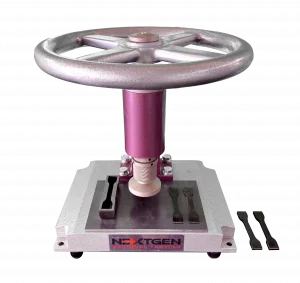
Rubber dumbbells are cut from sheet with a die and a press so every specimen has the same shape. The NG-T-Press cutting press cuts clean, consistent tensile specimens, which is important because a ragged edge starts a tear and skews the result. Good specimen prep is part of getting repeatable tensile numbers.
Yes. The rheometers, viscometers and universal testing machines run under software that sets up the test, records the curve live, calculates results and exports reports. Operators run to a saved method, so results are consistent between shifts and operators.
Yes. A single universal testing machine handles tensile, tear and compression; the test changes with the grips and fixtures you fit. That covers most of a rubber lab's static testing on one frame. If you're unsure which fixtures your standards need, contact our team.
Cutting dies for tensile dumbbells, abrasion wheels and sheets, rotor and die sets for rheometers, grips and fixtures for the universal frames, and spare probes for durometers. Send your model and we'll match the right supplies to it.
Yes. Installation and commissioning are done on site, followed by hands-on training on set-up, method creation, daily verification and maintenance, tailored to your systems and standards. To plan an install, contact our team.
Yes. NextGen provides calibration and verification traceable to recognised standards, plus spare parts and both remote and on-site service. Regular calibration keeps results defensible in an audit, and support continues for the life of the equipment.
Tire and rubber manufacturers, seal and gasket makers, hose and belt producers, footwear, automotive and aerospace suppliers, and compounding and research labs. Anywhere a rubber compound has to meet a cure, hardness, strength or wear specification, this equipment does the checking.
You can request a quote for any product on this page, and the request carries the item you're interested in so we can respond quickly. Prefer to talk it through first? Contact our team, and we can arrange a demonstration or a sample test on your own compound. You can also browse the full Rubber Testing Equipment range to compare options.