Standards
ASTM E8, ASTM A370, ISO 7500-1, ASTM E4, ISO 6892-1, EN ISO 15630-1, ASTM A931, ISO 3108
Ultimate User-Friendliness
Leading Dependability and Reliability
Strict Compliance with Industry Standards
Stocked Consumables and Spares
Trusted After Sales Technical Support
Lifetime Product Support Advantage
Horizontal Tensile Testing for Long and High-Force Specimens
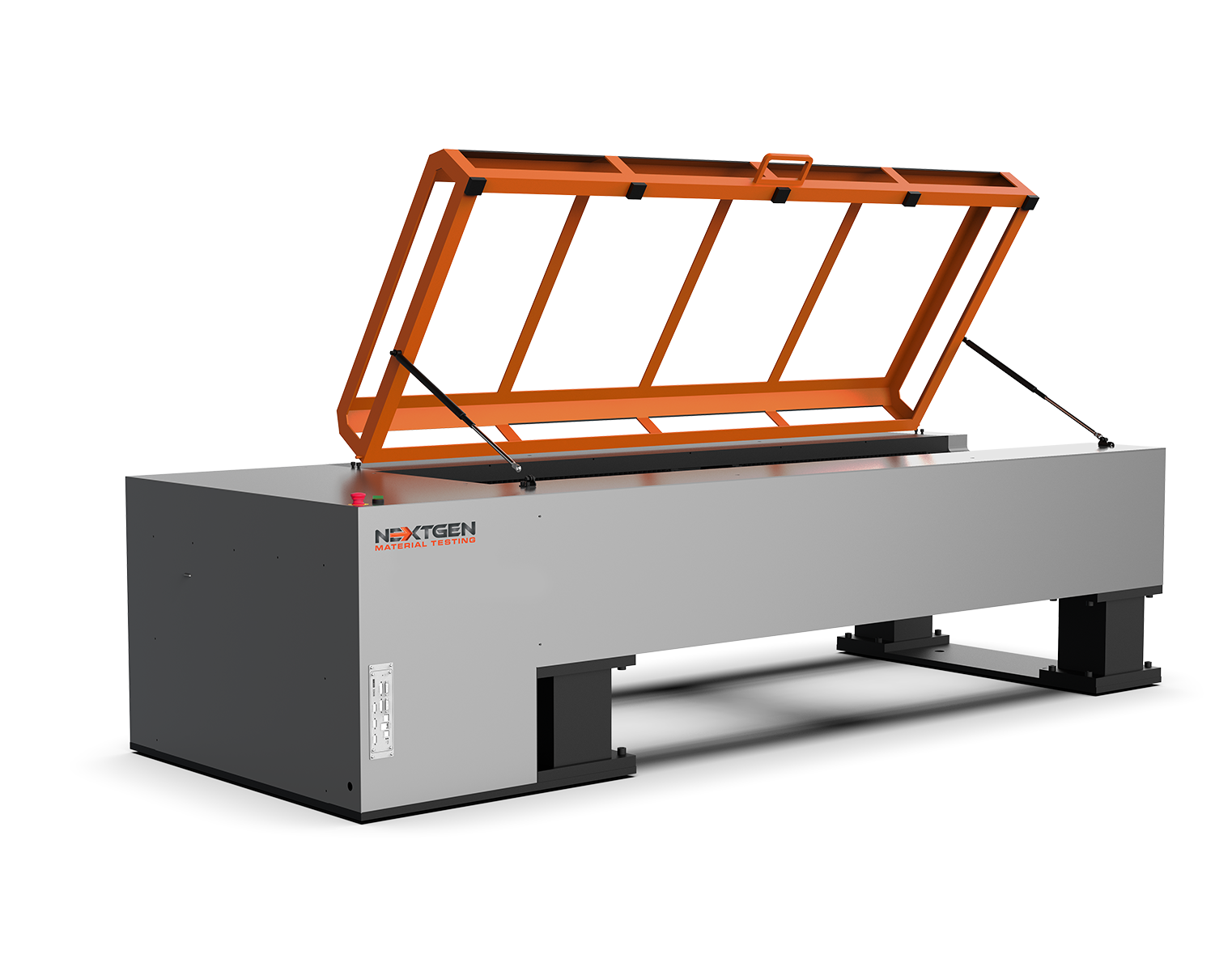
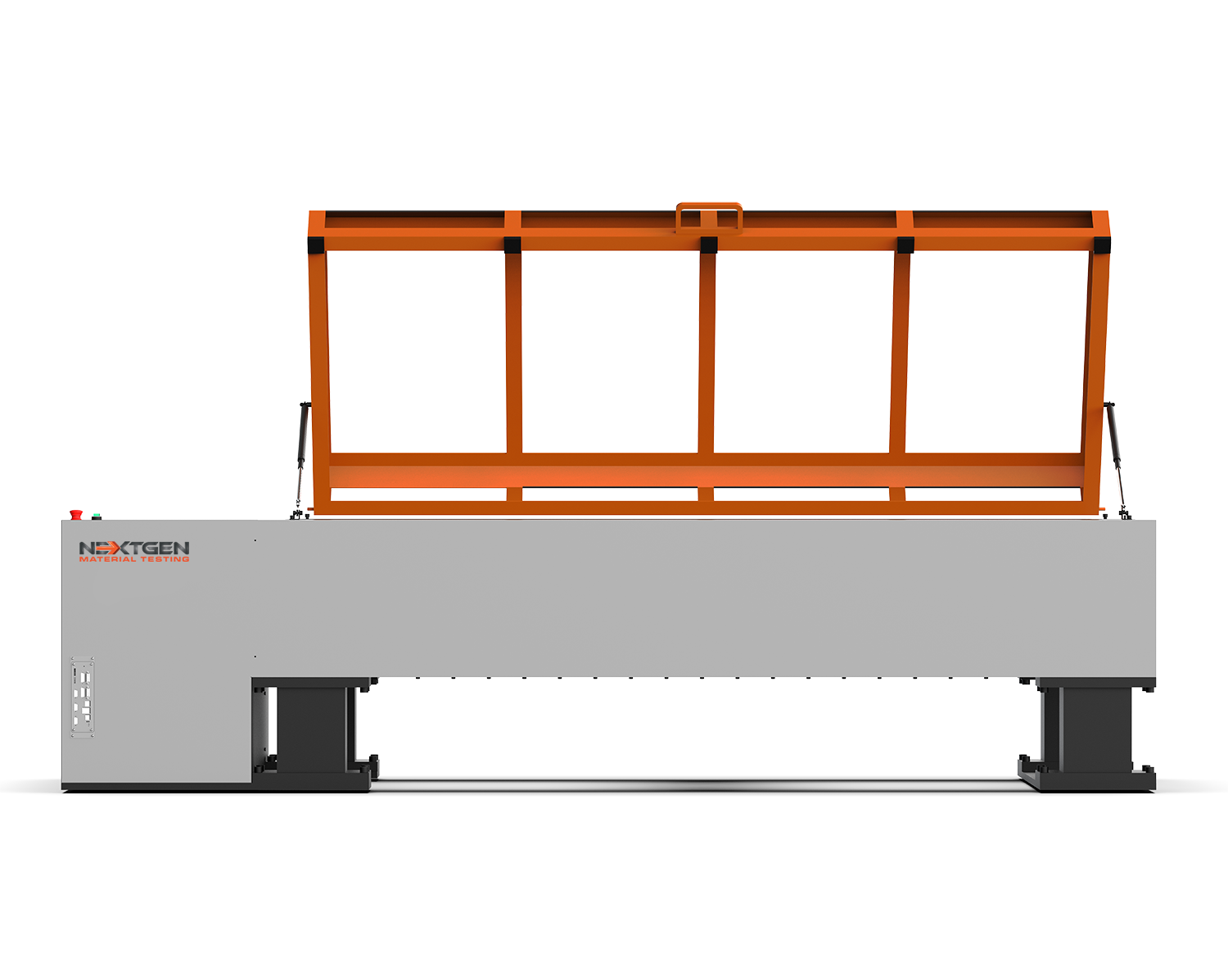
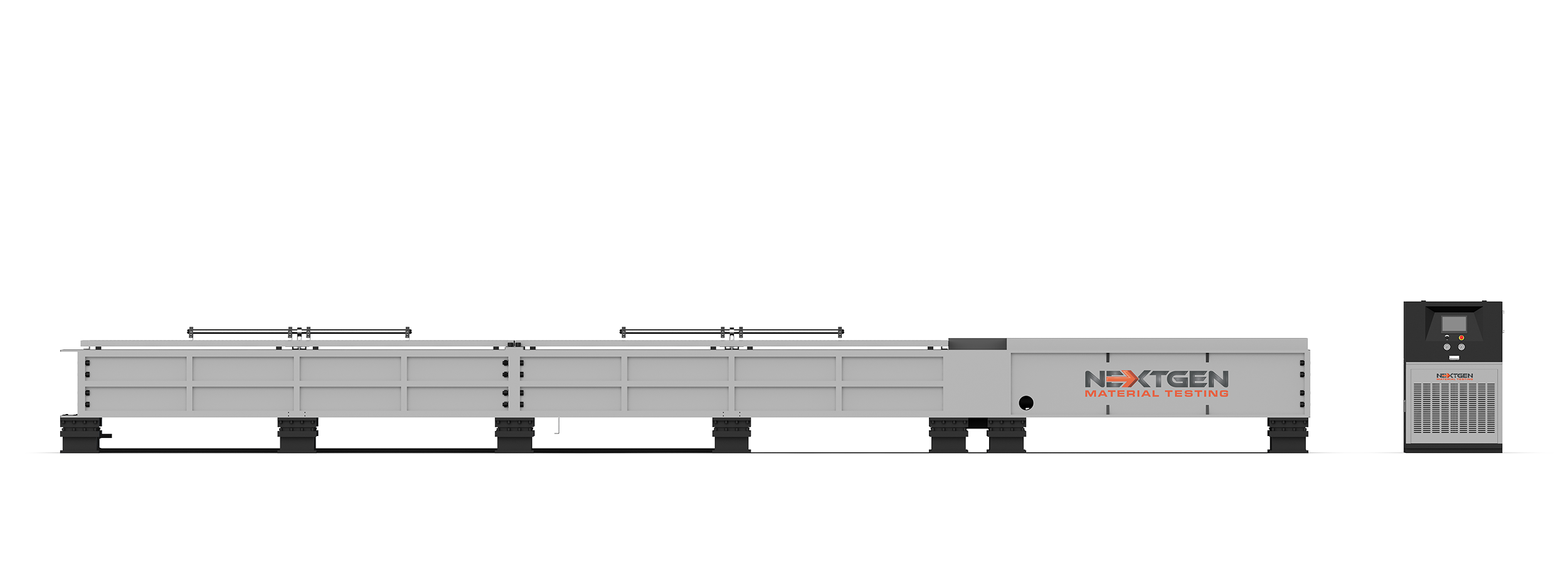
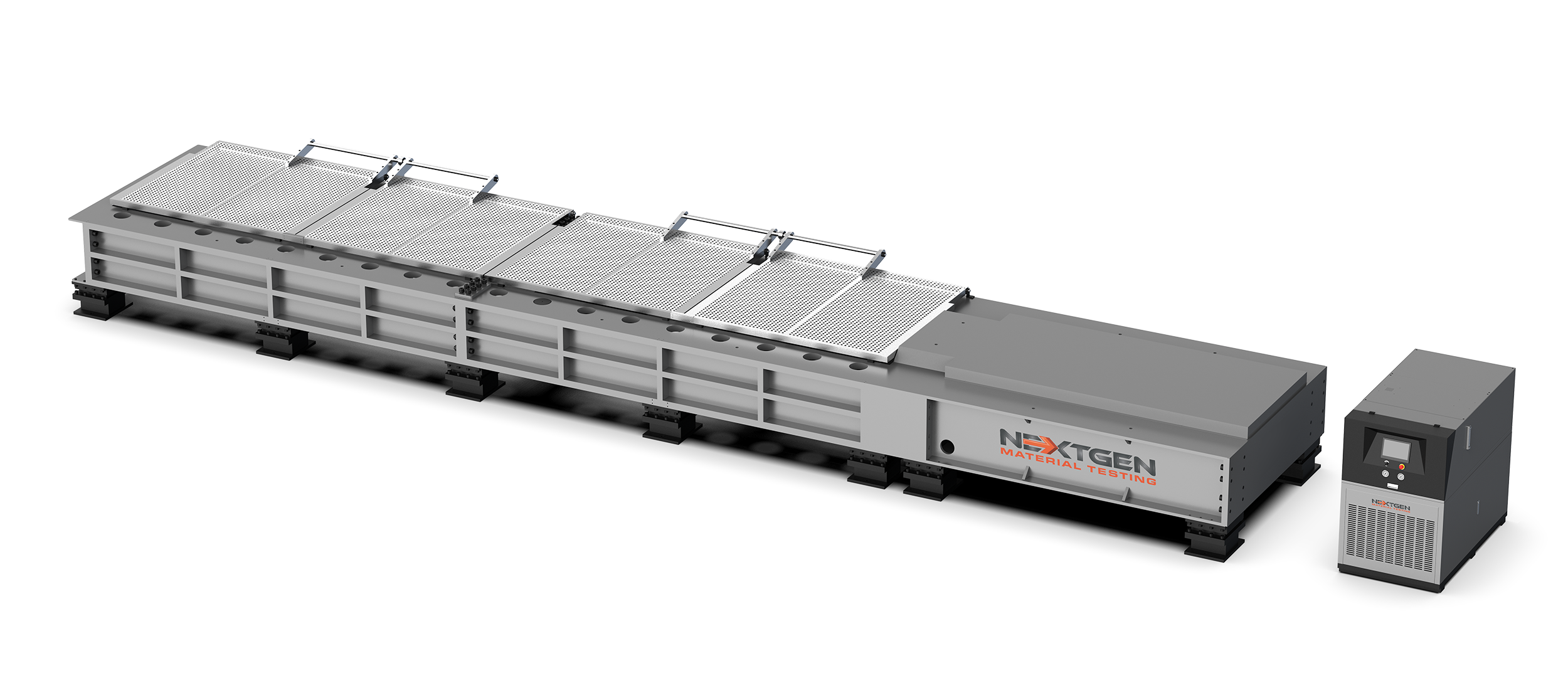
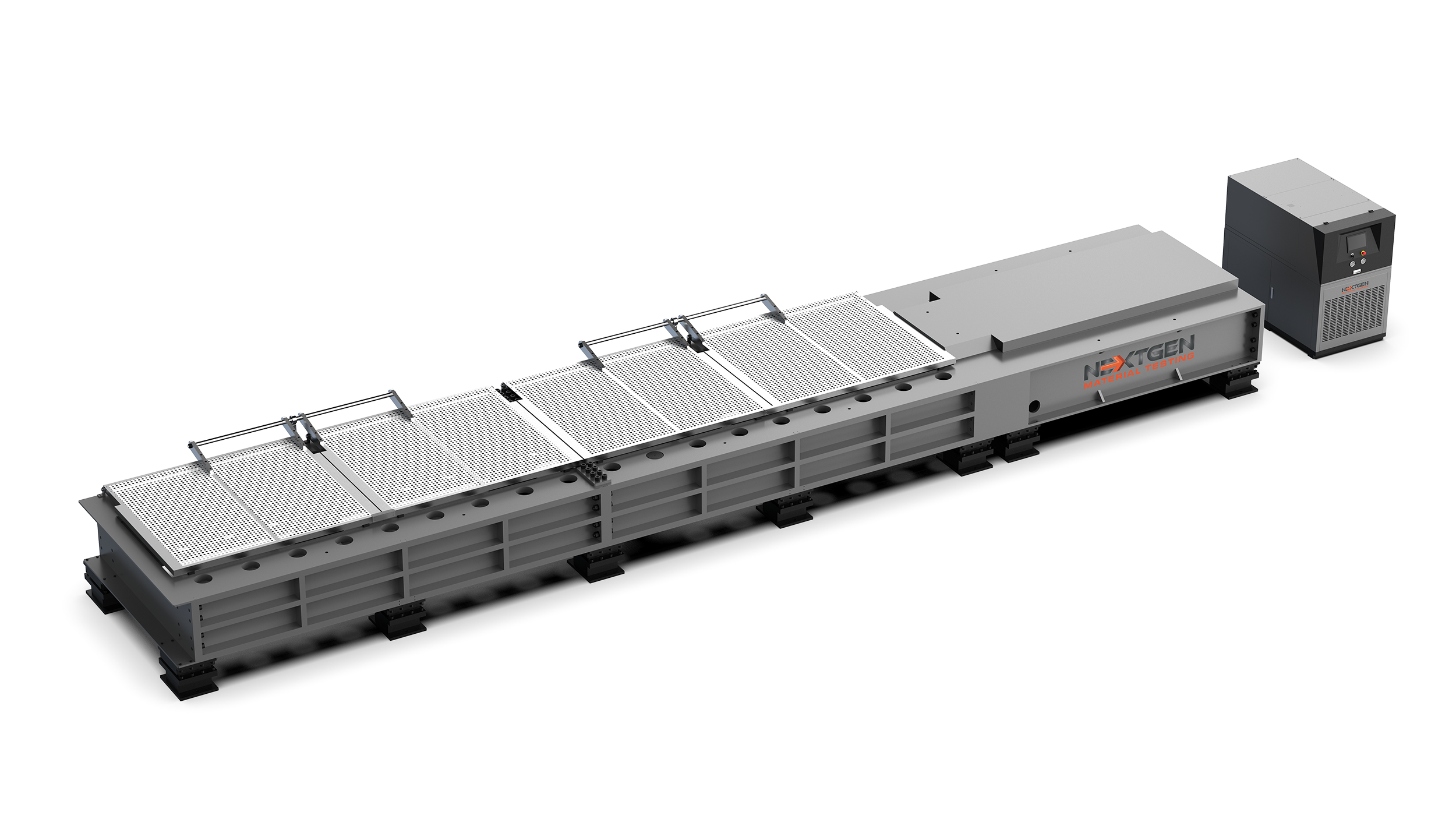
The NG-EML Series H is a line of horizontal universal testing machines designed for tensile, proof load, elongation, and breaking force testing of long or difficult-to-handle specimens. The horizontal frame provides the test length and loading access required for wire ropes, cables, chains, rebar, slings, fasteners, structural components, and other full-length metal and industrial components.
Each system is configured around the customer’s application instead of being supplied as a fixed machine. Force capacity, test bed length, crosshead or cylinder stroke, test width, grips, fixtures, guarding, control system, and reporting workflow can be adapted to the specimen geometry, required test method, and facility layout. The series includes electromechanical screw-driven configurations for lower-force long specimens and hydraulic configurations for high-force industrial tensile and breaking load testing.
The NG-EML Series H is suitable for laboratories and production environments that need controlled horizontal loading, repeatable force and displacement measurement, guarded test area operation, and application-specific fixture design. Typical applications include tensile strength determination, proof load testing, breaking force testing, elongation measurement, batch quality control, and certification support for long specimens and assembled components.
Configuration Type: Electromechanical and hydraulic horizontal testing systems
Force Capacity: Reference configurations from 200 kN to 5,000 kN, with custom force capacities available based on application requirements
Typical Specimens: Wire rope, cable, chain, rebar, slings, fasteners, structural components, and long metal products
Testing Applications: Tensile strength, proof load, elongation, displacement-controlled loading, and breaking force testing
Customization: Force capacity, test bed length, stroke, grips, fixtures, guarding, software, and reporting options
One Horizontal Testing Platform, Configured for Your Application
The NG-EML Series H is available in multiple reference configurations to match different force ranges, specimen types, and fixture requirements. Each system can be adapted to the customer’s required capacity, test length, specimen geometry, and installation conditions.
200 kN Reference Configuration
NG-EML Series H-205
Electromechanical Horizontal Universal Testing Machine
Designed for lower-force horizontal tensile testing of long or oversized specimens. This configuration is suitable for metals, building components, large fasteners, composites, wood products, and similar materials where extended specimen length is required.
Capacity
200 kN
Drive Type
Electromechanical
Best For
Long lower-force specimens
2,000 kN Reference Configuration
NG-EML Series H-206
Horizontal Tensile Testing Machine
A high-force horizontal configuration for industrial tensile testing of anchor chains, hooks, wire ropes, cables, stranded wire, rebar, ropes, and other long metal products. This configuration is intended for applications requiring higher tensile force and application-specific fixtures.
Capacity
2,000 kN
Drive Type
Hydraulic
Best For
Chains, ropes, rebar, cables
5,000 kN Reference Configuration
NG-EML Series H-506A
Heavy-Duty Horizontal Tensile Testing Machine
A heavy-duty horizontal testing configuration for high-capacity tensile strength and breaking force applications. This configuration is designed for steel wire ropes, fiber ropes, nylon ropes, slings, and other long specimens that require high-force loading and guarded test operation.
Capacity
5,000 kN
Drive Type
Hydraulic
Best For
Wire rope, slings, breaking load tests
Note: These models are reference configurations. Final force capacity, test bed length, stroke, grips, fixtures, protective guarding, control system, and software package can be customized according to the customer’s application requirements.
Technical Specifications — NG-EML Series H
The specifications below summarize reference configurations for the NG-EML Series H horizontal testing platform. Final force capacity, test bed length, stroke, grips, fixtures, guarding, and control package can be configured according to application requirements.
Reference Capacities
200 kN to 5,000 kN
Frame Type
Horizontal tensile testing platform
Configuration
Electromechanical or hydraulic horizontal testing systems
| Specification |
H-205 |
H-206 |
H-506A |
| Force Capacity |
200 kN |
2,000 kN |
5,000 kN |
| Drive / Actuation |
Electromechanical screw-driven |
Electro-hydraulic servo loading |
Hydraulic static tensile loading |
| Accuracy Class |
Class 1 |
| Force Reading Accuracy |
±1% |
| Force Resolution |
1/500,000 FS |
| Max Sample / Tensile Space |
9.84 ft
3,000 mm maximum sample length |
16.40 ft
5,000 mm maximum tensile space |
1.97–16.40 ft
600–5,000 mm tensile testing space |
| Stroke / Travel |
39.37 in
1,000 mm crosshead travel
|
9.84 ft
3,000 mm piston travel
|
39.37 in
1,000 mm cylinder stroke
|
| Max Speed |
0.001–500 mm/min |
300 mm/min moving speed
50 mm/min loading speed |
300 mm/min |
| Test Width / Internal Width |
23.62 in
600 mm test width |
Application-dependent configuration |
47.24 in
1,200 mm internal frame width |
| Dimensions |
22.97 × 4.17 × 1.97 ft
7,000 × 1,270 × 600 mm |
36.09 × 5.51 × 2.30 ft
11,000 × 1,680 × 700 mm |
41.01 × 6.69 × 3.22 ft
12,500 × 2,040 × 980 mm, excluding cover |
| Power |
6 kW |
12.5 kW |
55 kW |
| Weight |
Custom / application-dependent |
Approx. 33,070 lb
15,000 kg, estimated |
Approx. 88,185 lb
approx. 40,000 kg |
Typical Applications and Test Specimens
The NG-EML Series H is used for horizontal tensile, proof load, elongation, and breaking force testing of long specimens and assembled components. Typical applications include wire rope, cable, chain, rebar, slings, fasteners, and structural products that require extended test length, high-force loading, or application-specific fixtures.
Wire, Rope & Cable Testing
For tensile strength, elongation, and breaking force testing of wire rope, steel strand, fiber rope, nylon rope, cable assemblies, and lifting slings. These applications often require long test space, secure gripping, and protective guarding during specimen failure.
Chain, Hook & Hardware Testing
For proof load and tensile testing of anchor chains, hooks, shackles, lifting connectors, fasteners, and related hardware. Custom fixtures can be configured around the specimen shape, loading direction, and required test method.
Long Metal Product Testing
For testing rebar, stranded wire, long rods, structural bars, building components, and other full-length metal products. The horizontal frame provides the required specimen length and loading access when vertical test frames are not practical.
Industrial QA / R&D
For production quality control, batch acceptance, certification support, and research testing. Common measurements include tensile strength, proof load, elongation, displacement, breaking force, and deformation behavior under controlled loading.
Standards and Method Support
The NG-EML Series H can be configured to support tensile, proof load, breaking force, and force-verification workflows in accordance with selected ASTM, ISO, EN, and other recognized test standards. Applicable methods depend on the specimen type, force capacity, grips, extensometer setup, calibration requirements, and reporting procedure.
Commonly supported standards include:
- ASTM E4 — Standard Practices for Force Calibration and Verification of Testing Machines
Used for force calibration and verification of static or quasi-static tension and compression testing machines.
- ISO 7500-1 — Metallic materials — Calibration and verification of static uniaxial testing machines — Part 1: Tension/compression testing machines — Calibration and verification of the force-measuring system
Covers calibration and verification of tension/compression testing machines, including inspection and verification of the force-measuring system.
- ASTM E8/E8M — Standard Test Methods for Tension Testing of Metallic Materials
Used for room-temperature tension testing of metallic materials, including yield strength, tensile strength, elongation, and reduction of area.
- ISO 6892-1 — Metallic materials — Tensile testing — Part 1: Method of test at room temperature
Defines the method for tensile testing of metallic materials and the mechanical properties that can be determined at room temperature.
- ASTM A370 — Standard Test Methods and Definitions for Mechanical Testing of Steel Products
Covers mechanical testing procedures for steels, stainless steels, and related alloys used to determine properties required by steel product specifications.
- ASTM A931 — Standard Test Method for Tension Testing of Wire Ropes and Strand
Used for room-temperature tension testing of wire ropes and strand, including measured breaking force, yield strength, elongation, and modulus of elasticity.
- ISO 3108 — Steel wire ropes — Test method — Determination of actual breaking force
Specifies a tensile test to destruction for determining the actual breaking force of steel wire ropes.
- ISO 15630-1 / EN ISO 15630-1 — Steel for the reinforcement and prestressing of concrete — Test methods — Part 1: Reinforcing bars, wire rod and wire
Applies to test methods for reinforcing bars, wire rod, and wire used for reinforcing and prestressing of concrete.
Why Use a Horizontal Universal Testing Machine?
A horizontal universal testing machine is used when specimen length, weight, geometry, or expected elongation makes vertical testing impractical. The horizontal layout provides more usable test length, easier specimen handling, and better access for custom grips and fixtures.
Long products such as wire rope, cable, chain, rebar, slings, and assembled hardware can be positioned along the test bed instead of being lifted into a vertical frame. This improves loading access and helps maintain alignment during tensile, proof load, and breaking force testing.
For high-force applications, the horizontal design also supports protective guarding around the test area. This is important when testing specimens that may release stored energy at failure, including ropes, chains, cables, and sling assemblies.
Engineered for Long-Specimen Tensile Testing
The NG-EML Series H is configured around the specimen type, required force capacity, test length, stroke, fixture design, and safety requirements. The system can be supplied in electromechanical or hydraulic configurations depending on the application.
Horizontal Load Frame
The horizontal frame supports long specimens and provides stable loading alignment during tensile testing. Test space can be configured according to specimen length, fixture layout, stroke requirements, and available floor space.
Drive and Loading System
The H-205 configuration uses an electromechanical screw-driven system for lower-force long-specimen testing. The H-206 and H-506A configurations use hydraulic loading systems for higher-force tensile, proof load, and breaking force applications.
Force, Displacement and Extension Measurement
The system supports closed-loop control of force, displacement, and extension. Load cells, displacement sensors, and extensometer options can be selected according to the required test method and measurement accuracy.
Grips and Fixtures
Fixtures are selected according to specimen geometry and loading requirements. Available options may include pin-type grips, wedge grips, rope and cable fixtures, chain fixtures, hook and shackle fixtures, rebar fixtures, and custom tooling for non-standard components.
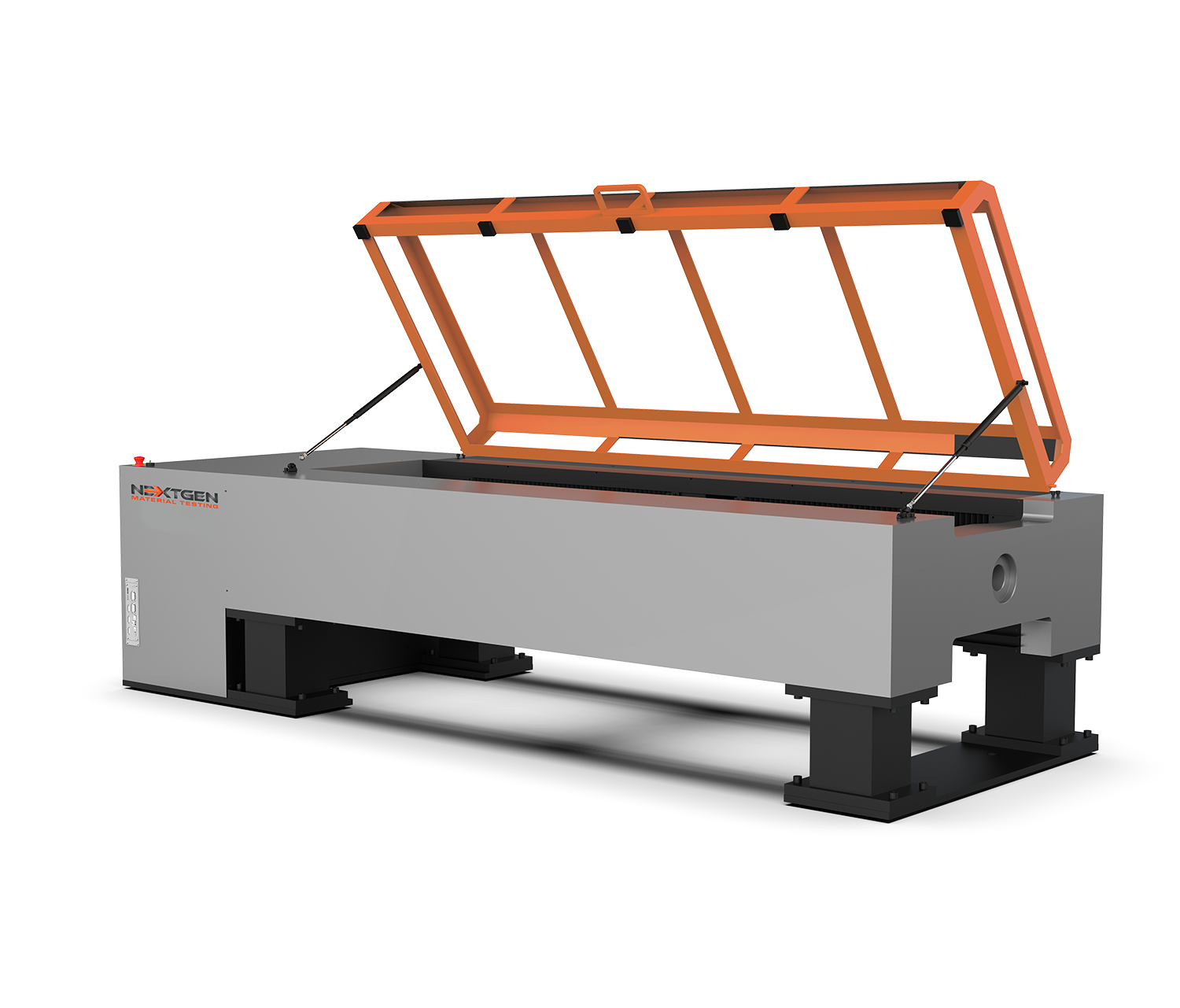
Safety Protection
The system can include protective shielding or a fully enclosed protective frame depending on force capacity and specimen type. Safety functions may include overload protection, travel limits, emergency stop controls, guarded test areas, and protective covers for breaking load tests.
Fully Customizable for Force Capacity, Test Length and Fixture Requirements
The NG-EML Series H is configured around the customer’s specimen type, required force range, test length, stroke, fixture design, safety requirements, and installation conditions. The listed models are reference configurations; final specifications can be adapted to the application.
Force Capacity
Load capacity can be selected according to the required tensile force, proof load, breaking force, and expected safety margin for the specimen.
Test Bed Length
The horizontal test bed can be configured for long specimens, extended assemblies, high-elongation samples, or application-specific test spacing.
Stroke / Travel
Piston stroke or crosshead travel can be matched to the expected elongation, loading procedure, and required displacement range.
Internal Frame Width
Frame width can be adjusted for oversized samples, wide fixtures, rope or chain assemblies, and components with non-standard geometry.
Grips and Fixtures
Fixture packages can include pin-type grips, wedge grips, rope and cable fixtures, chain fixtures, rebar fixtures, or custom tooling.
Protective Enclosure
Guarding can be configured for high-force tensile tests, breaking load applications, and specimens that may release stored energy at failure.
Load Cell and Extensometer Package
Measurement components can be selected for the required force range, displacement control, extension measurement, and test method accuracy.
Software and Reporting
Test methods, result calculations, real-time graphs, report templates, and data export workflows can be configured for laboratory or production use.
Power Supply and Site Layout
Electrical supply, hydraulic power unit location, operator access, specimen handling, and available floor space can be reviewed during configuration.
Foundation and Installation Requirements
Heavy-duty systems can be configured with project-specific foundation, anchoring, access, and installation requirements based on machine size and load capacity.
Configuration Note: Each NG-EML Series H system should be specified based on specimen type, maximum force, required test length, expected elongation, grip design, safety requirements, and facility constraints.
Test Control, Data Acquisition and Reporting
The NG-EML Series H can be supplied with a closed-loop control system for force, displacement, and extension measurement. The control package is selected according to the machine configuration, required capacity, sensor package, and test method.
The software supports programmable test procedures, real-time display of force and displacement data, live graphing, custom report formats, and result calculations for tensile strength, proof stress, yield behavior, elongation, modulus, and breaking force. For production or laboratory workflows, reports and test data can be configured for export and review based on the customer’s documentation requirements.
Core functions include:
- Closed-loop control of force, displacement, and extension
- Real-time display of load, displacement, extension, time, and graph data
- Programmable test procedures for different specimen types and test methods
- Customizable report templates and result fields
- Data export options, including Excel export where configured
- Calculation of tensile strength, proof stress, yield values, elongation, modulus, and breaking force
- Operator safety logic, including overload, travel limit, and emergency stop functions