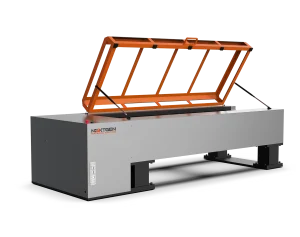
ASTM A931 is a standard test method for tension testing of wire ropes and strand at room temperature. It is used when labs and manufacturers need measured breaking force and, where required, related tensile properties for rope or strand samples.
For buyers and test labs, ASTM A931 usually points to a high-capacity tensile test setup with rope-specific end terminations, aligned loading, and fixturing suited to the product construction being tested. If you need help matching a system to rope size, force range, or end-fitting approach, Contact Us.
ASTM A931: Standard Test Method for Tension Testing of Wire Ropes and Strand
ASTM A931 is a mechanical test method, not a product specification. It describes how wire rope and strand samples are tension tested to generate measured breaking force and other tensile results when those values are part of a quality, qualification, or comparative test program.
Because wire ropes are assembled products rather than simple straight specimens, test quality depends heavily on specimen condition, end terminations, gripping, and machine alignment. In practice, the standard is often used alongside rope or strand purchase specifications rather than as a stand-alone acceptance document.
Quick Definition
ASTM A931 is the ASTM test method used for room-temperature tensile testing of wire ropes and strand.
Document type: Test method.
Primary outputs: Measured breaking force and, when applicable, yield strength, elongation, and modulus-related data.
Important caution: End attachments and sample condition can directly affect the result.
What This Standard Covers
This standard covers tension testing of wire ropes and strand at room temperature. It focuses on mechanical loading of the assembled rope or strand specimen rather than only the properties of the individual wires.
The method is commonly used to determine whether a rope or strand sample reaches the needed breaking-force level. It also addresses related tensile properties when the test program calls for them, although modulus evaluation may require more specialized instrumentation and technique.
Why This Standard Matters in Testing
ASTM A931 matters because rope test results can change significantly when outer wires are damaged or when the end terminations are poorly prepared. The standard helps control these variables so the result reflects the sample as tested rather than avoidable setup error.
It is especially useful in qualification work, incoming inspection, product comparison, and other situations where a documented tensile procedure is needed for assembled rope products.
Common Materials, Product Types, or Applications Covered
ASTM A931 is commonly associated with steel wire rope and strand products used as tension members. Typical examples include general-purpose stranded carbon steel wire ropes, structural wire rope, and structural strand products where tensile performance must be demonstrated.
Common product forms: Wire rope, strand, and metallic-coated rope products.
Common applications: Structural and general-purpose rope products where breaking force is part of product qualification, comparison, or acceptance.
Common Test or Verification Workflow
A typical ASTM A931 workflow starts with visual examination of the sample so obvious outer-wire damage can be noted before testing. The rope or strand is then measured, fitted with suitable end terminations, aligned in the machine, and loaded in tension until failure or until the required data have been captured.
For many labs, the most critical workflow decisions are specimen length, termination style, and load-train alignment. Poured or swaged sockets are commonly used, and the setup must allow the rope or strand to be gripped uniformly so bending or premature end failure does not dominate the result.
Equipment Commonly Used for This Standard
ASTM A931 usually connects to a tensile test system configured for assembled rope products rather than flat or round metallic coupons. Capacity and fixturing must match the expected breaking force and the rope construction being tested.
| Equipment family | How it is used for ASTM A931 | Common selection point |
|---|---|---|
| Calibrated tensile testing machine | Applies axial tensile load to the rope or strand specimen | Force range should cover the expected breaking force while meeting machine verification requirements |
| Rope-specific gripping or socket fixtures | Transfers load from the machine into the specimen | Fixture style must suit rope diameter, construction, and termination method |
| Poured or swaged end terminations | Helps the specimen reach the required breaking force without grip-induced failure | Termination quality can directly influence the measured result |
| Alignment and measurement tools | Supports specimen setup, length checks, and dimensional documentation | Useful for controlling bending and recording as-tested specimen details |
Common equipment path: High-capacity universal or tensile testing machine, rope-end fixtures or sockets, and setup tooling sized to the rope or strand being evaluated.
How to Read This Designation or Revision
In ASTM designations, the number after A931 identifies the edition year, and a year in parentheses indicates a later reapproval. For example, A931-08(2013) identifies the 2008 edition reapproved in 2013.
The active ASTM store listing identifies ASTM A931-18 as the current version. When specifying equipment or preparing a quote, it is good practice to match the exact edition named in the purchase specification, contract, or lab procedure.
Related Standards, Methods, or Frameworks
ASTM A931 is often used alongside product specifications that define the rope or strand being tested. Related ASTM documents in this area include A1023/A1023M for carbon steel wire ropes for general purposes, A603 for metallic-coated steel structural wire rope, and A586 for metallic-coated steel wire structural strand.
Testing machine force verification connects back to ASTM E4, which is referenced by the method. Where socketing procedures are part of the setup, ISO 17558 is also relevant to the end-termination process.
Get Help Selecting ASTM A931 Test Equipment
If you are planning an ASTM A931 setup, the key choices are machine capacity, rope-specific fixturing, and the end-termination approach needed to reach the required breaking force without introducing avoidable test error.
Request a Quote for an ASTM A931 test system matched to your rope size, expected load range, and fixture requirements.