Hysteresis is a phenomenon when the response of a system to an external influence depends not only on the influence itself, but also on the history of its changes.
Let’s consider the phenomenon of hysteresis on the example of rubber belts stretching. When the tape is stretched, depending on the hardness of the rubber, its length changes, and thus the external force required for further stretching also changes. If we stretch the belt to a certain point and then start reducing the external force, the belt will not return to its original length. It looks as if the rubber has a “memory” of its previous states, and is “reluctant” to shrink as the tensile force decreases.
In fact, the long molecules of rubber polymers are arranged in a certain way in their resting state: they are compressed and twisted. When stretched, they straighten out, increasing the length of the belt. This change in the shape of the molecules accounts for the lion’s share of the tensile energy. However, part of the energy is lost to the temperature increase due to the friction of the molecules against each other. Therefore, when we reduce the external force after the belt has been stretched to a certain point, the rubber molecules do not return to their original positions, and the belt remains slightly more stretched than it was when the external force was increased. And to return the belt to its original length, it is necessary to further reduce the external force. This is how the effect of elastic hysteresis manifests itself.
Interesting Facts about Rubber Hysteresis
It is interesting that when rubber hysteresis is measured, the material behaves similarly to a gas. When the rubber is stretched, it heats up, and if it is suddenly released, it cools down significantly.
Suspensions of small vehicles using rubber (or other elastomers) can perform the dual function of spring and shock absorption. Rubber, unlike metal springs, has a pronounced hysteresis and does not return all the absorbed compression energy when the tension is released. That’s why mountain bikes use elastomeric suspension, just like the original Mini car.
The rolling resistance effect is one of the main causes of energy loss in mechanical systems such as car wheels. Rolling resistance is caused by friction between surfaces in contact with each other and depends on several factors, including surface material, wear level, tire pressure, speed, etc. Hysteresis plays a major role in rolling resistance. As the tire rotates, under the weight of the vehicle, it undergoes repeated cycles of deformation and recovery, and thus dissipates hysteresis energy in the form of heat.
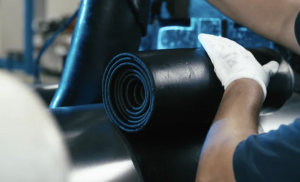
When the surfaces meet, the pressure on them increases, which leads to a change in the shape of the contact surface and the corresponding rolling resistance. If this resistance decreases during subsequent movement, the shape of the contact surface does not fully return to its original state, but remains somewhat altered. This can lead to an increase in rolling resistance when the vehicle is driven again. Thus, hysteresis slows down the movement and is the main reason for the energy loss due to rolling resistance, that depends on the viscoelastic properties of rubber.
Why does Rubber Remain the Main Material for Car Tires?
It’s a logical question. Indeed, with its tendency to hysteresis, rubber should not be the main material for wheel tires, because hysteresis is the main factor in slowing down cars. However, there are a few nuances here.
First, rubber is a flexible material that can adapt to road irregularities, providing a more comfortable ride. Secondly, rubber has good adhesion to the road surface, which allows for better grip and shorter braking distances. Thirdly, the tire pressure and tread shape also have a significant impact on vehicle performance.
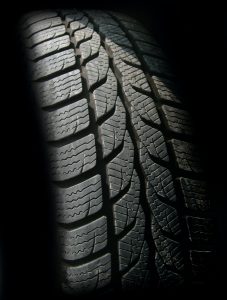
The shock absorption properties of rubber also play an important role in the context of rolling resistance. Rubber has the ability to absorb energy from impacts and vibrations, which can help provide a more comfortable ride for passengers. This is achieved because rubber has a high internal damping capacity, which allows it to absorb energy from impacts and vibrations and dissipate it in the tire’s spring elements. Also, the shock absorption properties of rubber can vary depending on its composition, design, and tread type. Some types of rubber may have a greater ability to absorb energy than others, which can provide better cushioning. In addition to rubber, other materials are used, such as textiles to create the tire carcass, and yarns made of polyester, nylon, and aramid, which have high strength and tensile resistance. This can be especially important for vehicles carrying heavy loads or traveling on uneven roads, as shock absorption can help prevent tire damage and preserve other vehicle components.
Therefore, vehicle performance is a multi-factor issue and the choice of tire material is much more complex when it comes to optimizing vehicle performance.
Material Selection is a Key Step in Product Development & Hysteresis
When creating any product, after developing its design, it is necessary to choose the materials. The mechanical properties of such materials must meet certain requirements dictated by the product design and ensure the reliability and efficiency of the product. The mechanical properties of new materials and the ongoing quality control of manufactured products are studied using special tests. In rubber or plastic hardness tests, the reaction of the material to an applied load is measured, and this data is used to determine the hardness of the material and then to determine its suitability for use.
Among such tests, the Shore hardness test is a method of measuring the hardness of materials by determining the depth of penetration of a conical gauge or plug into the surface of the material under a specific standardized pressure. The Shore test was developed to measure the hardness of elastomers such as rubber, rubber, silicone, and other soft materials, but it can also be used to measure the hardness of harder materials such as plastics and even metals. It is used to select materials for product manufacturing and for quality control in various industries, such as automotive, electrical, medical, and other industrial sectors.
The test provides a numerical value for the hardness of a material on the Shore scale. There are several types of Shore scales that differ in the range of hardness values, and each is used for specific types of materials. Typically, Shore A or Shore C is used for rubber tires. Shore A measures the hardness of materials with a softness of 10 to 90, while Shore C measures the hardness of materials with a softness of 0 to 100. Other Shore scales – D, B, O, and OO – are used to measure the hardness of materials with specific properties and hardness ranges.
For example, the Shore D scale is used to measure the hardness of materials with high strength, such as hard rubbers and plastics. Shore B is used to measure the hardness of materials with low strength, such as foams and soft plastics. The Shore O and OO scales are designed to measure the hardness of very soft materials, such as gels or shoe linings. Each of these scales has its own standards and specifications that are used to measure the hardness of materials. Manufacturers usually specify which Shore scale they use to measure the hardness of their materials. So, the logic behind using different Shore scales is that they allow you to measure the hardness of materials with different properties and hardness ranges, which is important for many industrial sectors and applications.
The hysteresis data of a rubber or plastic obtained by measuring the hardness of samples indicates how elastic the material is and how quickly it returns to its original state after a load is applied. This data can be used to select the material for various applications. Let’s go back to tires and car tires, where a material with a high hysteresis coefficient is required, which can provide high cushioning efficiency when driving.
Digitest II: Key Features and Benefits – Only Tester To Do Hysteresis
For reliable results of measuring the hardness of rubbers and plastics, we recommend that you pay attention to the Digi Test II from NextGen, a state-of-the-art testing system. The device is unique in that it is the only one that can automatically determine the hardness of any surface, including concave and convex surfaces. This makes it stand out from conventional hardness testers that can only measure samples that have a flat surface. Also, this hardness tester is the only one on the market that has a hysteresis function – a special program that allows you to measure this important factor of rubbers and plastics. This makes it the optimal testing equipment for industries such as rubber, plastics, automotive, defence, and aerospace.
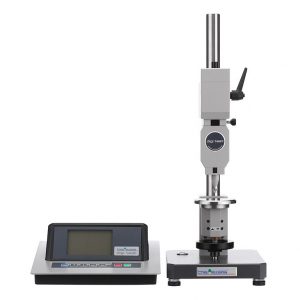
It is also convenient because the indenter length is adjustable, meaning it can be extended to any point on the test piece. The DigiTest II system guarantees accurate test results. The device is easy to use and does not require constant operator intervention. The digital rubber hardness tester can work with rubber, polymers, plastics and is capable of processing almost all materials except metals.
DigiTest II Automatic Shore, IRHD and VLRH Hardness Testing System complies with the following international standards:
- DIN ISO 7619
- DIN ISO 48
- DIN EN ISO 868
- NF EN ISO 868
- ASTM D 2240
- BS 903 Part. A 26
- NF T 46-003
- ASTM D1415
- DIN ISO 27588
Unique to the DigiTest II system is the VLRH (Very Low Rubber Hardness) test scale. It is used for thin spongy materials such as foam rubber, porous rubber, silicone, etc. The main feature of the scale is that the VLRH offers additional versatility, as it can make indentations on thinner samples as thin as 2 mm and allows testing concave and convex surfaces. The device therefore measures hardness on all Shore scales as well as IRHD and VLRH. Shore scales are most commonly used for hardness testing in the United States, while in Europe, the most common test is the IRHD test, which differs in that it uses a spherical rather than a cone-shaped indenter.
Digi Test II is equipped with an electronic unit that has a navigation menu that controls the display of information and the selection of various functions, including the measurement method. The device is supplied with the following accessories: electronic unit, test stand, lifting bracket, and interchangeable measuring unit for Shore, IRHD, and VLRH scales. There is a USB interface for data transfer. In addition, all interchangeable measuring devices in the DigiTest system are officially certified by DKD/DAkks.
So if you’re looking for a leading hardness tester for plastics and rubber, then check out the Digitest II & other Plastic Hardness Testers from NextGen Material Testing. This supplier offers the best devices made in Europe. In particular, we recommend paying attention to the Bareiss Digi Test II automatic hardness tester. If necessary, you will receive support for calibration, device testing, and maintenance contracts.
Machines Behind This Article
Plastic TestingAutomatic Shore, IRHD and VLRH Hardness Testing SystemDigi Test II is an automatic Shore, IRHD, and VLRH hardness testing system for rubber, plastics, foams, elastomers, O-rings, tubes, hoses, and shaped parts. It...View product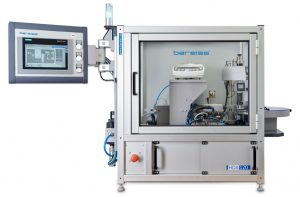 Plastic TestingHDA 120 – Hardness and Density Automation SystemHDA 120 is a semi-automatic hardness and density automation system for rubber and plastic sample characterization. It can handle up to 20 samples, perform three...View product
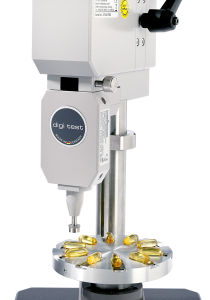 Plastic TestingCapsule and Soft Gel Hardness TesterGelomat is an automatic capsule and soft gel hardness tester for gelatin capsules, softgels, plasticine, edible gelatin, and similar materials. Available with 0–2 N...View product
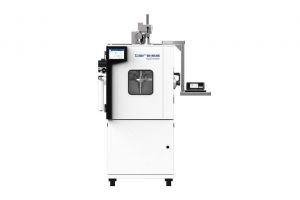 Rubber TestingdigiChamber – Temperature-Controlled Hardness TesterdigiChamber is a temperature-controlled rubber hardness testing system designed by Bareiss for Shore A and IRHD N testing under extreme environmental conditions. It...View product
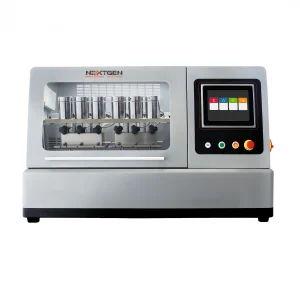 Plastic TestingNG-HDT – HDT/Vicat Testing Machine for PlasticsNG-HDT is an HDT/Vicat testing machine for measuring heat deflection temperature and Vicat softening temperature of thermoplastics, including pipes and fittings....View product
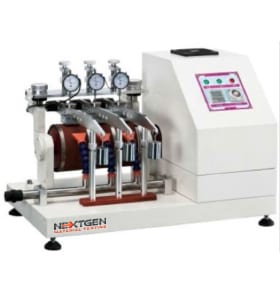 Rubber TestingGenNBS – NBS Rubber Abrasion TesterGenNBS is an NBS rubber abrasion tester for evaluating abrasion resistance of vulcanized rubber and related compounds, especially shoe soles and heels. It measures...View product
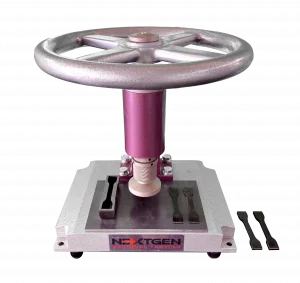 Rubber TestingNG-T-Press M Series – Manual Cutting Press for Rubber SpecimensNG-T-Press M Series is a compact manual cutting press for preparing rubber, tape, and specialty material specimens for tensile and mechanical testing. With optional...View product
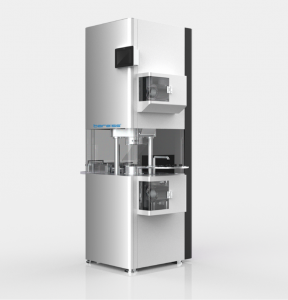 Rubber TestingRPA Ultra – Rubber Process AnalyzerRPA Ultra is an advanced rubber process analyzer rheometer for measuring dynamic and static properties of raw rubber compounds and elastomers during processing and...View product
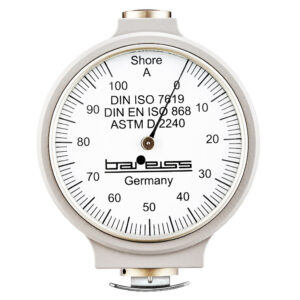 Plastic TestingAnalogue Shore Durometer with Test StandThe Classic Analogue Shore Durometer is a German-manufactured hardness tester for rubber and plastic materials, available with manual or automatic test stand...View product
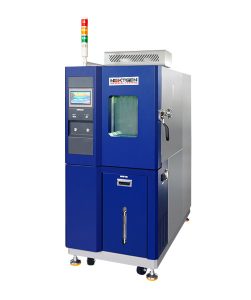 Plastic TestingNG-EC Series – Environmental Test Chambers (100–1000 L)NextGen NG-EC Environmental Chambers provide controlled temperature and humidity conditions for material, product, and quality-control testing. Available in 100,...View product
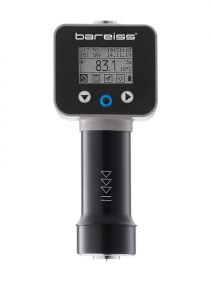 Plastic TestingPortable Shore Durometer System with Test StandHPE III is an advanced portable Shore durometer system for hardness testing of rubber, plastics, and related materials. It measures hardness while also displaying...View product
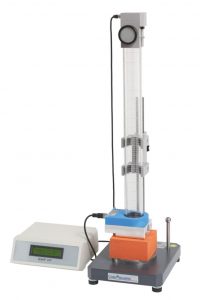 Plastic TestingBall Rebound TesterThe Ball Rebound Tester measures rebound resilience in foam, polyurethane, rubber, and similar materials. Designed for DIN EN ISO 8307 and ASTM D3574 testing, it...View product