Here at NextGen Material Testing, we offer a comprehensive range of universal testing machines designed to match the needs of modern laboratories and production facilities. It is the purpose of this article to introduce our compact bench-top solution – the NG-EML Single Column Universal Testing Machine (50N-5kN). Designed for precision, ease of use, and low-force testing, this electromechanical system is suitable for an array of routine and standardized applications.
We will begin by explaining what a bench-top universal testing machine is and how it differs from larger systems. Then, we will present an overview of the NG-EML model, followed by a breakdown of the specific tests it performs. The article will also cover the main features, technical parameters, accessories, and calibration standards associated with the machine. Lastly, we will discuss who can benefit from this solution and why it is a valuable addition to any quality control or testing environment.
What Are Bench Top Universal Testing Machines?
It is widely recognized that floor-standing universal testing machines (UTMs) are the standard for high-capacity material testing. These large, dual-column systems are engineered to handle substantial loads, often exceeding 100 kN, making them ideal for testing metals, construction materials, and other heavy-duty applications. However, when laboratory space is limited or when testing smaller specimens, bench-top UTMs offer a practical alternative.
Bench-top universal testing machines provide the same fundamental capabilities as their floor-standing counterparts, including tensile, compression, and flexural testing. The primary distinction lies in their compact, single-column design, which allows them to fit comfortably on a laboratory bench. Typically, bench-top UTMs accommodate load capacities ranging from 0.5 kN to 50 kN, making them suitable for testing plastics, composites, textiles, and other materials that do not require high-force applications.
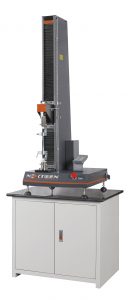 Introducing the NG-EML Single Column Universal Testing Machine
The NG-EML Single Column Universal Testing Machine (50N–5kN) is NextGen’s precision-engineered bench-top solution for low-force material testing. Created for laboratories that require reliable performance in a compact format, this system combines advanced electromechanical technology with a space-saving single-column frame. It delivers accurate and repeatable results for an array of standardized tests on a broad range of materials.
Developed with ease of use, durability, and compliance in mind, the NG-EML model is suitable for both quality control settings and research environments. Due to its digital control system, integrated safety features, and compatibility with international testing standards, it is a flexible and reliable tool for routine mechanical testing. The following sections will describe the specific tests this system can conduct, its key design features, technical capabilities, calibration precision, available accessories, and its ideal application areas.
Types of Tests the NG-EML Can Perform
The NG-EML Universal Testing Machine performs standard mechanical tests under controlled low-force conditions. It supports tensile, compression, and flexural testing.
This system is commonly used to test:
-
Plastics and polymers
-
Fine wires and metal threads
-
Fibers and textiles
-
Biomaterials and medical-grade components
-
Adhesives and bonding materials
-
Flexible foam and packaging
-
Thin films and paper products
-
Consumer goods requiring light-load verification
Key Features of the NG-EML System
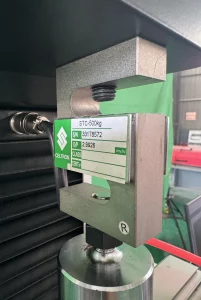 It is now time to discuss the features of our machine. Among the key features are:
-
Compact Single-Column Load Frame – Saves space while maintaining structural stability for low-force testing.
-
Electromechanical Drive System – Offers smooth, high-speed testing with low vibration for consistent results.
-
Preloaded Ball Screws – Enhance movement precision and reduce backlash during testing cycles.
-
Linear Motion Guides – Assure exact vertical alignment of the crosshead for accurate force application.
-
Digital Closed-Loop Control – Provides high-resolution measurement and response through integrated feedback systems.
-
User-Friendly Software – Includes a built-in library of international standards such as ASTM, ISO, DIN, EN, and BS for fast test setup.
-
USB 2.0 Communication Interface – Enables fast and stable data transfer between hardware and software.
-
Automatic Safety Checks – Actively monitors crosshead position, overload, over-temperature, and over-voltage conditions to protect the system and samples.
-
Protected Test Space – Includes durable barriers for safe operation in both laboratory and production settings.
Technical Specifications and Capabilities
With NG-EM, you receive a well-balanced combination of technical accuracy and user-friendly engineering, making it suitable for consistent and traceable low-force material testing. Detailed specifications of its core features are as follows:
-
Force Capacity Options: 50N, 100N, 200N, 500N, 1kN, 2kN, 5kN
-
Force Accuracy: ±1% or ±0.5% of reading, depending on model configuratio
-
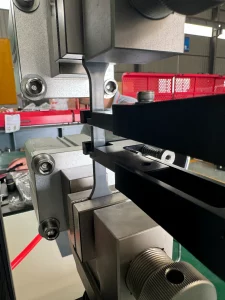
Force Resolution: 1/500,000 full scale
-
Position Accuracy: ±0.5% of reading
-
Position Resolution: 0.042 µm
-
Crosshead Speed Range: 0.001 to 1000 mm/min
-
Speed Accuracy: ±1.0% or ±0.5% of set speed
-
Crosshead Travel: 700 mm (standard), extendable to 1000 mm
-
Frame Dimensions: 53 × 49 × 129 cm (or 159 cm with extended travel)
-
Test Space: Single-zone, protected
-
Machine Weight: 90 kg
-
Power Requirements: AC 220V ±10%, 50/60 Hz
-
Control Interface: USB 2.0 communication with 12 Mb/s data transfer rate
-
Calibration Standards: ISO 7500-1, ASTM E4
-
Compliance Standards: ASTM D412, ASTM D638, ASTM E8, ISO 527, ISO 178, ISO 604, ISO 6892, and others
Calibration and Compliance Standards
Furthermore, it is very important to consider the standards with which our product complies – there are many of them that need to be met in order to meet all the requirements. We have listed their descriptions below so that you can better understand them:
ASTM D412 – Standard Test Methods for Vulcanized Rubber and Thermoplastic Elastomers—Tension
This standard outlines procedures for determining the tensile properties of vulcanized rubber and thermoplastic elastomers. It specifies methods to measure tensile strength, elongation, and stress-strain behavior, which are critical for assessing elastomeric materials’ performance under tensile loads.
ASTM E8 – Standard Test Methods for Tension Testing of Metallic Materials
ASTM E8 provides guidelines for conducting tensile tests on metallic materials to determine properties such as yield strength, tensile strength, and elongation. It is widely used in quality control and material certification processes for metals.
ISO 7500-1 – Metallic Materials—Verification of Static Uniaxial Testing Machines—Part 1: Tension/Compression Testing Machines—Verification and Calibration of the Force-Measuring System
This standard specifies the requirements for the verification and calibration of uniaxial testing machines’ force-measuring systems. Compliance guarantees force measurements accuracy and reliability during testing.
ASTM E4 – Standard Practices for Force Verification of Testing Machines
ASTM E4 outlines the procedures for verifying testing machines’ force-measuring systems. It assures that the machines provide accurate force readings, which is essential for test results validity.
ISO 527 – Plastics—Determination of Tensile Properties
ISO 527 specifies methods for determining plastic tensile properties, including tensile strength, modulus of elasticity, and elongation at break. It is necessary for characterizing the mechanical behavior of plastic materials.
ISO 178 – Plastics—Determination of Flexural Properties
This standard describes the method for determining plastic flexural properties, such as flexural strength and modulus. It is commonly used to assess plastic materials’ stiffness and resistance to bending.
 ISO 604 – Plastics—Determination of Compressive Properties
ISO 604 outlines procedures for measuring plastic compressive properties, including compressive strength and modulus. It is vital for applications where plastic components are subjected to compressive loads.
ISO 1184 – Plastics—Determination of Tensile Properties of Films
This standard specifies methods for determining plastic films’ tensile properties, such as tensile strength and elongation. It is crucial for evaluating the mechanical performance of thin plastic films used in packaging and other applications.
ISO 37 – Rubber, Vulcanized or Thermoplastic—Determination of Tensile Stress-Strain Properties
ISO 37 provides procedures for determining the tensile-stress-strain properties of vulcanized or thermoplastic rubber. It includes measurements of tensile strength, elongation, and modulus, which are fundamental for assessing rubber mechanical behavior.
ASTM D638 – Standard Test Method for Tensile Properties of Plastics
ASTM D638 outlines the method for determining the tensile properties of plastic materials, including tensile strength, modulus of elasticity, and elongation at break. It is commonly used for quality control and material specification purposes.
ASTM D790 – Standard Test Methods for Flexural Properties of Unreinforced and Reinforced Plastics and Electrical Insulating Materials
This standard describes procedures for determining the flexural properties of plastics and electrical insulating materials. It includes measurements of flexural strength and modulus, which are important for evaluating materials’ stiffness and load-bearing capacity.
ISO 6892 – Metallic Materials—Tensile Testing—Part 1: Method of Test at Room Temperature
ISO 6892 specifies the method for tensile testing of metallic materials at room temperature. It provides procedures for determining properties such as yield strength, tensile strength, and elongation, which are critical for material characterization and quality assurance.
Included and Optional Accessories
In addition to the basic components required for standard operation, the NG-EML Universal Testing Machine is fully compatible with optional accessories that can be added in order to expand its testing capabilities.
Included with the machine:
-
Integrated Digital Control System – Pre-installed in the load frame for direct monitoring and control
-
USB 2.0 Communication Interface – Supports a a stable connection between the machine and testing software
-
Single-Zone Protected Test Space – Enhances operational safety for all test types
Optional accessories available:
-
Grips and Fixtures – A complete selection tailored to tensile, compression, and flexural testing for different material types and geometries
-
Extensometers – Available for precise strain measurement during elongation or deformation analysis
-
Environmental Chambers – For testing under controlled temperature and humidity conditions
-
Additional Software Modules – Including advanced analytics, custom reporting, or industry-specific templates
Who Can Benefit from the NG-EML Bench Top UTM
The NG-EML Bench Top Universal Testing Machine is an ideal tool for professionals who need reliable material testing without sacrificing laboratory space or precision. The compact design, flexible configuration, and compliance with international standards make it a practical solution for many industries and institutions.
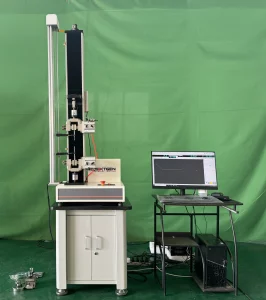 Quality control laboratories use the NG-EML for routine testing of plastics, wires, adhesives, and packaging materials to verify product consistency before release. Its speed, accuracy, and repeatability make it ideal for fast-paced environments where dependable results are essential.
Research and development departments benefit from its capabilities and precision, especially when testing new materials or components under tension, compression, or flexural stress. With optional extensometers and fixtures, it can be configured for more advanced testing workflows.
Educational institutions appreciate the NG-EML for its safety features, ease of use, and clear software interface. It provides students and instructors with a professional testing system that demonstrates the real-world mechanical behavior of materials.
Manufacturers in industries such as consumer products, medical components, electronics, and polymers can integrate the NG-EML into their in-house labs to make sure their products meet mechanical performance standards at every stage of production.
Purpose-Built for Precision Testing in Compact Spaces
The NG-EML Single Column Universal Testing Machine is more than just a compact alternative to traditional systems. It is a practical, high-precision solution built for everyday use in busy labs and testing environments. Whether you are running routine quality checks or conducting material research, this bench-top model delivers the accuracy, reliability, and control needed to get meaningful results without occupying excessive space.
With support for tensile, compression, and flexural testing of various kinds of materials, this bench-top system maintains full compliance with global standards while delivering consistent, repeatable results. Its modular accessories, integrated digital controls, and intuitive software make it adaptable to an array of industry needs.
If you require additional information or have specific questions about the NG-EML model, please contact us directly or request an online quote. Our technical team is ready to support you.
Keep Reading in Electromechanical Universal Testing Machines
See the Electromechanical Universal Testing Machines rangeMachines Behind This Article
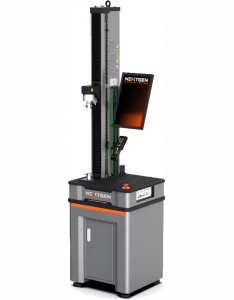 Electromechanical Universal Testing MachinesNG-EML Series A – Single-Column Universal Testing Machine (50 N – 5 kN)NG-EML Series A is a compact single-column benchtop universal testing machine for low-force tensile, compression, and flexural testing. Covering 50 N to 5 kN...View product
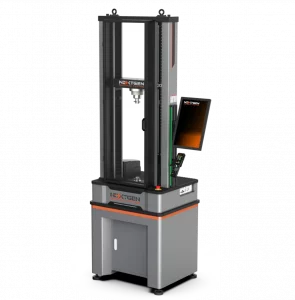 Electromechanical Universal Testing MachinesNG-EML Series B – Dual-Column Universal Testing Machine (100 N – 10 kN)NG-EML Series B is a dual-column benchtop electromechanical universal testing machine for precision testing from 100 N to 10 kN. Built for research and industrial...View product
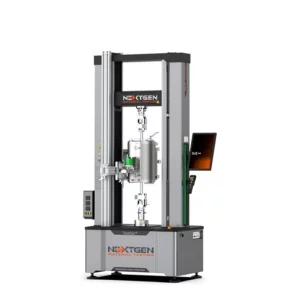 Electromechanical Universal Testing MachinesNG-EML Series C – Dual-Column Universal Testing Machine (5–50 kN)NG-EML Series C is a dual-column electromechanical universal testing machine available in bench-top and floor-standing formats from 5 kN to 50 kN. Built for...View product
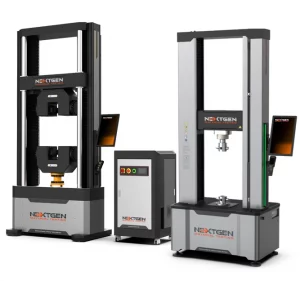 Electromechanical Universal Testing MachinesNG-EML Series D – Floor-Standing Universal Testing Machine (50–1000 kN)NG-EML Series D is a heavy-duty floor-standing electromechanical universal testing machine for high-capacity tensile, compression, and flexural testing. Available...View product
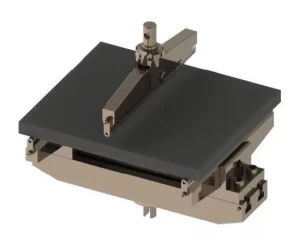 Electromechanical Universal Testing Machines3-Point Bending Fixtures for Flexural TestingThese bending fixtures support standard 3-point flexural testing of plastics, composites, metals, ceramics, alloys, and construction materials. Designed for use...View product
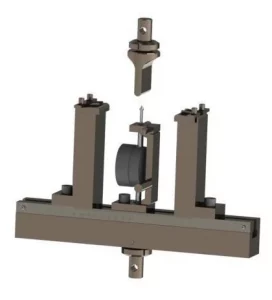 Electromechanical Universal Testing Machines3-Point and 4-Point Bending Fixtures for Flexural TestingThese 3-point and 4-point bending fixtures support flexural strength, deformation, and modulus testing of natural stone, ceramics, composites, concrete, metals,...View product
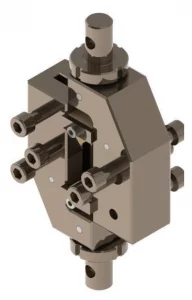 Electromechanical Universal Testing MachinesComposite Grips and Fixtures for Tensile and Shear TestingComposite grips and fixtures are engineered for tensile, compression, shear, bending, peel, and delamination testing of fiber-reinforced plastics, carbon...View product
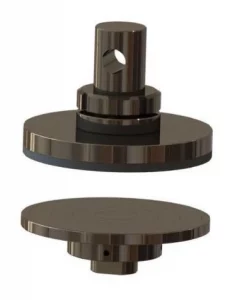 Electromechanical Universal Testing MachinesCompression Fixtures for Rigid SamplesCompression fixtures provide aligned axial loading for rigid samples tested on NG-EML and SHM universal testing machines. They are suited for metals, polymers,...View product
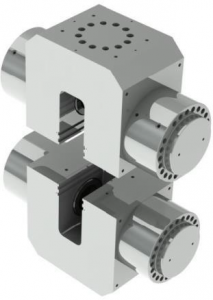 Electromechanical Universal Testing MachinesDual-Action Hydraulic Wedge Grips for High-Capacity TestingDual-Action Hydraulic Grips are high-capacity wedge-clamping fixtures for tensile testing on universal testing machines. Designed for metals, plastics, and...View product
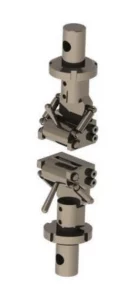 Electromechanical Universal Testing MachinesEccentric Roller Grips for Thin and Flexible SpecimensEccentric roller grips are built for low-force tensile testing of thin, soft, and flexible specimens such as rubber sheets, plastic film, and deformable materials....View product
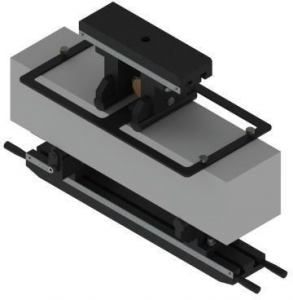 Electromechanical Universal Testing MachinesFlexure Fixtures for Large and Brittle SpecimensThese flexure fixtures are designed for precise bending tests on large, brittle, or high-strength specimens, including metals, ceramics, composites, concrete, and...View product
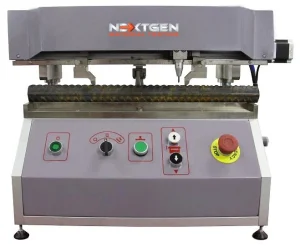 Electromechanical Universal Testing MachinesGenMark 500 – Automatic Gauge Length Marking MachineThe GenMark 500 is a full-automatic gauge length marking machine for metal bar, rebar and wire rod, applying the reference marks used to determine elongation after...View product