Rockwell hardness testing is a cornerstone method in metal quality control, used to measure resistance to penetration under a standardized load. This testing is a necessity in industries where guaranteeing material durability and performance can mean the difference between success and failure. By providing accurate insights into metal hardness, Rockwell hardness testing ensures that components meet safety and performance standards, allowing manufacturers to deliver reliable products.
The material testing market is saturated with options, yet not all machines provide the precision, consistency, or compliance with international standards that industries demand. For businesses relying on hardness testing, choosing the right equipment is critical to maintaining quality and avoiding costly errors.
Throughout this article, we will introduce our NG-RockGen Rockwell Hardness Testers—a comprehensive solution for precise and dependable hardness testing. We will explore the features of both manual and electronic models, their applications in a range of industries, and the advantages they bring to modern material testing processes. Whether you are seeking accuracy, ease of use, or compliance with standards like ASTM E18, the NG-RockGen Series offers the right balance of performance and reliability.
Introduction to the NG-RockGen Series – Rockwell Hardness Testers
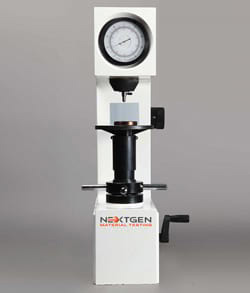 The NG-RockGen Series by NextGen represents the pinnacle of precision in metal hardness testing, built to meet modern industry demands. As a leading solution for Rockwell hardness testing, these testers provide reliable and accurate measurements by evaluating the depth of penetration of an indenter under a predefined load. This method, standardized under ASTM E18, guarantees consistent results between materials and industries.
Rockwell hardness testers are useful tools for determining materials’ durability and wear resistance. From hardened steel used in automotive components to aluminum alloys in aerospace applications, understanding hardness levels is crucial for quality control, safety, and product longevity. For example, testing chilled steel assists in maintaining its structural integrity in harsh environments, while analyzing annealed steel helps in optimizing its machinability for industrial applications.
The NG-RockGen Series offers a versatile approach to Rockwell hardness testing, accommodating both Regular Scales (HRA, HRB, HRC, etc.) and Superficial Scales (HR15N, HR30N, HR45T, etc.). This flexibility allows industries to test thin materials like metal sheets or small components with high precision. A thin steel plate can be accurately assessed using the HR30N scale, thereby verifying its suitability for precision machinery.
With two distinct models—manual and electronically controlled—the NG-RockGen Series is ideally suited to different operational needs. The manual model offers an economical, power-free solution ideal for workshops and basic testing facilities. On the other hand, the electronic model features automation for test force application, dwell time, and release, greatly reducing the margin for error in laboratories requiring high-throughput testing.
What sets NG-RockGen apart is its compliance with international standards and NIST-certified consumables. Whether testing a batch of bearing steel for heavy machinery or validating aluminum alloy hardness in aerospace engineering, NG-RockGen testers deliver precise, repeatable results.
Features of NG-RockGen Electronic and Manual Models
The NG-RockGen Series combines durability, precision, and adaptability in its manual and electronic Rockwell hardness testers, catering to a broad spectrum of material testing needs. Below is a comprehensive overview of the features shared by both models and the unique attributes that set each apart.
Shared Features
Both manual and electronic NG-RockGen models are engineered for longevity and reliability, which makes them ideal for use in demanding industrial environments. Key shared features include:
-
High-Gloss, Scratch-Resistant Surface
The testers offer a polished finish that resists wear and tear, resulting in a professional appearance and operational integrity for years.
-
Casted Molding Shell
Constructed for maximum stability, the sturdy casing protects the internal mechanisms and withstands minor damages, even in harsh work environments.
-
User-Friendly Dial Gauge
The precision dial gauge offers direct, accurate readings of hardness values, simplifying the testing process for consistent results.
-
Adjustable Loading Wheel
Both models feature an intuitive loading wheel, enabling operators to easily switch between three test forces to accommodate a variety of Rockwell Regular and Superficial scales.
Manual Model-Specific Features
The manual NG-RockGen tester is a cost-effective solution optimized for simplicity and convenience, making it a practical option for basic testing. A further feature of this product is:
-
Economical Operation. This model requires no external power supply, allowing for reliable hardness testing in workshops or field environments without electricity.
Electronic Model-Specific Features
The electronic model has the following features:
-
Automated Functionality
Test force application, dwell time (adjustable from 1 to 60 seconds), and load release are fully automated, eliminating human error and offering consistent, repeatable results.
-
High Precision for Thin Metal Parts
This model is particularly adept at testing delicate materials such as thin sheets and metal surfaces, providing highly accurate readings without compromising the material.
-
Global Usability
With compatibility with both 110V/60Hz and 220V/50Hz power supplies, the electronic model is suitable for facilities throughout the world.
As you can see, The NG-RockGen Series offers exceptional versatility and dependability, whether you are looking for the simplicity of a manual tester or the advanced automation of an electronic tester. It is easy to choose the correct machine for your requirements as each is configured to provide precise results, meeting the diverse needs of modern material testing with ease.
Applications of the NG-RockGen Series
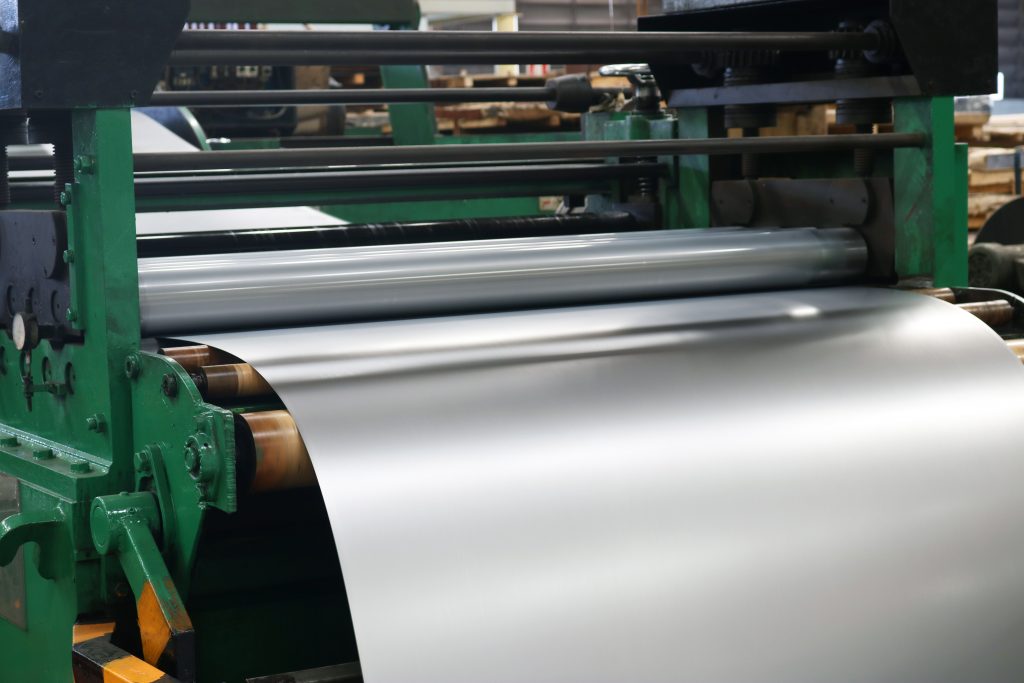 We developed the NG-RockGen Series to meet the diverse testing requirements of industries that require accurate measurements of material hardness. The following are examples of materials and industries for which our product is specifically suited:
Applicable Materials
The NG-RockGen Series is compatible with an extensive range of metals and alloys. These include:
-
Chilled Steel: An important component for wear-resistant applications, such as heavy machinery components.
-
Hardened and Tempered Steel: Commonly used in cutting tools, automotive parts, and structural components, where durability and strength are key.
-
Annealed Steel: Ideal for components requiring enhanced ductility and machinability.
-
Aluminum Alloys: Widely used in aerospace and automotive industries.
-
Bearing Steel: Critical for precision engineering applications, such as ball bearings and rollers.
Industries Benefiting from the NG-RockGen Series
-
Metal Manufacturing
The NG-RockGen Series offers quality control during production, verifying the hardness of raw materials and finished products to meet stringent industry specifications.
-
Aerospace
Aerospace components demand exceptional performance and safety standards. Rockwell hardness testing determines whether aluminum alloys and hardened steel are suitable for high-stress applications.
-
Automotive
Automotive manufacturing requires the NG-RockGen Series for testing critical components, including gears, axles, and chassis parts, to maintain durability and reliability.
-
Quality Control Laboratories
Laboratories use the NG-RockGen testers for routine hardness testing across multiple materials, assuring compliance with ASTM E18 standards and delivering reliable data for research and development.
Why Choose NG-RockGen for Hardness Testing?
The NG-RockGen Series stands out as a reliable and flexible solution for Rockwell hardness testing, engineered to meet the highest industry standards. With strict compliance with ASTM E18 standards, these testers deliver accurate and consistent hardness measurements, providing maximum reliability across a broad range of materials and applications. Whether it is hardened steel, annealed steel, or aluminum alloys, the NG-RockGen Series is built to provide dependable results, making it a valuable instrument for laboratories, workshops, and industrial facilities.
Both manual and electronic models are engineered for durability and precision. The manual model offers cost-effective simplicity, ideal for basic testing environments, while the electronic model provides advanced automation, minimizing human error and guaranteeing high throughput in demanding testing conditions. To further enhance their value, testers are supported by NIST-certified consumables. This commitment to quality and performance positions the NG-RockGen Series as a trusted choice for material testing professionals.
At NextGen Material Testing, we are dedicated to supporting your success. Whether you require more information about our products or have specific questions, our team is here to assist you. You can request an online quote or contact us directly for personalized support. Let us provide the tools you need to achieve success in material testing.
Machines Behind This Article
Rockwell Hardness TestersNG-RockGen Analogue Series – Rockwell Hardness TesterNG-RockGen Analogue Series is a Rockwell hardness tester for routine hardness measurement of metals, available in manual and electronic models. It supports HRA,...View product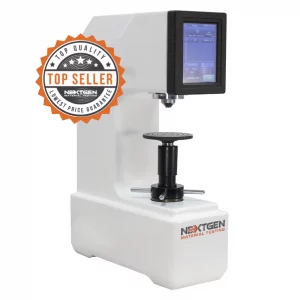 Rockwell Hardness TestersNG-RockGen DGEN Series – Digital Rockwell Hardness TesterNG-RockGen DGEN Series is a digital Rockwell hardness tester for measuring metal hardness by indentation depth under standard Rockwell loading. Available in...View product
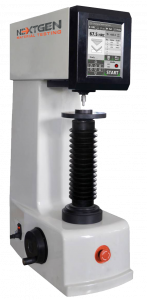 Rockwell Hardness TestersGenRock NG-150 Series – Rockwell Hardness TesterGenRock NG-150 Series is an advanced Rockwell hardness tester for regular and superficial hardness testing of metals and alloys. Available in manual and automatic...View product
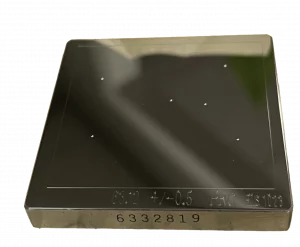 Rockwell Hardness TestersHardness Test Blocks, Indenters and AccessoriesHardness test blocks, indenters, and accessories support daily verification and reliable operation of metal hardness testing systems. The range includes certified...View product