Rock Mechanics Testing Equipment
Rock strength results are only as good as the specimen. A core that is out of square, uneven at the ends or cut to the wrong length loads the press unevenly, and the strength it reports belongs to the geometry rather than the rock. Specimen preparation therefore runs as a sequence: coring a sample from a block or slab, cutting it to length, and grinding the ends flat and parallel. ASTM D4543 describes how to prepare rock core as cylindrical specimens and how to verify length, diameter, end flatness and perpendicularity against set tolerances. For weak or porous rock it asks the laboratory to report what was achieved.
NextGen supplies a machine for each stage. Laboratory coring takes specimens from rock and concrete on the bench, saws cut hardened concrete, rock and natural stone to the size a test method calls for, an automatic cutter trims core in a controlled cycle, and end grinders finish the faces in semi-automatic, double-faced and fully automatic forms. Water cooling or spray holds dust down, and diamond tooling does the cutting. Bits, blades and wheels are matched to the specimen. Machines are installed by NextGen engineers, operators are trained on the preparation procedure, and support continues for the life of the equipment.
For Laboratories
One partner to equip your complete rock mechanics laboratory
Rock testing rarely stops at one machine. NextGen equips the whole laboratory, from coring, cutting and core grinding to point load, shear box and abrasivity testing, and stays responsible for it after delivery.
- Equipment, fixtures and software
- Installation, training, calibration
- Lifetime technical support
Most requested
 100 mm
Laboratory Coring Machine and Bits
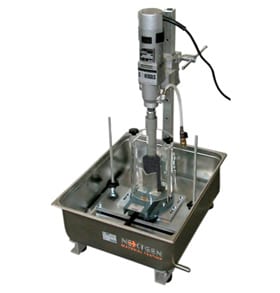
The Laboratory Coring Machine and Bits system is designed for extracting clean cylindrical cores from rock, concrete,…
View product
Get quote
Most requested
 Rock Core Cutter and Masonry Saw
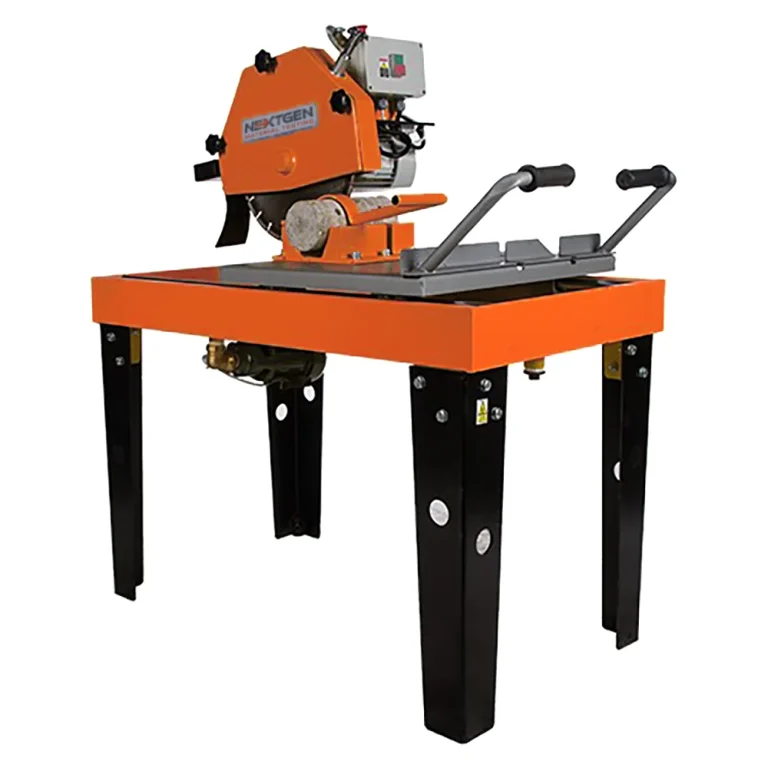
The Rock Core Cutter and Masonry Saw is a universal cutting system for concrete, rock cores, and irregular rock…
View product
Get quote
Most requested
 100 mm
CoreTrim 3000 – Core Cutting Machine
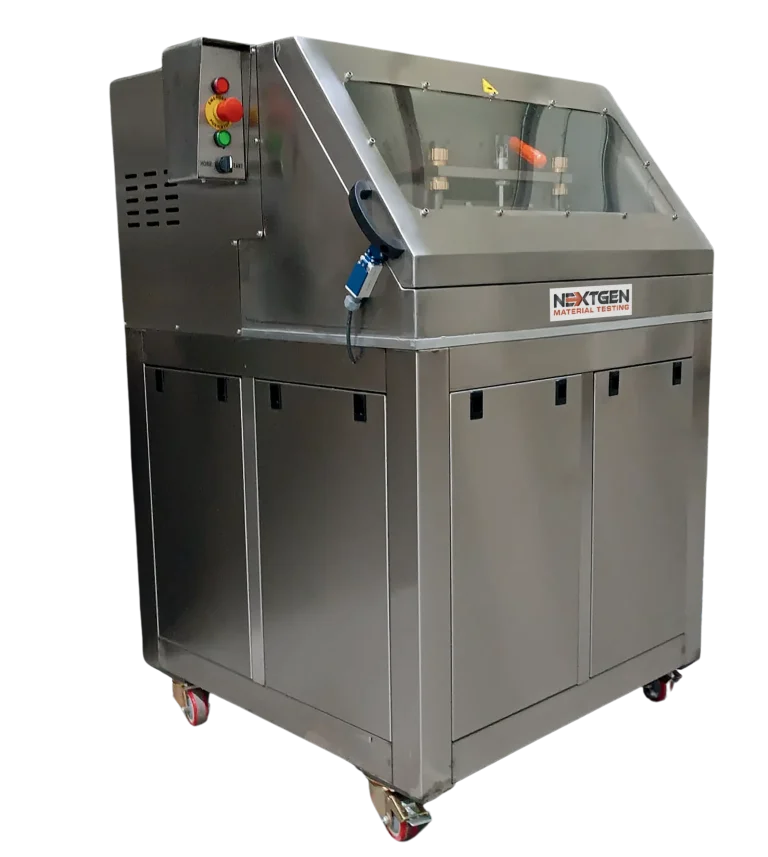
CoreTrim 3000 is a fully automatic core cutting machine for preparing cylindrical rock specimens before laboratory…
View product
Get quote
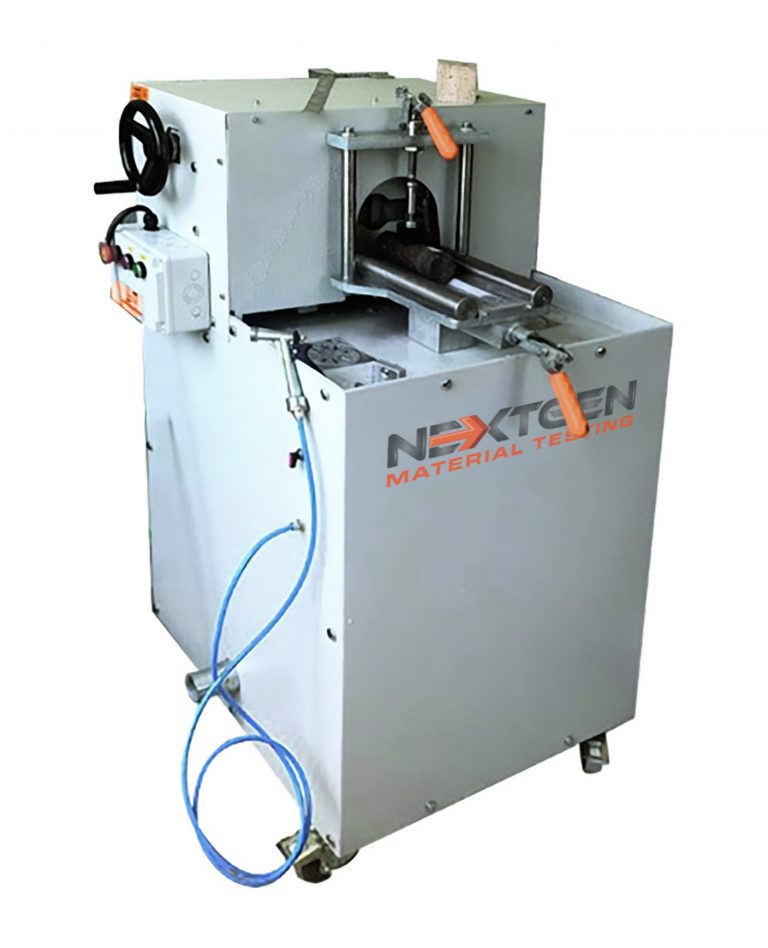 NG-CoreGrind 1000 – Semi-Automatic Core Grinding Machine
NG-CoreGrind 1000 is a semi-automatic core grinding machine for preparing rock and concrete specimens as an…
View product
Get quote
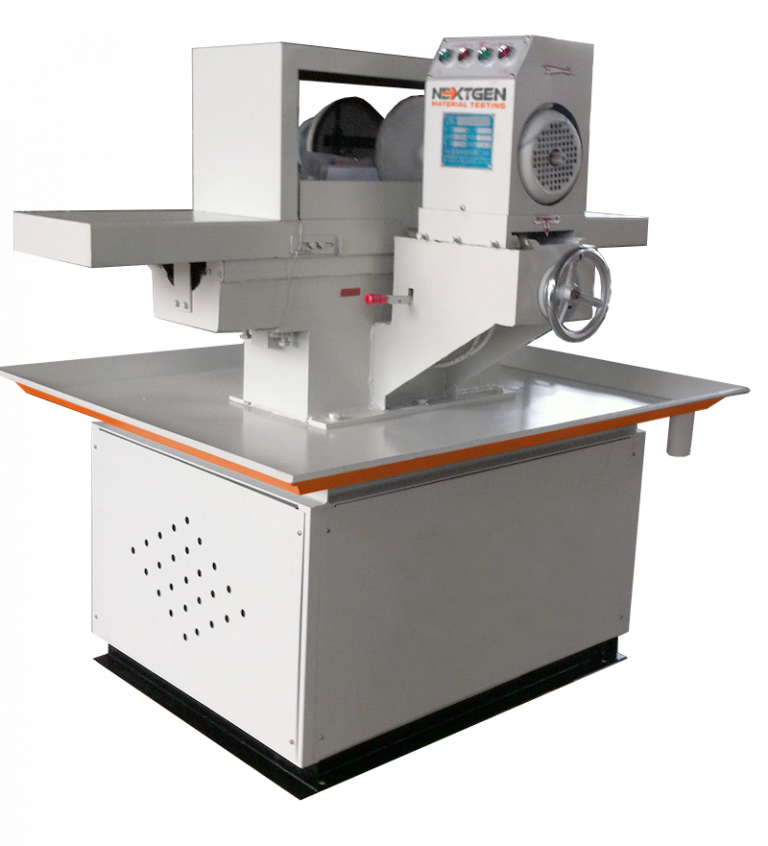 NG-CoreGrind 2000 – Double-Faced Rock Core Grinder
NG-CoreGrind 2000 is a double-faced rock core grinder for preparing flat, parallel specimen ends before rock…
View product
Get quote
 CoreGrind 3000 – Automatic Core Grinding Machine
CoreGrind 3000 is a fully automatic core grinding machine for preparing rock core specimens before geotechnical and…
View product
Get quote
100 mm
Laboratory Coring Machine and Bits
The Laboratory Coring Machine and Bits system is designed for extracting clean cylindrical cores from rock, concrete,…
View product
Get quote
Most requested
Rock Core Cutter and Masonry Saw
The Rock Core Cutter and Masonry Saw is a universal cutting system for concrete, rock cores, and irregular rock…
View product
Get quote
Most requested
100 mm
CoreTrim 3000 – Core Cutting Machine
CoreTrim 3000 is a fully automatic core cutting machine for preparing cylindrical rock specimens before laboratory…
View product
Get quote
NG-CoreGrind 1000 – Semi-Automatic Core Grinding Machine
NG-CoreGrind 1000 is a semi-automatic core grinding machine for preparing rock and concrete specimens as an…
View product
Get quote
NG-CoreGrind 2000 – Double-Faced Rock Core Grinder
NG-CoreGrind 2000 is a double-faced rock core grinder for preparing flat, parallel specimen ends before rock…
View product
Get quote
CoreGrind 3000 – Automatic Core Grinding Machine
CoreGrind 3000 is a fully automatic core grinding machine for preparing rock core specimens before geotechnical and…
View product
Get quote
Laboratory Coring Machine and Bits100 mm
The Laboratory Coring Machine and Bits system is designed for extracting clean cylindrical cores from rock, concrete,…
Coring
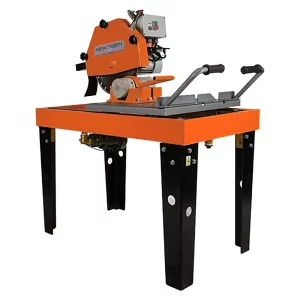 Rock Core Cutter and Masonry Saw
The Rock Core Cutter and Masonry Saw is a universal cutting system for concrete, rock cores, and irregular rock…
Core cutting
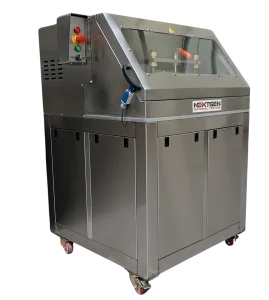 CoreTrim 3000 – Core Cutting Machine100 mm
CoreTrim 3000 is a fully automatic core cutting machine for preparing cylindrical rock specimens before laboratory…
Core cutting
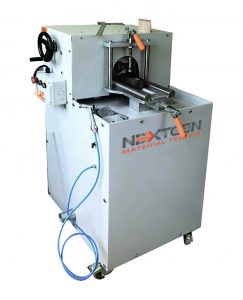 NG-CoreGrind 1000 – Semi-Automatic Core Grinding Machine
NG-CoreGrind 1000 is a semi-automatic core grinding machine for preparing rock and concrete specimens as an…
Core grinding
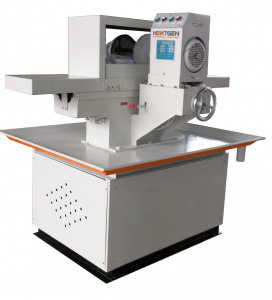 NG-CoreGrind 2000 – Double-Faced Rock Core Grinder
NG-CoreGrind 2000 is a double-faced rock core grinder for preparing flat, parallel specimen ends before rock…
Core grinding
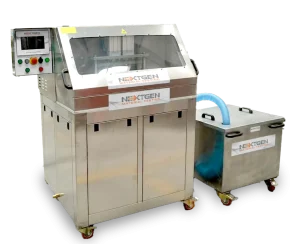 CoreGrind 3000 – Automatic Core Grinding Machine
CoreGrind 3000 is a fully automatic core grinding machine for preparing rock core specimens before geotechnical and…
Core grinding
Nothing matches that filter. Show all products
FAQs
The laboratory coring machine covers diameters from 8 to 100 mm, and drill bits are ordered separately. Six diamond core bits come with spigot adapters, giving specimen diameters of 21.46 mm (EX), 30.10 mm (AX), 38.10 mm, 42.04 mm (BX), 54.74 mm (NX) and 63.50 mm (HQ). The drilling industry code is the quickest way to match a bit to core you already hold. A separate clamping device is available for preparing specimens from pieces of core.
The saw is a manual machine in two sizes. The NG-CoreTrim 450 takes a 450 mm blade with a 175 mm cutting depth, and the 600 takes a 600 mm blade with 250 mm depth, for blocks and large cores. The CoreTrim 3000 cuts 38 to 100 mm core automatically, up to three samples in about 120 seconds, with a cutting angle accuracy of 0.1 degrees. Blades are ordered separately, and the saws are built for a 380 V supply unless you ask for 220 V.
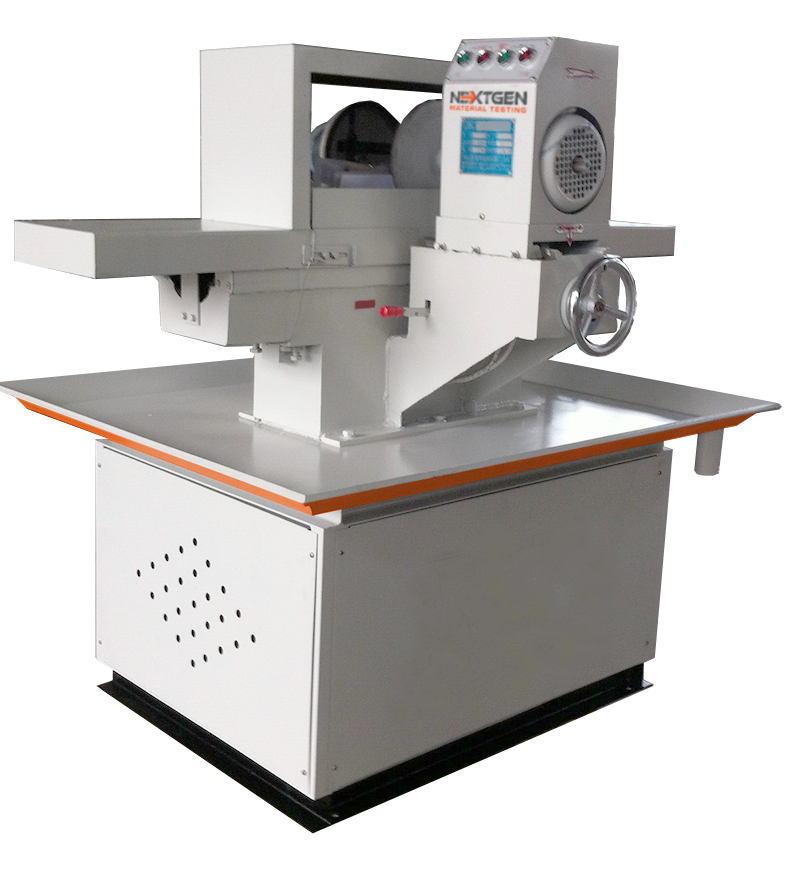
The NG-CoreGrind 1000 is semi-automatic and replaces rubber or sulfur capping, with adapters from 25 to 150 mm diameter. The NG-CoreGrind 2000 grinds both faces in one setup with two 200 mm diamond wheels, on cubes up to 150 mm and cylinders from 50 to 150 mm. The CoreGrind 3000 is fully automatic, in a version for 38 to 100 mm cores and one for 50 to 160 mm. Tell us the diameters and daily volume.
Yes. The coring machine takes cores from rock and concrete, and the saw cuts hardened concrete, rock and natural stone. The NG-CoreGrind 2000 grinds the end faces of concrete and rock cubes and cylinders, and the NG-CoreGrind 1000 grinds concrete specimens, rocks, natural stones, tiles, block pavers and ceramics. Concrete cores follow ASTM C42 for obtaining and testing drilled cores.
If an end face is not flat or not perpendicular to the axis, the platen touches an edge or a point first and the stress concentrates locally. The specimen then fails early or abnormally, and the strength it reports belongs to the geometry rather than the rock. ASTM D4543 sets tolerances for end flatness and perpendicularity for this reason. The tolerances matter most for strong rock and stiff load frames without a spherical seat.