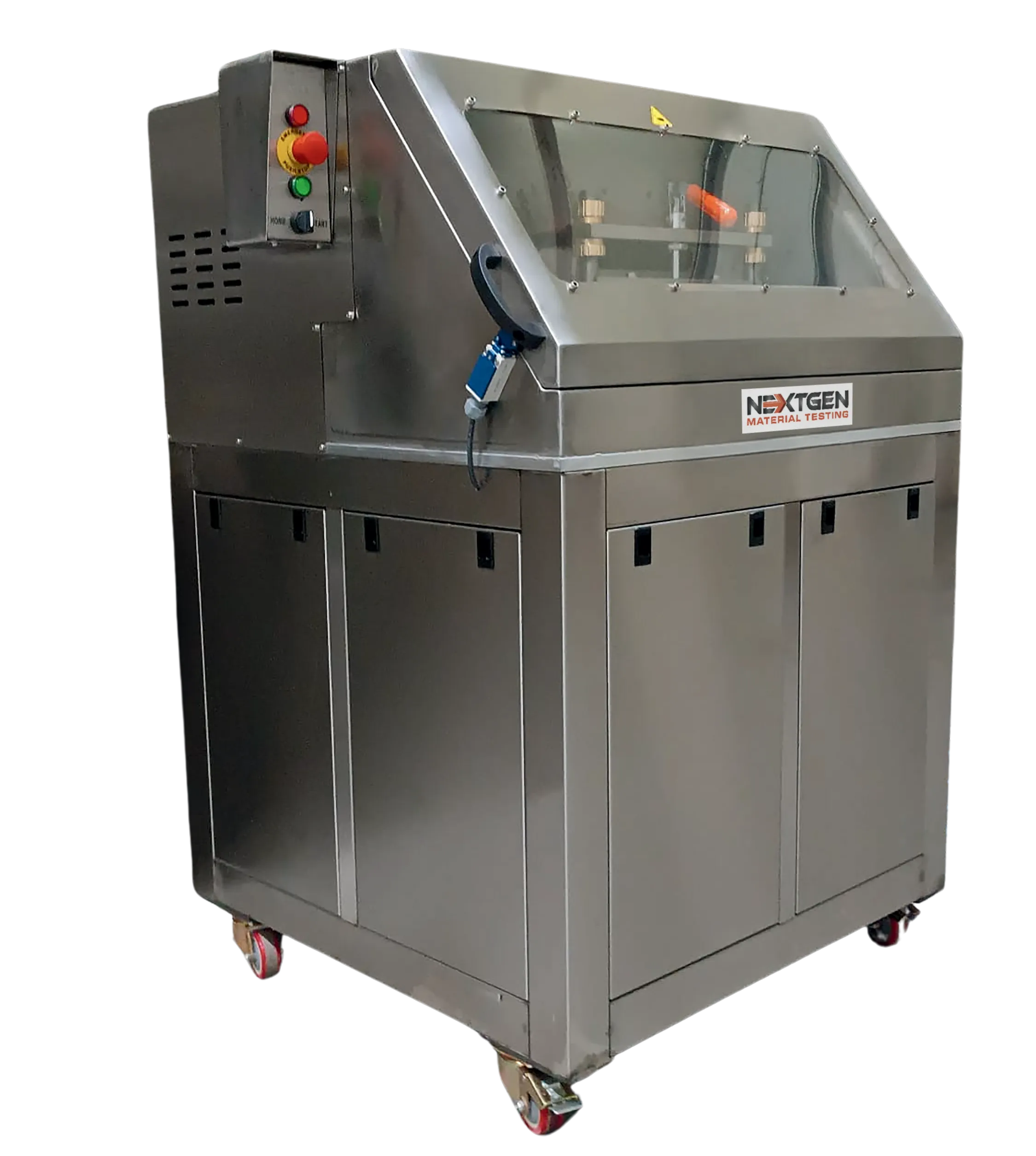
Core Cutting Machine for Sample Preparation – CoreTrim 3000

Rock Mechanics Testing Equipment




Description
CoreTrim 3000 is a fully automatic core cutting machine used for rock sample preparation. It cuts cylindrical core samples in a controlled cutting process and is intended for laboratories working with routine core specimen preparation before testing.
During cutting, an integrated water spray is applied to limit dust. The cutting cycle runs automatically and returns the blade to the starting point (home position) at the end of the cycle.
CoreTrim 3000 is built around electronic control and a simple start procedure, so the operator loads the samples, starts the cycle, and the machine completes the cutting sequence automatically.
Main Features And Capabilities
CoreTrim 3000 combines fully automatic core cutting functions for rock sample preparation with the controls and operating features required for repeatable, production-style lab workflows. Key features and capabilities include:
- Automatic Electronic Control System: Runs the cutting sequence automatically with electronic control for consistent cycle execution.
- Core Diameter Range: Cuts cylindrical core samples from 1.50 to 3.94 in (38 to 100 mm).
- Multi-Sample Cutting Capacity: Processes up to 3 core samples per automatic cycle for 3.94 × 7.87 in (100 × 200 mm) specimens.
- Cutting Angle Accuracy: Provides cutting accuracy up to 0.1° for sample preparation requiring tight angle control.
- Automatic Water Spray Against Dust: Applies water during cutting to reduce dust and support a cleaner cutting process.
- Cycle Time: Completes a fully automatic cycle for 3 samples in approximately 120 s.
- Home Position Return: Returns the cutting blade automatically to the starting point (home position) at the end of the cycle.
How It Works
This core cutting machine follows a simple operating sequence for automatic core cutting during sample preparation:
- Load the core samples into position.
- Start the automatic cutting cycle.
- The machine performs cutting automatically, applying water spray to reduce dust during the process.
- At the end of the cycle, the blade returns automatically to home position.
Applications
CoreTrim 3000 is used for rock sample preparation where cylindrical core specimens must be cut before laboratory testing.
- Rock Mechanics Testing Laboratories
- Core Sample Preparation For Routine Testing
- Geological And Research Sample Preparation Workflows
Technical Specifications
Key technical specifications for CoreTrim 3000, a core cutting machine for sample preparation, are listed in the table below.
| Specification | Value |
|---|---|
| Machine Type | Fully Automatic Core Cutting Machine For Sample Preparation |
| Core Diameter Range | 1.50 to 3.94 in (38 to 100 mm) |
| Capacity Per Cycle | Up To 3 Samples |
| Supported Specimen Size | 3.94 × 7.87 in (100 × 200 mm) |
| Cutting Angle Accuracy | Up To 0.1° |
| Cycle Time | Approximately 120 s per cycle for 3 samples |
| Dust Control | Automatic Water Spray During Cutting |
| Blade Return | Automatic Return To Home Position |
| Power Supply | 220 V AC, 50 to 60 Hz |
Request A Quote For CoreTrim 3000
For pricing, lead time, and product configuration details, request a quote for CoreTrim 3000 or contact us directly to discuss your core diameters, specimen size, required throughput, and local power standard.
Related Products
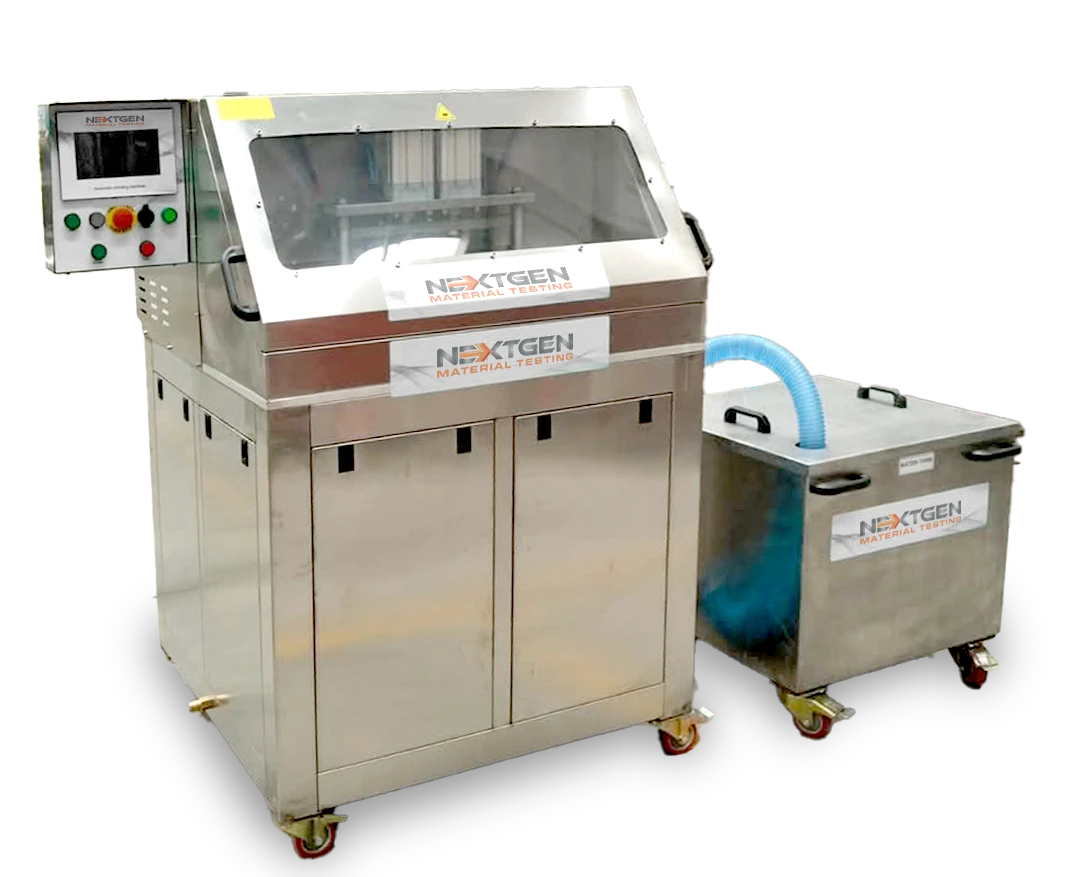
Automatic Core Grinding Machine For Sample Preparation - CoreGrind 3000
CoreGrind 3000 is a fully automatic rock core grinding machine for sample preparation before laboratory testing. It uses 7-inch touchscreen electronic control with recipe-based operation and pneumatic sample locking. An automatic recirculating water spray system is used during grinding for dust control. CoreGrind 3000 is available in two versions: V1 for 1.50 to 3.94 in (38 to 100 mm) cores and V2 for 1.97 to 6.30 in (50 to 160 mm) cores.
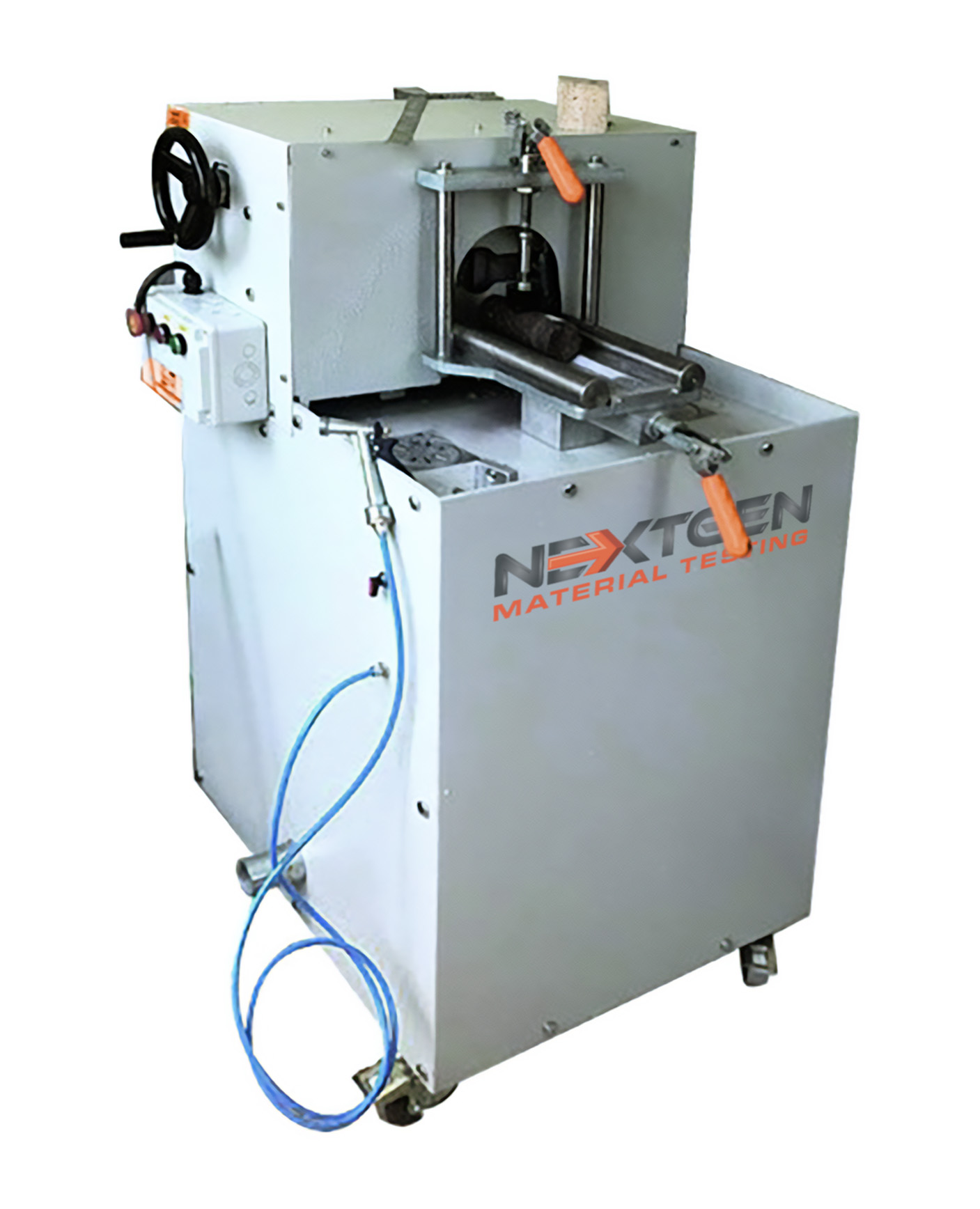
Semi-Automatic Core Grinding Machine - NG-CoreGrind 1000
Our Semi-Automatic Core Grinding Machine (also known as Coregrinder or Core Grinder) is the preferred alternative to the traditional rubber / sulfur capping methods used by Quality Labs
West Cerchar Abrasivity Index Tester
Description The West Cerchar Abrasivity Index Tester is designed to determine the rock abrasivity index (CAI) for the purpose of quantifying the classification of rock materials abrasivity. This type of test is especially valuable in the mining industries, underground construction […]
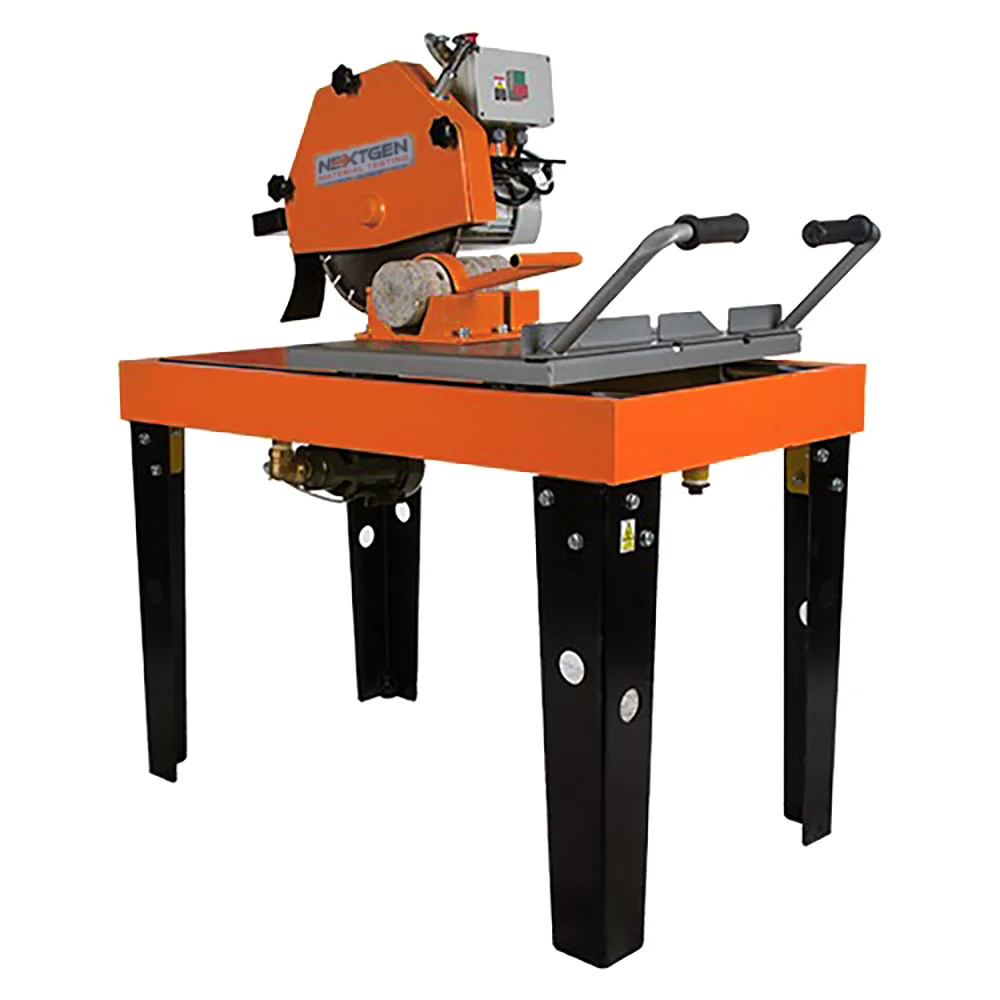
Rock Core Cutter and Masonry Saw
Our Rock Core Cutter and Masonry Saw designed for preparing concrete, rock, or natural stone cores and test specimens.
Rock Shear Box Apparatus
This apparatus was originally developed at Imperial College, London, by Professor E. Hoek. It is a simple and practical method of determining the strength and slope stability of rock, both in the field and in the laboratory.
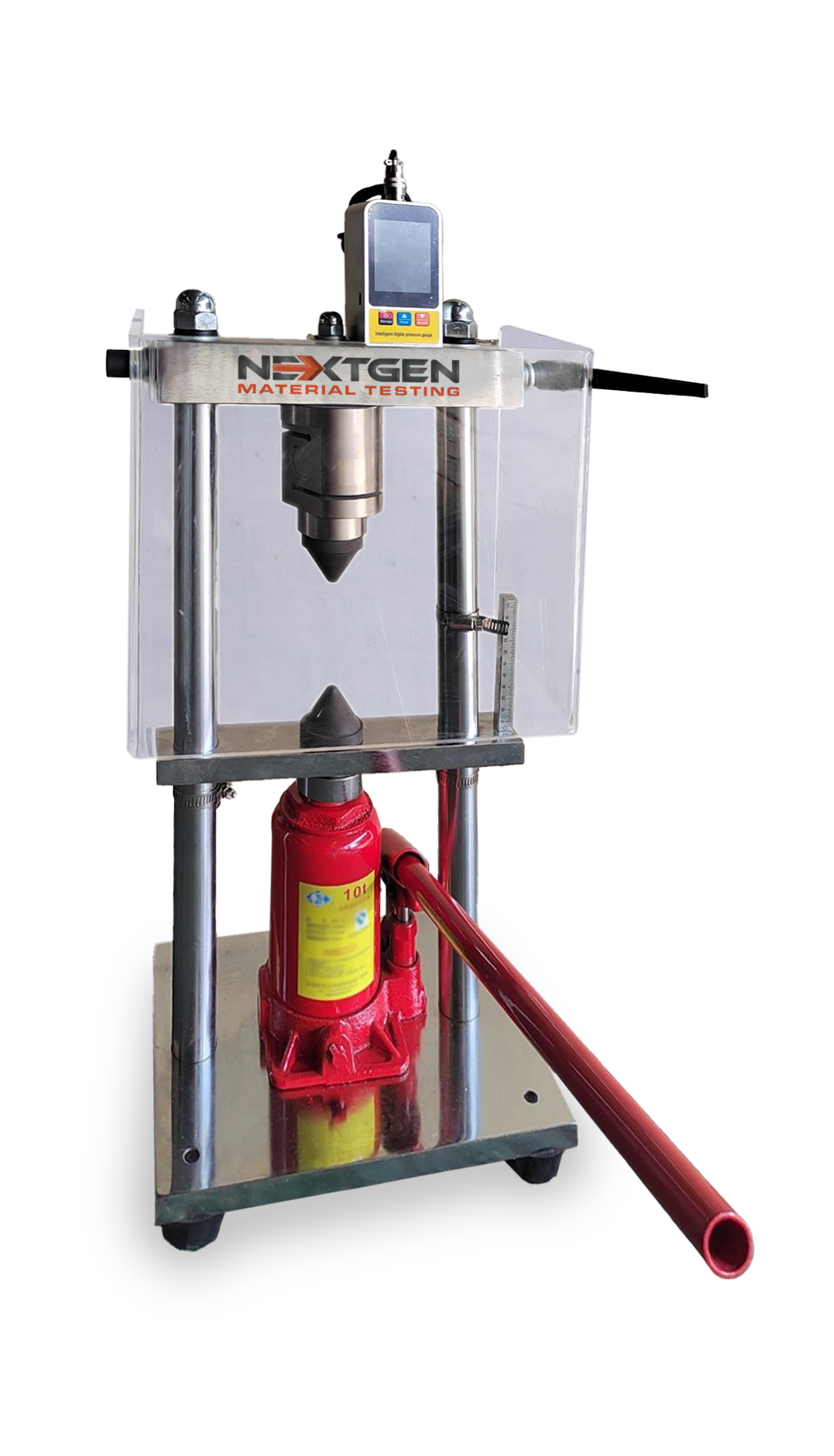
Point Load Tester: Portable Rock Strength Testing for Field Applications
Discover the high-precision Point Load Tester for fast and reliable rock strength testing as a cost-effective solution for geotechnical and construction projects.
Laboratory Coring Machine and Bits
This machine is specifically used in the laboratory for cutting core samples from hard materials such as rock and concrete.
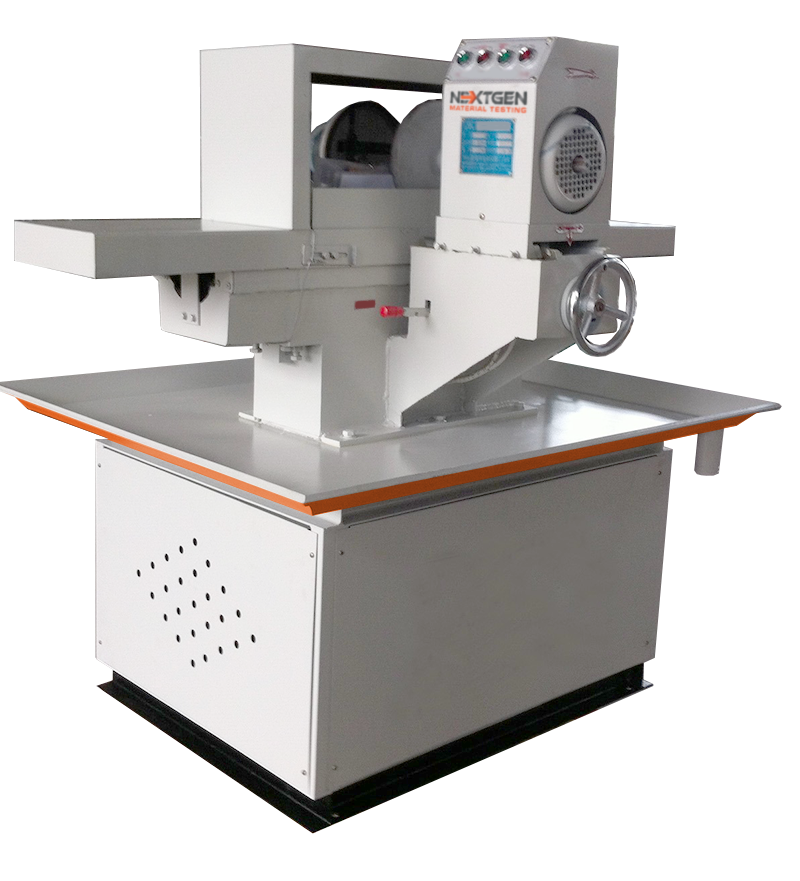
Double Faced Rock Core Grinder Machine NG-CoreGrind 2000
CoreGrind Double faced core grinder machine is designed to grind and polish the end surfaces of concrete & rock cube and cylinder specimens.