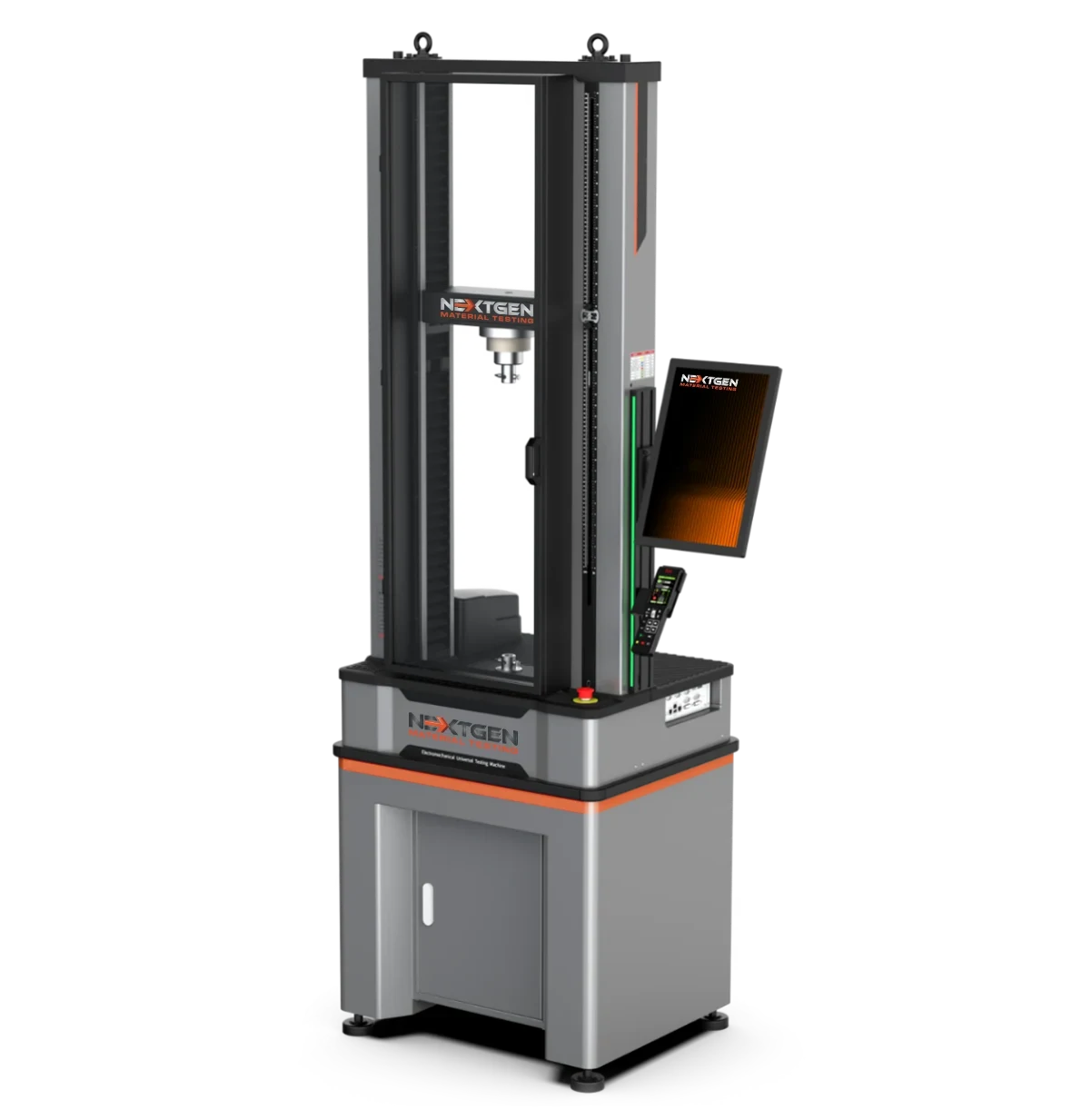
NG-EML Series B – Dual Column Bench Top Universal Testing Machine (100 N – 10 kN)

Metal Testing Equipment
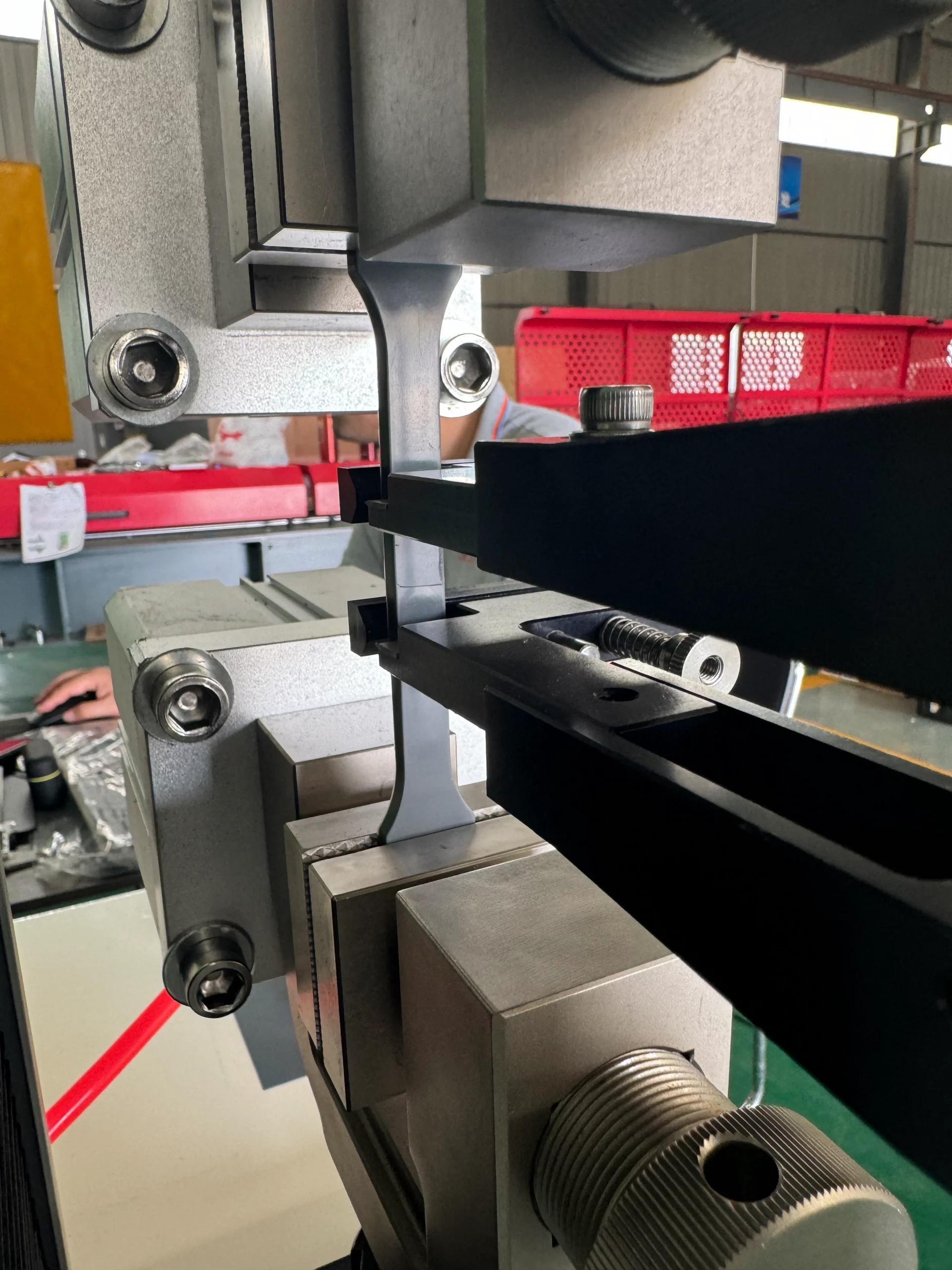
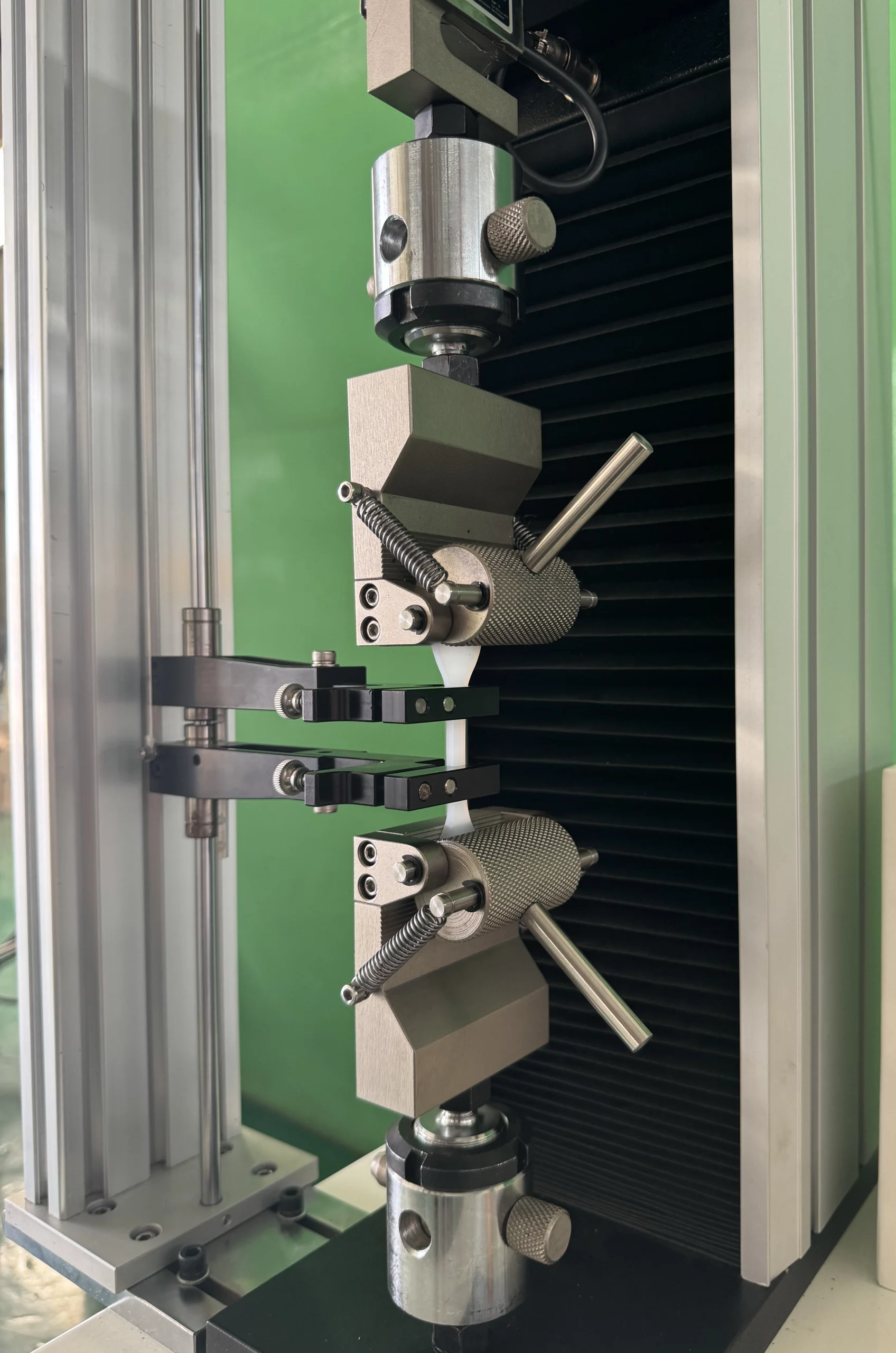
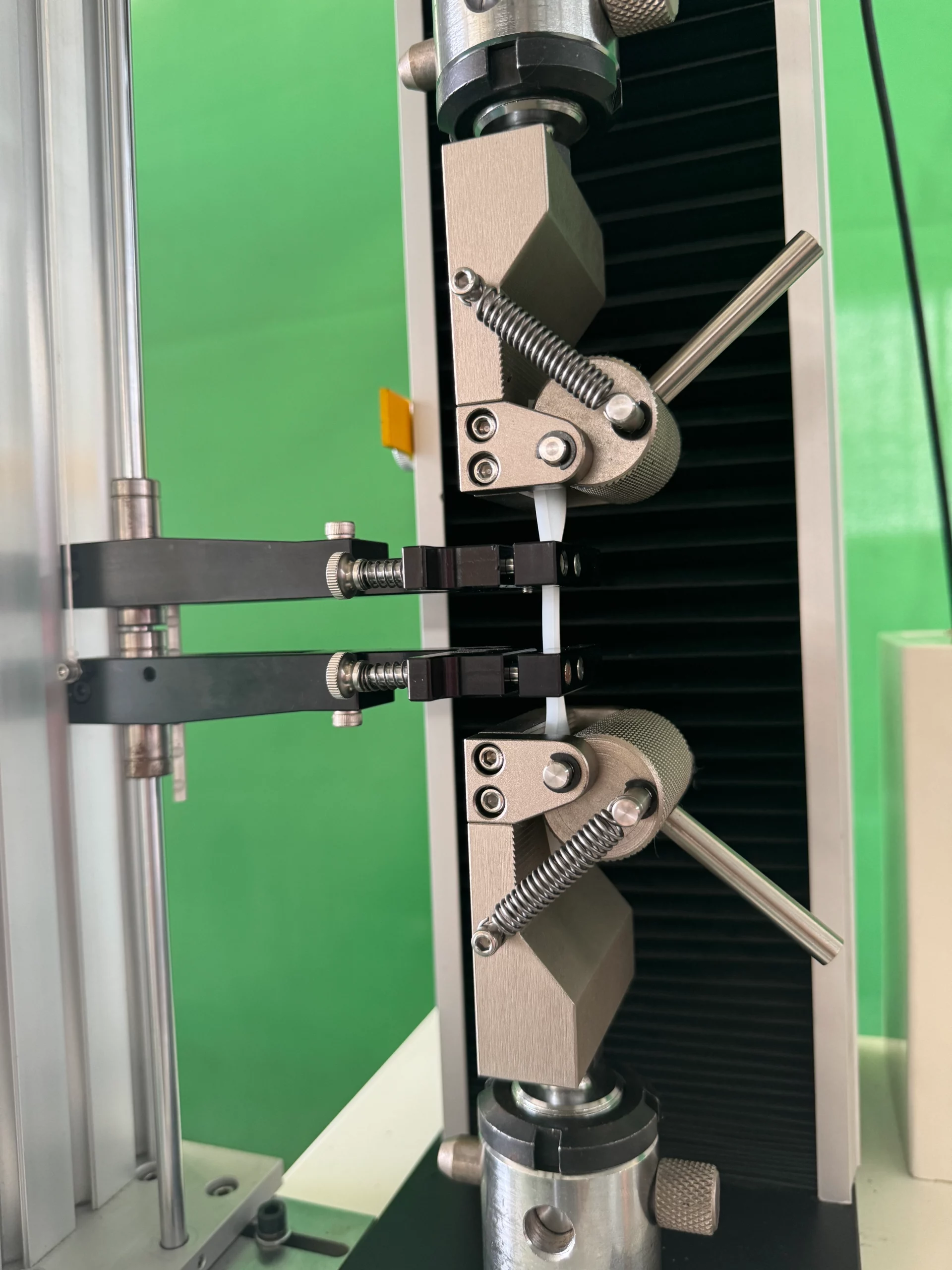
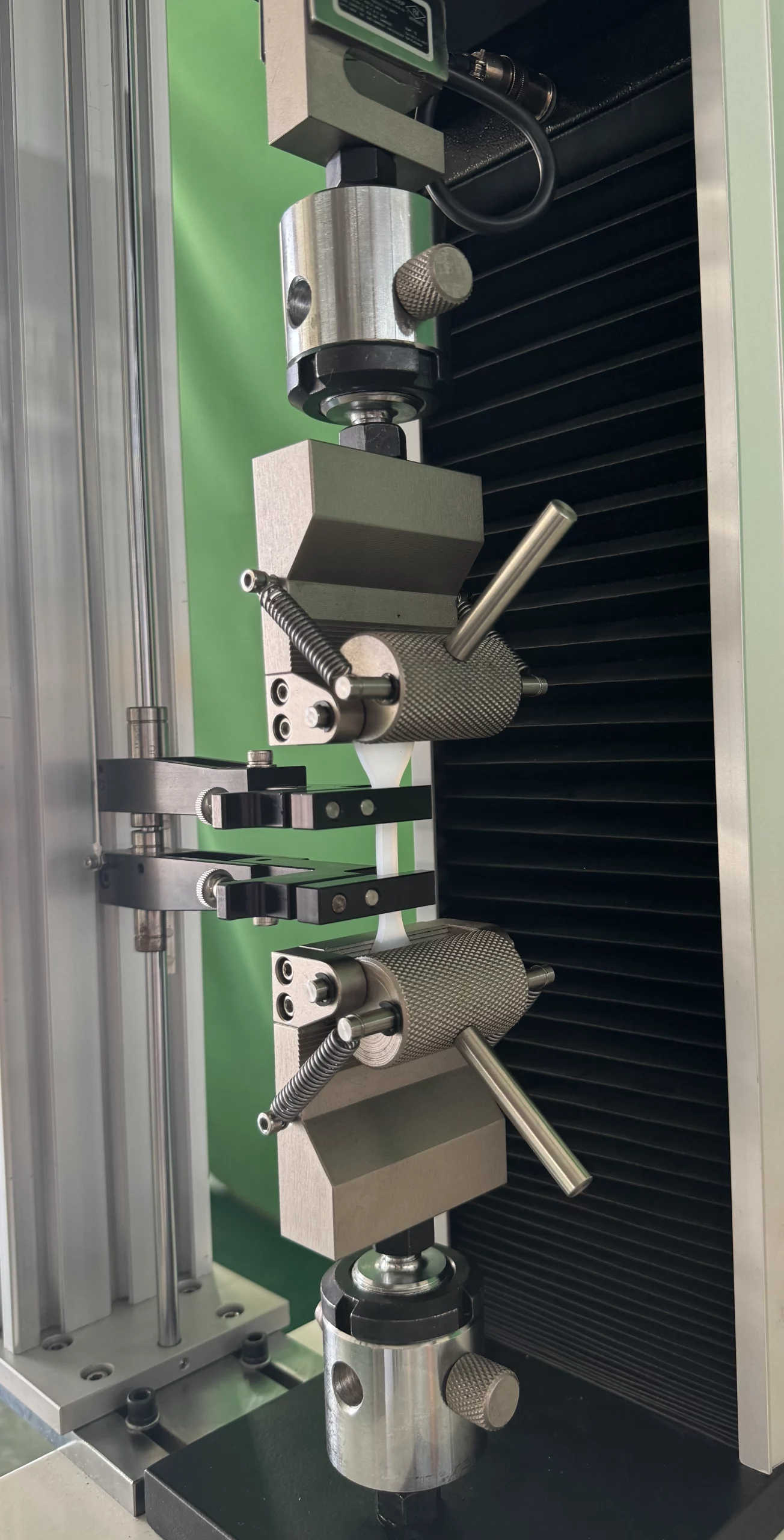
Standards
ASTM E4, ISO 6892, ASTM D790, ASTM D638, ISO 37, ISO 1184, ISO 604, ISO 178, ISO 527, ISO 7500-1, ISO 2439, ISO 7500, ASTM E8, ASTM D412






Description
The NG-EML Series B – Dual Column Bench Top Universal Testing Machine (100 N – 10 kN) is a high-performance electromechanical system engineered for precision testing in both research and industrial environments. Designed to meet the increasing demands of composite, high-strength metal, and high-temperature material testing, this system combines stiffness, speed, and advanced control accuracy in a compact benchtop format. Equipped with a direct-drive servo architecture, dual guidance columns, and FEM-optimized components, the system ensures minimal vibration, high structural rigidity, and consistent axial alignment under full load. These features enable accurate testing of materials such as rubber, plastics, foams, films, metals, composites, flexible electronics, and biodegradable polymers under tensile, compression, and flexural conditions.- Force Capacity Options: 100 N, 200 N, 500 N, 1 kN, 2 kN, 5 kN, 10 kN (22.48 – 2248.09 lbf)
- Frame Configuration: Dual-column, bench-top electromechanical frame with servo direct-drive transmission
- Test Space: Single-zone vertical layout with reinforced guidance columns for precise displacement control
- Typical Applications: Ideal for quality control, R&D, material certification, and academic testing. Suited for standard and high-performance applications involving elastomers, thermoplastics, composites, and metals requiring repeatable and high-accuracy test results.
Typical Specimens
Designed for high-precision testing of modern materials, the system supports a wide variety of specimen types, including:- Rubber, elastomers, and flexible polymer films (ASTM D412, ISO 37, ISO 1184)
- Engineering plastics and reinforced composites (ASTM D638, ISO 527, ISO 604)
- Thin metal sheets, soft metals, and wire (ASTM E8, ISO 6892-1, GB/T 228)
- High-strength alloys and prepregs (ASTM E21, ISO 7500)
- Flexible electronic substrates and small components
- Adhesives, foam, paper-based and wood products (ASTM D790, ISO 178)
- Textiles, biomaterials, and consumer goods
Key Features of the NG-EML Series B UTM
The NG-EML Series B incorporates advanced structural and control technologies, offering the following key features:- Dual-column electromechanical bench-top configuration: Designed for high precision and stability, optimized for both standard and advanced materials testing.
- FEM-optimized crosshead and frame structure: Rigid guidance columns with self-lubrication and preload assembly ensure high stiffness and accurate axial alignment throughout the test stroke.
- Direct-drive servo system with synchronous belt transmission: Offers high speed (up to 2400 mm/min), fast return, low vibration, and maintenance-free operation. Enhances energy efficiency and minimizes backlash.
- Pre-loaded precision ball screws: Improve force transmission consistency and reduce mechanical clearance, maintaining accuracy under cyclic loading.
- Photoelectrical encoder-based position measurement: Integrated into the servo motor system, enabling 0.011 µm position resolution and smooth speed transitions, including high-temperature strain rate testing as low as 0.00007 s⁻¹.
- Closed-loop control with 1200 Hz frequency: Digital 24-bit acquisition with high-speed 6-channel AD conversion and up to 4 MHz pulse signal input. Ensures precise control of force, displacement, and strain in real time.
- Built-in overload and collision protection: Includes automatic stop on force spike detection, 103% overload protection, mechanical limit switches, and programmable safety logic to protect the load cell and specimen.
- GenTest™ Software: Intuitive interface with preloaded test methods (ASTM, ISO, GB/T, EN), real-time graphing, quick test setup, recalculation, voice prompts, and multi-language switching.
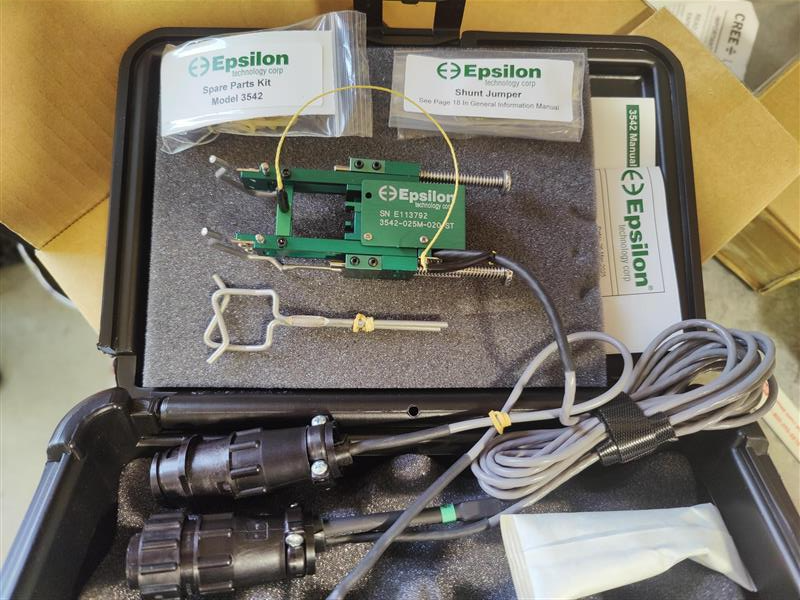
- Flexible accessory integration: Supports connection with extensometers, temperature chambers, pneumatic controllers, and other devices. Features TEDS recognition and dual communication modes (PC/software and controller).
- Handset with 3.5” color touchscreen: Allows direct crosshead control, test initiation, grip actuation, and fine-tuning for sensitive adjustments. Features magnetic base and ergonomic wheel.
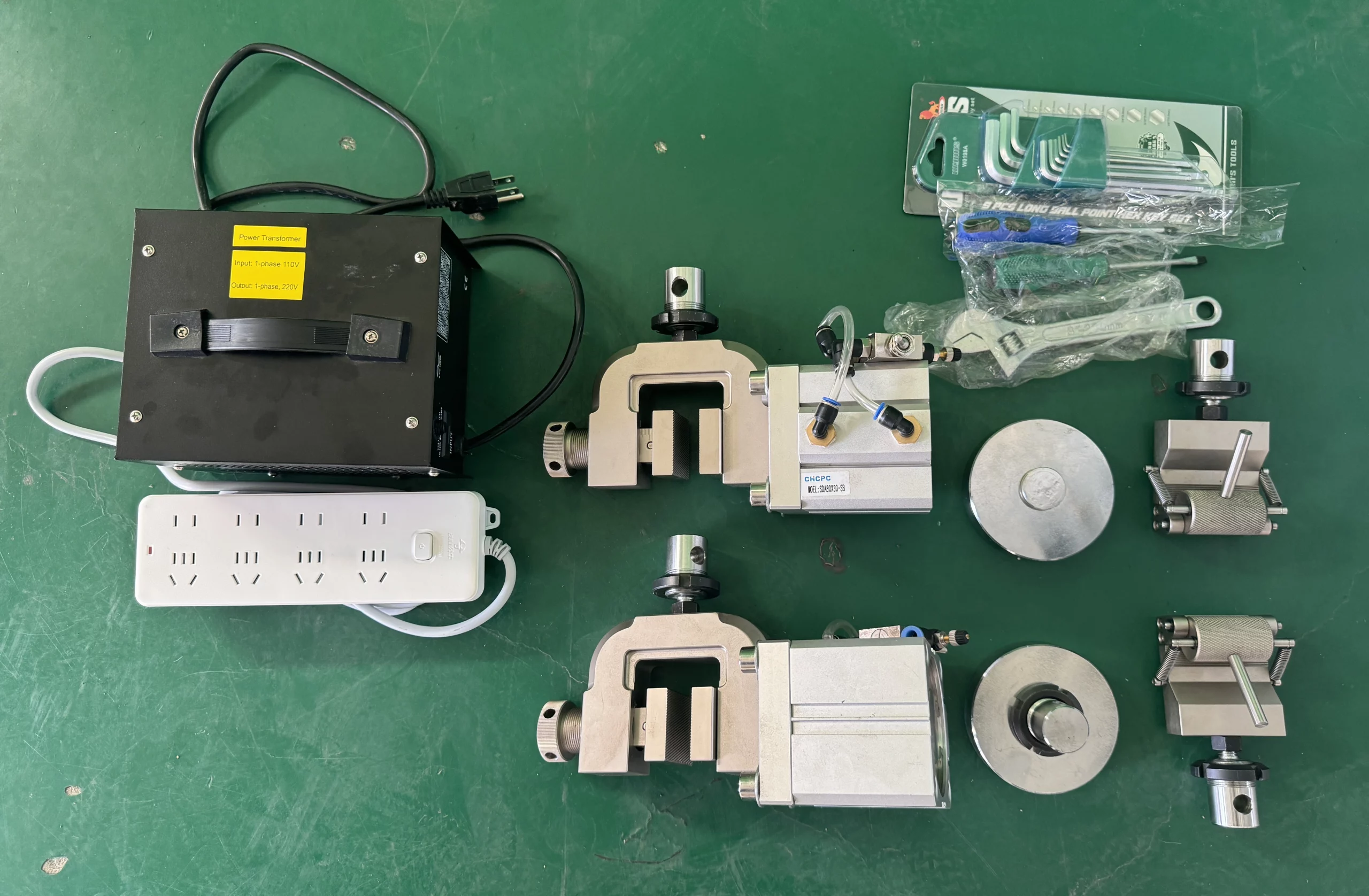
- Optional modular components: Include ergonomic workbench (793×658×675 mm), full-protection safety shield with interlock logic, touchscreen PC, and pneumatic grip control unit with integrated pressure regulation.
Control System
The NG-EML Series B system incorporates a high-performance digital control unit designed for precise test execution, seamless communication, and enhanced system integration.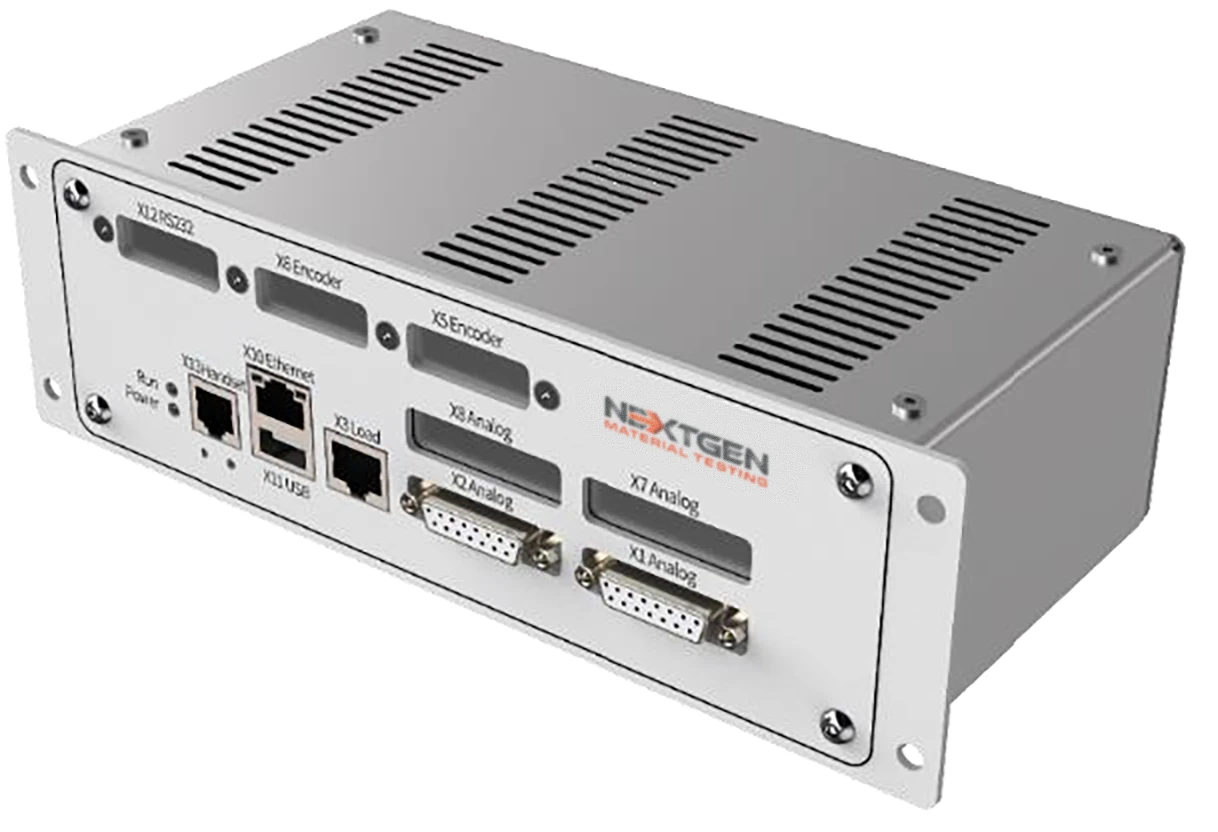
- Alternative Connectivity – Ethernet (TCP/IP): In addition to USB, the controller supports Ethernet-based communication using a dedicated high-speed logic chip with full TCP/IP protocol stack support. This allows for high-throughput, low-latency data transmission in distributed testing environments or where remote control and network integration are required.
- Sampling and Acquisition Performance: The control system offers 1200 Hz closed-loop sampling, enabling precise synchronization of force, displacement, and extensometer inputs. Six-channel analog acquisition with 24-bit resolution allows highly accurate signal capture for real-time feedback and test control.
- Integrated Hardware Protection: Embedded firmware ensures autonomous monitoring of voltage, current, overload, motor temperature, and crosshead limits. Emergency stop logic is implemented both in software and hardware layers.
- Handheld Remote Console (Standard): Includes a 3.5-inch full-color touch screen, ergonomic silicone keypad, and fine-adjustment rotary dial. Features include test start/stop, grip control, crosshead positioning, return-to-origin function, and overload prevention. It can operate in dual mode—connected directly to the controller or through the PC interface—offering full control redundancy for lab flexibility.
Optimized Structural Rigidity
The NG-EML Series B – Dual Column Bench Top Universal Testing Machine features a frame engineered for superior mechanical stiffness and durability. Utilizing a high-rigidity dual-rail structure and an FEA-optimized crosshead design, the system minimizes deflection and backlash, ensuring exceptional accuracy during critical measurements such as modulus determination, yield strength, and failure loads.- The testing frame integrates preloaded precision ball screws, dual linear motion guide rails, and reinforced column supports to significantly reduce mechanical play.
- All interfaces — load cell, ball screw, motor couplings, and crosshead contact points — are engineered for zero-clearance under load, enhancing measurement consistency in both static and dynamic tests.
- The rigid design ensures long-term alignment stability, even during high-cycle or repetitive test applications.
Advanced Direct-Drive Servo Actuation
The NG-EML Series B UTM is equipped with a next-generation direct-drive servo transmission system that delivers exceptional speed, acceleration, and responsiveness.- The system eliminates traditional
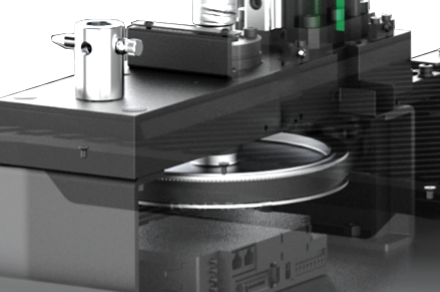 gear reducers by employing a high-rigidity synchronous belt and servo motor assembly, which significantly improves mechanical efficiency and reduces transmission backlash.
 - Maximum crosshead movement speed reaches 2400 mm/min, significantly reducing testing cycle durations and increasing throughput.
- High-speed drive enables better responsiveness for low-speed creep, stress relaxation, and modulus ramp tests, while still allowing ultra-slow control for precision measurement scenarios.
- Enhanced acceleration profiles improve system adaptability in multi-stage or high-speed ramp testing procedures.
Intelligent Safety and Control Architecture
The NG-EML Series B incorporates an advanced safety and intelligence layer that protects both operator and equipment while optimizing system responsiveness and usability.- Real-Time Collision Prevention: The system constantly monitors real-time force feedback and movement data. If an abnormal force spike is detected (e.g., specimen fracture or obstruction), crosshead motion is automatically halted to prevent load cell overload or mechanical damage.
- Overload Protection Logic: The system enforces an immediate stop at 103% of rated capacity. This hardware-level safeguard ensures long-term integrity of sensitive components.
- Dual-Layer Position Limit Protection: Built-in software and mechanical end-stop switches ensure safe operation boundaries. Both user-defined digital limits and physical stroke protectors are implemented.
- Emergency Stop Circuitry: Integrated emergency stop buttons allow the operator to immediately interrupt any movement.
- Sensor Range Enforcement: All input channels (force, displacement, extensometer) include range-checking logic to prevent overrange conditions and maintain data validity.
- Handheld Controller Safety: The remote control unit includes grip lockout, overload prevention, and a return-to-origin function that prevents accidental mispositioning.
Optional Protection Shield
The optional protection shield features a fully enclosed structural design with an aluminum alloy reinforcement frame and high-impact polycarbonate panels. This safety enclosure is engineered in accordance with international mechanical safety standards to ensure maximum protection during critical testing operations. Equipped with an integrated door locking mechanism and software-linked interlock system, the shield restricts system movement when the door is open. This design minimizes the risk of injury and enhances occupational safety in high-throughput or high-force test scenarios.Streamlined Operation and Maintenance
The Series B UTM is designed for intuitive use and efficient daily operation, reducing setup time, operator training, and maintenance complexity.- User-Centered Software Workflow: GenTest software presents a clean, icon-driven interface. Built-in templates for ASTM, ISO, GB/T, and EN standards allow rapid setup, while drag-and-drop test design and real-time graphical outputs simplify routine and advanced testing alike.
- Step-by-Step Configuration: Operators can build test sequences with guided steps, reducing the risk of errors and ensuring repeatability across users and labs.
- Instant Report Generation: One-click data export, automatic calculation of results (modulus, yield, tensile strength, etc.), and batch processing functions streamline documentation and compliance.
- Accessible Maintenance Architecture: The controller module is slide-mounted and accessible for service without disassembling the frame. Protective covers can be quickly opened for belt, motor, or sensor inspection.
- Dual Control Modes: The handheld remote console and optional touch-screen PC interface allow local or PC-based operation with full synchronization, offering flexibility for both training and production use.
Mechanical and Electronic Architecture
The NG-EML Series B Universal Testing Machine is engineered with a precision mechanical structure and high-performance control electronics to ensure stability, repeatability, and accuracy across all test scenarios.Precision Load Frame
Key components that ensure stable, accurate crosshead movement and precise axial alignment:- High-Stiffness Linear Guide System: Dual linear guide rails with integrated self-lubrication significantly enhance lateral stiffness and ensure straight, low-friction crosshead travel. This design minimizes off-axis motion and maintains precise axial alignment, which is essential for reducing measurement error in displacement- and strain-sensitive tests.
- Low-Noise Synchronous Belt Drive: The direct-drive system employs a high-performance synchronous belt optimized for high speed and low vibration. It operates maintenance-free and ensures smooth power transmission between the servo motor and the actuator assembly.
- Integrated Optical Encoder: A high-resolution photoelectric encoder is embedded within the servo system to capture real-time position feedback of the crosshead, supporting micro-displacement measurements with 0.0133 μm resolution.
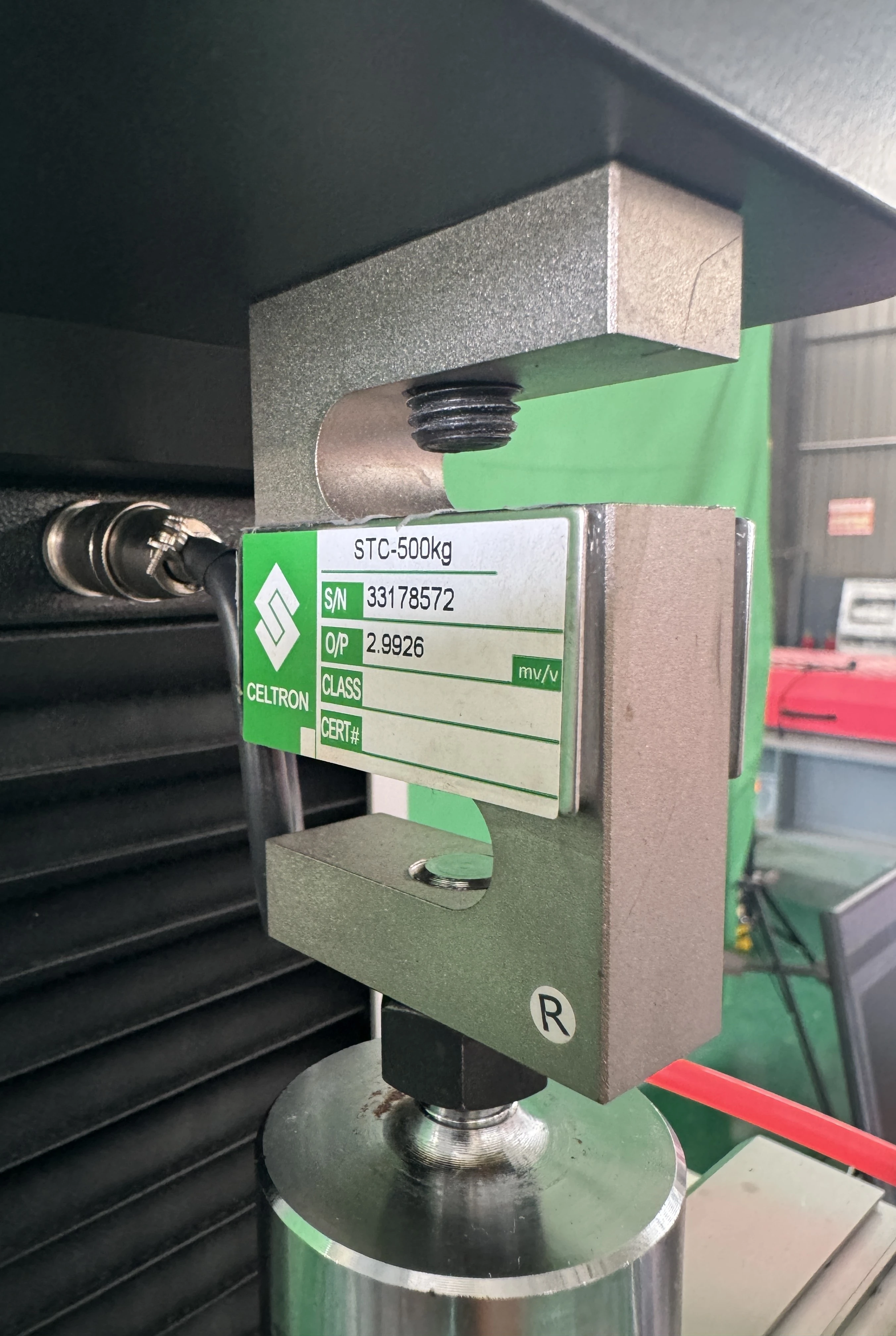
Load Cell Assembly
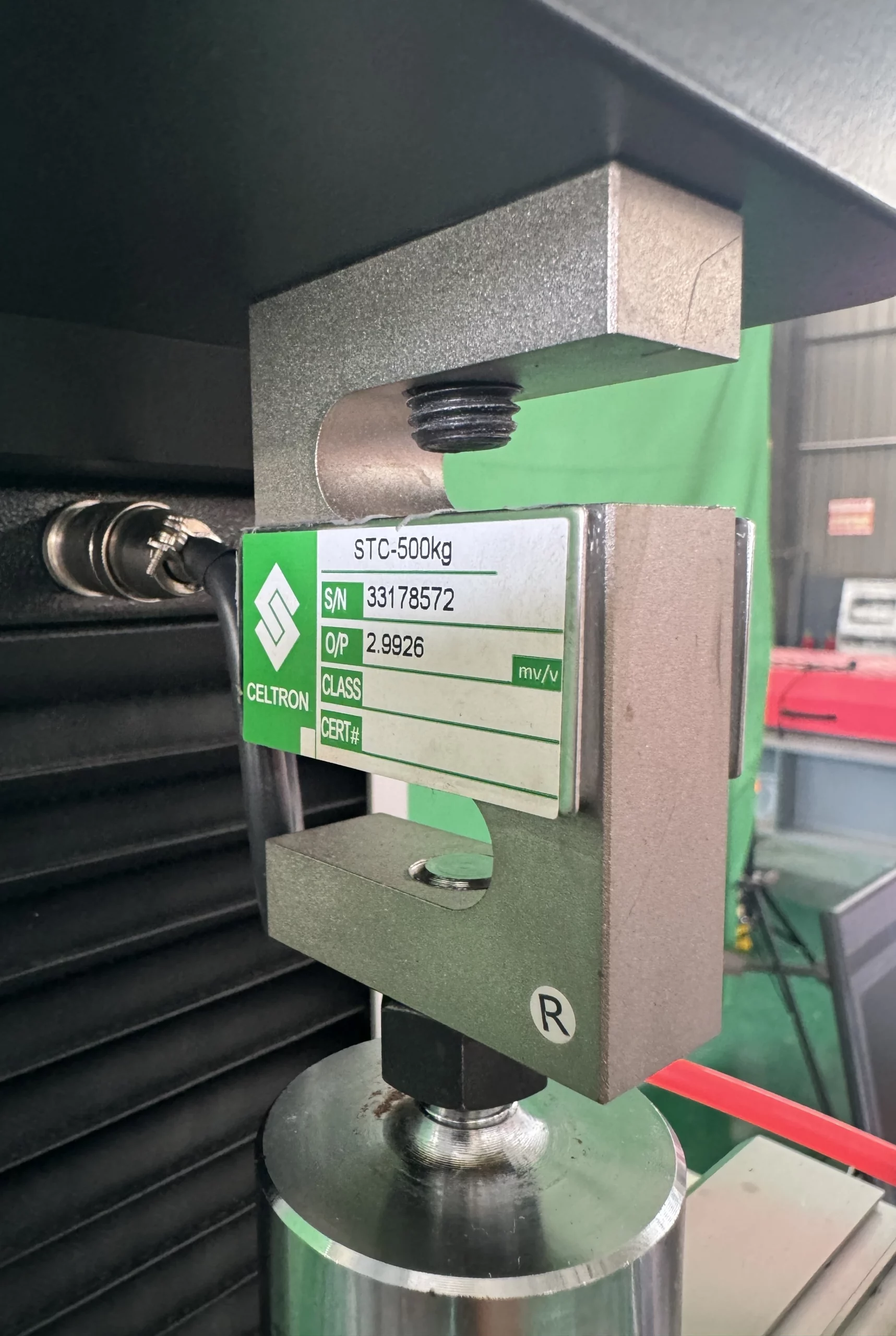
Main features of the load cell system designed for accuracy, protection, and dual-mode testing:- High-Precision Load Cells: Each system includes a factory-calibrated load cell with high stiffness, minimal signal drift, and linearity across the entire rated force range.
- Overload and Lateral Force Protection: Built-in safety logic and structural reinforcement protect the sensor against shock loading, side forces, and improper specimen failure.
- Bidirectional Testing: The load cells support both tensile and compression tests without requiring reconfiguration.
- TEDS Auto-Recognition: All load cells are equipped with IEEE 1451.4-compliant TEDS chips, enabling plug-and-play recognition and eliminating manual setup.
- Self-Calibration Ready: The system supports internal load cell verification procedures to maintain measurement accuracy over time.
- Wide Operating Temperature Range: Rated from −55 °C to +90 °C, suitable for standard and environmental chamber-based testing.
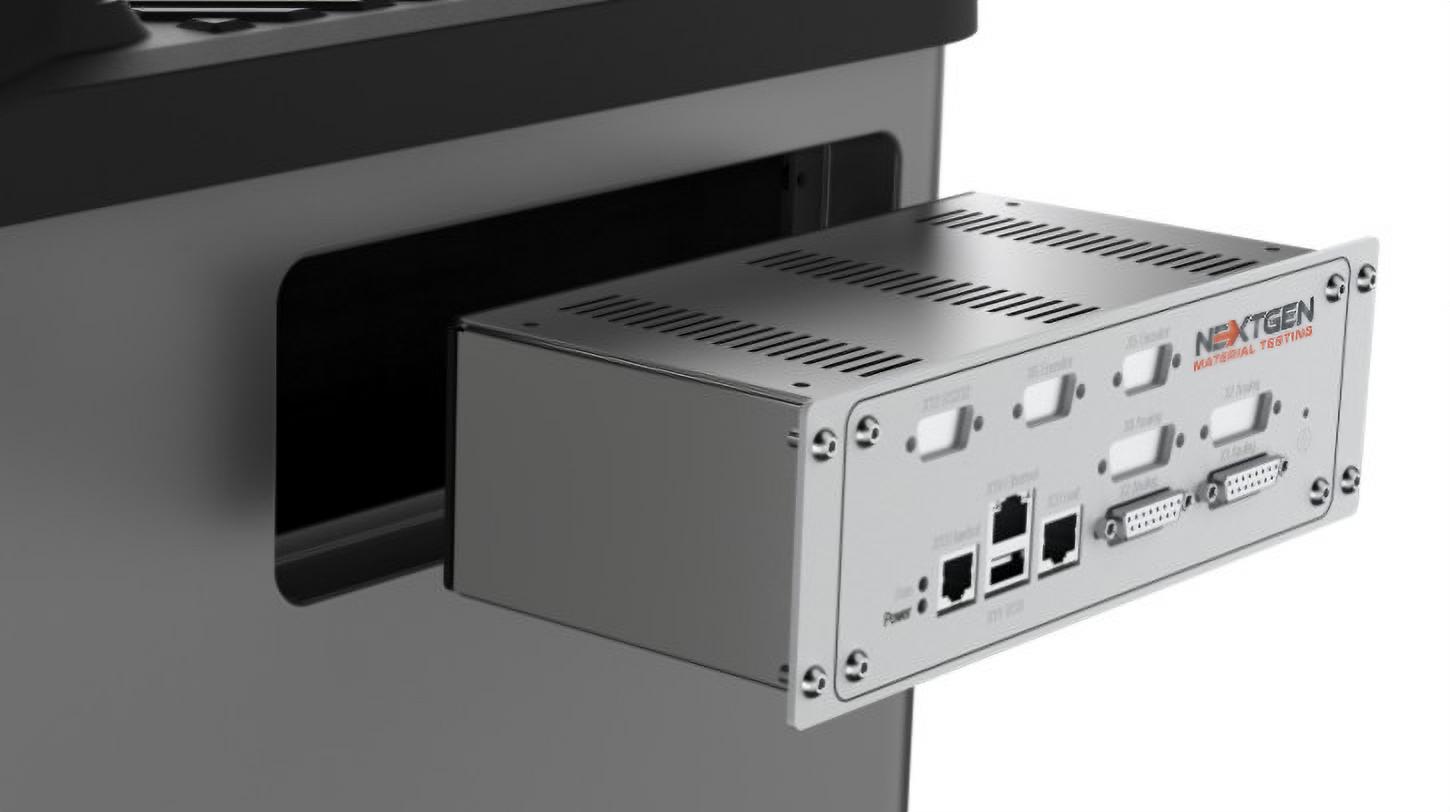
Closed-Loop Controller
Core control functions that enable fast response, smooth operation, and high-precision data acquisition:- Adaptive Feedback Control: The controller features a next-generation closed-loop PID algorithm, optimized for the upgraded direct-drive mechanics. This enables rapid system response under varying material behavior and loading profiles.
- Smooth Transition Profiles: Intelligent speed ramps and control smoothing algorithms ensure consistent performance across high-speed and low-speed regimes. This is critical for metal testing at both ambient and elevated temperatures.
- Multi-Channel Acquisition: Six synchronized analog channels and multiple digital inputs allow simultaneous integration of extensometers, temperature sensors, strain gauges, and load signals with millisecond-level accuracy.
Live Data Visualization and Graphing
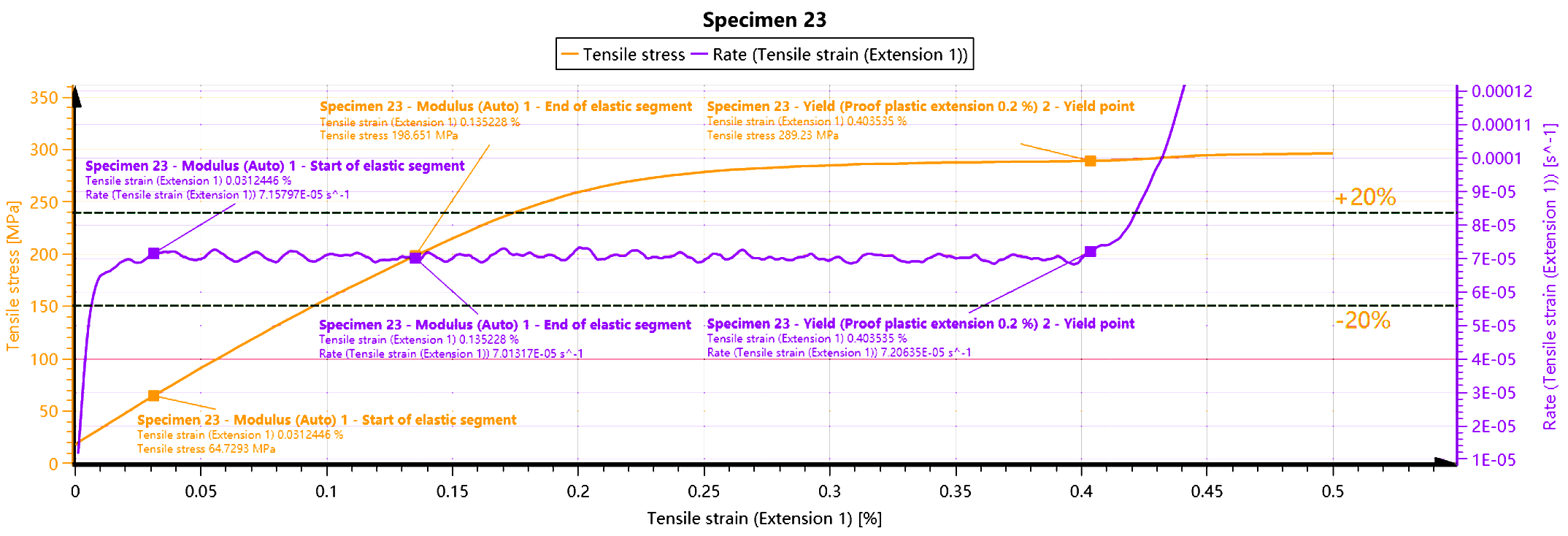
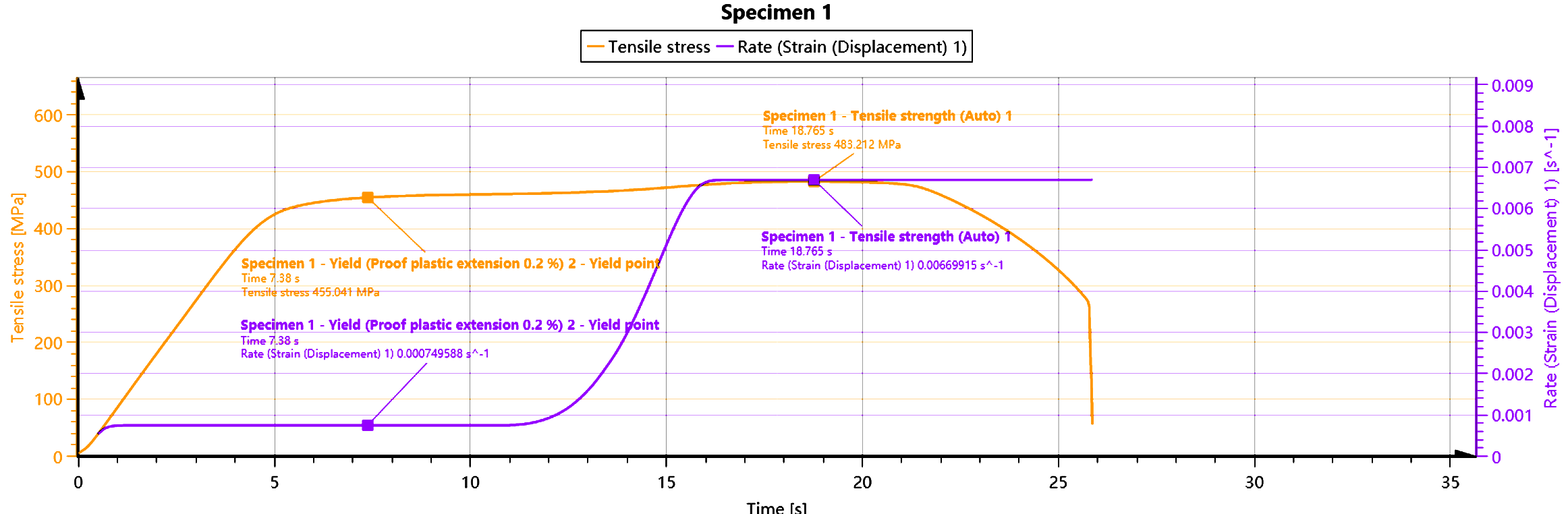
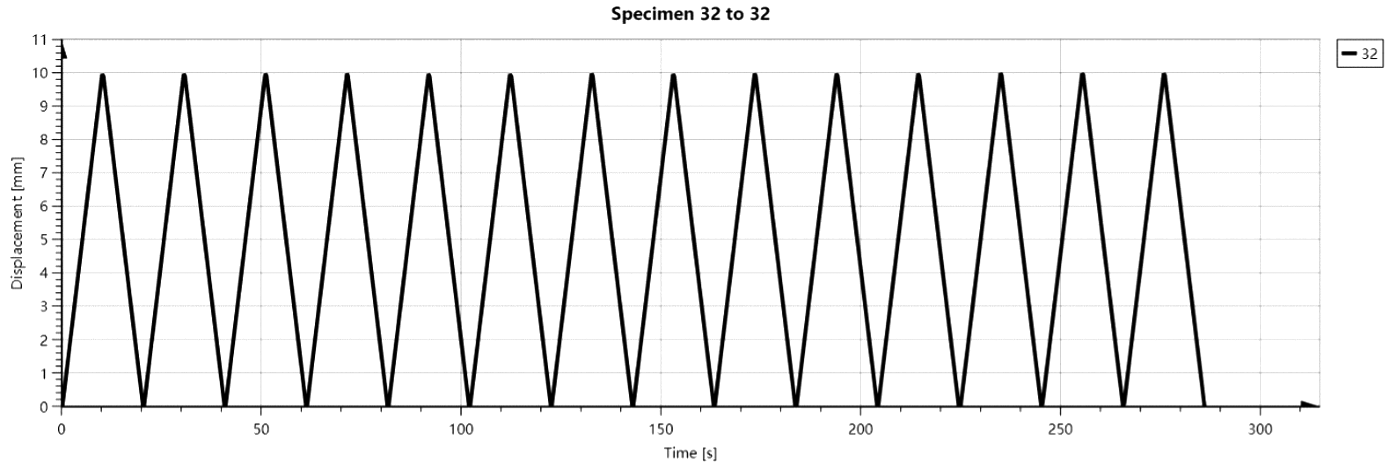
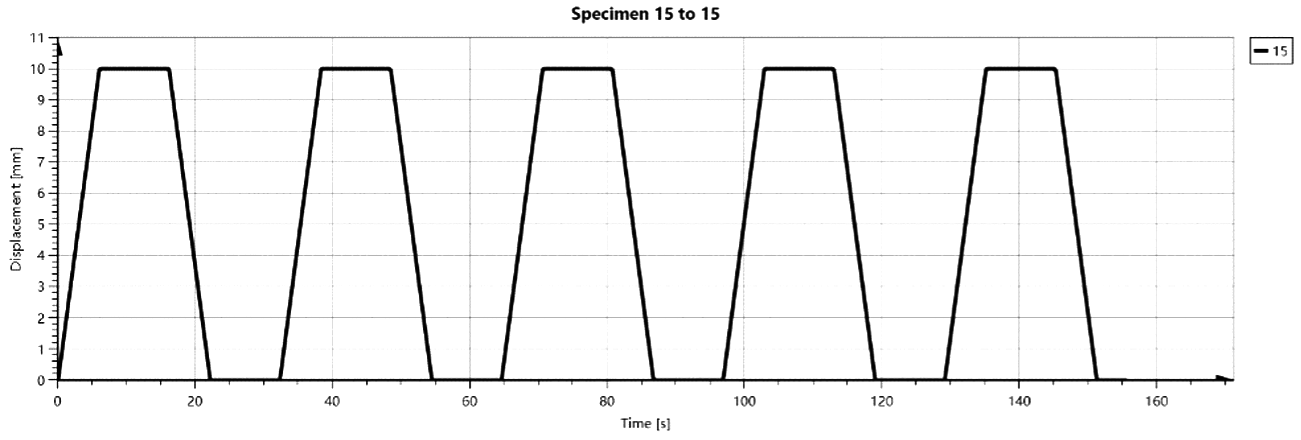
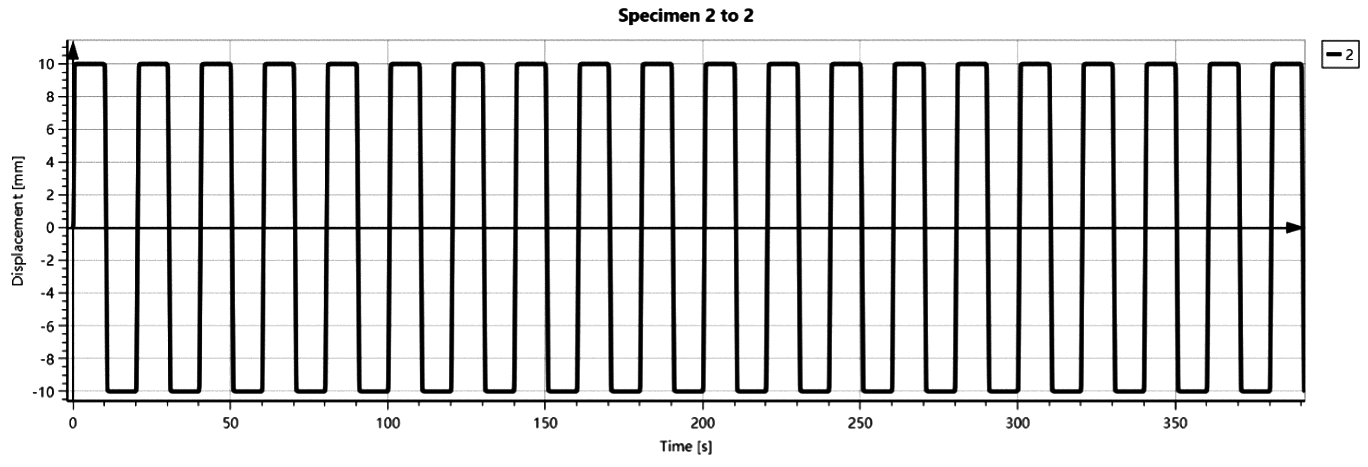
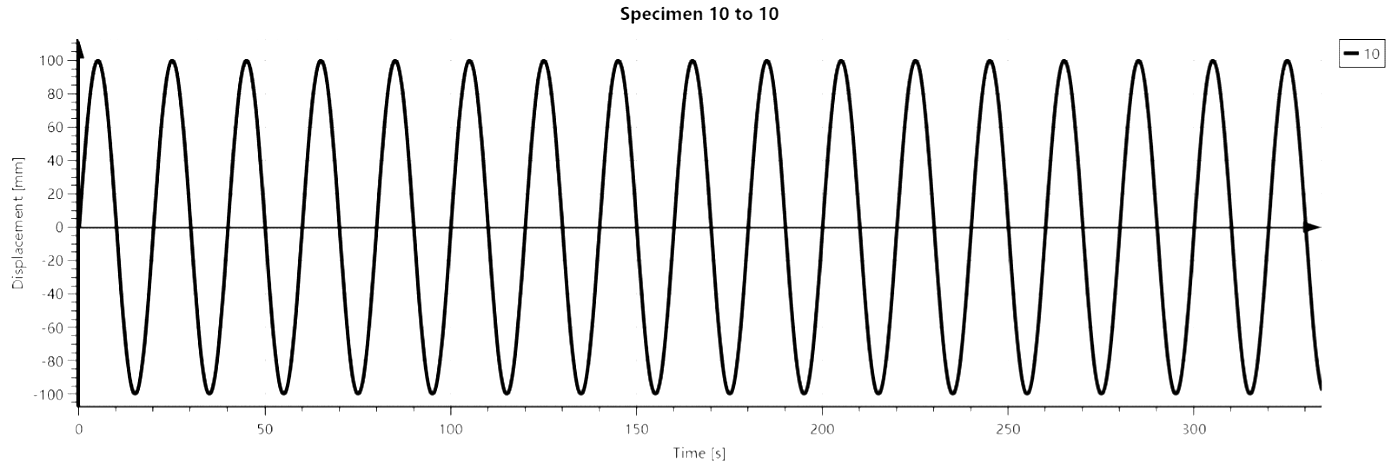
- Real-Time Graphing: During each test, the system displays synchronized force-displacement, stress-strain, and time-based curves in real time. Graphs are updated dynamically with every acquisition cycle (1200 Hz).
- Customizable Chart Layouts: Operators can define custom chart views, zoom windows, axis scaling, and data overlays for advanced comparative analysis.
- Zoom-In Tools: Operators can manually explore key points such as break locations, yield regions, and modulus segments during or after the test using interactive chart controls.
- Multiple Curve Overlays: Batch testing and comparison of multiple sample curves on a single graph allow performance consistency analysis and outlier detection.
- Export Formats: Charts and raw data can be exported in multiple formats including CSV, Excel, PDF, and graphical image (PNG, SVG).
Integrated Control Interfaces
The NG-EML B Series UTM is engineered to support multiple control and interaction modes, providing operators with ergonomic, efficient, and flexible access to all machine functions. Whether in production, R&D, or training environments, these interfaces streamline test execution, setup, and safety control.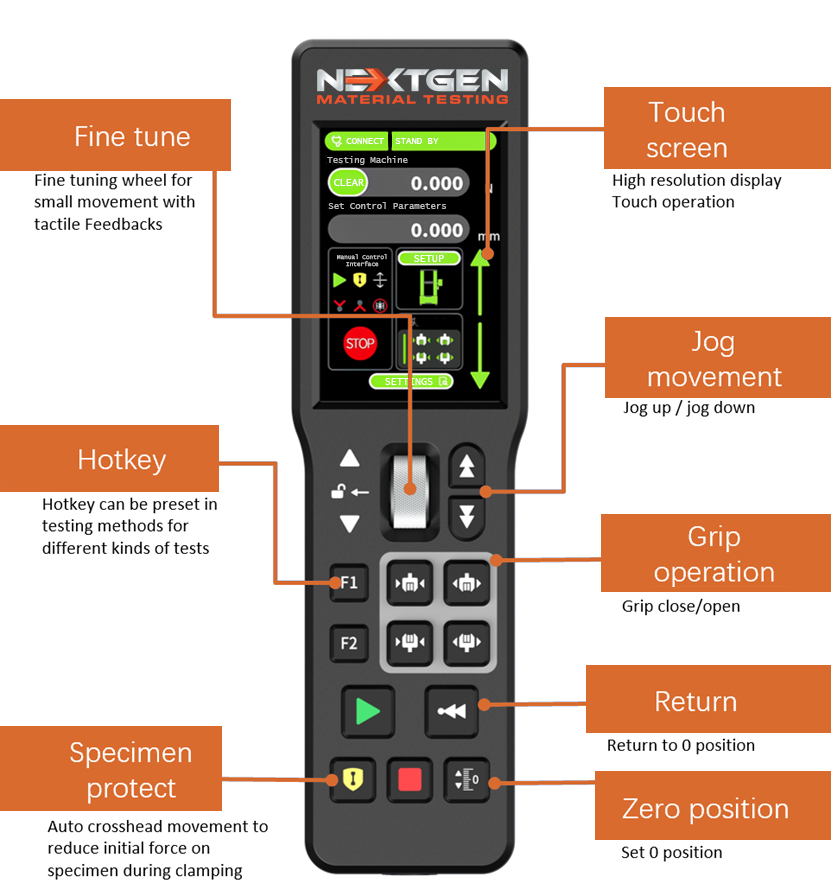
Handheld Remote Controller – Included as Standard
This compact, magnetically mountable remote handset includes a fully integrated 3.5-inch full-color touchscreen display for direct user interaction with test status and parameter control.- Ergonomic Interface: Features silicone-coated buttons and a fine-resolution rotary wheel, which allows precise manual positioning of the crosshead. Operators can jog the crosshead, issue return-to-origin commands, or fine-tune alignment prior to clamping specimens.
- Real-Time Feedback: Live force, displacement, and system state are displayed on-screen. The user receives continuous updates, reducing the need to shift attention between the handset and PC.
- Core Control Functions:
- Start / Stop test
- Return to home position
- Manual jog of crosshead (up/down)
- Grip open/close control (if pneumatic system installed)
- Specimen protection logic – prevents excessive preload during setup
- Flexible Communication Modes: Can function either:
- In direct mode, communicating with the controller via embedded logic
- In PC-synchronized mode, acting as a secondary user input device for software-guided workflows
Optional Industrial Touchscreen PC
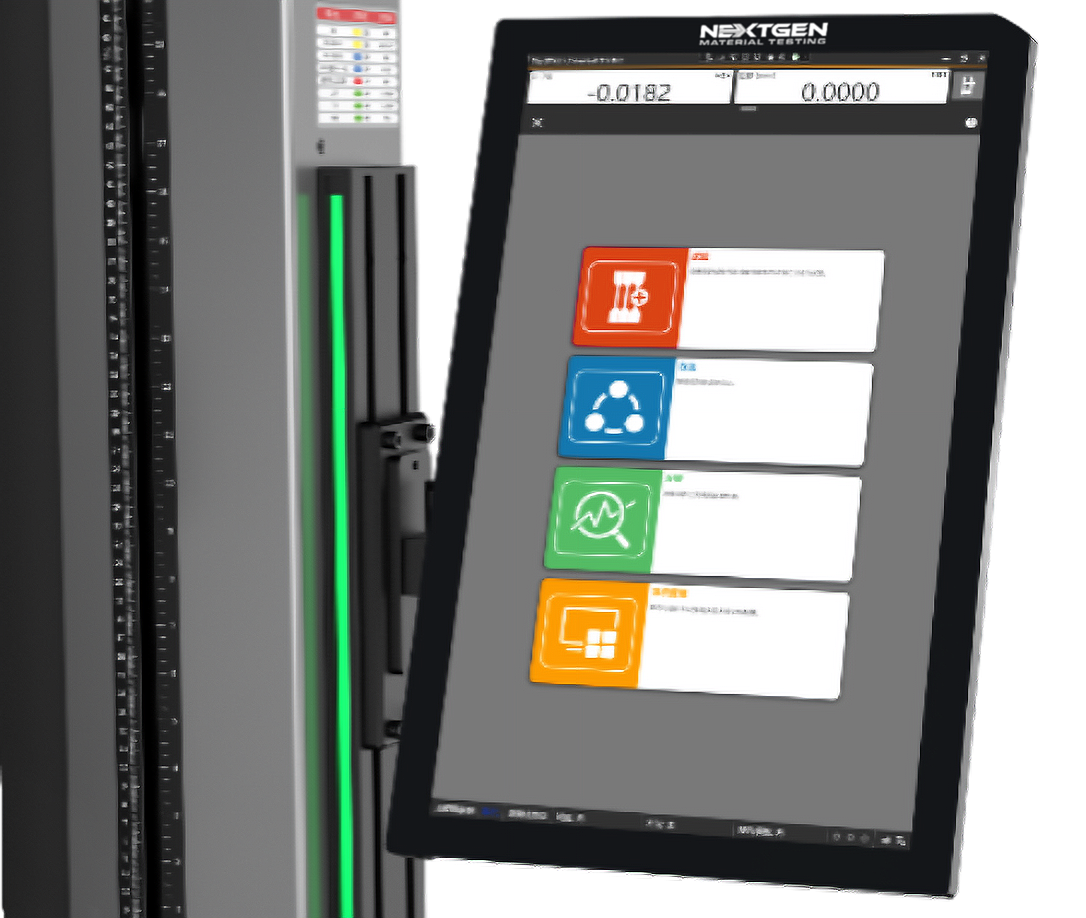
An optional all-in-one touchscreen computer can be mounted directly on the load frame, enabling standalone test execution without requiring an external desktop or laptop.- GenTest™ Software Ready: The integrated industrial PC is preloaded with the full version of GenTest™ software. It provides access to all standard test method libraries, custom sequence creation, live graphing, real-time analytics, and report generation tools.
- Intuitive Touch Interface: Multi-touch screen supports tap, drag, pinch-to-zoom, and gesture control. Graphs, test results, and settings are interactively accessible on-screen, minimizing the learning curve for new users.
- Industrial-Grade Build: The PC unit features:
- Shock-absorbing housing
- Sealed surface for dust and moisture resistance
- Vibration isolation mounts (optional)
- Port Expansion: Offers multiple USB ports for data export, printer connection, barcode scanning, or peripheral automation.
Optional Workbench
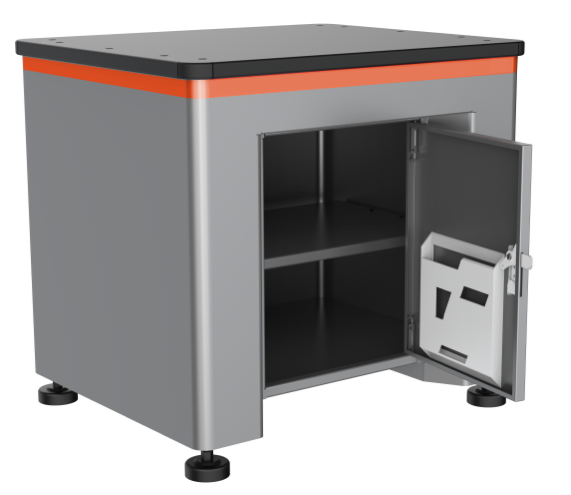
The optional ergonomic workbench is designed to enhance operator convenience during test preparation and execution. It provides a stable surface for instrument handling and organized storage of accessories such as grips and fixtures. With compact dimensions of 793 × 658 × 675 mm (L × D × H), it integrates seamlessly into laboratory environments and supports efficient workflow.Optional Pneumatic Grip Control Module
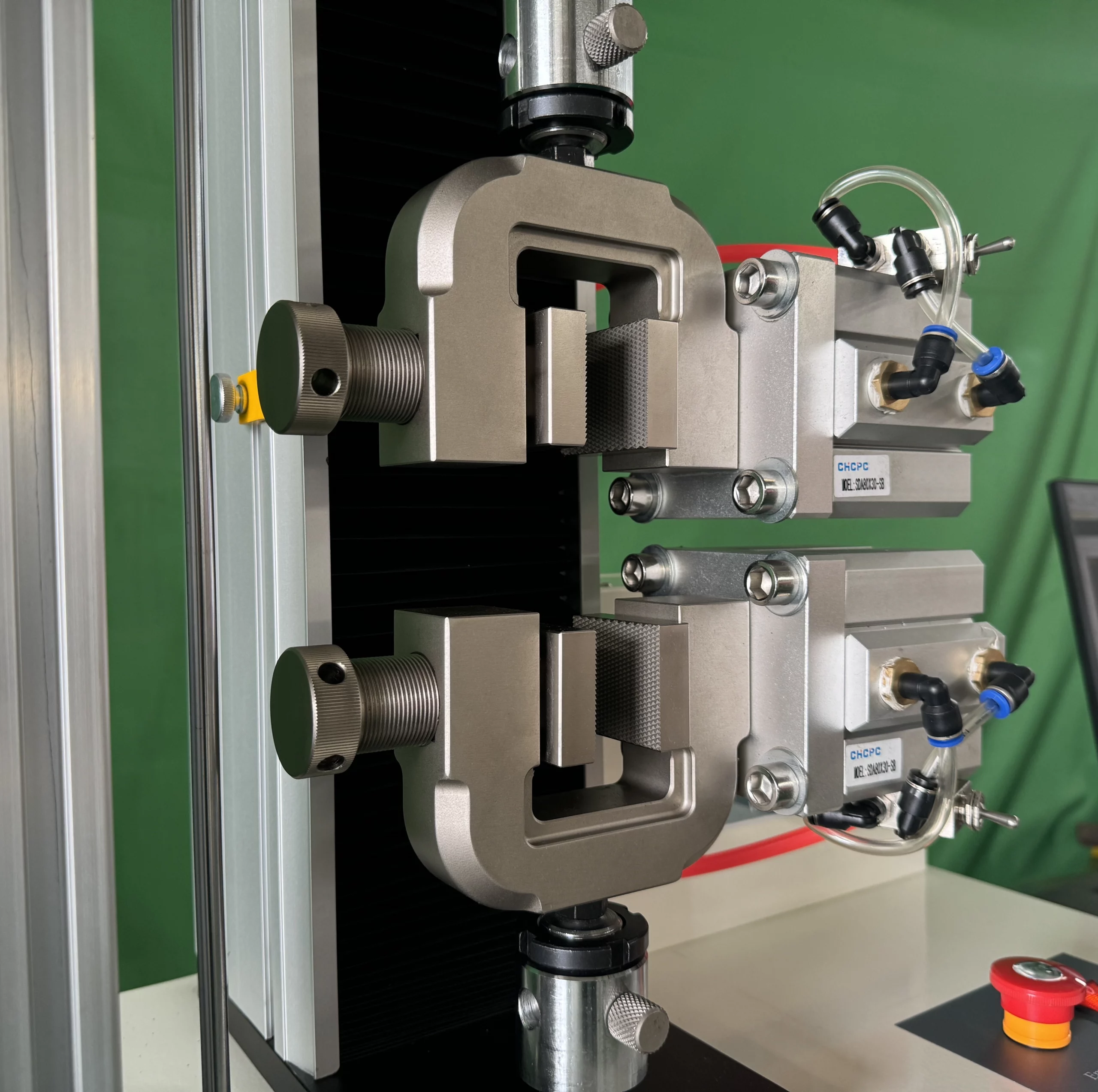
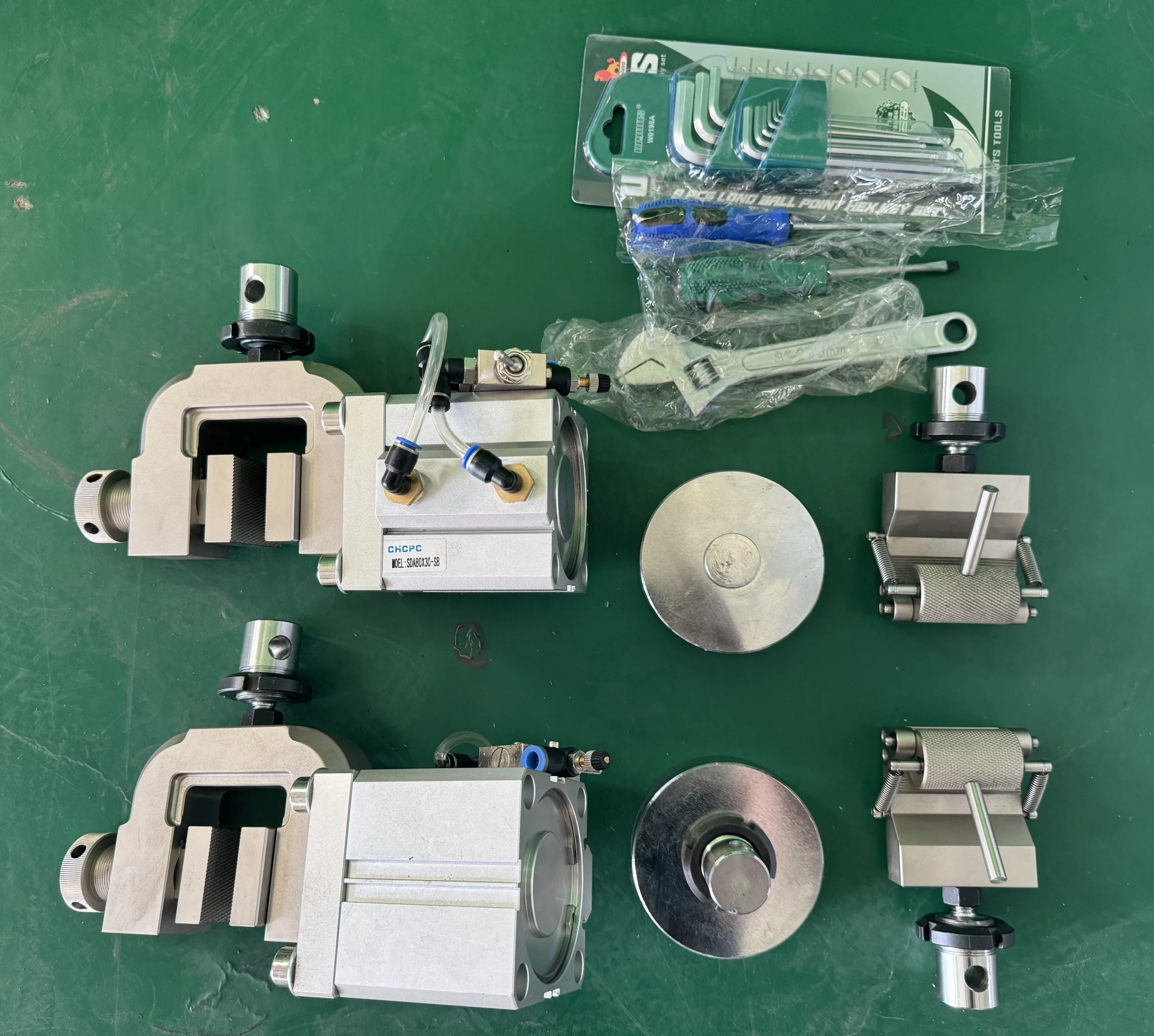
For applications requiring pneumatic grips, the system supports an optional digital pneumatic grip pressure control unit, allowing for programmable clamping force and improved specimen protection.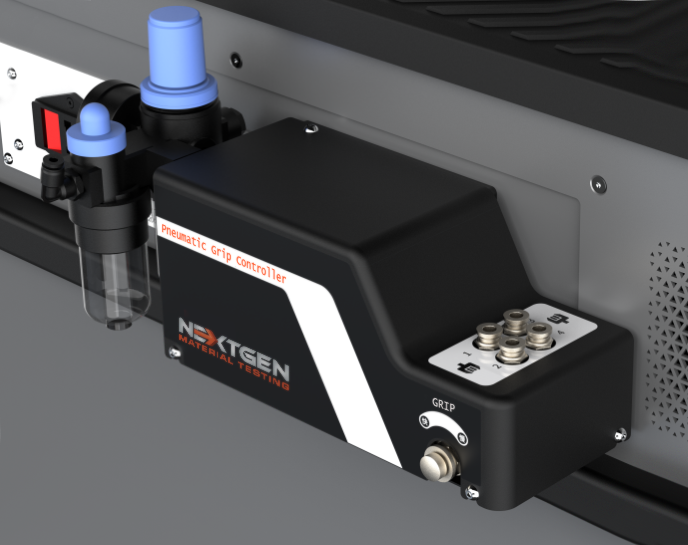
- Pressure Control and Regulation: Users can set and adjust air pressure via a digital interface to match the material’s clamping requirements. Accurate pressure prevents both under-clamping (slippage) and over-clamping (material deformation).
- Dual Gripping Channels: Independently control opening and closing of upper and lower pneumatic grips for high-precision clamping sequences.
- Integrated Safety Mechanism:
- Grip actuation is disabled unless the test space is clear and the system is in a safe state
- Pre-pressure locking and relief mechanisms help maintain grip force during test start
- Compact Design: The module can be rack-mounted near the testing system or installed directly on the machine frame for easy access. Quick-connect fittings allow fast changeover of grip types.
- Visual Display: Real-time pressure feedback and grip status indicators support operator awareness and reduce the risk of setup error.
GenTest™ Software
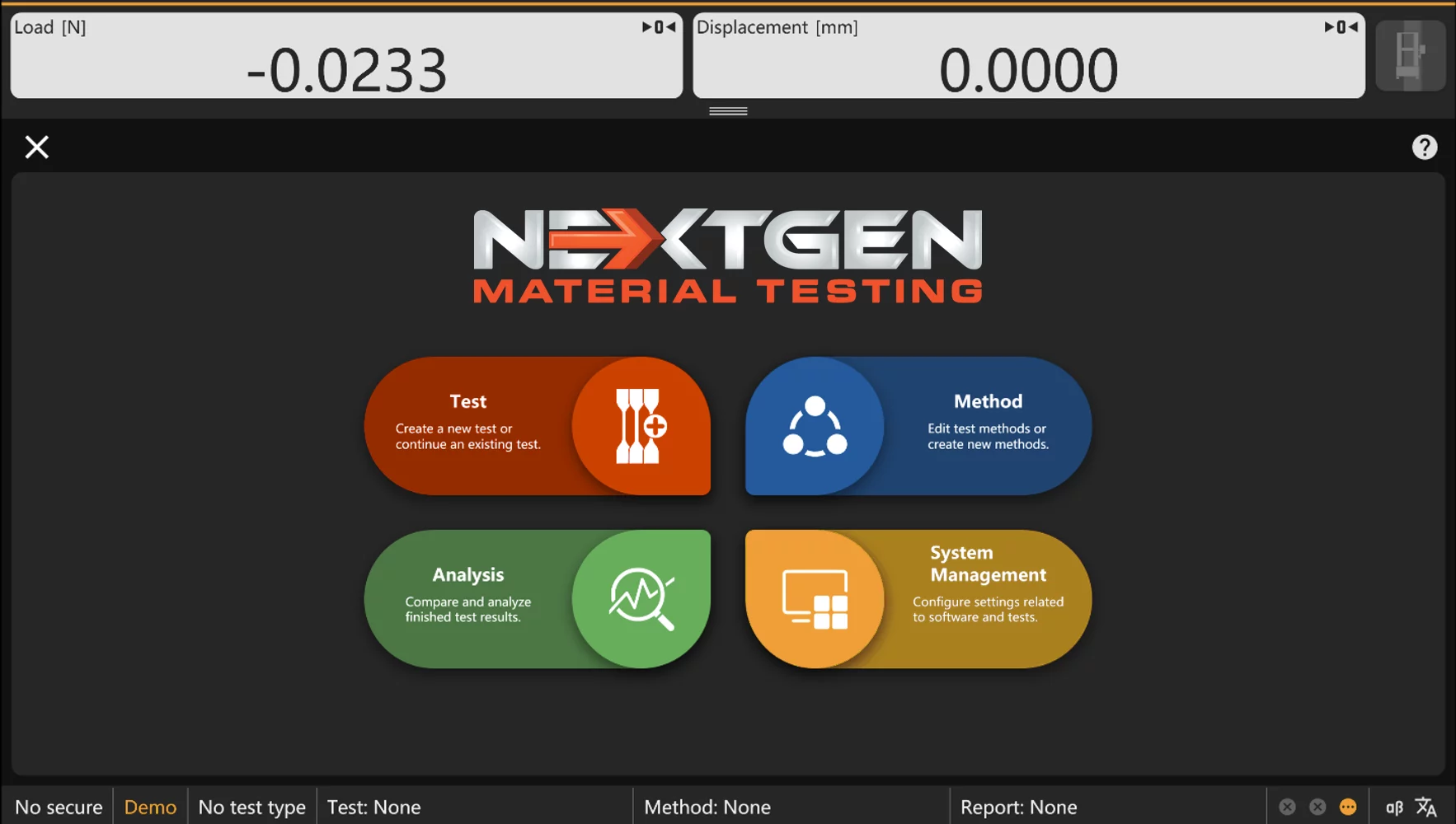
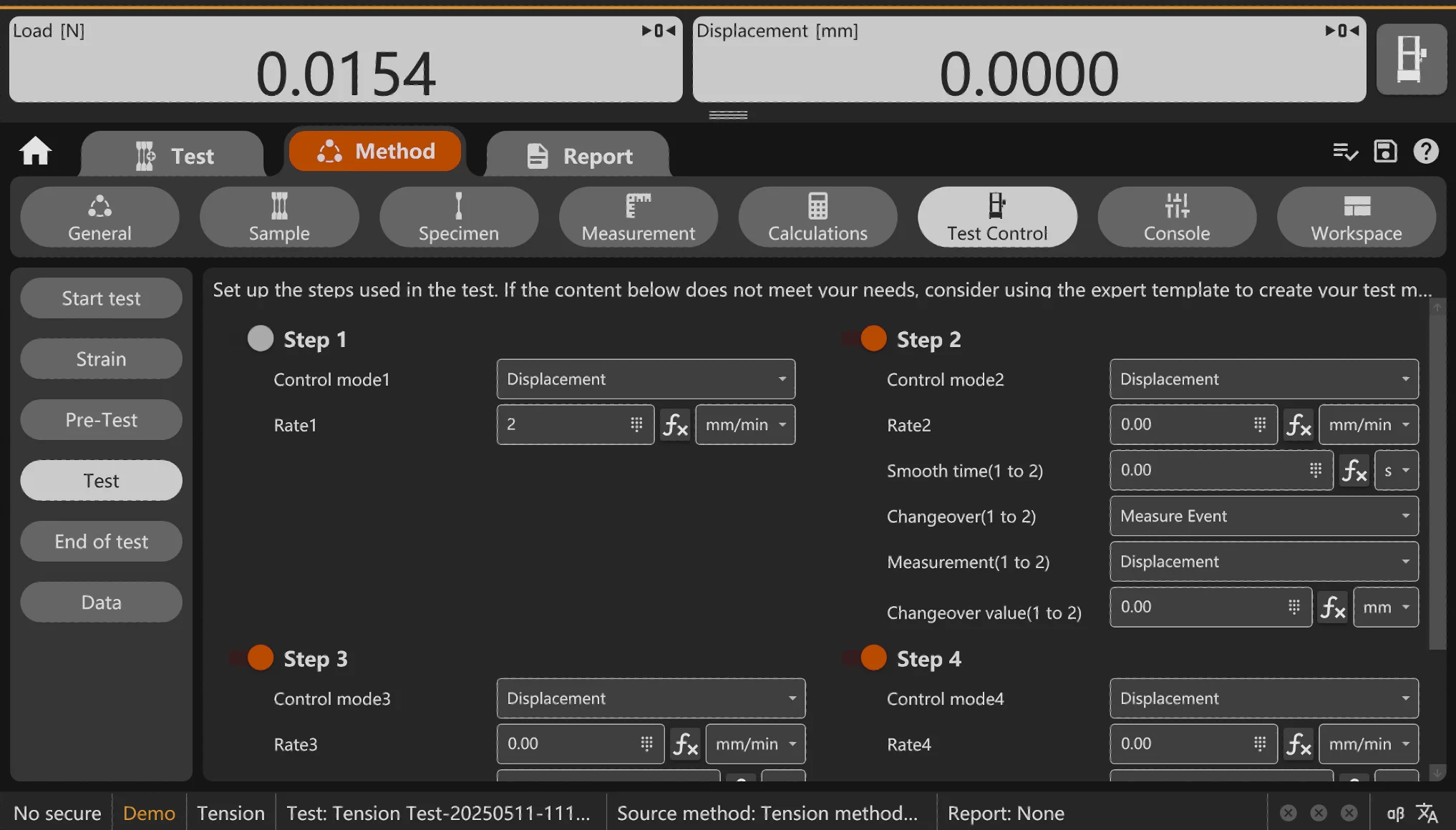
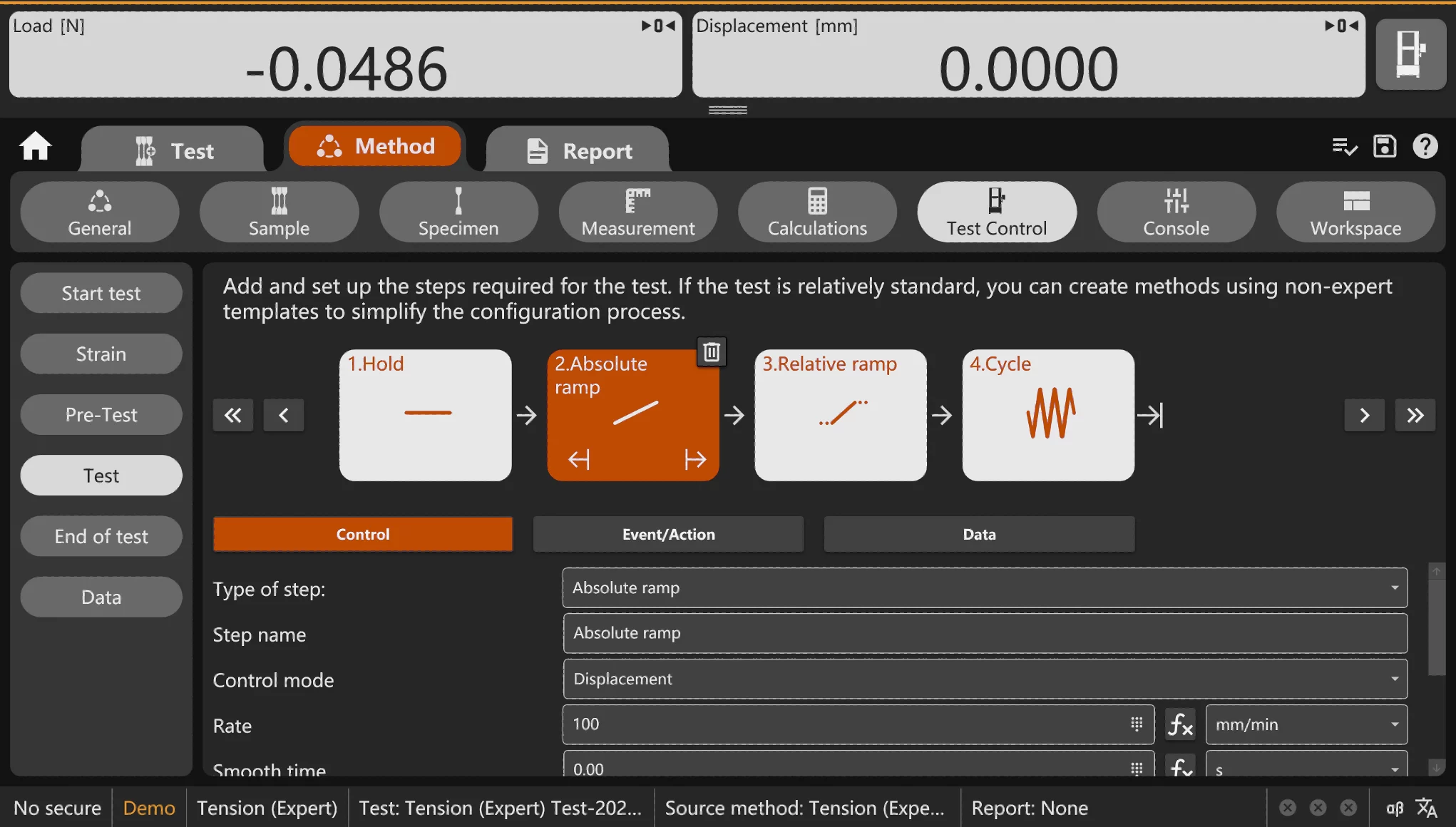
- Interface Design: Employs a simplified, flat UI conforming to modern design standards. Optimized font display enhances readability and aesthetic coherence, improving the operator experience significantly.
- Layout and Touch Optimization: Supports both horizontal and vertical display layouts; a numeric keypad is integrated for streamlined touch-based input under operational constraints.
- Demonstration Mode: Enables simulation of tests, allowing familiarization with the software interface without physical specimen interaction.
- Recalculation: Post-test recalculation allows users to modify parameters and reprocess results efficiently.
- Test Standards: Preloaded with built-in test methods compliant with GB/T, ASTM, ISO, and EN standards, organized modularly for streamlined selection.
- Method List: Intuitive display and keyword filtering of test procedures facilitate rapid method identification and selection.
- Quick Test Method: Optimized for tensile and compression tests with minimal configuration steps.
- Data Export: One-click raw data export streamlines post-test processing.
- Test Progress Visualization: Real-time tracking of test steps, cycles, control modes, and duration provides operational transparency.
- Test Graph: Multi-mode interaction with graphs (e.g., touch, keyboard, zoom, and axis panning). Advanced plotting options support complex data visualization needs.
- Function Key Customization: Allows tailored UI controls for specific test methods, maximizing testing efficiency.
- Test Log Recording: Records comprehensive metadata including parameter inputs, system states, and abnormal events for traceability.
- Pre-test Parameter Verification: Enforces parameter validation prior to execution to eliminate procedural errors and reduce waste.
- Sample Protection Mechanism: Prevents premature damage by controlling the clamping sequence and forces.
- Real-Time Data Display: Supports up to 12 configurable channels with customizable layout, units, time formats, and refresh intervals.
- Multifunction Operation Panel: Consolidates manual control functions for connected accessories and core equipment.
- Basic Templates: Pre-configured test method templates support rapid onboarding and expert-level customization.
- Unit System: Includes metric and imperial units; conversion is automatic per selected method or test item.
- Expression Generator: Allows construction of advanced test expressions using logic or variable inputs.
- Measurement Function: Supports multi-channel data collection and live result synthesis.
- Calculation Function: Provides a suite of pre-programmed algorithms for dynamic and static calculations.
- Rounding Function: Permits configurable rounding logic in processed data to ensure result uniformity.
- Test Control: Supports step-based sequencing (ramp, hold, waveform) with customizable trigger events and acquisition strategies.
- Voice Broadcasting Function: Configurable voice prompts guide users through critical testing stages and events.
- Accessory Connection: Broad compatibility with extensometers, chambers, and other peripheral testing hardware.
- Accessory Action Control: Granular control of peripheral device behavior across the test sequence timeline.
- Data Acquisition Strategy: Customizable interval settings prevent data loss during rapid measurement changes.
- Automatic Fixture Pressure Setting: Pressure automatically adjusts based on force thresholds to prevent sample damage.
- Test Report: Full customization of report content and export format, including watermarking and formatting templates.
- Multi-language Switching: Real-time language changes without system reboot enhance international usability.
- Data Analysis: Enables inter-test and inter-batch statistical comparisons for deeper analytical insight.
- Maintenance Reminder: Intelligent system tracking prompts timely servicing to optimize hardware lifespan.
- Permission Configuration Management: Tiered access rights improve operational control and accountability.
- Safety Performance: Covers multi-dimensional safety metrics including electrical, overload, and thermal protections with real-time monitoring.
Technical Specifications
| Model | NG-EML Series B – Dual Column Bench Top Universal Testing Machine |
|---|---|
| Force Capacity | 0.1 kN (22.5 lbf) / 0.2 kN (45 lbf) / 0.5 kN (112 lbf) / 1 kN (225 lbf) / 2 kN (450 lbf) / 5 kN (1124 lbf) / 10 kN (2248 lbf) |
| Frame Type | Desktop |
| Test Space | Single-zone configuration |
| Maximum Crosshead Speed | 2000 mm/min |
| Minimum Crosshead Speed | 0.00005 mm/min |
| Return Speed (Max) | 2400 mm/min |
| Position Resolution | 0.011 µm |
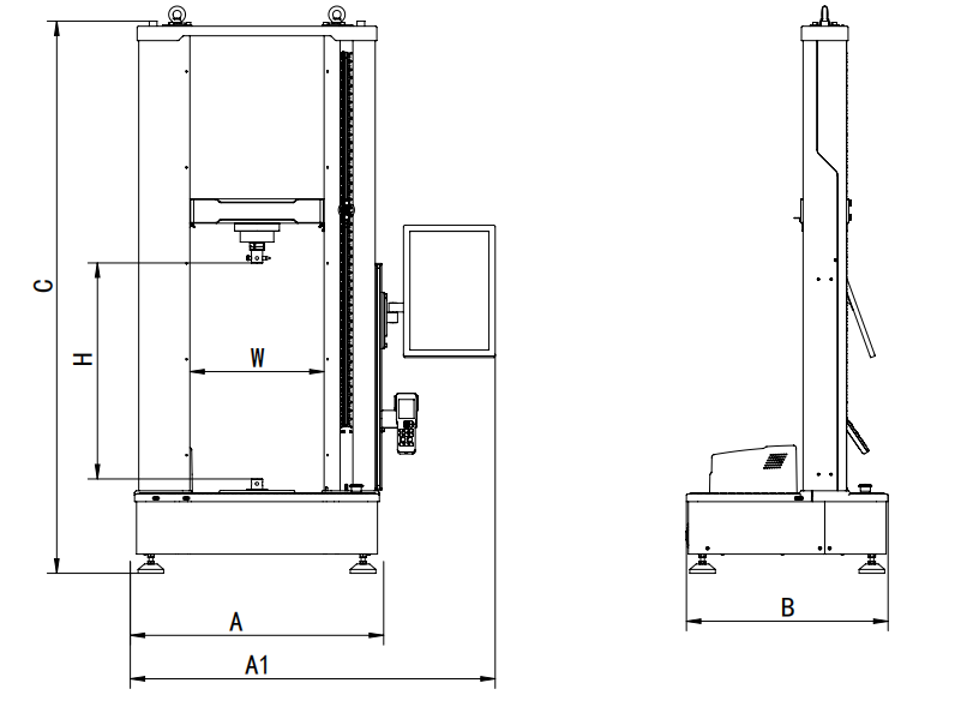
| Vertical Crosshead Travel (H) | 1090 mm (42.9 in) |
| Test Width (W) | 420 mm (16.5 in) |
| Dimensions (A × B × C) | 30.3 × 25.2 × 66.9 in (770 × 640 × 1700 mm) |
| Frame Stiffness, kN/mm | 50 kN/mm |
| Weight | 595 lbs (270 kg) |
| Power Supply | 1 kW |
| Voltage | Single-phase AC 220 V ±10 %, 50 Hz / 60 Hz |
| Voltage | Single-phase AC220V±10%, 50Hz/60Hz |
| Common Parameters | |
|---|---|
| Accuracy | Class 0.5 |
| Force Range | 500 N – 10 kN (0.2% – 100% FS) 10 N – 250 N (0.4% – 100% FS) |
| Calibration Standard | GB/T 16825.1, ISO 7500 (Class 0.5), ASTM E4 |
| Speed Accuracy | ±0.2% of set speed |
| Position Accuracy | ±0.2% of set position |
| Force Resolution | 1 / 600000 FS |
| Extension Resolution | 1 / 600000 FS |
| Strain Accuracy | Better than GB/T 228, ISO 6892-1, ASTM E8, ASTM E21 |
| Safety Protection | Overload protection (103% of rated force), position limit, over-voltage protection |
| Single-Channel Data Sampling Rate | 1200 Hz |
| Control Frequency | 1200 Hz |
| Environmental and Operational Conditions | |
|---|---|
| Working Temperature | +5 °C to +40 °C |
| Storage Temperature | −25 °C to +55 °C |
| Relative Humidity | At 20 °C, +10% to 90%, non-condensing |
| Maximum Operating Altitude | 2000 meters |
| Motor Type | AC servo motor |
| Ball Screw | Pre-loaded |
| Position Measurement | Optical encoder |
Overall Dimensions and Working Area Diagram
FAQs
NextGen Material Testing offers a comprehensive range of high-precision grips and fixtures specifically designed for use with NG-EML Series Universal Testing Machines. These accessories enable accurate and repeatable tensile, compression, flexural, shear, peel, and puncture testing across a wide range of materials, including metals, plastics, composites, rubber, and wood.
The available solutions include:
- Wedge grips for high-load metal and composite testing (ASTM E8, ISO 6892)
- Pneumatic grips for fast, repeatable clamping of soft and flexible specimens
- Side-action grips with interchangeable jaw faces for general-purpose applications
- Self-tightening and eccentric roller grips for deformable or low-friction materials
- Flexural fixtures for 3-point and 4-point bending (ASTM D790, C393, D6272)
- Compression platens and cages for ASTM D695 and other compression tests
- Snubbing grips for cable and wire testing using the capstan method
- Threaded grips for bolt and nut tensile verification (ASTM F606)
- Specialized fixtures for tear, peel, puncture, delamination, and wood testing (ASTM D143, D2344, D3167, etc.)
Each fixture is engineered for optimal load alignment, high-strength durability, and full compliance with ASTM, ISO, and other global testing standards. From basic clamping to advanced high-capacity or component-specific testing, these fixtures are designed to support consistent performance across all NG-EML Series UTM configurations.
Yes, NextGen Material Testing Inc. offers professional calibration services for all NG-EML Series Universal Testing Machines, including Series A, B, C, and D. These services are designed to maintain compliance with international standards such as ASTM E4, ISO 7500-1, ASTM E8, and ISO/IEC 17025:2017.
As a general industry requirement, universal testing machines must be calibrated annually to ensure ongoing accuracy and traceability. Our calibration services are performed by certified technicians and qualified engineers, either during initial installation or as part of routine equipment servicing.
Calibration includes:
- Verification of force measurement systems
- Accuracy checks of extensometers and displacement systems
- Issuance of traceable calibration certificates aligned with ASTM and ISO standards
Alongside calibration, we also provide on-site installation and training, including system setup, mechanical and electrical checks, operational testing, and software introduction for up to three users.
Yes, all NG-EML Series UTMs from NextGen Material Testing Inc. are designed to comply with key international standards, including ASTM E4, ISO 7500-1, ASTM E8, and ISO 6892. These standards ensure that the systems meet the highest levels of accuracy, repeatability, and reliability for force measurement and material testing.
Additionally, NextGen offers full certification and calibration services for both in-house and third-party testing equipment. We work closely with ISO/IEC 17025:2017-accredited partners to support certification under a wide range of international standards such as:
-
ASTM E4 – Force verification for universal testing machines
-
ISO 7500-1 – Verification of force-measuring systems in tension/compression testing
-
ASTM E83 and ISO 9513 – Calibration of extensometers and strain measurement devices
-
ASTM E1012 – Alignment verification for load frames
-
ANSI/NCSL Z540-1-1994 – Calibration system accuracy and traceability
-
NADCAP – For aerospace/defense sector certification (with alignment fixtures available to meet NASM 1312B and ASTM E1012 coaxiality requirements)
All NG-EML Series machines are powered by GenTest™ – an advanced data acquisition and control software platform engineered for precision mechanical testing across a wide range of materials and applications.
Key features include:
-
Preloaded test methods compliant with ASTM, ISO, GB/T, EN, and DIN standards, organized by application type for quick selection
-
A modern, intuitive interface with real-time graphing, live data acquisition, and streamlined navigation for both new and experienced users
-
Advanced analysis tools, such as recalculation, zoomable charts, curve overlays, and multi-batch comparisons
-
Full support for modular accessories, including extensometers, thermal chambers, strain sensors, and pneumatic grips
-
Customizable test reports, automated result calculations, and export options in Excel, PDF, CSV, and image formats
-
Real-time sample protection logic, voice-guided testing prompts, multilingual support, and remote demonstration mode
-
Integrated expression builders, step-based sequencing, waveform generation (e.g., ramp, hold, sine), and automated fixture control
GenTest makes sure that all NG-EML models are fully compliant, easy to use, and give accurate data output, whether they are used in quality control labs or research and development settings.
If you would like to learn more about this software, please visit the official GenTest™ software page.
Yes — NG‑EML Series machines are supported by a robust stocked consumables and spare parts program designed for maximum uptime:
- We maintain an extensive inventory of critical consumables — including grips (manual, pneumatic, hydraulic), extensometer accessories, load cells, bearings, belts, seals, and electronic modules — tailored to bench-top and floor-standing UTM platforms.
- Spare parts are NIST‑traceable, factory‑calibrated, and ready for quick shipment, eliminating extended lead times.
- For higher‑wear items like seal kits or grips, we offer bulk reorder options, making them easy to stock in your lab.
- All parts are plug-and-play compatible with GenTest™ equipped systems, ensuring a hassle-free installation—no technician visit required.
- Replacement orders are filled from regional warehouses, guaranteeing fast delivery worldwide and keeping your machines operational.
- If a rare or specialized component is needed, NextGen will expedite sourcing and shipping, so you're never left waiting.
This guarantees that you can quickly and easily get the parts you need for your UTM investment, exactly when you need them.
Each NG-EML Series machine comes backed by NextGen's Lifetime Product Support Advantage, ensuring long-term technical assistance for the lifetime of the system. From pre-sale consultation to post-installation support, our goal is to provide comprehensive service that aligns with your needs.
NextGen offers both remote and in-person technical support:
-
Over 95% of technical issues are resolved remotely through guided troubleshooting, reducing downtime and eliminating the need for service visits in most cases.
-
If on-site assistance is required, NextGen coordinates with certified local partners in your region. These partners work under our direct guidance to resolve the issue quickly and effectively.
-
Our equipment is supported globally, and its standardized design allows qualified labs familiar with material testing systems to service the equipment with ease.
If you’d like to learn more, feel free to contact us directly or request a quote for a technical support inquiry.
The NG-EML Series Universal Testing Machines are designed with ultimate user-friendliness in mind, making them suitable for both experienced professionals and first-time operators. Every model—whether bench-top or floor-standing—comes equipped with an intuitive, icon-driven interface via the GenTest™ software. This platform supports:
-
Preloaded test method templates (ASTM, ISO, GB/T, EN) to reduce setup time
-
Step-by-step test configuration with guided prompts
-
Real-time graphing and visual feedback for easy monitoring
-
Multilingual interface and voice-guided operation, minimizing the learning curve
-
Handheld touchscreen remote controller (3.5”) with jog wheel and core control functions like start/stop, return-to-origin, and grip actuation
-
Optional industrial touchscreen PC for fully independent control without a computer
In addition, the system allows for rapid accessory changes through a plug-and-test interface, eliminating the need for manual calibration or setup when switching grips or extensometers.
Whether installed in a production lab or research environment, NG-EML machines deliver a seamless and straightforward testing experience for any user level.
Related Products
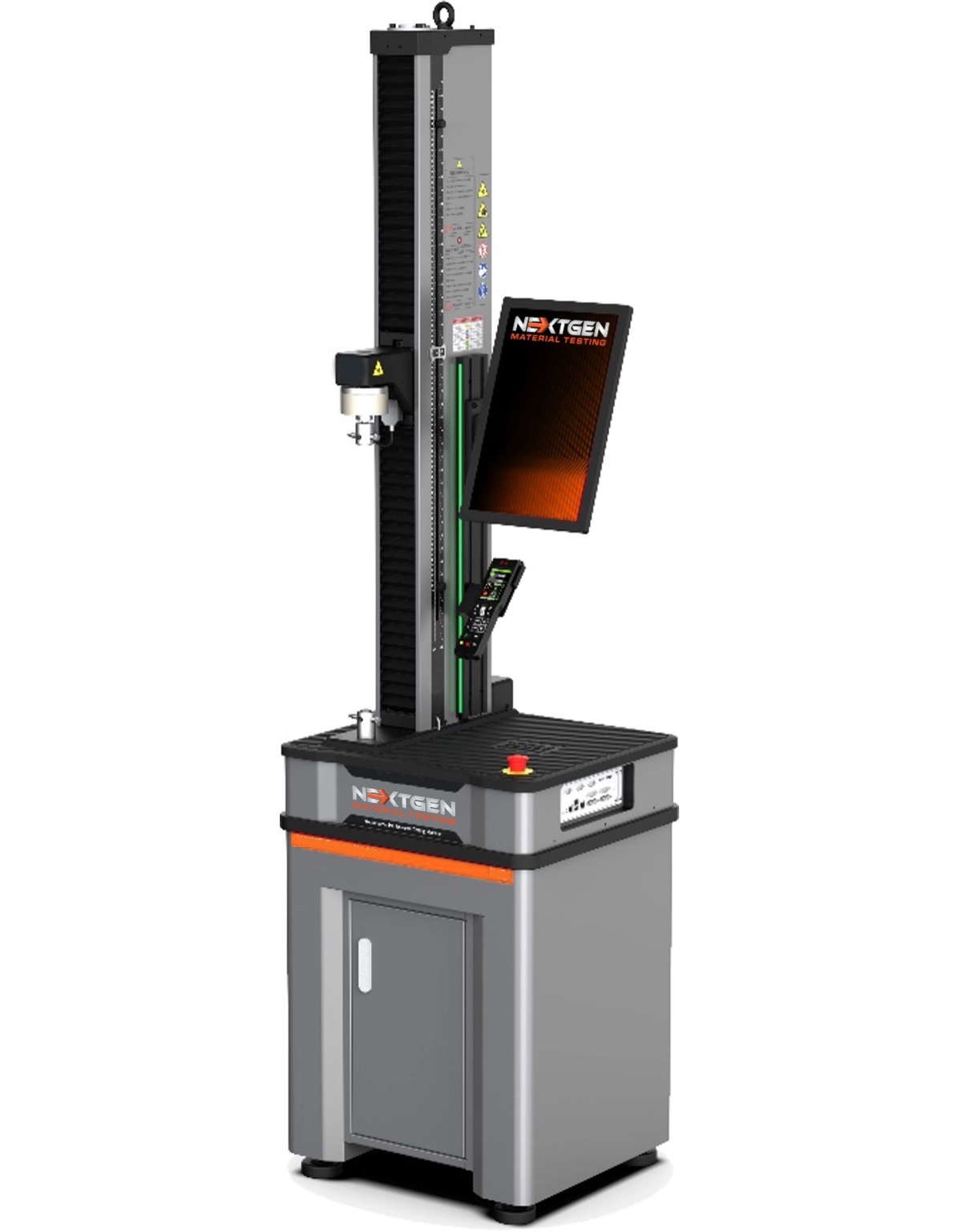
NG-EML Series A – Single Column Bench Top Universal Testing Machine (50 N – 5 kN)
The NG-EML Series A – Single Column Bench Top UTM (50 N–5 kN) is a precision electromechanical system designed for tension, compression, and flexural testing of low-force specimens. Featuring GenTest™ software, a high-speed servo drive, Class 0.5 accuracy, and USB/Ethernet control, this compact tabletop unit supports ASTM, ISO, and EN standards. Ideal for testing plastics, rubber, foams, films, composites, and thin metals.
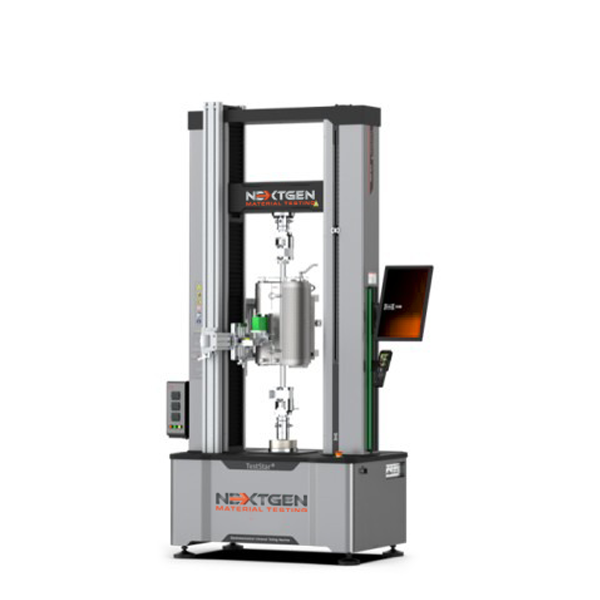
NG-EML Series C – Dual Column Bench Top and Floor Standing Universal Testing Machine (5 kN – 50 kN)
The NG-EML Series C is a precision-engineered dual-column universal testing machine for tension, compression, and flexural testing of metals, composites, rubbers, and polymers. Available in both bench-top and floor-standing formats, with force capacities from 5 kN to 50 kN and Class 0.5 accuracy.
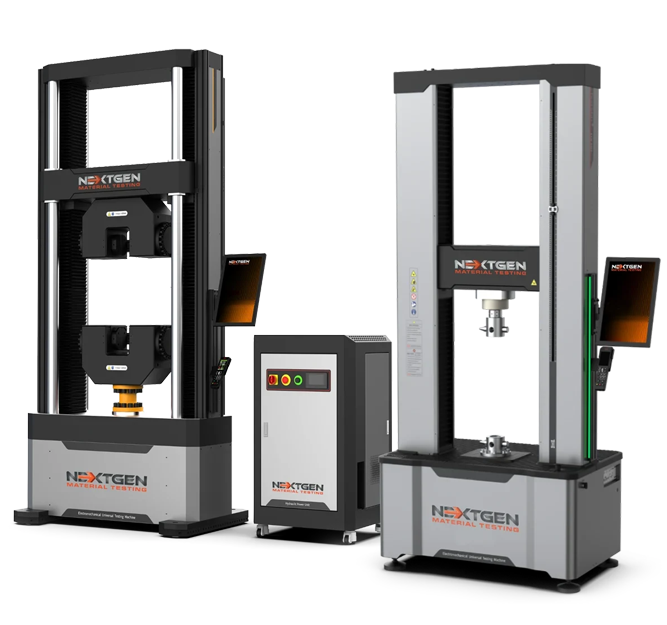
NG-EML Series D – Floor Standing Universal Testing Machine (50 kN – 1000 kN)
The NG-EML Series D – Floor Standing Universal Testing Machine (50 kN–1000 kN) is a dual-column system for tensile, compression, flexural, shear, and cyclic testing of high-strength metals, composites, polymers, and advanced materials. Available in single-space and dual-space configurations, it meets ASTM E8, ISO 6892-1, ISO 527, and GB/T 228 standards. With closed-loop control, 1200 Hz sampling, ultra-low speeds (0.00005 mm/min), and waveform generation, it is ideal for aerospace, automotive, construction, and research labs.
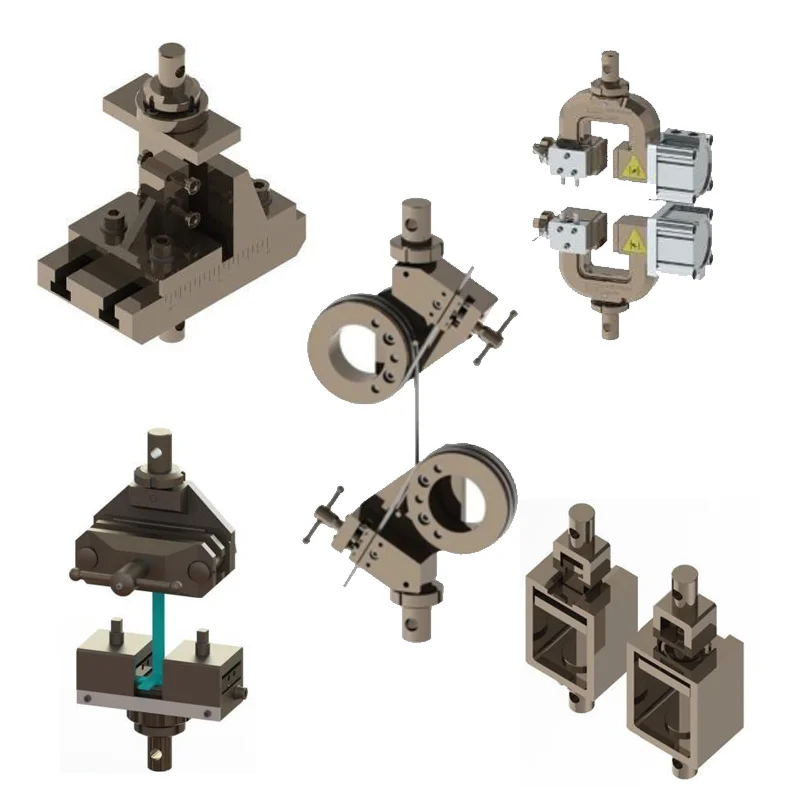
Grips and Fixtures for NextGen Universal Testing Machines (UTMs)
NextGen's grips and fixtures are precision-engineered accessories that transform universal testing machines into versatile systems capable of tensile, compression, flexural, shear, and other mechanical tests. Designed to meet ASTM and ISO standards, these components ensure accurate, repeatable results across various materials and applications.
GenTest Data Acquisition Software - Advanced Universal Testing Machine Software
Upgrade to GenTest, the latest data acquisition software for universal testing machines. Ensure precise, repeatable material testing with an intuitive interface, powerful analysis tools, and full compliance with ASTM, ISO, DIN, and more.