ASTM E8/E8M – Tension Testing of Metallic Materials

ASTM E8/E8M is a widely used standard test method for room-temperature tensile testing of metallic materials. It is commonly referenced for generating tensile properties used in material qualification, incoming inspection, production QA/QC, and engineering comparisons.

If you need help matching specimen type, extensometer approach, or reporting expectations to a purchase order or customer flowdown, talk with our team about your application.

Read More…


ASTM E8/E8M – Standard Test Methods for Tension Testing of Metallic Materials

This standard describes how to perform uniaxial tensile tests on metallic materials at room temperature and how to determine commonly reported tensile results. It is used across many metal product forms, from mill products and machined coupons to finished-part sampling, when a room-temperature tensile property set is required.


Quick definition

Document type: Standard test methods.

Primary purpose: Determine tensile properties such as yield strength, yield point elongation (when applicable), tensile strength, elongation, and reduction of area from a room-temperature tension test.

Typical output: A tensile stress–strain record and a set of reportable tensile properties used for acceptance, comparison, or design screening.


What This Standard Covers

ASTM E8/E8M covers tensile testing of metallic materials “in any form” at room temperature and focuses on determining key strength and ductility values from the test.

It also distinguishes between E8 and E8M specimen conventions. A practical difference called out in the standard is the required gage length relationship for most round specimens (commonly expressed as a multiple of specimen diameter), which can affect specimen preparation and extensometer selection.

The standard notes that exceptions or modifications may be specified in other material-specific documents, and it provides examples of companion tensile-testing references used for certain material categories.


Why This Standard Matters in Testing

ASTM E8/E8M is often the “default” tensile-testing reference used to create a comparable dataset for metals across suppliers, heat lots, and production runs. When it is cited on a drawing, purchase order, or material certification requirement, it typically drives decisions around specimen geometry, strain measurement approach, and what values must be calculated and reported.

It also highlights a common interpretation issue: results from standardized specimens machined from selected locations may not fully represent the performance of the entire end product or in-service behavior. For QA/QC and supplier qualification, that distinction can matter when deciding where coupons are taken from and how results are used.


Common Materials, Product Types, or Applications Covered

This standard is used for metallic materials across a wide range of industries, including general manufacturing, aerospace supply chains, energy, transportation, and metal processing.

Common material forms: Plate, sheet, strip, bar, rod, wire, forgings, castings, and machined tensile coupons taken from parts or test blocks.

Common use cases: Material certification (mill/heat lot testing), process validation (heat treatment, welding procedure support where applicable), incoming inspection, and routine production monitoring.


Common Test or Verification Workflow

ASTM E8/E8M is typically applied as a controlled workflow that links specimen preparation, tensile loading, strain measurement, and reporting.

  • Confirm the exact cited designation (for example, E8/E8M with a specific year) and whether the requirement is expressed in the E8 or E8M convention.
  • Prepare specimens from the required product form or sampling location (often machined to standardized shapes).
  • Set up the tensile test system with appropriate grips/fixtures and alignment for the specimen type.
  • Measure extension/strain as required to determine yield-related results and elongation (often using an extensometer or other strain-measurement approach appropriate to the requirement).
  • Run the test at room temperature within the applicable definition of room temperature for the cited document.
  • Calculate and report the required properties (commonly yield strength, tensile strength, elongation, and reduction of area, plus any additional outputs required by the controlling purchase specification).

Equipment Commonly Used for This Standard

ASTM E8/E8M does not point to a single mandatory machine model, but it strongly implies a conventional uniaxial tensile test setup capable of controlled loading and accurate force/extension measurement.

Common equipment families: Universal testing machines (electromechanical or servo-hydraulic), tensile grips for round and flat specimens, load cells, wedge grips or collet-style grips (application dependent), and extensometers suitable for the required gage length and expected strain range.

Common selection factors: Force capacity for the alloy/section size, grip style to prevent slip and avoid grip-induced failures, extensometer gage length and travel, and data acquisition/control capability aligned with how your lab reports yield and elongation results.

If you are configuring a tensile system for the materials and specimen sizes you run most often, you can request pricing for a matched tensile testing setup including grips and extensometry.


How to Read This Designation or Revision

E8/E8M: Indicates the standard includes both E8 and E8M conventions under the combined designation.

Suffix year (for example, “-25”): Indicates the year of the published edition being cited. In purchasing and compliance workflows, the year matters because details affecting specimen requirements, calculation conventions, and reporting expectations can change between editions.

Unit usage: The standard separates SI units and inch-pound units and expects each system to be used independently rather than mixing values between systems.


Related Standards, Methods, or Frameworks

Depending on the metal type and the controlling material specification, tensile requirements may cite additional or alternative tensile references for specific material families.

Commonly referenced alongside ASTM E8/E8M: ASTM A370 (steel products) and ASTM B557/B557M (aluminum and magnesium alloys) when a product specification directs you to those documents for certain forms or exceptions.


Talk through your ASTM E8/E8M tensile testing requirement

If you are unsure whether to follow E8 or E8M conventions for your specimen type, or you need to align grips, extensometer gage length, and reporting outputs to a specific contract requirement, contact our team for practical guidance.
Products With This Standard: ASTM E8

Below you can find the products in our catalog that support this standard and the related testing workflow.

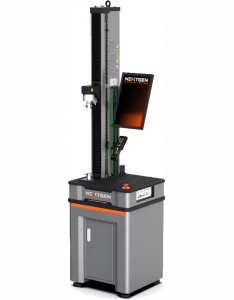
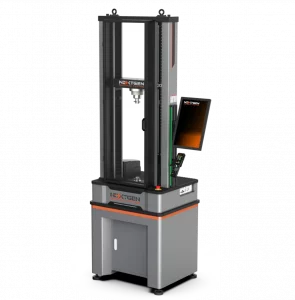
NG-EML Series A – Single Column Bench Top Universal Testing Machine (50 N – 5 kN)

NG-EML Series A – Single Column Bench Top Universal Testing Machine (50 N – 5 kN)

NG-EML Series A is a compact single-column benchtop universal testing machine for low-force tensile, compression, and flexural testing. Covering 50 N to 5 kN capacity options, it is suited for rubber, plastics, adhesives, films, foams, wires, metals, composites, and consumer products. Its electromechanical frame, high-speed servo actuation, GenTest software, and standards support make it practical for R&D and routine QC.

View Product
NG-EML Series B – Dual Column Bench Top Universal Testing Machine (100 N – 10 kN)

NG-EML Series B – Dual Column Bench Top Universal Testing Machine (100 N – 10 kN)

NG-EML Series B is a dual-column benchtop electromechanical universal testing machine for precision testing from 100 N to 10 kN. Built for research and industrial labs, it supports tension, compression, flexural, and component testing of composites, high-strength metals, polymers, films, foams, and rubber. Its compact rigid frame, advanced control accuracy, and GenTest software help deliver repeatable results in limited lab space.

View Product
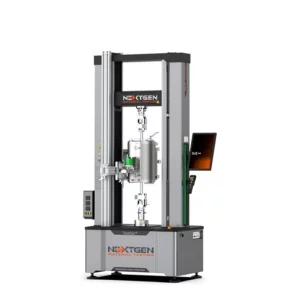
NG-EML Series C – Dual Column Bench Top and Floor Standing Universal Testing Machine (5 kN – 50 kN)

NG-EML Series C – Dual Column Bench Top and Floor Standing Universal Testing Machine (5 kN – 50 kN)

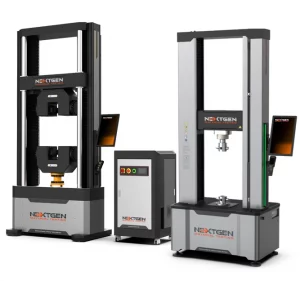
NG-EML Series C is a dual-column electromechanical universal testing machine available in bench-top and floor-standing formats from 5 kN to 50 kN. Built for tension, compression, flexural, shear, and peel testing, it combines Class 0.5 accuracy, a servo direct-drive system, high-rigidity frame, touchscreen control, and GenTest software to support precise testing of metals, composites, rubber, plastics, and polymers.

View Product
NG-EML Series D – Floor Standing Universal Testing Machine (50 kN – 1000 kN)

NG-EML Series D – Floor Standing Universal Testing Machine (50 kN – 1000 kN)

NG-EML Series D is a heavy-duty floor-standing electromechanical universal testing machine for high-capacity tensile, compression, and flexural testing. Available from 50 kN to 1000 kN, it is built for high-strength steels, advanced composites, alloys, and challenging research materials. Its rigid dual-column frame, servo direct-drive system, closed-loop control, safety protections, and GenTest software support stable, accurate testing.

View Product
NG-SHM Series A — Servo-Hydraulic Universal Testing Machines (300 kN – 3000 kN)

NG-SHM Series A — Servo-Hydraulic Universal Testing Machines (300 kN – 3000 kN)

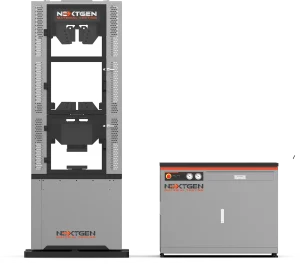
NG-SHM Series A is a high-force servo-hydraulic universal testing machine for static mechanical testing of metals and structural components. Available from 300 kN to 3000 kN, it uses a high-stiffness multi-column frame and dual-zone layout for tensile and compression work. Hydraulic wedge grips, extensometer compatibility, and GenTest software support testing of rebar, fasteners, chains, welds, castings, and large metallic specimens.

View Product
TensileTurn CNC – Industrial Upgrade – Round Tensile Sample Preparation Machine

TensileTurn CNC – Industrial Upgrade – Round Tensile Sample Preparation Machine

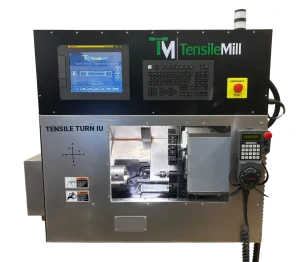
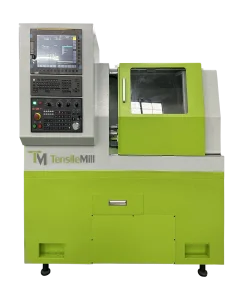
TensileTurn CNC Industrial Upgrade is a compact CNC lathe for preparing standardized round tensile specimens in laboratory and production environments. Guided TensileSoft software lets operators select ASTM E8, ASTM B557, ISO, or DIN specimen profiles or enter custom dimensions. It machines round, square, or irregular stock into round bars, threaded tensile specimens, fatigue bars, and button-head samples while improving repeatability and turnaround.

View Product
TensileMill CNC XL – Flat Tensile Specimen Preparation Machine

TensileMill CNC XL – Flat Tensile Specimen Preparation Machine

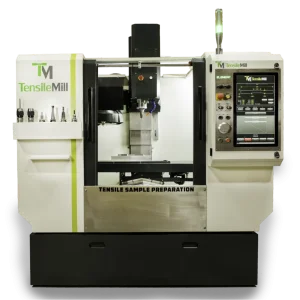
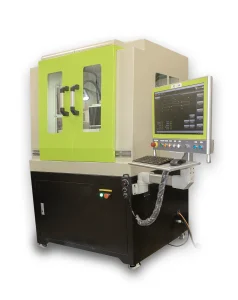
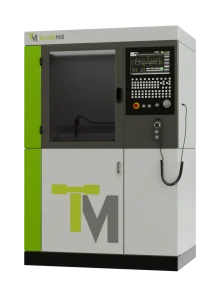
TensileMill CNC XL is a high-capacity flat tensile specimen preparation machine for laboratories and production floors handling larger or tougher materials. It combines extended table travel, increased spindle power, precision servo motors, Mach4-based control, and the TensileSoft interface to machine ASTM E8, ASTM A370, ISO 6892-1, and DIN 50125 specimens with repeatable dimensional accuracy, faster turnaround, and reduced outsourcing.

View Product
TensileMill CNC MINI – Compact Flat Tensile Specimen Preparation System

TensileMill CNC MINI – Compact Flat Tensile Specimen Preparation System

TensileMill CNC MINI is a compact flat tensile specimen preparation system for laboratories that need in-house CNC machining without a large industrial footprint. Built around a heavy cast-iron frame, smooth linear rails, high-powered servos, a 24,000 rpm ISO20 spindle, and guided TensileSoft/Carbon software, it prepares ASTM, ISO, DIN, and JIS-style specimens with repeatable geometry for metals, composites, and polymers.

View Product
TensileTurn CNC – Classic Upgrade – Round Tensile Specimen Preparation Machine

TensileTurn CNC – Classic Upgrade – Round Tensile Specimen Preparation Machine

TensileTurn CNC Classic Upgrade is a compact CNC lathe for accurate, repeatable preparation of round tensile specimens. It supports specimen diameters up to 1.5 inches, materials up to 55 HRC, and multi-sample preparation with a triple clamping fixture. Touchscreen-guided TensileSoft workflows, standard specimen libraries, and full CNC access help labs reduce outsourcing and maintain consistent geometry.

View Product
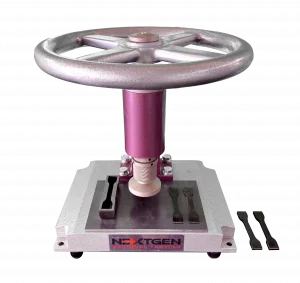
NG-T-Press M Series – Manual Cutting Press System for Rubber Tensile Specimens

NG-T-Press M Series – Manual Cutting Press System for Rubber Tensile Specimens

NG-T-Press M Series is a compact manual cutting press for preparing rubber, tape, and specialty material specimens for tensile and mechanical testing. With optional knives for standards such as ASTM D412, ASTM E8, ASTM B557, and ASTM A370, plus 30 kN punching force, quiet operation, and a 25 mm stroke, it helps labs create accurate, repeatable test samples with minimal setup.

View Product

Snubbing Grips for Wire and Cable Tensile Testing

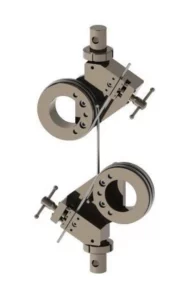
Snubbing grips, also known as capstan grips, are designed for tensile testing of wires, cables, ropes, textile strips, and geogrids that can slip or break in standard clamps. By wrapping the specimen around curved surfaces, they increase friction and reduce grip-end failures. These fixtures help laboratories achieve safer, more repeatable axial loading for high-strength or flexible materials.

View Product

Pneumatic Grips for Fast and Repeatable Clamping

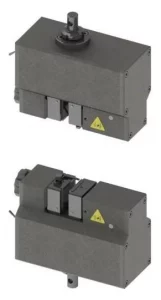
Pneumatic grips provide fast, repeatable air-actuated clamping for universal testing machines in high-throughput tensile and compression workflows. Designed for wires, composites, polymers, films, fabrics, and other materials, they apply uniform gripping pressure while reducing operator fatigue and sample loading time. Side-action, wedge-action, and snubbing configurations, plus interchangeable jaw faces, support secure holding across varied specimen geometries and standards.

View Product

Wedge Tensile Grips for High-Load Metal and Composite Testing

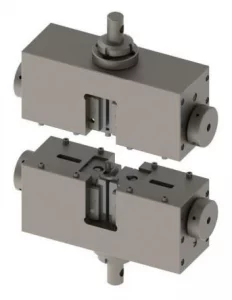
Wedge tensile grips are built for high-load tensile testing of flat and round specimens made from metals, composites, and plastics. Their wedge-action mechanism increases gripping pressure as tensile force rises, helping minimize slippage and maintain alignment during demanding tests. Available models support force capacities from lower-force laboratory work up to 300 kN, with interchangeable flat and vee jaw inserts for different specimen sizes.

View Product
Automatic Longitudinal Polisher System for Tensile Specimens – NG-AutoPol

Automatic Longitudinal Polisher System for Tensile Specimens – NG-AutoPol

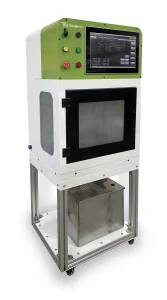
NG-AutoPol is an automatic longitudinal polishing system for metallic tensile and fatigue specimens. It removes machining marks, grinding stress, and residual surface stress after turning or milling, producing a uniform low-stress finish along the specimen axis. Touchscreen control, interchangeable fixtures, adjustable 5–50 N force, 10–100 mm/s speed, multi-grit automation, and ASTM E8, ASTM E466, ASTM E606, EN 6072, and NADCAP-ready workflows support repeatable preparation.

View Product
TensileMill CNC Classic Upgrade – Flat Tensile and Charpy/Izod Impact Specimen Preparation System

TensileMill CNC Classic Upgrade – Flat Tensile and Charpy/Izod Impact Specimen Preparation System

TensileMill CNC Classic Upgrade is a hybrid CNC specimen preparation system for machining flat tensile and Charpy/Izod impact specimens in-house. It combines TensileSoft™ guided software with a FANUC controller, standardized geometry templates, rigid cast-iron construction, and a servo-driven spindle. Support for ASTM E8, ASTM E23, ISO 6892-1, DIN 50125, and JIS Z2201 helps labs produce repeatable test-ready specimens.

View Product
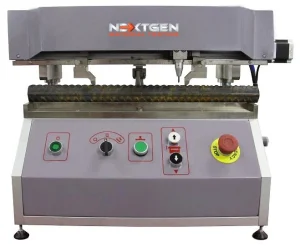
TensileMill CNC MICRO – Compact Flat Tensile & Impact Specimen Preparation Machine

TensileMill CNC MICRO – Compact Flat Tensile & Impact Specimen Preparation Machine

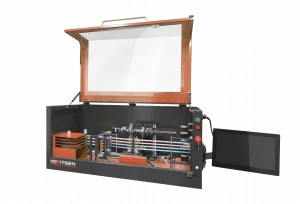
TensileMill CNC MICRO is a compact 2-axis machine for preparing flat tensile and impact specimens in-house. Designed for metals, plastics, and composites, it supports standard and custom specimen geometries for QC, R&D, product development, and material qualification. Touchscreen-guided operation, a clean enclosed layout, and dedicated specimen-preparation workflow help non-machinists produce repeatable samples without relying on a full CNC shop.

View Product
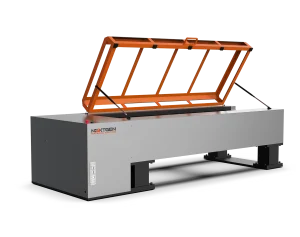
NG-EML Series H Horizontal Universal Testing Machines

NG-EML Series H Horizontal Universal Testing Machines

NG-EML Series H is a horizontal universal testing machine line for tensile, proof load, elongation, and breaking force testing of long or difficult-to-handle specimens. The horizontal frame provides better access and support for cables, wire ropes, chains, shackles, steel strands, and finished metal assemblies, helping laboratories perform stable, repeatable high-force testing when a standard vertical UTM is not practical.

View Product