Non-destructive material testing is becoming increasingly prevalent in a number of industries. Its advantages, including accuracy, efficiency, and the ability to assess material properties without damage, make it a preferred method among researchers, engineers, and quality control professionals. This allows critical components to retain their structural integrity while still undergoing rigorous evaluation.
One of the key instruments used in non-destructive hardness testing is the portable Leeb rebound hardness tester. This device provides a convenient and efficient solution to measuring metal hardness, offering an alternative to traditional stationary testing methods. Designed for ease of use and portability, it allows hardness measurements to be performed directly on-site, therefore requiring no sample extraction or laboratory testing.
In this article, we will introduce our NG – LeebGen 3000 – Leeb Rebound Portable Hardness Tester, discussing its features, working principles, and key advantages. The discussion will focus on its primary functions, technical features, and the range of impact devices available for different applications. Additionally, we will explore its role in modern non-destructive hardness testing and its practical benefits in a number of different fields.
Understanding the Leeb Rebound Portable Hardness Tester
Before getting into the details of this equipment it would be beneficial to have a basic understanding of the Leeb rebound portable hardness tester, its role and principle behind it, as well as the applications for which it is used.
What Is a Leeb Rebound Portable Hardness Tester?
A Leeb rebound portable hardness tester is a non-destructive tool used to measure metallic materials’ hardness based on the Leeb rebound method. First introduced in 1975 by Leeb and Brandestini, this testing technique was developed as a portable alternative to traditional hardness testers such as Rockwell, Brinell, and Vickers, which require large benchtop machines and prepared samples.

The core principle of this method is that the hardness of a material is determined by measuring the energy loss of an impact body after it collides with the test surface. Harder materials will cause more rebound velocity, while softer materials will produce lower rebound. The device records these values and converts them into hardness readings across multiple scales, including Leeb (HL), Rockwell (HRC), Brinell (HB), Vickers (HV), and Shore (HS).
Leeb rebound testers are known for their portability and efficiency. Unlike conventional hardness testing methods that require stationary setups, these devices are compact, lightweight, and can be used in numerous positions—vertical, horizontal, or inclined—without affecting accuracy. This flexibility allows for on-site hardness testing of large, assembled, or irregularly shaped metal structures, reducing laboratory time and cost.
How Does the Leeb Rebound Method Work?
The Leeb rebound method operates on the dynamic impact principle. The process follows these steps:
-
An impact device propels a small striker (impact body) toward the test material using a spring mechanism.
-
The impact body strikes the surface, causing plastic deformation in the material.
-
The tester measures velocity before and after impact to determine energy loss.
-
The hardness value is calculated based on the ratio of rebound velocity to impact velocity.
-
The device converts the measurement into standard hardness scales, such as HL, HRC, HB, HV, or HS, depending on user settings.
One of the key advantages of this method is its ability to measure hardness in any orientation—whether testing a flat, cylindrical, or angled surface, the results remain highly accurate due to the device’s automatic angle compensation.
Applications of Leeb Rebound Portable Hardness Testers
Leeb rebound portable hardness testers are commonly used in industrial environments requiring fast, reliable measurements of hardness. The most common applications include:
-
Large and Heavy Workpieces – Suitable for testing engine blocks, forgings, rollers, and castings, where conventional hardness testers would be impractical.
-
Installed Machinery and Assemblies – Enables hardness testing of bearings, gears, and mechanical components without disassembly.
-
Material Verification – Used in warehouses, manufacturing plants, and metalworking facilities to classify and verify material hardness before processing.
-
Quality Control – Integrated into production lines for checking batch consistency in mass-produced metal components.
Its non-destructive nature makes Leeb rebound tester a valuable tool for preventive maintenance, failure analysis, and rapid material inspection in an array of industries, including aerospace, automotive, construction, and heavy machinery manufacturing.
Introducing the NG – LeebGen 3000 Leeb Rebound Portable Hardness Tester
Overview of NG – LeebGen 3000
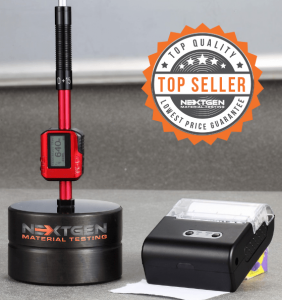 The NG – LeebGen 3000 is a high-precision portable hardness tester developed for efficient, non-destructive metal hardness measurement in industrial and field environments. Developed in accordance with the latest industry standards, this device provides exceptional accuracy, ease of use, and a robust feature set, making it an excellent alternative to stationary hardness testers such as Vickers, Brinell, and Rockwell.
With its compact and ergonomic design, the LeebGen 3000 enables on-site hardness testing without sample preparation, offering a cost-effective and time-saving solution for quality control professionals. The integration of advanced micro-electronic technology guarantees precise, repeatable hardness measurements, while its 360° automatic angle compensation allows testing in any direction without affecting accuracy.
Key Features and Functional Capabilities Leeb Rebound Tester
The NG – LeebGen 3000 is engineered to enhance hardness testing efficiency and reliability by incorporating the following advanced functionalities:
-
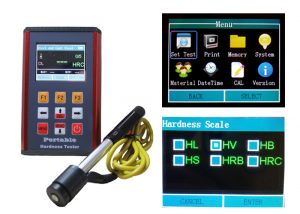
High-Resolution LCD Display – Equipped with a large, high-contrast screen, the device provides clear readability in many lighting conditions, allowing for a smooth user experience in laboratory and field applications.
-
Self-Contained Universal D Impact Device – Unlike many portable hardness testers, the LeebGen 3000 eliminates external cables, integrating a built-in impact direction sensor for enhanced mobility and accuracy.
-
Multi-Directional Testing with 360° Angle Adjustment – The device compensates for testing position variations, offering precise results within a ±4HL accuracy range, regardless of impact direction.
-
Versatile Hardness Scale Conversion – Displays hardness values for multiple internationally recognized scales, including Rockwell, Brinell, Vickers, Knoop, and Shore, allowing compatibility with diverse industry standards.
-
Easy Data Management – Features USB connectivity for data transfer and reporting, while internal memory storage enables users to log and retrieve testing records for quality control tracking.
-
Rechargeable Power System – The LeebGen 3000 operates on a USB-rechargeable battery, offering extended usage for field applications without frequent power replacements.
-
Wireless Bluetooth Mini Printer – Comes standard with a Bluetooth-enabled printer, allowing immediate documentation of test results, and simplifying manual data recording.
-
Intelligent Sleep Mode & Power Efficiency – An automated sleep function extends battery life by reducing power consumption during inactivity, optimizing energy efficiency for prolonged use.
-
User-Friendly Calibration System – This device allows easy and precise calibration, making it simple to set up and adjust testing parameters without requiring complex instruction.
Compliance with International Hardness Testing Standards
The NG – LeebGen 3000 is engineered to comply with 3 key international standards for portable hardness testing: ISO 18625, ASTM A956, and JIS B7731. Let us take a closer look at them.
ISO 18625 – International Standard for Leeb Hardness Testing
The ISO 18625 standard, established by the International Organization for Standardization (ISO), sets the general principles and methodology for Leeb rebound hardness testing. It defines impact device characteristics, test material requirements, and calibration protocols, making sure that hardness measurements are performed uniformly and accurately for all applications. This standard is widely accepted in the manufacturing and metalworking industries, where precise hardness evaluation is critical for quality control and compliance.
ASTM A956 – American Standard for Portable Hardness Testing
Developed by the American Society for Testing and Materials (ASTM), ASTM A956 is the primary standard for Leeb rebound hardness testing in the United States. It provides detailed procedural guidelines, including impact energy specifications, conversion chart validation, and material classification criteria. One of its unique aspects is its focus on correlating Leeb hardness values (HL) with traditional hardness scales (Rockwell, Brinell, and Vickers), allowing smooth integration with existing industry testing methods. ASTM A956 is commonly used in metallurgy, heavy machinery, and structural engineering, where hardness verification is necessary for safety and durability assessments.
JIS B7731 – Japanese Standard for Hardness Measurement
The Japanese Industrial Standard (JIS) B7731 defines the technical specifications and operational guidelines for Leeb rebound hardness testers used in Japan. It focuses on testing precision, device calibration, and performance validation so that measurements remain highly consistent and repeatable under changing environmental conditions. Moreover, unlike other standards, JIS B7731 includes specific material-based testing protocols tailored for the automotive, shipbuilding, and precision manufacturing industries, for which strict control of hardness is necessary to maintain the reliability of products.
Impact Devices for the NG – LeebGen 3000
The NG – LeebGen 3000 is compatible with multiple impact devices, each engineered specifically to optimize hardness testing for different materials and testing conditions. These devices vary in impact energy, tip structure, and application range, offering precise and reliable hardness measurements.
D – Universal Impact Device
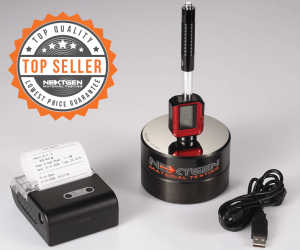 The D impact device is the most popular option for Leeb rebound hardness testing. It is capable of measuring hardness values up to 68 HRC and is designed for general-purpose applications. This device is suitable for several types of metals, including:
-
Steel and cast steel
-
Stainless steel
-
Cast iron
-
Brass and bronze
-
Cast aluminum alloys
-
Wrought copper alloys
DC – Compact Impact Device for Restricted Areas
The DC impact device shares similar hardness testing capabilities with the D device, but it is specifically manufactured for hard-to-reach areas. Its short impact body allows testing inside holes, cylinders, and assembled machine components that conventional testers cannot access. This makes it particularly useful for:
-
Machinery components inside enclosed systems
-
Cylindrical surfaces with limited access
-
Structural assemblies with internal hardness testing need
D+15 – Extended Impact Device for Indented Surfaces
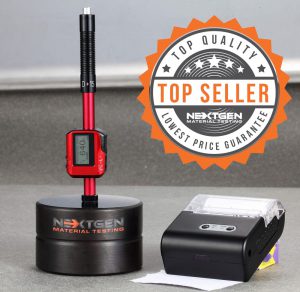 The D+15 impact device functions similarly to the D and DC devices but features a longer impact body and a raised coil position (15mm or 0.6 inches). This extended design allows it to test components that have grooves, depressions, or recessed areas that standard impact devices cannot reach. Common applications include:
-
Surfaces with curved or recessed sections
-
Grooved components in mechanical structures
-
Parts requiring deeper indentation testing
DL – Narrow-Tip Impact Device for Small Features
The DL impact device is engineered for testing small and narrow spaces, where conventional impact devices may be too large. While it shares similar hardness range capabilities (up to 68 HRC) with the D+15, its narrower tip allows for precision testing in:
-
Drill holes
-
Gears with small teeth
-
Deep grooves and recesses in metal components
G – High-Energy Impact Device for Coarse Structures
The G impact device delivers higher impact energy, approximately 9 times greater than the D impact device. This allows it to test harder and rougher surfaces, making it suitable for coarse microstructures and heavy industrial materials. Unlike other impact devices, it does not require as smooth a surface finish, providing more accurate readings on:
-
Cast aluminum and cast steel
-
Large forgings
-
Heavy-duty castings
-
Coarse-grained metals that standard impact devices struggle with
C – Low-Energy Impact Device for Sensitive Materials
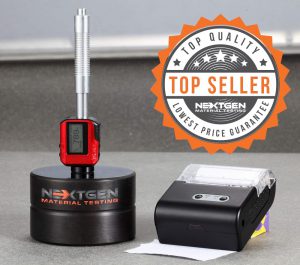 The C impact device features reduced impact energy – about 25% lower than the D impact device. As a result, it is ideal for thin coatings, delicate materials, and components where minimal indentation is required. It is best suited to:
-
Case hardness depth testing
-
Coatings with thicknesses as low as 0.1 inches (0.3mm)
-
Impact-sensitive materials require fine measurement
-
Cold work tool steels and thin-cast aluminum alloys
Choosing the Right Impact Device
As each impact device is optimized for specific testing environments, the NG – LeebGen 3000 can be used for a variety of industrial hardness testing applications. The availability of multiple impact devices increases testing flexibility, precision, and efficiency regardless of whether the testing is performed on large heavy workpieces, fine mechanical components, or coatings.
Final Thoughts on the NG – LeebGen 3000 and Its Capabilities
The NG – LeebGen 3000 Leeb rebound portable hardness tester is a highly advanced, precise, and highly adaptable tool for non-destructive metal hardness testing in industrial and field environments. Its portable design, 360-degree angle adjustment, multi-scale hardness conversion, and impact device compatibility provide the ideal solution for quality control, maintenance inspections, and material verification in a variety of sectors.
Complying with ISO 18625, ASTM A956, and JIS B7731, the LeebGen 3000 complies with global hardness testing standards. The range of impact devices allow testing coarse castings or fine-coated surfaces.
For professionals seeking an efficient, easy-to-use, and reliable portable hardness tester, the NG – LeebGen 3000 provides cutting-edge technology with practical usability. Its data management capabilities, Bluetooth-enabled printer, and energy-efficient design guarantee a smooth testing experience, even under the most demanding conditions.
We at NextGen Material Testing are here to help you with advanced material testing equipment. If you need assistance, have additional questions, or require more specific information, please do not hesitate to contact us directly or through an online quote. Our team will make certain that you have access to all the resources required to perform a hardness test that is accurate and efficient.
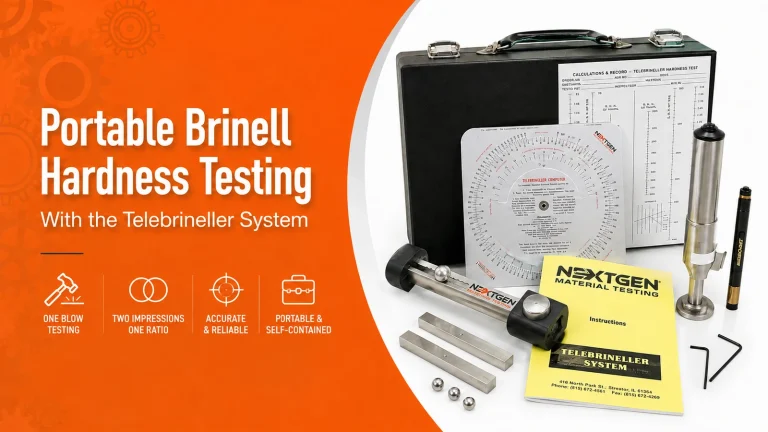 Portable Brinell Hardness Testing With the Telebrineller SystemHardness on a pressure vessel weld, a length of track or a mill housing has to be verified where the part already sits. Nobody is cutting a coupon out of a finished fabrication to satisfy a...Read the articleIn the Field or on the Go: Introducing the Portable Telebrineller Hardness TesterBrinell Hardness tests typically take place in a single area: wherever your hardness testing system is located. In other words, you bring the specimen to the machine. But what if you could bring the machine to the specimen? Thanks to the portable Telebrineller hardness tester, now you can. Whether you're in the field, a different part of your plant, or visiting another lab, the Telebrineller instrument offers completely mobile Brinell hardness tests with unparalleled convenience and accuracy - within plus or minus 2% of the BHN on the end of the NIST-certified test bars. In this post, we'll examine a few of the main features of the Telebrineller, including ease of operation, test accuracy, and what additional components you may wish to use during...Read the articleUltrasonic Hardness Tester – Your Best Hardness Testing SolutionA hardness tester comes in two forms. The first one is the bench hardness tester. The other is the portable hardness tester. This guide will tell you more about the UCI hardness tester. How Does the Ultrasonic Hardness Tester Work? A UCI portable hardness tester can quickly and easily detect and gauge the hardness of various metals with no damage. This tool comes with high speed and precision. It doesn’t have an indentation. A hardness tester uses a solo chip technology and cutting-edge sensing system that makes it better compared to typical ultrasonic hardness testers in structure and function. You can use an ultrasonic portable hardness tester to know the hardness of various materials like metal foil and metal thin layers like carburizing layer,...Read the articleThe Technological Advantages of Ultrasonic Hardness Tester to Oil Industries and Large Pipe ManufacturersLarge-scale industries require various tests on their components to regulate the condition and stability of the whole system. Furthermore, these tests require large parameters, tools and a league of experts who can interpret all those data accumulated from these procedures. One such test that is necessary is the hardness test. The traditional hardness test for a certain material may be a drawback for large-scale production plants because it demands high amount of force in the operation. It may cost the owners an inefficient price to pay just to satisfy the test runs. And this is where innovation takes place. The ultrasonic hardness tester, a device that uses the ultrasonic contact impedance method which relies on the nature of high frequency sound...Read the articleAffordable Brinell Hardness Testing SystemThere is an ever-present need for reliable yet affordable material testing equipment. In particular, this is true for hardness testing, since accurate measurements of hardness are crucial to determining how durable and strong a material will be in the future. Regardless of whether you are testing metals, plastics, or other materials, the precision and consistency of your hardness tester can have a significant impact on the quality of the results you receive and, as a consequence, your products' safety and performance. NextGen Material Testing offers the best Brinell hardness testing systems available in the market today. Our product line includes a number of Brinell solutions for quality control that are affordable for laboratories of all sizes and...Read the articleLeeb Rebound Portable Hardness TesterDeveloped in 1957 the Leeb Rebound Testing method provides a portable solution for metal testing. By offering a Non-Destructive Testing (NDT) advantage, the Leeb Rebound Test stands apart from the traditional laboratory hardness testers. The Leeb hardness testing scale derives your hardness value by calculating the energy loss of a defined impact body after impacting a metal sample. The Leeb test takes place in a matter of seconds and is a quick, economic solution for hardness testing. A D Impact device is most commonly used as a Universal hardness testing solution. Typical applications for a D Impact device include the testing of Steel and cast steel, cast iron, stainless steel, bronze, cast aluminum alloys, brass, wrought copper alloys and more....Read the articleTelebrineller Portable Brinell Type Hardness TesterTelebrineller is a portable system designed primarily for measuring Brinell hardness anywhere in the field, the plant or the laboratory. A Telebrineller test bar must be selected with a hardness value plus or minus 15% of the specimen’shardness value. Standard Telebrineller Test Bars are guaranteed to have a uniform hardness within plus or minus 2% of the BHN etched on the end of the bar. They are made of various alloys of carbon steel and finish ground to 9/16” square. Low value Telebrineller test bars are also available in Aluminum. The accuracy of any test made with the Telebrineller is dependent upon the relative hardness of the test bar and the test piece. When the Telebrineller is properly used, accuracy of +/- 5% is consistently attainable,...Read the article
Machines Behind This Article
Portable Hardness TestersNG-LeebGen 3000 – Portable Leeb Rebound Hardness TesterLeebGen 3000 is a portable Leeb rebound hardness tester for non-destructive metal hardness measurement in the lab, shop, or field. Designed to support ISO 18625,...View product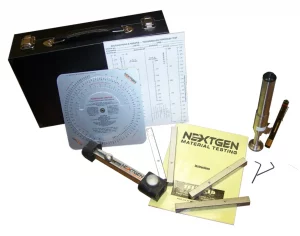 Portable Hardness TestersTelebrineller – Portable Brinell Hardness Testing SystemNextGen Telebrineller is a portable Brinell hardness testing system for field use, welding crews, and QA teams that need fast BHN checks outside a stationary lab....View product
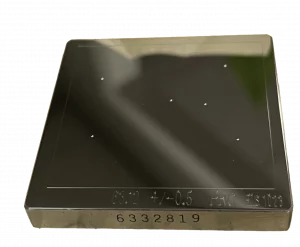 Portable Hardness TestersHardness Test Blocks, Indenters and AccessoriesHardness test blocks, indenters, and accessories support daily verification and reliable operation of metal hardness testing systems. The range includes certified...View product
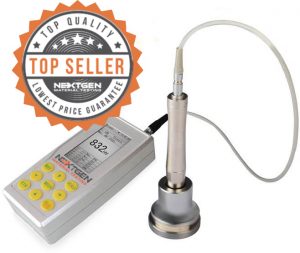 Portable Hardness TestersUH200 – Ultrasonic Contact Impedance Hardness TesterUH200 is a portable ultrasonic contact impedance hardness tester for fast, accurate hardness checks on metals and finished components. Using a 136° Vickers diamond...View product
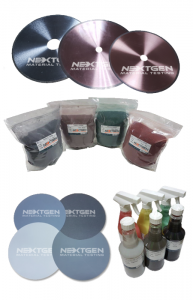 Portable Hardness TestersMetallography ConsumablesMetallography consumables cover the materials needed for sectioning, mounting, grinding, polishing, etching, and cleaning specimens before microscopic examination....View product
 Portable Hardness TestersSurface Roughness TestersNextGen Surface Roughness Testers are portable profilometer-style instruments for measuring surface texture on machined parts and manufactured components. They help...View product