GB/T 1843 is a Chinese national test method for determining the Izod impact strength of plastics using a pendulum impact tester. It is commonly used to compare the impact behavior of rigid plastics and related composites under specified conditioning and test conditions.
Labs and manufacturers use GB/T 1843 for material qualification, incoming inspection, and product QC where impact resistance is a key acceptance property. If you need help aligning sample type, temperature, or notch selection to a product specification, talk with our team.
GB/T 1843-2008 — Plastics — Determination of Izod impact strength
GB/T 1843-2008 is a “method” standard for Izod pendulum impact testing of plastics. It is aligned with ISO 180:2000 (Izod impact strength) and is written to support consistent sample preparation, conditioning, test execution, and reporting for comparable results.
This standard is widely referenced in plastics datasheets and product requirements because it provides a practical, repeatable way to characterize brittleness versus toughness for specified specimen types and notch conditions.
Quick definition
GB/T 1843 defines how to measure the energy absorbed when a pendulum strikes an Izod-mounted plastic specimen, and how to express the result as Izod impact strength for the chosen specimen/notch configuration.
What it measures: Impact energy absorption during fracture (or defined failure modes) under specified conditions.
Typical outputs: Izod impact strength values for notched and/or unnotched specimens, with reported failure type and key test parameters.
What This Standard Covers
GB/T 1843 specifies an Izod pendulum impact method under standard conditions and allows for different specimen types and test conditions chosen based on the material and the notch/specimen configuration.
It applies broadly to rigid plastics, including many thermoplastics and thermosets (filled and reinforced grades), rigid sheets/laminates, and certain fiber-reinforced composites. It is generally not intended for rigid foams or sandwich structures containing foam, and it notes limitations for notched testing with some long-fiber composites and certain liquid-crystal polymer materials.
Key comparability caution: Results from different notch types, specimen dimensions, or specimen preparation routes are not directly comparable unless the full setup is matched.
Why This Standard Matters in Testing
Izod impact testing is often used as a fast screening tool for material changes (resin grade, filler level, process window, conditioning) and for routine QC where a repeatable impact metric is required.
Because impact results are sensitive to factors such as clamping, notch quality, specimen preparation method, conditioning environment, and pendulum capacity/velocity, GB/T 1843 is most valuable when it is used as a controlled, specification-driven test rather than a general “impact resistance” statement.
Practical note: The standard is commonly used for comparison and qualification under defined conditions; it is not intended to be used by itself as a design basis for parts.
Common Materials, Product Types, or Applications Covered
GB/T 1843 is commonly applied to rigid plastic materials and semi-finished forms where Izod impact strength is reported or specified.
- Rigid thermoplastics: Injection-molded or extruded materials (including filled/reinforced grades).
- Rigid thermosets: Molded materials and laminates, including filled/reinforced grades.
- Sheets and laminates: Machined specimens taken from extruded, cast, or laminated sheet products.
- Composites: Certain fiber-reinforced thermoset/thermoplastic composites where Izod testing is specified for a defined specimen orientation and configuration.
Common Test or Verification Workflow
Most GB/T 1843 programs follow a controlled workflow so that notch quality, conditioning, and machine setup do not dominate the result.
Common workflow: Prepare molded or machined specimens (often from standardized multipurpose or bar specimens) → add the specified notch when required → condition specimens in a defined lab atmosphere → verify impact tester condition/settings and select an appropriate pendulum energy range → test multiple replicates → calculate and report Izod impact strength along with specimen configuration, notch type, and observed failure mode.
Lab planning tip: If testing is required at non-ambient temperatures, plan for temperature conditioning and transfer timing so the specimen temperature at impact is consistent.
Equipment Commonly Used for This Standard
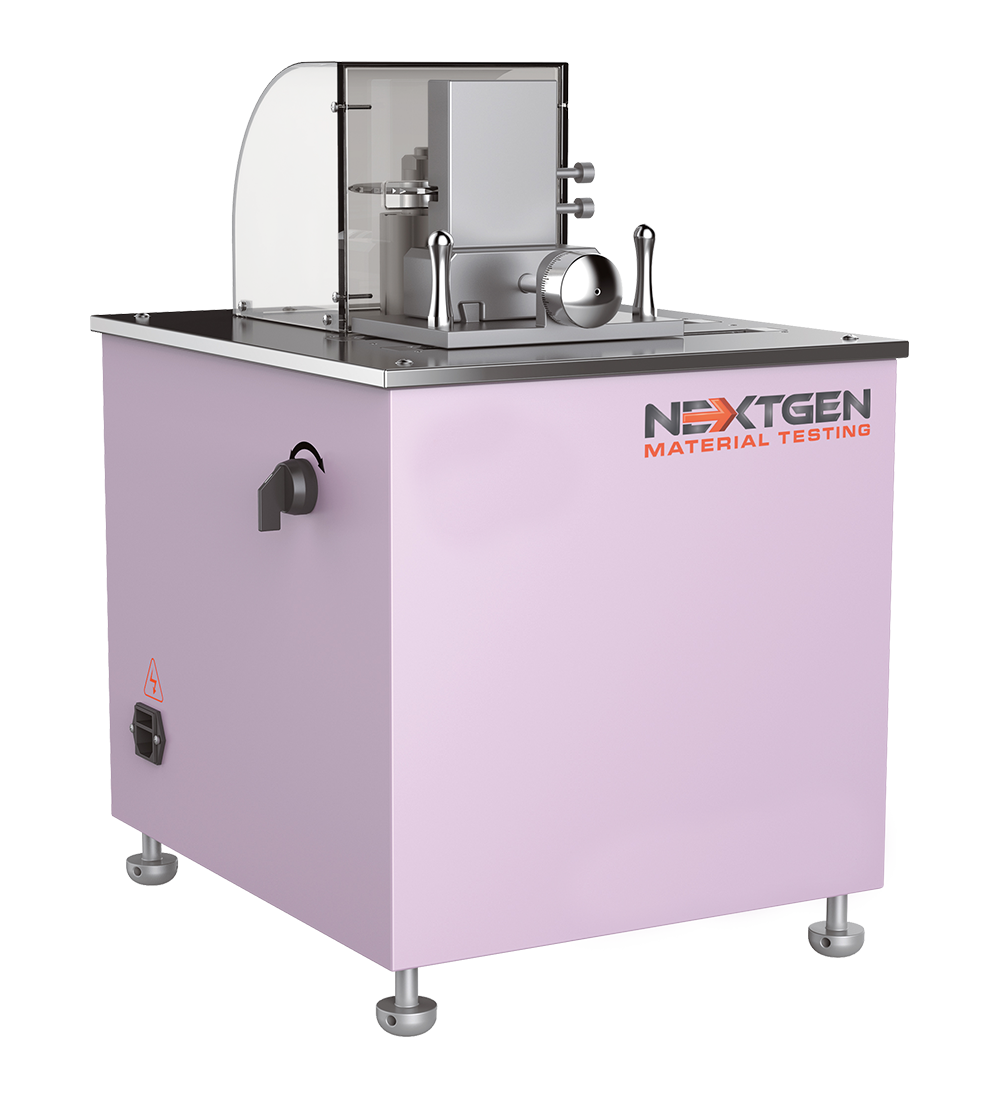
GB/T 1843 is primarily an instrumented workflow centered on a pendulum Izod impact tester, supported by specimen preparation and dimensional/conditioning controls.
Common equipment: Izod pendulum impact testing machine with Izod fixture/vice → suitable pendulums (energy capacities matched to expected absorption range) → notch cutter/notching machine for standardized notches → dimensional measurement tools (e.g., micrometer/gauges) → conditioning environment (standard lab atmosphere control) and, when required, hot/cold conditioning capability.
Configuration sensitivity for quoting: Pendulum capacity range, striker/fixture configuration, clamping approach (including controlled clamping force where needed), and any temperature conditioning accessories should be selected to match the exact specimen type and test conditions cited in your requirement. If you are selecting a new impact system or upgrading pendulums/fixtures, you can request a detailed quote based on your material set and the GB/T 1843 configuration you need to run.
How to Read This Designation or Revision
GB/T 1843 is a recommended (“GB/T”) national standard designation. The “1843” is the standard number, and the “-2008” suffix indicates the published edition year commonly referenced in purchase specs, quality plans, and datasheets.
Revision sensitivity: Impact testing is sensitive to edition-specific details (specimen types, notch definitions, conditioning references, and reporting). When a customer, datasheet, or regulatory document cites GB/T 1843, match the cited edition exactly and document the specimen/notch configuration used.
Related Standards, Methods, or Frameworks
GB/T 1843 is commonly used alongside supporting documents for conditioning, specimen preparation, and impact-machine verification, as well as the aligned international method.
- ISO 180: International Izod impact strength method aligned with GB/T 1843-2008.
- GB/T 2918: Standard atmospheres for conditioning and testing of plastics (often referenced for specimen conditioning).
- GB/T 11997: Multipurpose test specimens (often used as a source for machined impact bars, depending on program requirements).
- GB/T 21189: Verification of pendulum impact testing machines used for plastics (commonly used to support machine verification practices).
Get help selecting an Izod impact testing setup
If you share your material type, specimen thickness, notch requirement (notched vs. unnotched), and any temperature conditions, we can help you narrow down the right pendulum impact tester configuration and accessories for GB/T 1843 testing. To price a complete system (tester, pendulums, fixtures, and notching tools), request pricing.