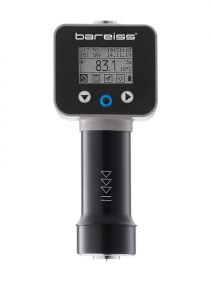
SRIS 0101 is a legacy Japanese rubber-industry standard most commonly referenced when a specification calls for Asker C hardness (C-type durometer hardness) on soft, cellular, or sponge-like materials.
If you are working from a customer drawing or material sheet that cites SRIS 0101 and need help matching the callout to a practical test setup, talk with our team about your material type, thickness, and expected hardness range.
SRIS 0101 (Society of Rubber Industry, Japan) — Asker C hardness
SRIS 0101 is widely used as a reference for measuring hardness with an Asker C type durometer. In practice, SRIS 0101 is typically cited when evaluating indentation hardness on softer elastomers and cellular materials where Shore A or Shore D is not the best fit.
Many buyers encounter SRIS 0101 as a requirement embedded in older Japanese material specifications, supplier datasheets, or internal legacy test procedures.
Quick definition
SRIS 0101 is most commonly used as the standard procedure reference for Asker C durometer hardness (C-type spring durometer hardness) measurements on soft rubber, sponge rubber, and similar materials.
What This Standard Covers
At a practical level, SRIS 0101 is used to define a consistent approach to taking Asker C hardness readings, including how the durometer is applied to the specimen surface and how results are read and recorded.
Because SRIS 0101 is often cited alongside other hardness frameworks (for example, JIS durometer references), the key outcome is a repeatable hardness number on the Asker C scale that can be compared against an acceptance requirement.
Why This Standard Matters in Testing
Soft and cellular elastomers can be sensitive to operator technique, sample support, and time-dependent behavior (creep/relaxation). A cited standard like SRIS 0101 helps ensure that hardness values are taken in a consistent way across suppliers, incoming inspection, and product qualification.
For QA/QC teams, SRIS 0101 is most often used to support incoming-material verification, supplier comparisons, and ongoing conformance checks where hardness is a control characteristic.
Common Materials, Product Types, or Applications Covered
SRIS 0101 callouts are frequently associated with materials that are too soft or too cellular for typical Shore A workflows.
Common examples include:
- Sponge rubber and cellular rubber sheets (e.g., NBR, CR, EPDM sponge)
- Soft urethane elastomers and gel-like damping materials
- Foamed or expanded rubber parts used for sealing, cushioning, vibration isolation, and protective pads
Common Test or Verification Workflow
SRIS 0101 hardness checks are typically run as a quick bench test or inspection step.
Common workflow: Prepare a flat, stable test surface on the specimen; condition samples as required by the controlling specification; apply an Asker C durometer to the surface in the prescribed manner; record hardness readings and report averages as required by the purchasing or product requirement.
For soft or thin materials, the cited procedure or customer requirement may include specific guidance on specimen build-up, support conditions, and reading timing. Those details are important for repeatability and should be matched to the exact requirement being flowed down.
Equipment Commonly Used for This Standard
SRIS 0101 is primarily an equipment-and-technique dependent measurement, so repeatability often improves when the durometer application is controlled.
Common equipment: Asker C durometer (analog or digital), a stable flat anvil/support surface, optional durometer stand or constant-application fixture (to reduce operator-to-operator variation), and verification accessories such as reference blocks or checks used in your quality system.
When quoting or configuring a hardness setup, the main selection variables are the measurement scale (Asker C), how you will control application force and dwell/reading behavior, sample geometry/flatness, and how results must be documented for your QA program.
How to Read This Designation or Revision
SRIS 0101 is commonly written with a space or hyphen (for example, SRIS 0101 or SRIS-0101) and may appear in older documents with a year appended (for example, SRIS 0101-1968).
If a customer document cites SRIS 0101 without an edition, test conditions can still vary depending on the internal procedure being followed (and any linked JIS/ISO/ASTM requirements). For contract-critical work, align the test setup and reporting to the exact edition or controlling customer specification.
Related Standards, Methods, or Frameworks
SRIS 0101 is often mentioned alongside other hardness standards, especially when organizations are mapping Asker hardness scales to broader durometer programs.
Common related reference: JIS K 7312 (Type C) is frequently associated with Asker C hardness testing in Japanese practice.
Discuss SRIS 0101 equipment and setup
If you need an Asker C hardness workflow that matches a customer SRIS 0101 callout (including stand options, verification approach, and reporting expectations), you can request a detailed quote for a configuration aligned to your material type and throughput.