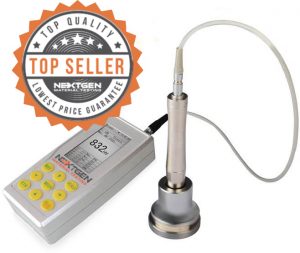
JB/T 9377-2010 is a JB/T (machinery industry) standard that sets technical conditions for ultrasonic hardness testers used with the ultrasonic contact impedance (UCI) approach for metal hardness measurement.
It is typically referenced when you need to purchase, qualify, or verify an ultrasonic hardness tester (instrument requirements, inspection/verification items, and documentation) rather than when you need a full material test method. If you need help matching your requirement to the correct edition and supporting documents, talk with our team.
JB/T 9377-2010 — 超声硬度计 技术条件 (Ultrasonic hardness tester — technical conditions)
JB/T 9377-2010 focuses on the ultrasonic hardness tester itself—what the instrument should be able to do, what should be checked during inspection, and how it should be identified, packaged, and delivered with accompanying technical documentation.
In many procurement and QA/QC workflows, this standard is cited alongside a UCI hardness testing method standard and a calibration/verification reference, so that both the instrument and its measurement results are controlled.
Quick Definition
Document type: Technical conditions / product technical requirements (instrument-focused).
Primary purpose: Define technical requirements and inspection items for ultrasonic hardness testers used for UCI-based hardness determination on metallic materials (commonly expressed in Brinell, Rockwell, and Vickers scales via instrument conversion/indication).
Typical user: Labs, maintenance teams, and QA/QC groups selecting, accepting, and periodically checking portable or bench-capable UCI ultrasonic hardness testers.
What This Standard Covers
JB/T 9377-2010 is concerned with ultrasonic hardness tester design and acceptance expectations, including items such as technical requirements, inspection methods, inspection rules, marking/packaging, and accompanying documents.
Because it is instrument-focused, it is most often used to control equipment suitability and acceptance rather than to define a complete “material test method” workflow by itself.
| Item | JB/T 9377-2010 |
|---|---|
| Standard title | 超声硬度计 技术条件 |
| Publish date | 2010-02-21 |
| Implementation date | 2010-07-01 |
| Revises | JB/T 9377-1999 |
Why This Standard Matters in Testing
Ultrasonic (UCI) hardness testing is commonly chosen when fast, localized hardness checks are needed and conventional bench hardness testing is impractical due to part size, installed condition, or limited access.
When a purchase specification or quality plan cites JB/T 9377-2010, it is usually to ensure the hardness tester meets defined technical and inspection expectations before it is relied on for production decisions, incoming inspection, or field verification work.
Common Materials, Product Types, or Applications Covered
JB/T 9377-2010 is applied to ultrasonic hardness testers used for hardness determination on metallic materials using the UCI principle. In practice, this often includes steel and cast steel components, machined parts, heat-treated surfaces, weld areas, and other metal products where portable hardness checks are valuable.
Because UCI hardness readings are sensitive to surface condition, local microstructure, and proper probe contact, buyers often pair instrument requirements (JB/T 9377-2010) with method guidance and calibration practices appropriate to their material and geometry.
Common Test or Verification Workflow
Common workflow: (1) Confirm the instrument model/probe type is suitable for the part and hardness range, (2) perform setup and calibration checks using appropriate reference blocks, (3) take repeated readings with controlled probe contact, (4) document results and instrument settings, and (5) maintain periodic verification and calibration records.
Where this standard fits: JB/T 9377-2010 is typically used at the equipment acceptance/inspection stage and as a reference for ongoing instrument checks, rather than as the only document defining how to prepare test surfaces or interpret material-specific influences.
Equipment Commonly Used for This Standard
JB/T 9377-2010 most directly points to ultrasonic hardness tester equipment and supporting items needed to keep measurements consistent.
Common equipment: UCI ultrasonic hardness tester (portable main unit), UCI probe(s) suited to the application, probe support stand/fixture when repeatability is critical, and certified hardness reference blocks used for calibration/verification.
Practical purchasing cautions: Probe force class, intended hardness scale outputs (HB/HRC/HV), calibration workflow, and data logging requirements can materially affect instrument selection and day-to-day usability. If you are comparing probes, stands, or verification accessories for a JB/T 9377-2010-driven requirement, you can request a detailed quote for a configuration matched to your application.
How to Read This Designation or Revision
Designation: “JB/T 9377-2010” identifies a JB/T series standard number (9377) with a 2010 edition year.
Revision sensitivity: Equipment acceptance criteria and inspection items can vary by edition. If a contract, drawing, or internal control plan cites JB/T 9377-2010 explicitly, align procurement documents, inspection records, and calibration practices to the same cited edition unless an updated edition is formally accepted by your customer or quality system.
Related Standards, Methods, or Frameworks
JB/T 9377-2010 is commonly encountered alongside UCI hardness testing method documents and calibration/verification references used to control measurement traceability and ongoing instrument performance.
Commonly paired references: GB/T 34205-2017 (metallic materials hardness test using the ultrasonic contact impedance method) and JJF 1436-2013 (calibration specification for ultrasonic hardness testers) are frequently used in the same programs where JB/T 9377-2010 is cited.
Discuss your JB/T 9377-2010 equipment and verification needs
If you need help selecting an ultrasonic hardness tester, probe type, and verification accessories to align with a JB/T 9377-2010 requirement, contact our team with your material type, geometry constraints, target hardness range, and any customer-specified companion standards.