ISO 6892-1:2019 is an International Standard that describes a tensile test method for metallic materials at room temperature and the mechanical properties that can be determined from that test.
If you need help matching grips, extensometry, or control options to the specific product form and properties you need to report, contact our team to discuss your setup.
ISO 6892-1:2019 — Metallic materials — Tensile testing — Part 1: Method of test at room temperature
ISO 6892-1 is used when a buyer, manufacturer, or laboratory needs a standardized way to run uniaxial tensile tests on metals at room temperature for qualification, production control, or comparative material characterization.
Because many metal products are specified and accepted on tensile properties, ISO 6892-1 often drives not only how the test is performed, but also how the test system is configured and checked.
Quick Definition
Document type: Test method (tensile testing at room temperature).
In one sentence: ISO 6892-1 defines how to perform a room-temperature tensile test on metallic materials and determine the tensile properties derived from the force/extension (or stress/strain) response.
Typical outcome: Comparable tensile results for acceptance testing and engineering use when the correct specimen, measurement, and control approach are used.
What This Standard Covers
ISO 6892-1 focuses on tensile testing of metallic materials at room temperature, including the general test approach and the mechanical properties that can be determined from the tensile test.
In practical lab terms, it is commonly used to standardize items such as specimen loading in uniaxial tension, how extension/strain is measured, and how results are derived and reported for a room-temperature test.
Why This Standard Matters in Testing
ISO 6892-1 is widely cited in metals supply chains because tensile properties are frequently used for material certification, incoming inspection, and release of finished goods.
For lab managers and QA/QC teams, the standard is also equipment-significant: obtaining repeatable tensile properties depends on appropriate force measurement capacity, grip selection, alignment, and the right approach to strain measurement and control.
Common Materials, Product Types, or Applications Covered
ISO 6892-1 is used across many metallic materials and forms where room-temperature tensile properties are required.
Common examples: Metallic plate, sheet, strip, bar, rod, wire, and machined tensile specimens taken from metallic products (including welded or heat-treated conditions when tensile verification is required by a product specification).
Common use cases: Mill test verification, supplier acceptance, process change validation, and comparative evaluation of lots, heats, or product conditions.
Common Test or Verification Workflow
Most ISO 6892-1 workflows follow a straightforward tensile sequence, but the details that affect results are often in specimen definition, strain measurement, and control settings.
- Select the applicable specimen type and dimensions required by the product requirement and the standard.
- Prepare and measure the specimen (dimensions used for calculations).
- Install the specimen in appropriate tensile grips and set up the chosen strain/extension measurement method.
- Run the tensile test at room temperature using the required control approach and record force and extension/strain.
- Calculate and report the required tensile properties and retain the test record per internal or contractual requirements.
Equipment Commonly Used for This Standard
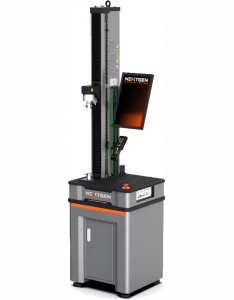
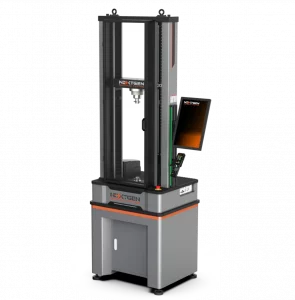
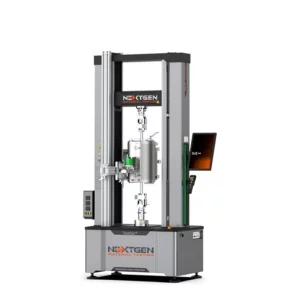
ISO 6892-1 is typically performed on a universal testing machine configured for uniaxial tensile loading with suitable gripping and strain measurement.
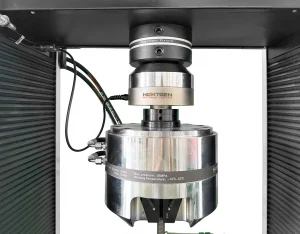
Common equipment: Universal testing machine (UTM) with appropriate load capacity, force transducer/load cell, tensile grips matched to specimen geometry (e.g., wedge grips, hydraulic grips, or specialized fixtures), and data acquisition/control software.
Strain/extension measurement: Clip-on extensometers are commonly used when accurate strain-based properties are required; non-contact extensometry may be used where appropriate for the specimen and measurement needs.
Practical selection note: The right configuration depends heavily on specimen form (flat vs. round, thin sheet vs. heavy section), expected strength level, and whether the work requires strain measurement over a defined gauge length versus crosshead displacement only.
How to Read This Designation or Revision
ISO tensile standards in this family use a part-based structure.
ISO 6892-1 identifies Part 1 of ISO 6892, which addresses the tensile test method at room temperature.
ISO 6892-1:2019 indicates the edition published in 2019. When a purchase order, drawing, or contract cites ISO 6892-1, the exact year matters because requirements and guidance can differ by edition.
Status note for edition matching: ISO 6892-1:2019 has been reviewed and confirmed by ISO (confirmed in 2025), so it is commonly treated as the current reference unless a customer or product specification mandates another edition.
Related Standards, Methods, or Frameworks
Depending on the testing temperature and contractual requirements, other parts of the ISO 6892 series may be referenced alongside ISO 6892-1.
- ISO 6892-2: Tensile testing at temperatures higher than room temperature (elevated temperature).
- ISO 6892-3: Tensile testing at low temperature (cryogenic range down to very low temperatures as specified in the standard).
- ISO 6892-4: Tensile testing in liquid helium (4 K testing) for applications requiring specialized cryogenic apparatus.
Many tensile programs also require separate verification and calibration practices for the testing machine and any extensometry used, especially when results are used for acceptance decisions.
Get help configuring ISO 6892-1 tensile testing
If you are specifying a new tensile system or upgrading grips and extensometry for ISO 6892-1 work, you can request a detailed quote with the capacity range, gripping style, and strain measurement options matched to your specimens and reporting needs.