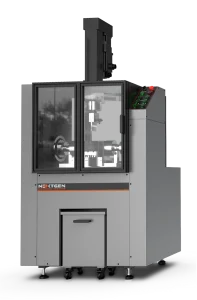
GB/T 232 is a recommended Chinese national test method that defines how to perform a bend test on metallic material test pieces to evaluate bending ductility and surface soundness under plastic deformation.
Because bend testing is commonly referenced by steel and metal product specifications (with acceptance often based on a required bend angle or former/mandrel diameter and a “no cracking” type evaluation), it is important to match the fixture style and test parameters to the exact cited product standard and GB/T 232 edition. If you want help mapping your material form to the right bend setup, talk with our team.
GB/T 232-2024 — Metallic materials—Bend testing method
GB/T 232-2024 is the current “in force” edition of GB/T 232 and is used to standardize bend testing for metallic materials when a product or qualification requirement calls up this method.
It is typically used as a workmanship and ductility check rather than a strength test, helping teams screen for cracking, lack of soundness, or insufficient formability during bending.
Quick Definition
GB/T 232 specifies a bend testing method for metallic materials where a test piece is bent using a defined device and conditions, then evaluated to determine whether it can undergo the required plastic deformation in bending.
What This Standard Covers
GB/T 232-2024 defines a method for determining the ability of metallic materials to undergo plastic deformation in bending.
It applies to test pieces taken from metallic products as specified in the relevant product standard, and it does not apply to certain materials or products where other dedicated standards are used (for example, full-section tube tests or welded joints when other bend-test standards are specified).
Why This Standard Matters in Testing
Bend testing is widely used for production control and qualification because it can reveal sensitivity to cracking during forming, rolling, bending, or installation-type deformation.
For many metal products, passing a bend test is a practical “go/no-go” requirement tied to process stability, heat treatment condition, and surface quality—often influencing release decisions and supplier approvals.
Common Materials, Product Types, or Applications Covered
GB/T 232 is used across metallic materials when a product standard requires a bend ductility check using a standardized bend method.
- Steel and other metal plate/strip and flat specimens (test pieces defined by the product standard)
- Bars/sections where bend testing is specified via extracted test pieces
- Forgings, castings, and semi-finished products when bend testing is required by the governing product requirement
Product standards often define sampling location/orientation, acceptance criteria, and the target bend condition (angle, former diameter, or bend-to-parallel/close requirement).
Common Test or Verification Workflow
GB/T 232 bend testing is usually run as part of incoming inspection, process validation, or final release testing for metal products.
Typical workflow: Prepare the test piece per the relevant product standard → select the bend device configuration and former/mandrel setup → bend the specimen to the required condition (angle or bend completion condition) → inspect the bend region per the applicable requirement and record results in the test report.
In practice, most workflow differences come from the referenced product standard (specimen geometry, bend direction, required bend severity, and how cracking is defined and evaluated).
Equipment Commonly Used for This Standard
GB/T 232 includes requirements around bend test devices and the way bending is applied; equipment selection should focus on applying controlled bending with the correct fixture geometry and sufficient capacity.
Common equipment: Bend test fixture/devices with supports and a former (mandrel), V-block bend fixtures, clamp-type bend fixtures, and associated formers/rollers sized to the required bend severity.
Common test frame options: A universal testing machine (UTM) or a dedicated bend test machine capable of applying the required force smoothly while accommodating the required fixture style and specimen dimensions.
Practical quoting details: Specimen thickness/width, target former (mandrel) diameter or bend angle requirement, fixture style (supports + former vs V-block vs clamp), and whether the product requirement calls for any specific inspection aid or reporting detail.
How to Read This Designation or Revision
Standard number format: “GB/T 232-2024” identifies a recommended (GB/T) national standard, number 232, issued in 2024.
Current edition: GB/T 232-2024 is listed as the current (现行) edition with an implementation date of 2024-10-01.
Older editions: GB/T 232-2010 is listed as abolished/obsolete (废止). When requirements are contract- or specification-driven, always match the edition cited by the customer or the governing product standard.
Related Standards, Methods, or Frameworks
GB/T 232 is frequently referenced by metal product standards that define acceptance criteria and sampling details for bend testing. In some cases, other dedicated bend-test standards may be required for specific product forms (such as certain tubes or welded joints), and those would take precedence when explicitly cited.
If your requirement references multiple standards (product specification + GB/T 232), make sure the specimen definition and acceptance criteria come from the product specification while the bend execution follows GB/T 232.
Get help configuring bend test equipment for GB/T 232
If you are selecting a UTM bend fixture, mandrels/formers, or a dedicated bend test setup to match a GB/T 232 callout (including the correct fixture style and specimen envelope), you can request a detailed quote for an equipment package aligned to your lab’s workflow.