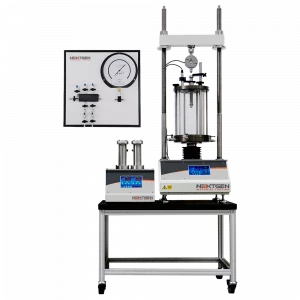
ASTM D1883-07 is a laboratory test method for determining California Bearing Ratio (CBR) from compacted soil (and similar pavement-layer) specimens. It is commonly used to support flexible pavement and airfield pavement design decisions where a CBR value is required for subgrade, subbase, or base course materials.
If you need help confirming whether D1883-07 is the right edition for your project specifications (or how it relates to newer revisions), talk with our team and we’ll help you align the standard, equipment configuration, and reporting expectations.
ASTM D1883-07 Standard Test Method for CBR (California Bearing Ratio) of Laboratory-Compacted Soils
ASTM D1883-07 is a standardized approach to preparing laboratory-compacted specimens and measuring resistance to penetration to generate a CBR value. The standard also sets expectations around specimen conditioning (including soaking unless otherwise specified) and how compaction targets are selected (such as optimum moisture content or a specified range of water contents at a specified dry unit weight).
Quick Definition
ASTM D1883-07: A lab test method that determines CBR for pavement-layer materials (subgrade/subbase/base) using laboratory-compacted specimens, primarily intended for materials with a maximum particle size under 19 mm (3/4 in.).
What This Standard Covers
ASTM D1883-07 covers laboratory determination of CBR for pavement subgrade, subbase, and base course materials using compacted specimens.
- Primary intent: Evaluate strength for materials with maximum particle size less than 19 mm (3/4 in.).
- Oversize particles: Provides an approach to modify gradation when the original material includes particles larger than 19 mm, while keeping the overall gravel fraction concept consistent for the prepared test material.
- Compaction targets: Supports determining CBR at optimum water content or across a water-content range, at a specified dry unit weight (commonly expressed relative to a maximum dry unit weight from a referenced compaction method).
- Soaking: Unless the requesting agency specifies otherwise (or it is shown to have no effect for the material), specimens are soaked prior to penetration.
Why This Standard Matters in Testing
CBR remains a widely specified index for pavement design and material acceptance in transportation and civil works. Using a consistent laboratory method helps teams compare candidate borrow sources, evaluate stabilization or blending approaches, and document compliance to project requirements for pavement support layers.
This standard is also sensitive to how the specimen is prepared (compaction method, target density, and water content) and conditioned (including soaking), so aligning the equipment setup and workflow to the exact citation (D1883-07) can materially affect comparability of results.
Common Materials, Product Types, or Applications Covered
ASTM D1883-07 is most often applied to geomaterials used in pavement and earthwork layers.
- Subgrade soils used below pavement structures
- Unbound granular subbase and base course materials
- Engineered fills and select materials used for roadway and airfield pavement support layers
- Materials that may require gradation modification when oversize particles exceed the typical CBR apparatus limits
Common Test or Verification Workflow
A typical ASTM D1883-07 workflow connects compaction control with a penetration measurement to produce a CBR value.
Common workflow steps: Select compaction method and targets (density and water content), prepare laboratory-compacted specimens, condition specimens (often including soaking unless specified otherwise), perform penetration testing to obtain load-versus-penetration response, and report CBR for the requested condition(s).
Where D1883-07 fits: It is commonly run alongside a laboratory compaction test method (to establish or reference compaction conditions) and may be paired with field CBR when in-place verification is needed.
Equipment Commonly Used for This Standard
ASTM D1883-07 is an equipment-driven method: repeatability depends on controlled specimen preparation and a stable, well-instrumented penetration system.
- CBR loading / penetration frame: A load frame capable of applying controlled penetration while measuring force and penetration (commonly via load measurement and displacement indication).
- CBR specimen molds and accessories: Mold(s), base plates, spacer disks, and related hardware suitable for compacting and testing specimens in the CBR configuration.
- Surcharge weights and seating/loading components: Masses and fixtures used to represent surcharge conditions during penetration testing.
- Soaking / conditioning equipment: Containers or tanks for soaking specimens when required, plus tools for handling and measurement associated with swelling/conditioning where applicable.
- Compaction equipment: Laboratory compaction tooling appropriate to the compaction method referenced for the job (for example, standardized compaction methods used to determine maximum dry unit weight and related targets).
- Sieves and material processing tools: Equipment to prepare test material within the particle-size limits or to perform the gradation modification approach when oversize particles are present.
If you are configuring a CBR frame or upgrading instrumentation (load/penetration measurement and controls) for a D1883 workflow, you can request pricing for a system package matched to your expected loads, throughput, and reporting needs.
How to Read This Designation or Revision
ASTM D1883-07 identifies the ASTM designation (D1883) and the revision year (2007) for that edition of the document. Some citations may also include an “e” suffix (for editorial changes) such as D1883-07e1; those are still tied to the same base revision year but may incorporate editorial updates.
Revision sensitivity: Test setup details, conditioning expectations, and reporting conventions can vary by revision. When a contract or agency specification cites D1883-07 explicitly, labs typically align procedures and reporting to that exact edition rather than a newer revision unless the owner authorizes substitution.
Related Standards, Methods, or Frameworks
ASTM D1883-07 is often referenced alongside companion standards that define compaction targets, field equivalents, and data/reporting practices.
- ASTM D698 and ASTM D1557: Commonly used to determine maximum dry unit weight and related compaction targets used when specifying D1883 test conditions.
- ASTM D4429: Referenced for determining CBR of field-compacted materials (in-place CBR).
- ASTM D6026: Referenced for guidance on significant digits and rounding in geotechnical data reporting.
Discuss ASTM D1883-07 equipment and setup
If you’re planning new CBR capability or replacing an older penetration frame, we can help translate your cited edition (ASTM D1883-07) into a practical equipment configuration—frame capacity, controls, and measurement options—based on your material types and throughput. To compare configurations and lead times, ask for a detailed quote.