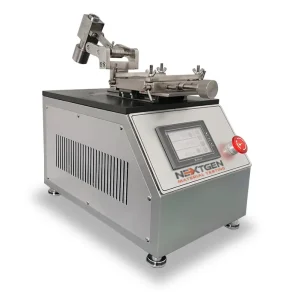
QB/T 2537 is a Chinese light-industry test method used to evaluate how easily color transfers from a leather surface during repeated back-and-forth (reciprocating) rubbing.
It is commonly used to control staining risk on footwear uppers, furniture leather, upholstery panels, handbags, belts, and other leather goods where dry and wet rubbing can cause visible color transfer. If you need help mapping your product requirement to the right edition and test setup, talk with our team.
QB/T 2537: Leather — Tests for colour fastness — Colour fastness to cycles of to-and-fro rubbing
QB/T 2537 describes a laboratory rubbing procedure that simulates repeated contact in use and helps quantify color change on the leather surface and color transfer onto the rubbing medium.
The result is typically reported using visual rating tools (gray scales) to support acceptance decisions in quality control, supplier qualification, and incoming inspection.
Quick definition
QB/T 2537 is a reciprocating rubbing colorfastness test for leather, using a specified felt rubbing material under controlled conditions (commonly including both dry and wet rubbing conditions), followed by visual grading of discoloration and staining.
What this standard covers
This standard focuses on color fastness of leather surfaces when subjected to repeated to-and-fro rubbing with felt under defined test conditions.
Typical evaluations: Color transfer to the felt (staining) and any visible change to the leather surface after the required rubbing cycles.
What it does not cover: It is not a full durability or abrasion loss method for thickness or mass loss; it is primarily a colorfastness and staining-risk check.
Why this standard matters in testing
Rubbing-induced staining is one of the most frequent causes of customer complaints in leather goods because it can soil clothing, socks, interior trim, or adjacent materials. A repeatable rubbing test helps teams screen dyes, finishes, and topcoats before release.
In production, the method is often used to compare lots and suppliers, monitor finish consistency, and support pass/fail criteria defined in product specifications or brand requirements.
Common materials, product types, or applications covered
QB/T 2537 is typically applied to finished leather surfaces where appearance and staining control are critical.
Common applications: Footwear upper leather, garment leather, upholstery and furniture leather, automotive/interior leather trim components, belts, wallets, bags, and other leather accessories.
Practical note: Surface finish type (e.g., coated, pigmented, aniline) can strongly influence rubbing performance, so sample selection and test location on the hide/product should be chosen intentionally.
Common test or verification workflow
A typical QB/T 2537 workflow is a controlled rubbing sequence followed by visual grading.
Common workflow steps: Condition specimens as required, perform dry rubbing, perform wet rubbing (when specified), then grade staining on the felt and any change on the leather surface using the required rating scales.
Common decision points: Pass/fail thresholds are usually defined by a product specification, brand requirement, or contract, rather than by the test method alone.
Equipment commonly used for this standard
QB/T 2537 is typically run on a leather rubbing fastness tester (often referred to as a reciprocating crockmeter / Veslic-type rubbing tester) configured for the required felt rubbing medium and motion.
Common equipment and accessories: Reciprocating rubbing tester, specified felt rubbing pads, weights or loading system required by the method, specimen holding fixture, and visual grading tools (gray scales) for discoloration and staining.
Equipment-selection cautions: Stroke length, cycle counting, applied load, rubbing head geometry, and wetting approach can vary by method family and by edition. If you are comparing configurations or multi-standard capability, you can request a detailed quote for a setup matched to your test workload.
How to read this designation or revision
QB/T indicates a Chinese light-industry (轻工行业) standard designation, followed by the document number (2537).
When written with a year (for example, “QB/T 2537-2001”), the suffix typically indicates the published edition year. Always match your equipment setup and reporting to the exact edition cited in your customer or regulatory requirement.
Related standards, methods, or frameworks
Leather rubbing colorfastness is also addressed in international method families, and some organizations cite different test motions or rubbing media for similar performance questions.
Often referenced alongside: ISO 11640 (leather color fastness to cycles of to-and-fro rubbing) and national standards that adopt or modify the ISO approach (for example, GB/T 40920 for leather reciprocating rubbing colorfastness).
Get help selecting a QB/T 2537 test setup
If you need a rubbing tester configured for leather felt rubbing, wet/dry capability, and clear grading workflow, we can help match the instrument configuration to your cited edition and acceptance criteria. Share your requirement and sample type to get a quote.