NEXT 16 is a private (company-issued) testing requirement used in NEXT’s supplier quality and product-approval workflows. In practice, this designation is commonly associated with Martindale-based abrasion durability evaluation for textiles and footwear-related materials.
If you need help determining whether NEXT 16 is the right callout for your fabric, lining, or coated material, contact our team with the exact wording from your buyer spec.
NEXT 16 (NEXT retailer private standard)
NEXT 16 is not a public consensus standard (like ISO, ASTM, or EN). It is typically cited as an internal NEXT requirement that suppliers and third-party labs use to run a defined durability evaluation and report results in the format NEXT expects.
Because private retailer standards can vary by product category and can be updated without the public revision trail found in ISO/ASTM systems, the exact version and any product-specific variants matter when setting up a test program.
Quick Definition
What it is: A NEXT retailer specification/test requirement commonly used for Martindale abrasion durability testing of textile and footwear-related materials.
What it’s used for: Supplier qualification, incoming material verification, and durability benchmarking against NEXT sourcing requirements.
What it points to: A Martindale abrasion/pilling platform with the correct holders, weights, abradants, and assessment approach required by the cited NEXT document.
What This Standard Covers
NEXT 16 is commonly used to assess abrasion-related durability performance by subjecting a specimen to controlled rubbing motion over a defined number of cycles, then evaluating wear, breakdown, or visible appearance change (depending on how the requirement is written in the purchase spec).
In many supply-chain workflows, the intent is comparative: confirming a material meets an acceptance requirement, or comparing candidate materials for durability before bulk production.
Why This Standard Matters in Testing
When a customer specification cites NEXT 16, labs and suppliers are expected to match the retailer’s required test setup and reporting expectations—not simply run a “similar” abrasion method. Even small differences (abradant selection, loading configuration, endpoints, or grading criteria) can change outcomes and acceptance decisions.
For equipment selection, NEXT 16 typically drives the need for a stable Martindale motion platform, consistent applied loading, and a repeatable way to document the endpoint (for example, hole formation, visible wear, or appearance change).
Common Materials, Product Types, or Applications Covered
NEXT 16 is most often seen in textile and footwear supply chains where abrasion durability is a key performance attribute, such as:
- Upper materials, linings, and interior fabrics used in footwear
- Apparel fabrics and trims where wear resistance is buyer-controlled
- Coated textiles and other flexible sheet materials used in consumer products
If the requirement is tied to a specific end product (shoe lining vs. upper vs. apparel), the cited NEXT document may define different expectations or endpoints, so it’s important to align the test plan to the product callout.
Common Test or Verification Workflow
Typical workflow: Confirm the exact NEXT 16 callout and any variant notes → prepare and condition specimens as required → mount specimens and abradants on a Martindale platform → run to the required number of cycles or endpoint → document observations and results in the required format.
Common endpoints: Wear-through/hole formation, visible surface change, or a pass/fail requirement at a specified cycle count (as defined by the cited NEXT document).
Reporting sensitivity: Retailer standards often require specific wording, grading scales, photos, or documentation conventions. Align your report template to the buyer requirement before running production-lot testing.
Equipment Commonly Used for This Standard
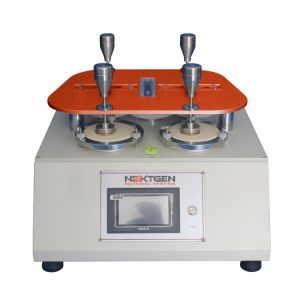
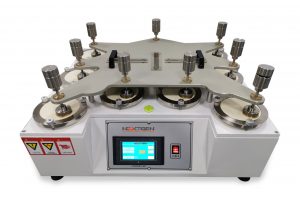
NEXT 16 is commonly supported using a Martindale abrasion tester configured with the correct specimen holders and accessories for the material form being evaluated.
Common equipment: Martindale abrasion/pilling tester, specimen cutting tools, specimen holders and clamps, loading weights, approved abradant fabrics/felts, backing foams/felts (when required), and a method to document endpoints (visual grading tools and/or mass measurement if specified).
Throughput considerations: Multi-station Martindale platforms are often used when suppliers must qualify multiple materials, colors, or lots under the same purchase specification.
If you’re matching a Martindale configuration to an active supplier requirement, you can request a detailed quote for a Martindale setup with the right station count and accessory package.
How to Read This Designation or Revision
Designation format: “NEXT 16” is typically written as a short internal code rather than a long-form title.
Revision sensitivity: The controlling details are defined by the specific NEXT document version referenced in the buyer spec or supplier manual. When quoting equipment or setting up a lab SOP, match the exact revision/edition language (and any product-category notes) used by your customer.
Related Standards, Methods, or Frameworks
NEXT 16 is commonly discussed alongside Martindale abrasion and appearance-change methods used in textile and footwear testing programs. Depending on the customer requirement, a lab may also be asked to run a public method in parallel for comparison or broader compliance reporting.
Commonly associated references (when specified by the buyer): ISO 12947 (Martindale abrasion), ASTM D4966 (Martindale abrasion), ASTM D4970 (Martindale pilling), and footwear-related abrasion callouts that reference Martindale-type setups.
Talk with a testing specialist
If you’re working from a customer PO, tech pack, or supplier manual that cites NEXT 16, contact our team and share the exact clause language so we can help you align the equipment configuration and lab workflow to what’s being called up.