M&S P29 is a Marks & Spencer (M&S) supplier-facing test requirement commonly used in textile and apparel quality programs for assessing tear performance of fabric and other sheet materials.
Because M&S methods are issued as private retailer documents, the exact specimen details and reporting requirements depend on the specific P29 edition referenced by your customer or product manual. If you need help matching your lab setup to the cited version, talk with our team.
M&S P29 (Marks & Spencer) — Standard overview
M&S P29 is most often encountered as a physical performance test for tear resistance using an Elmendorf (falling pendulum) style tearing approach. It is typically used within buyer approval, ongoing quality control, and supplier certification workflows for fabric and related flexible sheet materials.
This page provides practical guidance for equipment planning and lab workflow alignment. Always use the exact M&S P29 document and product category requirements specified by your customer for final setup, acceptance criteria, and reporting format.
Quick definition
Typical intent: Evaluate tear strength/tear resistance of a material by propagating a tear from a pre-cut slit using a falling pendulum (Elmendorf-type) tear tester.
Common lab outcome: A tear force (or tearing strength) value used for product approval, supplier QA, or comparative material benchmarking.
Document type: Retailer requirement / private test method (not a public consensus standard).
What this standard covers
M&S P29 is used to assess how a material resists the growth of an existing cut or slit under a rapid tearing action. In practice, it is applied to materials where tear durability is a key risk (for example, woven fabrics and certain nonwovens), and where an impact-style tear test is an accepted screening tool.
Depending on the M&S requirement and product category, the method may be applied in different directions (for example, warp/weft or machine/cross direction) and may require specific specimen dimensions, number of test pieces, conditioning, and averaging rules.
Why this standard matters in testing
Tear performance is often tied to real-world damage modes such as snag propagation, cut growth, and edge tearing during use, laundering, and handling. For sourcing teams and labs, an M&S P29 result is typically used to:
- Screen incoming lots for consistent fabric durability
- Compare alternative constructions, yarn types, finishes, or weights
- Support buyer approval and supplier performance programs
From an equipment standpoint, repeatable results depend heavily on using the correct pendulum capacity, maintaining blade condition, and following the specified specimen preparation approach.
Common materials, product types, or applications covered
M&S P29 is most commonly associated with flexible sheet materials used in clothing and home textile products.
Common materials: Woven fabrics, selected nonwovens, coated textiles, and other flexible sheet goods where an Elmendorf-style tear evaluation is specified by the buyer requirement.
Common use cases: Supplier QA/QC, pre-production qualification, material change control, and comparative R&D studies (for example, evaluating how finishing treatments affect tear behavior).
Common test or verification workflow
While the exact steps must follow the M&S P29 issue cited in your purchase order or manual, a typical Elmendorf-style tear workflow includes:
- Conditioning specimens as required (when specified)
- Preparing specimens with the required template and pre-cut slit
- Selecting a pendulum range that keeps results in the valid working region
- Running multiple replicates in each required direction
- Reporting results in the required units and format (including averaging rules when specified)
Practical caution: Differences in specimen geometry, slit preparation tools, and pendulum selection can shift results significantly. Edition matching matters when comparing data across suppliers or over time.
Equipment commonly used for this standard
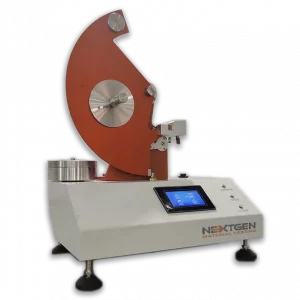
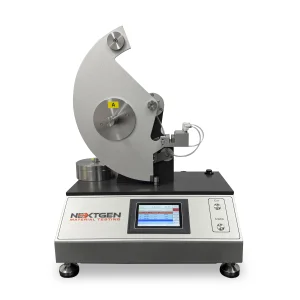
M&S P29 commonly points labs toward an Elmendorf (falling pendulum) tearing tester configuration with appropriate accessories for specimen preparation and verification.
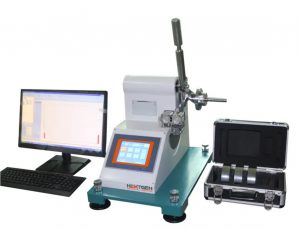
Common equipment: Elmendorf tearing tester (digital or analog), interchangeable pendulums/weights, specimen cutting templates, cutting blades, specimen clamps, calibration/check weights (as applicable), and basic conditioning/handling tools.
Selection considerations: Force range coverage (multiple pendulums), repeatability and resolution, specimen preparation tooling, guarding/safety interlocks, and software/data export needs for QA reporting.
If you are standardizing a lab across multiple fabric categories or need to cover a wide tear range, you can request a detailed quote for an Elmendorf tear system with the right pendulum set and accessories.
How to read this designation or revision
M&S: Marks & Spencer retailer requirement.
P29: Internal M&S method identifier used in supplier-facing testing programs.
M&S documents may be updated without a public revision history. For purchasing, audit, or dispute resolution, align on the exact issue/edition named in your customer documentation (and any referenced product category manual), then set up equipment and reporting to that version.
Related standards, methods, or frameworks
In many labs, M&S P29 is implemented alongside widely used Elmendorf tear standards for textiles and sheet materials. The most common pairing is to use the retailer requirement as the controlling reference while cross-checking instrument capability and general method expectations against broadly adopted tear test families.
Commonly encountered in the same workflow: Elmendorf tear methods for textiles and coated fabrics (often referenced by buyers and equipment manufacturers when configuring pendulum tear systems).
Need an M&S P29-ready setup?
If you share the product category, material type, expected tear range, and the exact M&S P29 issue you have been asked to follow, we can recommend a practical instrument configuration and accessory set, then help you request pricing for a complete system that fits your throughput and reporting needs.