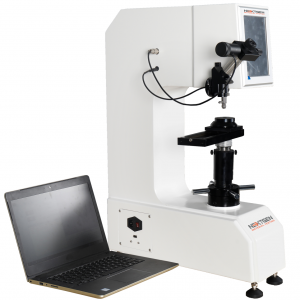
JIS Z 2243-1:2018 specifies a Brinell hardness test method for metallic materials, applicable to both stationary and portable (mobile) Brinell hardness testing machines.
If you need help matching your part size, surface condition, and reporting requirements to the correct JIS Z 2243 edition/part, contact our team for practical guidance before you lock in a test setup.
JIS Z 2243-1:2018 — Brinell hardness test — Part 1: Test method
JIS Z 2243 is used when Brinell hardness (commonly reported as HBW) is specified for metallic materials. In practice, the “Z 2243” requirement is most often satisfied by applying Part 1 (test method) and using the related machine verification and reference block standards referenced by the method.
This standard is commonly cited in production and QA/QC workflows where a robust indentation hardness value is needed for larger parts, thicker sections, castings, forgings, and other materials where Brinell is preferred over smaller-indent hardness methods.
Quick Definition
Document type: Test method (Brinell hardness test method for metallic materials).
What it does: Defines how to perform a Brinell indentation hardness test using specified test forces and a ball indenter, then determine hardness from the indentation measurement and required reporting elements.
Where it fits: Incoming inspection, heat treat verification, process control, and material certification checks where Brinell hardness is specified.
What This Standard Covers
JIS Z 2243-1 covers the Brinell hardness test method for metallic materials and states that it can be applied using fixed (bench/floor) and portable Brinell hardness testing machines.
It also points to supporting standards for machine verification/calibration, reference block calibration, and hardness value tables that are commonly used alongside the test method to keep results traceable and consistent.
| Topic | Typical decision it drives in the lab |
|---|---|
| Machine type (fixed or portable) | Whether testing is done on a bench/floor system or on-part/in-situ with a portable unit |
| Indenter and force selection | Which test configuration is required for the material and thickness to produce a valid indentation |
| Measurement method | Whether optical/manual reading or automated indentation measurement is preferred for throughput and consistency |
| Traceability controls | How you plan verification/calibration intervals and reference block usage to support audit-ready results |
Why This Standard Matters in Testing
Brinell hardness is widely used because it produces a relatively large indentation that can be more representative of bulk material behavior in coarse or inhomogeneous structures. For many steel, cast iron, and nonferrous production parts, a Brinell number is a fast, practical acceptance check that correlates well with heat treatment condition and overall strength trends.
From an equipment standpoint, JIS Z 2243-1 is important because it ties your reported hardness to the full test system: force application, indenter condition, surface preparation/flatness, indentation measurement, and the verification/calibration practices that keep results consistent over time.
Common Materials, Product Types, or Applications Covered
JIS Z 2243-1 applies broadly to metallic materials where Brinell hardness is specified. Common examples include:
- Steel plate, bar, forgings, and heat-treated components
- Cast irons and cast steel components
- Nonferrous metals where a larger indentation hardness method is preferred
- Larger parts or thick sections where Brinell testing is practical and representative
The best fit depends on the required hardness scale/configuration and whether the part geometry allows proper support and indentation measurement.
Common Test or Verification Workflow
A typical JIS Z 2243 workflow includes selecting an appropriate Brinell test configuration, preparing a suitable test surface, making one or more indentations under controlled conditions, measuring indentation size, and reporting hardness in the format required by the purchaser or product specification.
Common workflow steps: Choose method parameters → ensure part support and surface condition → perform indentation(s) → measure indentation(s) → calculate/report HBW per the required notation → maintain traceability through routine checks and periodic verification.
Equipment Commonly Used for This Standard
JIS Z 2243-1 can be applied using both fixed and portable Brinell hardness testers, so equipment selection is usually driven by part size, required throughput, and how the indentation will be measured and documented.
Common equipment families: Bench/floor Brinell hardness testing machines; portable Brinell hardness testers for on-part checks; ball indenters; test anvils/part supports; optical or digital indentation measurement systems; certified reference blocks for routine performance checks.
When quoting equipment, key inputs typically include the hardness range, the largest/heaviest parts, whether testing is in a lab or on the shop floor, and whether you need automated reading and data capture.
If you are comparing fixed vs portable systems or specifying digital measurement and reporting features, you can request a detailed quote for a configuration aligned to your JIS Z 2243 workflow.
How to Read This Designation or Revision
JIS Z 2243 is a Brinell hardness testing standard family. The currently used test method is designated as JIS Z 2243-1:2018 (Part 1: Test method), and a companion document exists as JIS Z 2243-2 (Part 2: hardness value tables).
JIS Z 2243-1:2018 indicates the part number (“-1”) and the publication year (“2018”). When hardness requirements are contractually specified, the cited part and edition matter because details in method controls, reporting, and referenced verification documents may depend on the exact version named in the purchase order or governing specification.
Related Standards, Methods, or Frameworks
Brinell hardness results are only as reliable as the machine verification and reference standards supporting them. JIS Z 2243-1 references additional documents that are commonly used to support traceable testing.
- JIS B 7724: Brinell hardness test — verification and calibration of testing machines
- JIS B 7736: Brinell hardness test — calibration of reference blocks
- JIS Z 2243-2: Brinell hardness test — Part 2: hardness value tables
Talk with us about Brinell hardness testing to JIS Z 2243
If you need a Brinell testing setup that fits your part geometry, required reporting format, and verification approach, talk with our team and we’ll help you narrow the right tester style, measurement option, and accessories for your workflow.