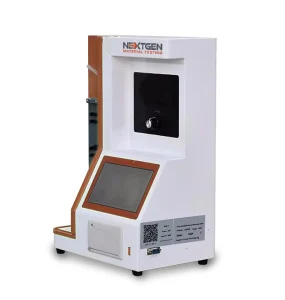
ISO 9277 specifies how to determine the specific surface area of disperse and porous solids using gas adsorption and BET analysis. It is widely used for powders, pigments, catalysts, ceramics, and porous materials where surface area is tied to performance and process control.
If you are unsure whether BET surface area is the right metric for your material type (for example, highly microporous samples or reactive surfaces), talk with our team about applicability, instrument configuration, and the edition you need to cite.
ISO 9277:2022 — Determination of the specific surface area of solids by gas adsorption — BET method
ISO 9277:2022 is an International Standard that defines a measurement approach for total (overall) specific external and accessible internal surface area by quantifying physically adsorbed gas and applying Brunauer–Emmett–Teller (BET) analysis.
In practice, it supports consistent, comparable surface area reporting across labs and supply chains when the material’s adsorption behavior is suitable for BET evaluation.
Quick Definition
ISO 9277 is a standardized BET surface area determination based on a measured gas adsorption isotherm, commonly reported as m²/g for powders and porous solids.
What This Standard Covers
This standard addresses specific surface area determination for disperse solids (including fine and nano-scale powders) and porous solids by measuring physisorption of an adsorptive gas.
It also provides guidance for interpreting adsorption behavior where BET assumptions may not be straightforward (for example, certain microporous behaviors), so the instrument setup and analysis choices should align with the material’s isotherm characteristics.
Why This Standard Matters in Testing
BET specific surface area is commonly used as a release, qualification, and process-control property because it can correlate with reactivity, adsorption capacity, catalytic performance, coating demand, and sintering or densification behavior.
ISO 9277 helps reduce lab-to-lab variability by standardizing how adsorption data is collected and how BET calculations are applied and reported.
Common Materials, Product Types, or Applications Covered
ISO 9277 is commonly cited for materials such as:
- Powders and particulate solids (including fine and nano-powders)
- Porous solids (including mesoporous materials and porous supports)
- Catalysts and catalyst supports where overall surface area is a key performance indicator
- Ceramic, battery, and pigment powders where surface area influences processing and end-use performance
Because the method is based on physical adsorption, it is most useful when the chosen adsorptive gas is not absorbed or consumed by the sample under the test conditions.
Common Test or Verification Workflow
A typical ISO 9277 workflow is built around controlled adsorption measurements and consistent sample preparation.
Common workflow steps: Representative sampling and splitting, sample mass selection, degassing/outgassing to remove moisture and volatiles, acquisition of an adsorption isotherm at controlled temperature, BET analysis of the isotherm to obtain monolayer capacity and calculate specific surface area, and reporting of key test conditions that affect comparability.
For procurement and QA/QC, the most important practical point is that surface area results can shift with preparation history (especially degassing conditions) and with the selected adsorptive gas and analysis temperature, so these details should be aligned with the cited ISO 9277 edition and your customer/specification expectations.
Equipment Commonly Used for This Standard
ISO 9277 typically points to a gas adsorption surface area analyzer capable of generating adsorption isotherms with stable pressure/flow control and reliable temperature control at the analysis point.
Common equipment: Gas adsorption analyzer (volumetric or gravimetric, depending on lab preference), sample preparation/degassing station with controlled heat and vacuum or inert purge, sample tubes/cells and seal hardware appropriate for powders, pressure transducers (as applicable to the analyzer design), and temperature control hardware (commonly cryogenic cooling for low-temperature adsorption).
Selection cautions: If your materials include very low surface area solids, highly microporous solids, or surfaces where the adsorptive choice can influence interpretation, instrument sensitivity and the supported analysis options can matter as much as throughput. If you are comparing analyzer configurations and sample prep capacity, you can request a detailed quote matched to your target surface area range and lab volume.
How to Read This Designation or Revision
ISO 9277:2022 is the standard number followed by the publication year of the cited edition (2022).
When surface area is used for compliance, supplier qualification, or inter-lab comparisons, purchasing documents and test reports should cite the full designation (including the year) to avoid ambiguity, since updates can affect analysis guidance, terminology, and reporting expectations.
Related Standards, Methods, or Frameworks
ISO 9277 references established practices for obtaining representative samples and preparing particulate test portions, which is important because surface area results are sensitive to sampling and handling.
Often used alongside: ISO sampling and sample-splitting standards for particulate materials (for example, documents covering sampling techniques for solid chemical products and sampling/sample splitting for particulate properties).
Get help selecting a BET surface area setup
If you need help matching analyzer sensitivity, degassing capacity, and automation level to an ISO 9277 workflow (and to the exact surface area range you need to measure), contact our team to discuss your materials, throughput, and reporting requirements.