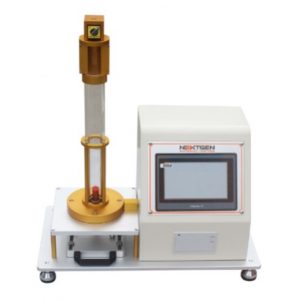
ISO 8307:2018 specifies a ball rebound method used to measure resilience (bounce) of flexible cellular polymeric materials such as flexible foams.
If you are unsure whether ball rebound resilience is the right metric for your product or which edition to cite on reports, talk with our team about your material and test objective.
ISO 8307:2018 Flexible cellular polymeric materials — Determination of resilience by ball rebound
ISO 8307 is used when you need a standardized, comparable resilience value for flexible cellular polymeric materials. In practice, it is commonly applied to flexible foam and cushioning materials where “bounce” is part of performance screening or lot-to-lot quality control.
This document is a test method standard (it defines a measurement procedure and reporting approach rather than product acceptance limits).
Quick Definition
ISO 8307 in one line: A resilience test where a steel ball is dropped onto a conditioned foam specimen and the rebound height is measured to calculate a resilience value.
| Item | What to expect |
|---|---|
| Measured property | Resilience by ball rebound (bounce response) |
| Material type | Flexible cellular polymeric materials (flexible foams) |
| Document type | Test method |
| Current edition | ISO 8307:2018 (Edition 3; reviewed and confirmed in 2023) |
What This Standard Covers
ISO 8307 covers a ball rebound procedure for determining resilience in flexible cellular polymeric materials. The method uses a dropped steel ball and a rebound-height measurement, with specimen conditioning requirements so results can be compared more consistently between labs and production sites.
This standard focuses on the rebound response measurement itself; it does not define product-specific pass/fail criteria.
Why This Standard Matters in Testing
Ball rebound resilience is widely used as a quick, repeatable indicator of foam “liveliness” and energy return. ISO 8307 helps procurement teams, QA/QC labs, and R&D groups communicate results with a common method when comparing formulations, suppliers, or process changes.
Practical note: Resilience results are sensitive to specimen conditioning, surface condition, and measurement technique, so matching the cited edition and setup details matters when comparing numbers across sites.
Common Materials, Product Types, or Applications Covered
ISO 8307 is associated with flexible cellular polymeric materials, commonly including flexible foam and cushioning products.
- Flexible foam blocks and sheets used for cushioning and comfort components
- Foam parts used for packaging, impact reduction, or vibration/handling protection
- Process control testing for foam manufacturing (incoming, in-process, or finished goods checks)
Common Test or Verification Workflow
A typical ISO 8307 workflow is straightforward and is often run alongside other foam physical tests.
Common workflow: Condition specimens as required by the method, place the specimen on the specified support, drop the steel ball from the specified height, measure rebound height, and report resilience per the standard’s calculation and reporting requirements.
Equipment Commonly Used for This Standard
ISO 8307 generally points to a dedicated ball rebound resilience apparatus rather than a universal testing machine.
- Ball rebound resilience tester (vertical drop guidance, defined steel ball release, and rebound-height measurement scale or sensor)
- Specimen support/anvil appropriate for the method
- Environmental conditioning capability (controlled temperature and humidity) to meet conditioning requirements
If you are choosing between manual scale-reading setups and instrumented rebound-height measurement, you can request a detailed quote for a configuration matched to your throughput and reporting needs.
How to Read This Designation or Revision
ISO 8307:2018 identifies the ISO standard number (8307) and the publication year of the cited edition (2018).
Older editions (such as ISO 8307:2007 and ISO 8307:1990) have been withdrawn, so purchase specifications and lab reports should cite the exact edition required by the customer, contract, or internal quality plan.
Related Standards, Methods, or Frameworks when useful
Ball rebound resilience is often used alongside other foam characterization tests (for example, hardness and compression-related measurements). When you are building a test plan, it is common to pair ISO 8307 with additional methods that cover stiffness, compression behavior, or durability so resilience is interpreted in context.
Get help selecting an ISO 8307 test setup
If you need to match an ISO 8307 edition to a customer requirement or want to standardize resilience testing across multiple sites, contact our team to discuss your specimens, conditioning environment, and measurement approach.