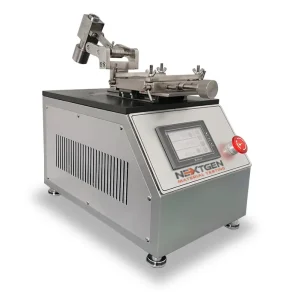
ISO 11640 is an ISO test method used to evaluate how a leather surface and finish behave when rubbed back-and-forth against a wool felt rubbing pad. It is commonly used to check surface durability and the risk of colour transfer during handling and end use.
If you need help aligning a rubbing fastness requirement to your product type (finish system, colour, surface texture, dry vs. wet rub), contact our team to discuss the most practical setup and reporting approach for your lab.
ISO 11640:2018 — Leather — Tests for colour fastness — Colour fastness to cycles of to-and-fro rubbing
ISO 11640 is used in leather quality programs to evaluate rubbing fastness using a standardized wool felt rubbing material and a controlled to-and-fro rubbing motion.
The result is typically used to judge both (1) change to the leather surface (marring, finish disturbance, colour change) and (2) staining/colour transfer onto the rubbing material, based on the evaluation system specified by the requirement you are working to.
Quick Definition
ISO 11640 measures leather colour fastness to repeated, reciprocating rubbing using wool felt as the rubbing medium.
What This Standard Covers
This standard specifies a method for determining the behaviour of the surface of leather when rubbed with wool felt.
It is written to be broadly applicable to leathers of all kinds, making it a common reference for footwear uppers, apparel leather, upholstery leather, and leather goods where rubbing contact is expected during use.
Why This Standard Matters in Testing
Rubbing is one of the fastest ways to reveal weak adhesion, unstable pigments, or sensitive topcoats on finished leather. A controlled rub fastness method helps QA/QC teams compare lots, qualify finishing changes, and reduce field complaints tied to scuffing or colour transfer.
For buyer-facing specifications, ISO 11640 results are often used as acceptance evidence in supply chain agreements (incoming inspection, vendor qualification, and periodic verification testing).
Common Materials, Product Types, or Applications Covered
ISO 11640 is commonly applied to:
- Finished leathers where surface coatings, pigments, or dyes may transfer under rubbing contact
- Footwear leathers (uppers and components) where scuffing and repeated rubbing are expected
- Leather goods and apparel leathers subject to handling and abrasion during use
- Automotive, furniture, and upholstery leathers where surface appearance retention is a key quality requirement
Common Test or Verification Workflow
Most laboratories run ISO 11640 as a controlled rub fastness check on the grain/finished surface.
Common workflow: Prepare and identify test areas, mount the specimen, rub with standardized wool felt under controlled conditions (often with separate dry and wet rub evaluations when required), then visually rate both the leather surface condition and any staining/transfer onto the felt using the rating approach specified by the relevant requirement.
Practical caution: Results can be sensitive to specimen surface texture, finish type, conditioning, wetting practice (if used), and how staining/colour change is graded—so it is important that the purchase specification clearly states the exact edition and rating expectations.
Equipment Commonly Used for This Standard
ISO 11640 typically points to a dedicated reciprocating rubbing fastness tester (often referred to as a “Veslic” rub fastness tester) equipped to run controlled to-and-fro rubbing cycles.
Common equipment elements: To-and-fro rubbing mechanism, specimen holding platform, rubbing finger/head assembly, standardized wool felt rubbing pads, and accessories for repeatable dry and wet rubbing setups when required by the specification.
If you are selecting a rub fastness tester for routine ISO 11640 work (single vs. dual station, cycle counting/control, dry/wet kit, and consumables), you can request a detailed quote for a configuration that matches your throughput and reporting needs.
How to Read This Designation or Revision
ISO 11640 is the standard number for this leather rub fastness test method.
ISO 11640:2018 indicates the 2018 published edition (the year after the colon is the publication year for that edition). Many purchase specifications require citing the year to ensure the lab uses the correct procedure and reporting rules.
This document is currently under revision in ISO, so contractual requirements should state the exact cited edition to avoid mismatched setups during the transition between editions.
Related Standards, Methods, or Frameworks
In leather testing programs, ISO 11640 is often referenced alongside other colour fastness and surface performance checks (for example, additional rub fastness variants used in footwear or coated materials specifications). When a customer specification references an alternate designation (such as an IULTCS method number) alongside ISO 11640, the lab should confirm the exact document and edition being invoked before testing.
Talk with a test specialist about ISO 11640 setup and reporting
If you need support matching ISO 11640 to a buyer specification (dry vs. wet rubbing, acceptance criteria, or edition callouts), talk with our team and we will help you define a clear, repeatable lab workflow.