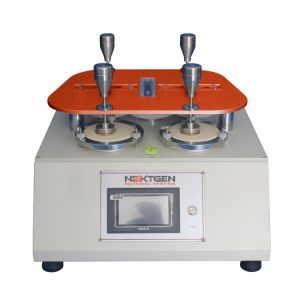
IS 12673 is an Indian Standard series for determining the abrasion resistance of textile fabrics using the Martindale method. It is commonly specified for apparel textiles, upholstery, technical fabrics, and nonwovens when buyers need a controlled, repeatable way to compare abrasion performance.
If you need help matching the right IS 12673 part (breakdown, mass loss, or appearance change) to your product requirement, you can talk with our team about your material, end-use, and reporting needs.
IS 12673 — Textiles: Determination of abrasion resistance by the Martindale method (multi-part)
IS 12673 is organized in multiple parts that work together: one part focuses on the Martindale abrasion testing apparatus and auxiliary materials, and other parts describe how abrasion resistance is evaluated using different end points (such as specimen breakdown, mass loss, or appearance change).
In procurement and QA/QC, IS 12673 is often used to qualify incoming fabric lots, validate supplier claims, compare constructions or finishes, and document performance for customer or contract requirements.
Quick definition
What it is: A multi-part abrasion testing standard for textiles using a Martindale rubbing motion and defined evaluation criteria.
What it helps answer: “How does this fabric hold up under repeated rubbing under controlled conditions?”
What to verify before testing: The specific cited part number and edition, because equipment setup, evaluation end point, and reporting expectations depend on the part referenced.
What This Standard Covers
IS 12673 covers abrasion resistance determination for textile fabrics (including nonwovens), using a Martindale abrasion tester. Depending on the part specified, results may be reported as:
- Specimen breakdown (cycles to a defined failure/end point)
- Mass loss (loss of specimen mass after a specified number of rubs)
- Appearance change (visual rating after rubbing, typically using an agreed rating approach)
Because these are different evaluation models, the “right” test outcome depends on how abrasion performance is defined in your product specification or customer requirement.
Why This Standard Matters in Testing
Martindale abrasion is widely used because it provides a consistent rubbing action and controlled loading that makes it practical for comparing materials and tracking production variability. When the same fabric is supplied across multiple sites or seasons, IS 12673-style testing supports consistent release decisions and supplier scorecards.
For equipment selection, the key is aligning the tester configuration and accessories to the cited IS 12673 part and the fabric category (for example, lightweight apparel vs. heavy upholstery), since accessories and evaluation steps can change the workflow.
Common Materials, Product Types, or Applications Covered
IS 12673 is commonly applied to:
- Woven and knitted fabrics for apparel and uniforms
- Upholstery and interior furnishing fabrics
- Workwear, protective textiles, and coated/laminated constructions (where applicable)
- Nonwoven fabrics where abrasion durability is a performance concern
When abrasion is tied to visual durability (pilling-like appearance concerns, surface fuzzing, shading), parts focused on appearance change may be referenced instead of (or in addition to) breakdown or mass loss.
Common Test or Verification Workflow
A typical IS 12673 workflow includes selecting the correct part and end point, conditioning specimens as required by the referenced textile conditioning standard, preparing specimens and abradants, running the Martindale cycles under the specified loading, and recording results at the required inspection intervals.
Common workflows: Qualification testing for new fabric styles, incoming inspection checks for critical lots, periodic supplier re-validation, and comparative R&D screening of yarns/finishes/constructions.
Equipment Commonly Used for This Standard
IS 12673 typically points to a Martindale abrasion testing system and supporting lab accessories. The exact accessory set depends on whether the requirement is breakdown, mass loss, or appearance change.
Common equipment: Martindale abrasion tester (multi-station), specimen holders and loading weights, abradant fabrics and backing materials, cutting dies/templates for repeatable specimen size, and inspection tools for documenting end points.
Often paired instruments (by test end point): A calibrated balance for mass-loss evaluations, and controlled lighting/rating aids for appearance-change evaluations where visual grading is specified by the method.
If you are equipping a lab or upgrading an existing Martindale system, you can request a detailed quote based on the number of stations, automation preferences, and the IS 12673 part you need to run.
How to Read This Designation or Revision
IS 12673 is commonly cited as a multi-part standard using a “Part” number and an edition year (for example, “IS 12673 (Part X): YYYY”). In some catalogs and procurement systems, the same parts may also appear in a hyphenated format (for example, “IS 12673-X”).
Revision sensitivity: Test conditions, inspection intervals, auxiliary materials, and reporting details can vary by part and edition. Always align your lab setup to the exact part number and year cited in the purchase specification or test plan.
Related Standards, Methods, or Frameworks
IS 12673 is aligned to the ISO 12947 Martindale abrasion method family, and its parts reference related textile conditioning and assessment practices that support consistent preparation and rating. When comparing results across suppliers or regions, confirm whether the requirement is written to IS 12673, ISO 12947, or another regional adoption, and whether the same part and edition are being used.
Get help selecting an IS 12673-ready Martindale setup
If you share the fabric type, the referenced IS 12673 part, and your throughput target, we can recommend a practical tester configuration, accessory kit, and documentation approach that fits your lab workflow. For pricing and lead-time options, ask for a quote.