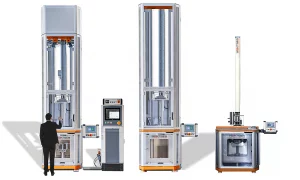
GOST 9454-78 is a test method for determining the impact performance of ferrous and non-ferrous metals and alloys using an impact bending (pendulum) test over a wide temperature range.
It is commonly used when material specifications require impact energy (absorbed work) and/or impact toughness values to support decisions around low-temperature service, elevated-temperature service, and overall resistance to brittle fracture. If you need help aligning your requirement to the correct edition or understanding what results should be reported, talk with our team.
GOST 9454-78 — Metals. Method for testing impact strength at low, room and high temperature
GOST 9454-78 defines a standardized impact bending approach where a notched specimen is fractured by a single blow from a pendulum impact machine (impact tester). The method supports testing across temperatures from approximately −100 °C up to +1200 °C.
The primary outputs are the total work (energy) absorbed during fracture (impact work) and, when required, impact toughness based on the absorbed work normalized to the specimen cross-sectional area at the notch location.
Quick Definition
Standard type: Test method (impact bending / pendulum impact).
Primary purpose: Determine absorbed impact work and/or impact toughness for metals and alloys using a notched specimen broken by a pendulum striker.
Temperature capability: Low, room, and high temperature testing across a broad range (about −100 °C to +1200 °C).
What This Standard Covers
GOST 9454-78 applies to ferrous and non-ferrous metals and alloys. It describes an impact bending setup where a specimen with a notch (stress concentrator) is supported on anvils and struck by a pendulum from the side opposite the notch, resulting in fracture by a single impact.
Results are expressed as absorbed impact work (the total work consumed in fracturing the specimen). When impact toughness is required, it is defined as the impact work divided by the initial cross-sectional area at the notch location.
Why This Standard Matters in Testing
Impact properties are frequently used to screen susceptibility to brittle fracture and to compare heat treatments, product forms, or material lots where toughness is critical. Because GOST 9454-78 supports testing at sub-ambient and elevated temperatures, it is often referenced for applications where service temperature strongly influences fracture behavior.
From a lab operations perspective, the temperature-conditioning and transfer step can be as important as the impact machine itself, especially when rapid test timing is required at the specified temperature.
Common Materials, Product Types, or Applications Covered
GOST 9454-78 is used broadly across metal industries where impact energy or toughness values are specified. Typical use cases include:
- Steel and alloy steel products where low-temperature toughness is specified (example: cold-service structural or pressure-retaining applications).
- Non-ferrous alloys where impact response is used for comparative qualification or process control.
- High-temperature materials where impact performance may be checked at elevated test temperatures as part of qualification or verification programs.
Common Test or Verification Workflow
While exact sampling and acceptance criteria are usually defined by the product specification or procurement document, a typical workflow for GOST 9454-78 testing includes:
- Machine setup and verification for the selected impact energy range.
- Specimen preparation using a notched geometry appropriate to the requirement.
- Conditioning specimens to the required test temperature (low, ambient, or elevated) with controlled handling.
- Placing the specimen on supports and impacting with the pendulum striker (impact from the side opposite the notch).
- Recording absorbed work (impact energy) and calculating impact toughness when required.
- Reporting results along with the test temperature and key setup identifiers needed for traceability.
Equipment Commonly Used for This Standard
GOST 9454-78 typically points to a pendulum impact testing setup plus temperature conditioning equipment matched to the required test temperature.
Common equipment: Pendulum impact tester (impact bending machine), specimen supports/anvils and striker components, specimen handling tools for fast transfer, and temperature-control systems (low-temperature bath or chamber and/or a high-temperature furnace) appropriate to the required range.
Practical selection note: When quoting or configuring a system, the required impact energy range, specimen size, and the temperature-conditioning approach (including how quickly specimens must be transferred from conditioning to impact) are usually the key drivers for capacity, guarding, and accessory selection.
How to Read This Designation or Revision
Designation: “GOST 9454-78” identifies the standard number (9454) and the year in the designation (78).
Status note: This document is shown as superseded on the standards record, with a replacing designation listed as GOST 9454-2025. When a contract or drawing cites GOST 9454-78, it is good practice to confirm whether the requirement is truly locked to the 1978 edition or whether the intent is to use the current replacing document.
Related Standards, Methods, or Frameworks
Impact requirements are often embedded inside product standards (for example, standards for specific forms such as plate, bar, forgings, castings, or welded constructions). Those product documents typically define specimen location/orientation, acceptance criteria, and any additional reporting expectations beyond the base impact method.
Get help selecting an impact testing setup for GOST 9454-78
If you are specifying a pendulum impact tester and temperature-conditioning accessories for a GOST 9454-78 requirement, you can request a detailed quote based on your energy range, specimen format, and test-temperature needs.