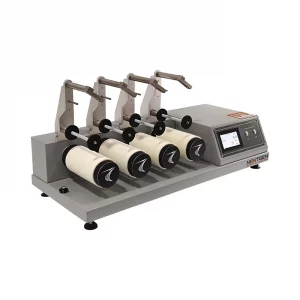
GB/T 11047-2008 is a Chinese national recommended standard that defines a mace (pinned-mace) method for evaluating the snagging degree of textile fabrics. It is commonly used to compare snag resistance of apparel and interior fabrics where pulls, loops, or surface disruptions can occur during wear or handling.
If you need help matching this standard to your fabric type, conditioning requirements, or snagging tester configuration, you can talk with our team about your application.
GB/T 11047-2008: Textiles — Evaluation for the snagging degree of fabrics — Mace test method
This standard covers a controlled snagging exposure using a mace-style device and a grading approach to express the fabric’s snagging degree. It is intended for quality control, product development comparisons, and supplier/customer acceptance checks where snag appearance is a key concern.
Quick Definition
What it is: A textile snagging evaluation method using a mace test apparatus to create snagging on a fabric specimen and then rate the snagging degree.
What it outputs: A snagging grade or index based on the standard’s evaluation criteria.
Best for: Fabrics that are prone to snagging, especially filament and textured-yarn chemical fiber fabrics.
What This Standard Covers
GB/T 11047-2008 specifies a test method and evaluation index for determining the snagging degree of fabrics by a mace test method.
Applicable materials: Knitted fabrics, woven fabrics, and other fabrics liable to snagging, especially chemical fiber filament and textured yarn fabrics.
Not typically applicable: Mesh-structure fabrics, non-woven fabrics, and tufted fabrics.
Why This Standard Matters in Testing
Snagging is a visible surface defect that can drive customer complaints and returns even when base fabric strength is acceptable. This standard provides a repeatable way to create snagging under defined conditions so labs can:
- Screen constructions and yarn types for snag risk
- Compare finishing or coating changes intended to reduce snagging
- Support consistent QA/QC decisions with a defined rating approach
Common Materials, Product Types, or Applications Covered
GB/T 11047-2008 is commonly referenced when snag appearance is a key performance attribute for:
- Apparel outer fabrics and fashion knits
- Sportswear and performance textiles using filament yarns
- Upholstery and home textile fabrics that see abrasion and contact with rough surfaces
- Filament and textured-yarn fabrics where loops and pulls are more likely to form
Common Test or Verification Workflow
A typical lab workflow influenced by this standard includes conditioning, controlled snagging exposure using a mace-type tester, and standardized rating/reporting.
Common workflow: Condition specimens in a standard textile atmosphere, mount/prepare specimens per the method, run the mace snagging exposure on the instrument, then evaluate snagging degree and document results in a test report.
Practical note: Because snagging evaluation is appearance-based, consistent lighting, evaluator training, and edition-matched rating criteria are important for repeatability across shifts or sites.
Equipment Commonly Used for This Standard
GB/T 11047-2008 points to an instrumented snagging test setup rather than a universal mechanical property test.
Common equipment: Mace (pinned-mace) fabric snagging tester, specimen mounting accessories/holders, and a conditioning environment suitable for standard textile atmospheres (commonly aligned with GB/T 6529).
Common lab support items: Cutting templates, marking tools, inspection lighting, and any evaluation aids required by your internal rating practice to keep grading consistent.
If you are comparing mace snagging tester layouts, station counts, or control features for your lab throughput, you can request pricing for a configuration matched to your workflow.
How to Read This Designation or Revision
GB/T: Indicates a recommended (non-mandatory) Chinese national standard.
11047: The standard’s unique identifier within the GB/T system.
-2008: The year shown in the designation for this edition.
Status and history: The 2008 edition is listed as current and it replaced GB/T 11047-1989.
Related Standards, Methods, or Frameworks
Snagging performance is often managed alongside other durability and appearance tests. Depending on customer requirements, labs may also reference:
- GB/T 6529 (standard atmospheres for conditioning and testing of textiles)
- Other snagging-related methods (for example, ASTM and JIS snagging approaches) when a buyer specification calls for a different apparatus or rating system
Talk with a Testing Equipment Specialist
If you need a snagging tester setup aligned with GB/T 11047-2008—along with guidance on conditioning, evaluation repeatability, and lab-to-lab consistency—contact our team to discuss your specimen types and reporting requirements.