GB/T 10128 is a Chinese national standard test method for torsion testing of metallic materials at ambient (room) temperature. It is used to generate torsional mechanical property data from controlled twisting of a prepared specimen while measuring torque and deformation.
If you are not sure whether your part geometry, specimen type, or reporting needs align to the exact cited edition, you can talk with our team about standard-based torsion testing workflows before you commit to equipment or fixtures.
GB/T 10128-2007: Metallic materials — Torsion test at ambient temperature
GB/T 10128-2007 describes a room-temperature torsion test method for metallic materials, including terminology/symbols, specimen considerations, test equipment, and test reporting elements used when characterizing torsional behavior.
In practice, the standard supports torsion testing where a specimen is twisted under controlled conditions and a torque–deformation response is recorded to determine torsional performance values.
Quick Definition
Standard type: Test method.
Primary purpose: Determine torsional mechanical properties of metallic materials at ambient temperature using a controlled torsion test and defined reporting.
Common output: Torsion performance values derived from measured torque and deformation (reported per the standard’s definitions and calculation requirements).
What This Standard Covers
GB/T 10128 focuses on the laboratory torsion test of metallic materials at room temperature. It addresses the overall method framework: specimen requirements, the role of the torsion testing machine and measurement system, how test values are obtained from measured quantities, and what is included in the test report.
This standard is most relevant when torque capacity, torsional deformation response, and torsional strength/ductility characteristics need to be quantified under controlled conditions rather than inferred from other mechanical tests.
Why This Standard Matters in Testing
Torsion behavior is critical for many metal components and materials that experience twisting in service. A standardized torsion method helps labs and manufacturers generate comparable results across sites by aligning how specimens are tested, how measurements are taken, and how results are documented.
Because torsion testing depends heavily on machine capability (torque range, angular measurement accuracy, alignment, and control), the standard is often used as a practical reference when specifying a torsion system for R&D, product validation, or quality investigations.
Common Materials, Product Types, or Applications Covered
GB/T 10128 applies to metallic materials tested in torsion at ambient temperature. It is commonly used for materials development, comparative material evaluation, and investigations where torsional response is a key design or performance input.
Typical use cases: Material screening and benchmarking, design validation work where torsional loading is expected, and controlled comparisons between heats, processing routes, or suppliers (when torsion behavior is a discriminating factor).
Common Test or Verification Workflow
A torsion program aligned to GB/T 10128 typically follows a structured sequence built around specimen preparation, controlled loading, measurement, and reporting.
Common workflow: Prepare a torsion specimen; verify dimensions; mount and align the specimen in a torsion testing machine; apply torsional loading under the standard’s test conditions; record torque and deformation response; calculate required torsional values using the standard’s definitions; issue a test report with the required identifiers, specimen details, and results.
For many labs, the most important practical decision is ensuring the machine/fixture setup can apply torque smoothly without introducing bending or grip slip, since these issues can distort torsion results and invalidates comparisons.
Equipment Commonly Used for This Standard
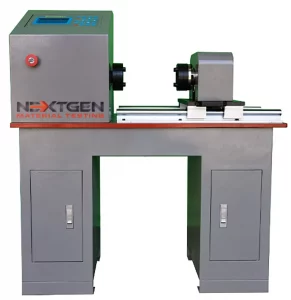
GB/T 10128 torsion testing is typically performed on a dedicated torsion testing machine or a torsion-capable electromechanical/servo system with appropriate measurement and control.
Common equipment: Torsion testing machine (with suitable torque capacity); specimen grips/chucks or collets designed for torsion; torque transducer and controller; angular displacement/rotation measurement; guarding and safety interlocks; data acquisition/software for torque–deformation recording and report outputs.
Practical selection factors: Torque range and resolution; stiffness and alignment of the load train; grip security to prevent slip; ability to match the required control mode and output data; and calibration/traceability expectations for torque and angle measurements.
If you are selecting a torsion frame, torque sensor range, or grip style for your specimens, you can request a detailed quote for a system configuration matched to your torque range and specimen geometry.
How to Read This Designation or Revision
GB/T: “GB” indicates a national standard of the People’s Republic of China; “/T” indicates a recommended national standard.
10128: The standard number for the metallic materials ambient-temperature torsion test method.
-2007: The publication year of the cited edition. GB/T 10128-2007 replaced GB/T 10128-1988, so the exact edition in a purchase order, drawing, or test plan matters for method and reporting alignment.
Related Standards, Methods, or Frameworks when useful
Many torsion programs are also managed alongside internal specifications or customer requirements that define acceptance limits, sampling, or reporting format on top of the base test method. When comparing results across organizations, it is good practice to align on the exact cited edition and the same specimen geometry and measurement approach.
Where a test plan includes multiple mechanical tests (for example, tensile plus torsion), the torsion method should be treated as its own setup with dedicated fixturing and measurement requirements rather than an add-on to a general tensile configuration.
Talk with us about GB/T 10128 torsion testing setups
If you need help matching torque capacity, grips, and measurement options to GB/T 10128 and your specimen geometry, contact our team to discuss a practical torsion testing configuration for your lab.