GB/T 20991 Section 7.3 is a clause within China’s national test-methods standard for protective footwear. It addresses abrasion resistance for insole-related components (commonly the insole board and/or insock), helping labs and manufacturers evaluate how quickly these materials wear under controlled rubbing.
If you need help matching your product and cited edition to the correct setup (fixture, load, evaluation endpoint), talk with our team about your application before locking in a test plan.
GB/T 20991 Section 7.3 — Foot protection—Test methods for footwear (insole abrasion)
GB/T 20991 is a test-methods document used in safety and protective footwear compliance and quality control. Section 7.3 focuses specifically on abrasion performance of insole components, which can be a durability and comfort-related requirement depending on the footwear category and the referencing product standard.
This clause is typically used when you need an objective, repeatable lab check on insole surface wear behavior rather than a field-wear trial.
Quick Definition
What it is: A clause-level abrasion resistance test for insole components referenced under GB/T 20991’s “insole and insock” test section.
What it checks: Resistance to surface wear and material breakdown under a defined rubbing/abrasion action and endpoint evaluation.
What it’s used for: Routine QA/QC, supplier qualification, and supporting evidence for protective footwear evaluations that cite GB/T 20991.
What This Standard Covers
GB/T 20991 Section 7.3 covers a lab method for evaluating abrasion resistance of insole-related components used in protective footwear. In practice, it is applied to materials and constructions where repeated rubbing from foot motion, socks, and internal contact points can drive wear.
This clause does not replace product-level acceptance criteria on its own; it provides a repeatable method that may be referenced by procurement specs, internal durability targets, or other footwear standards.
Why This Standard Matters in Testing
Insole abrasion performance can affect perceived quality, service life, and comfort over time. A controlled abrasion test helps teams compare materials, verify batch-to-batch consistency, and identify premature wear risks before footwear is released or requalified.
For labs, this type of clause-level method is also useful for troubleshooting: when a complaint points to internal wear-through or rapid surface degradation, an abrasion check can help separate material issues from fit or usage factors.
Common Materials, Product Types, or Applications Covered
Section 7.3 is most commonly associated with insole boards and insock/footbed layers used in protective footwear constructions.
Common materials: Coated fabrics, nonwovens, polymeric sheets/films, laminated insole structures, and other composite footbed constructions used in PPE footwear.
Common product contexts: Safety footwear and other protective footwear designs where internal durability is a controlled characteristic.
Common Test or Verification Workflow
A typical workflow for GB/T 20991 Section 7.3 is built around repeatable sample preparation, conditioning, controlled abrasion exposure, and a defined pass/fail or comparative evaluation endpoint.
Common workflow steps: Select insole/insock samples from production or incoming inspection lots, condition as required by the referenced GB/T 20991 general requirements, run the abrasion sequence for the specified cycles or endpoint, then document the observed wear result and test conditions in the report.
What’s often recorded: Sample identification, conditioning environment, abrasion settings (load, stroke/cycle count, counterface), and the observed wear outcome used for acceptance or comparison.
Equipment Commonly Used for This Standard
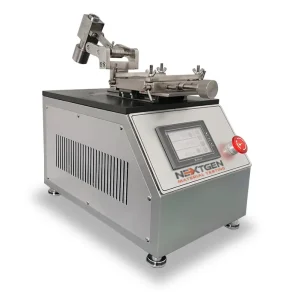
Because Section 7.3 is a controlled abrasion/rubbing evaluation, the equipment path is typically an abrasion tester configured with the appropriate rubbing head/counterface, applied load, and cycle/stroke control required by the cited clause and edition.
Common equipment families: Reciprocating rub/abrasion testers (often described as Veslic-type rub fastness/abrasion testers in footwear and leather testing), sample holders and tensioning fixtures (where applicable), calibrated weights/load system, cycle counter/timer, and basic conditioning controls for pre-test and post-test handling.
If you are comparing tester configurations, fixture options, or automation features for routine throughput, you can request a detailed quote for a setup aligned to your lab’s sample volume and reporting needs.
How to Read This Designation or Revision
“GB/T 20991 Section 7.3” is a clause reference inside the broader GB/T 20991 standard. In procurement and technical documents, it is common to see the clause cited without the full year designation; however, the year/edition matters because clause numbering, referenced apparatus, and reporting details can change between revisions.
Practical recommendation: When requesting testing or selecting equipment, specify the full cited edition (for example, GB/T 20991-2024) along with “Section 7.3” to avoid mismatches in setup and reporting expectations.
Related Standards, Methods, or Frameworks
GB/T 20991 is commonly used alongside protective-footwear product standards and selection/use guidance. Depending on the requirement you are supporting, it may be referenced with safety footwear standards and other test-method standards for slip resistance and related performance checks.
Commonly paired references: ISO 20344 (international test-methods framework that GB/T 20991 is based on), GB 21148 (safety footwear), and GB/T 28287 (footwear slip resistance test method).
Get help selecting an abrasion test setup for GB/T 20991 Section 7.3
For clause-level abrasion work, the right choice usually comes down to the exact cited edition, the specified rubbing counterface, and how you need to evaluate wear (comparative ranking vs. an internal acceptance limit). If you want help scoping a compliant, repeatable setup for your insole materials and reporting workflow, contact our team.