GB/T 1933-2009 is a Chinese national test method used to determine wood density values commonly referenced in physical and mechanical testing programs.
Because density results can be highly sensitive to moisture condition and specimen preparation, it is important to align your lab setup and reporting with the exact edition cited in your customer or regulatory documents; if you want help matching requirements to your workflow, you can talk with our team.
GB/T 1933-2009 — Method for determination of the density of wood
GB/T 1933-2009 describes a standardized approach for determining density for wood specimens used in lab testing, including how results are calculated and recorded for common density definitions.
This standard is listed as a recommended national standard (GB/T) and is shown as withdrawn/obsolete in the national catalog record, so users should confirm whether an updated method is required for new work.
Quick Definition
Standard type: Test method.
What it measures: Wood density at defined moisture conditions (commonly including air-dry density, oven-dry density, and basic density).
Typical output: Density values used for material characterization, QC comparisons, and supporting mechanical-property reporting.
What This Standard Covers
GB/T 1933-2009 provides requirements around specimens, test equipment, test steps, and calculation of density results for wood. It is commonly used alongside other wood physical/mechanical testing standards where density is a required companion property.
In practice, the method centers on measuring specimen mass and specimen volume under specified conditions, then calculating density from those measurements. When specimen geometry is irregular, a displacement approach may be used to determine volume (where permitted by the method).
Why This Standard Matters in Testing
Wood density is widely used to normalize or interpret test results, compare lots or species/material sources, and support acceptance decisions where density is part of the technical requirement.
For labs and QA/QC teams, the biggest practical risk is inconsistency in moisture condition, specimen preparation, and volume measurement approach, which can create density values that look “reasonable” but are not comparable across projects.
Common Materials, Product Types, or Applications Covered
This standard is primarily associated with wood testing using small clear specimens (commonly used in physical/mechanical property determination). Density results are often used in:
Common applications: Material characterization of wood, comparison testing across sources, supporting structural-performance research and reporting, and general wood products QA/QC where density is specified or tracked.
Common Test or Verification Workflow
A typical workflow aligned to GB/T 1933-2009 includes controlled specimen preparation, conditioning and/or drying to the required moisture condition, mass measurement using a calibrated balance, volume determination (from measured dimensions for regular specimens or via displacement where applicable), and calculation/reporting of the required density type.
Workflow sensitivity: The required density definition and the conditioning/drying endpoint are not interchangeable—density calculations and equipment choices should be aligned to the specific density value being reported.
Equipment Commonly Used for This Standard
GB/T 1933-2009 is equipment-light compared with mechanical strength methods, but accuracy depends on stable mass and volume measurements and controlled drying/conditioning.
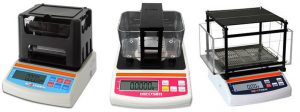
Common equipment: Precision balance (appropriate capacity and readability for specimen mass), drying oven for oven-dry conditioning, dimensional measurement tools (e.g., calipers/micrometers) for regular specimens, and a water-displacement setup (as applicable) for volume determination of irregular specimens.
If you are selecting balances, ovens, or fixtures for displacement-based volume measurement, you can request a detailed quote for a configuration that matches your specimen sizes and throughput.
How to Read This Designation or Revision
GB/T: Recommended (voluntary) national standard of the People’s Republic of China.
1933: The numeric identifier for this method in the GB/T catalog.
“-2009”: The published edition year for the withdrawn GB/T 1933 version commonly cited as “GB/T 1933-2009.”
Status note: The national catalog record lists GB/T 1933-2009 as withdrawn/obsolete, and it is shown as replaced by GB/T 1927.5-2021. When density is contractually specified, the cited edition in the controlling document should be followed unless the customer authorizes an update.
Related Standards, Methods, or Frameworks
GB/T 1933-2009 is often used with companion wood testing references that control specimen preparation and moisture content determination, since both directly affect density calculations and comparability.
Commonly referenced companions (depending on your program): GB/T 1929 (specimen preparation/sawing and sampling for wood physical/mechanical testing), GB/T 1931 (wood moisture content determination), and the replacement method GB/T 1927.5-2021 (density determination as part of the small clear specimen test methods series).
Get help selecting equipment for wood density testing
If you need to outfit or update a wood density measurement workflow (balances, drying ovens, or volume-measurement accessories) while staying aligned to the standard edition cited in your requirements, you can ask for a quote with your specimen geometry and reporting needs.