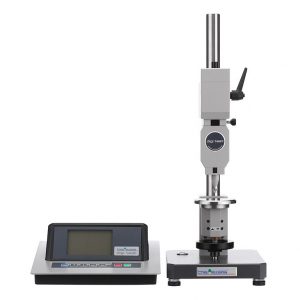
DIN ISO 27588 is a dead-load hardness test method for very soft vulcanized rubber and thermoplastic rubber, using the very low rubber hardness (VLRH) scale.
This method is commonly used when Shore or conventional IRHD hardness methods do not separate small hardness differences in soft elastomers (for example, silicone and rubber-like compounds). If you need help matching your product and the cited edition to the right hardness approach, contact our team.
DIN ISO 27588: Rubber, vulcanized or thermoplastic — Determination of dead-load hardness using the VLRH scale
DIN ISO 27588 describes a hardness measurement approach designed for the “very soft” end of elastomer hardness. It uses a dead-load setup and an indentation-depth measurement with sufficient resolution to quantify small changes in softness that can matter in sealing, damping, medical, and automotive applications.
In purchasing and QA specifications, the output is typically reported as VLRH degrees, supporting supplier/customer agreements for soft rubber acceptance.
Quick Definition
Document type: Test method (dead-load indentation hardness).
What it measures: Hardness of very soft vulcanized or thermoplastic rubbers on the VLRH scale.
How it works (in brief): A ball indents the specimen under a small contact force and then under a larger total force; the hardness value is derived from the change in indentation depth.
What This Standard Covers
DIN ISO 27588 defines a dead-load hardness method for very soft elastomers using the VLRH scale. The method is based on measuring indentation depth with a ball indenter under two loading conditions (a low contact force and a higher total force) and converting the measured depth difference to VLRH degrees using the standard’s tables/graphs.
This standard is primarily about the measurement method and reporting on the VLRH scale; it is not a full material specification for an elastomer compound or finished part.
Why This Standard Matters in Testing
Very soft elastomers can be difficult to differentiate using common hardness methods when hardness differences are small but functionally important. A VLRH dead-load approach is often selected to improve discrimination and reduce debate between suppliers and customers for soft rubber acceptance criteria.
For lab managers and QA/QC teams, the practical impact is that instrument resolution, load application consistency, and specimen support become more critical than they are in many “general purpose” hardness checks.
Common Materials, Product Types, or Applications Covered
DIN ISO 27588 is most commonly associated with very soft elastomers, including silicone-type materials and other rubber-like compounds where standard hardness tests may not adequately separate grades.
Common product examples: Soft seals and gaskets, damping elements, soft molded components, and other parts where softness correlates to fit, sealing force, comfort, or vibration behavior.
Common Test or Verification Workflow
Most programs use DIN ISO 27588 as part of incoming inspection, supplier qualification, or material release testing for soft elastomer batches and molded parts.
Typical workflow: Condition specimens at a defined laboratory temperature, perform VLRH indentation measurements using the specified dead-load approach, convert indentation depth differences to VLRH degrees using the standard’s conversion aids, and report results with the cited standard and edition.
Practical caution: Results can be sensitive to specimen flatness/support, surface condition, and instrument setup. For soft elastomers, consistent specimen presentation and a stable measurement stand can be as important as the hardness instrument itself.
Equipment Commonly Used for This Standard
DIN ISO 27588 points to a dedicated VLRH-capable dead-load hardness tester rather than a handheld durometer.
Common equipment elements: A rigid test stand, a ball indenter assembly, controlled dead-load application (weights), and a high-resolution displacement measurement system to capture indentation depth changes repeatably.
What to specify when quoting equipment: VLRH capability, measurement resolution, load application method (dead-load), specimen support/anvil configuration, and reporting outputs appropriate for VLRH degrees. If you are comparing automation level, throughput, or control/software options for hardness reporting, you can request a detailed quote for a configuration matched to your sample type and daily test volume.
How to Read This Designation or Revision
DIN ISO 27588 indicates a DIN adoption/translation of an ISO standard covering the VLRH dead-load hardness method.
Edition examples you may see in specifications: DIN ISO 27588:2010-05 (based on ISO 27588:2008) and DIN ISO 27588:2014-12 (German translation of ISO 27588:2012). Both are published as withdrawn on DIN Media, and later replacements are referenced there.
Revision sensitivity: Hardness methods are setup-sensitive; equipment, conditioning, and reporting should be aligned to the exact edition cited in contracts, drawings, or control plans.
Related Standards, Methods, or Frameworks
DIN ISO 27588 is closely tied to the ISO 48 series for rubber hardness measurement and has been superseded in later publications by the ISO 48-3 method family. When a customer calls out ISO 48-3 or DIN ISO 48-3 instead of DIN ISO 27588, the instrument capability and reporting expectations may need to be matched to that specific designation.
If your customer documentation mixes legacy and current callouts, harmonizing the cited standard across your test plans can prevent avoidable disputes in supplier quality reporting.
Talk through your DIN ISO 27588 / VLRH testing need
If you need to align a VLRH hardness requirement to the correct edition and equipment configuration (manual vs. automated, stand layout, and reporting expectations), talk with our team about your material type, part geometry, and throughput targets.