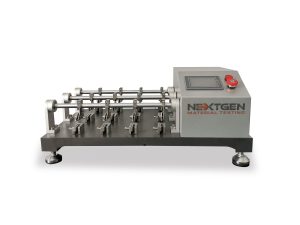
ASTM D6182 is a leather-finishing test method used to evaluate how a finish holds up when finished leather is repeatedly flexed. It is commonly used to screen for visible finish damage such as cracking, delamination, or discoloration that can occur in real-world bending and creasing.
If you are unsure whether this method fits your leather type, finish system, or quality requirement, talk with our team about the most practical way to align your lab setup and reporting to the cited edition.
ASTM D6182-23 — Standard Test Method for Flexibility and Adhesion of Finish on Leather
ASTM D6182 is a standard test method focused on the durability of finishes applied to leather when the material is subjected to repeated flexing. The method is intended for finished leather and is not applicable to “wet blue.”
In practice, D6182 is used as a finish-performance check: it provides an indication of finish flexibility and finish adhesion under cyclic bending stress, supporting go/no-go decisions and comparative evaluations between finish formulations, process conditions, or supplier lots.
Quick Definition
ASTM D6182 is a repeated-flex leather finish evaluation used to assess resistance to finish cracking, delamination, and discoloration on finished leather.
Typical output: A condition/appearance assessment of the finish after repeated flexing, used for comparisons and acceptance decisions.
What This Standard Covers
This method covers evaluation of finished leather after repeated flexing to see whether the finish shows damage such as cracking, separation (delamination), or visible color/appearance change. It is intended for finished leather and explicitly excludes wet blue.
Because this is a finish-focused method, it is generally applied to materials where the surface coating or finish is a key performance attribute (for example, decorative or protective finishes on leather used in consumer and industrial products).
Why This Standard Matters in Testing
Leather finishes often fail first at flex points—creases, folds, and high-motion areas—where repeated bending can initiate surface cracks or weaken adhesion between layers. ASTM D6182 provides a controlled way to compare finish performance under a repeatable flexing exposure.
For QA/QC teams, it is commonly used to support incoming inspection, process validation, supplier qualification, and investigation of finish complaints where flex-related damage is suspected.
Common Materials, Product Types, or Applications Covered
ASTM D6182 is typically used for finished leathers where the appearance and integrity of the finish matters after bending or creasing.
- Finished leather materials with coatings, pigments, or topcoats
- Leather used in footwear, upholstery, apparel, accessories, and similar finished-leather goods
- Finished leather panels or cut pieces used for qualification and lot-to-lot comparison
Common Test or Verification Workflow
D6182 is generally run as a comparative durability check for finish systems or for acceptance testing of finished leather. While the official standard defines the exact conditioning, flexing exposure, and evaluation approach, most lab workflows follow the same practical pattern: prepare representative specimens, apply controlled repeated flexing, and then evaluate the finish condition.
Common workflow: Select finished-leather specimens (representative of the lot or finish system) → condition as required by the cited edition or internal quality plan → flex the specimens for the required exposure → evaluate and document finish cracking, delamination, and discoloration/appearance change.
Equipment Commonly Used for This Standard
ASTM D6182 is primarily an apparatus-based repeated-flex evaluation. Equipment selection typically centers on a repeatable flexing device and a consistent method to inspect and document finish condition after exposure.
Common equipment: Leather flexing tester (often a Bally-type flexometer or similar repeated-flex apparatus), specimen cutting tools/templates as required, and inspection/recording tools for documenting finish damage (visual inspection, lighting/magnification as needed, and photo documentation).
If you are specifying a flexing tester for leather-finish evaluation and need help matching capacity, clamping approach, and throughput to your sample volume, you can request pricing for an equipment configuration suited to your lab workflow.
How to Read This Designation or Revision
Designation: ASTM D6182
Suffix year: The year suffix in ASTM D6182-23 indicates the revision year of the edition being cited. Test conditions, evaluation criteria, and reporting expectations can be edition-sensitive, so purchase orders, customer specifications, and test reports should cite the full designation (including the year).
Practical tip: When comparing historical data, confirm that all results were produced to the same edition (or document any edition differences) before trending or using the data for acceptance decisions.
Related Standards, Methods, or Frameworks when useful
In broader leather test programs, D6182 is often used alongside other physical-property and finish-surface evaluations (for example, related leather physical-property standards under ASTM Committee D31). The exact companion methods depend on the product’s performance requirements and the finish system being qualified.
Common pairing idea: Use D6182 as a flex-durability screen for finish integrity, then add separate methods for thickness, tensile/tear, abrasion, or tackiness as required by the product specification.
Talk with a testing equipment specialist
If you need help translating a customer requirement for ASTM D6182 into a practical lab setup—especially when multiple leather types, finishes, or acceptance criteria are in play—contact our team and we’ll help you scope the right approach for your workflow.