ASTM C617/C617M is the ASTM standard practice for capping cylindrical concrete specimens before compressive strength testing. It covers the materials, apparatus, and procedures used to create suitable bearing surfaces on freshly molded cylinders, hardened cylinders, and drilled concrete cores when specimen ends do not already meet the required end condition.
This is a specimen-preparation standard rather than the compression test itself. It is commonly used with ASTM C39/C39M for cylindrical concrete compression testing and ASTM C42/C42M when drilled cores are being evaluated. If you need help deciding whether this practice fits your workflow, Contact Us.
ASTM C617/C617M Standard Practice for Capping Cylindrical Concrete Specimens
ASTM C617/C617M addresses end preparation for cylindrical concrete specimens when the ends need bonded caps to provide proper bearing surfaces for compression loading. The practice is focused on how the cap is formed and what materials may be used for different specimen conditions.
| Document Type | Primary Focus | Typical Place in the Workflow | Common Companion Standards |
|---|---|---|---|
| Standard Practice | Bonded capping of cylindrical concrete specimens | Before compressive strength testing when specimen ends need preparation | ASTM C39/C39M, ASTM C42/C42M, ASTM C31/C31M, ASTM C1231/C1231M |
Quick Definition
ASTM C617/C617M is a concrete specimen preparation practice. It gives procedures for applying bonded caps to concrete cylinders and drilled cores so the specimen can be loaded more uniformly during a compressive strength test.
What This Standard Covers
The practice covers apparatus, materials, and procedures for capping freshly molded concrete cylinders with neat cement and for capping hardened cylinders and drilled concrete cores with high-strength gypsum paste or sulfur mortar.
It is used when specimen ends do not conform to the planeness and perpendicularity requirements of the applicable compression-testing standard. In that sense, ASTM C617/C617M supports the test result by improving the condition of the specimen ends before the specimen goes into the compression machine.
Why This Standard Matters in Testing
Concrete compression results depend on more than load frame capacity alone. If the specimen ends are uneven, not square to the axis, or otherwise unsuitable for bearing, the compressive load can be introduced unevenly and the reported strength may not reflect the specimen as intended.
ASTM C617/C617M matters because it provides a controlled method for creating bonded caps that improve bearing conditions before testing. For QA, QC, acceptance testing, and structural evaluation work, that preparation step can be important to repeatability and confidence in the final compressive strength result.
Common Materials, Product Types, or Applications Covered
This practice is most closely associated with concrete cylinders and drilled concrete cores used for compression testing. That includes freshly molded cylinders from production or field sampling, hardened cylinders that require end preparation, and cores removed from existing concrete for evaluation.
Common applications: ready-mix concrete acceptance testing, precast and prestressed concrete quality control, construction materials laboratories, agency and DOT concrete programs, and structural assessment work involving drilled cores.
Common Test or Verification Workflow
ASTM C617/C617M usually appears as one step within a broader concrete compression workflow rather than as a stand-alone test.
- Concrete cylinders are molded and cured under the applicable specimen-making practice, or cores are obtained from hardened concrete.
- The specimen ends are checked to determine whether end preparation is needed before compression testing.
- A bonded cap is applied using the capping material permitted for that specimen condition.
- The capped specimen is then handled and conditioned for subsequent compression testing.
- Compressive strength is measured under the applicable test standard, commonly ASTM C39/C39M for cylinders or ASTM C42/C42M for drilled cores.
Practical caution: ASTM C617/C617M is not the same as the compression test method. When a project specification cites a particular edition, the lab should match that citation and confirm whether bonded caps, alternate capping systems, or other end-preparation methods are permitted.
Equipment Commonly Used for This Standard
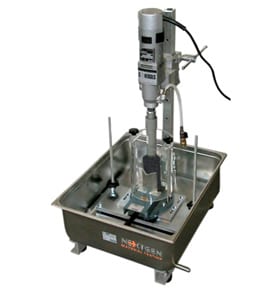
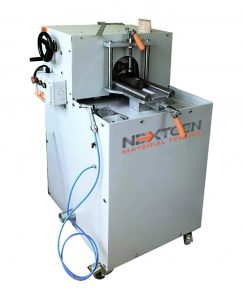
The equipment path for ASTM C617/C617M is centered on specimen end preparation. The exact setup depends on whether the lab is capping freshly molded cylinders, hardened cylinders, or drilled cores, and on which capping material the procedure allows.
- Capping plates with flat, durable working surfaces sized for the specimen.
- Alignment devices used with the capping plate to keep the cap centered and reasonably perpendicular to the specimen axis.
- Temperature-controlled melting pots and appropriate fume exhaust arrangements when sulfur mortar capping is used.
- Mixing and handling tools for gypsum paste or neat cement where those materials are permitted.
- Compression testing machines and compression accessories selected for the specimen size and expected load after capping is complete.
Equipment selection note: ASTM C617/C617M points most directly to capping accessories, preparation tools, and the surrounding concrete compression workflow. For quoting, the main factors are specimen diameter, expected strength range, testing volume, and whether the lab routinely prepares molded cylinders, hardened cylinders, drilled cores, or a mix of all three.
How to Read This Designation or Revision
The current ASTM listing uses the combined designation ASTM C617/C617M-23. Older project documents and lab procedures may still reference earlier editions such as ASTM C617-10.
Designation format: the combined C617/C617M format indicates a dual-unit standard with inch-pound and SI presentations together.
Revision sensitivity: the year suffix identifies the cited edition. If a contract, agency, or customer requirement names a specific revision, that edition should be used for procedure alignment and documentation.
Related Standards, Methods, or Frameworks
ASTM C617/C617M is commonly used alongside a short group of concrete specimen and compression standards.
ASTM C39/C39M: compressive strength testing of cylindrical concrete specimens.
ASTM C42/C42M: obtaining and testing drilled cores and sawed beams of concrete.
ASTM C31/C31M: making and curing concrete test specimens in the field.
ASTM C1231/C1231M: alternative practice covering unbonded caps for hardened concrete cylinders.
Request a Quote for ASTM C617/C617M Equipment Support
If your lab is building or updating a concrete compression workflow that includes ASTM C617/C617M specimen preparation, we can help match capping equipment, compression accessories, and load-frame capacity to your application. Request a Quote.